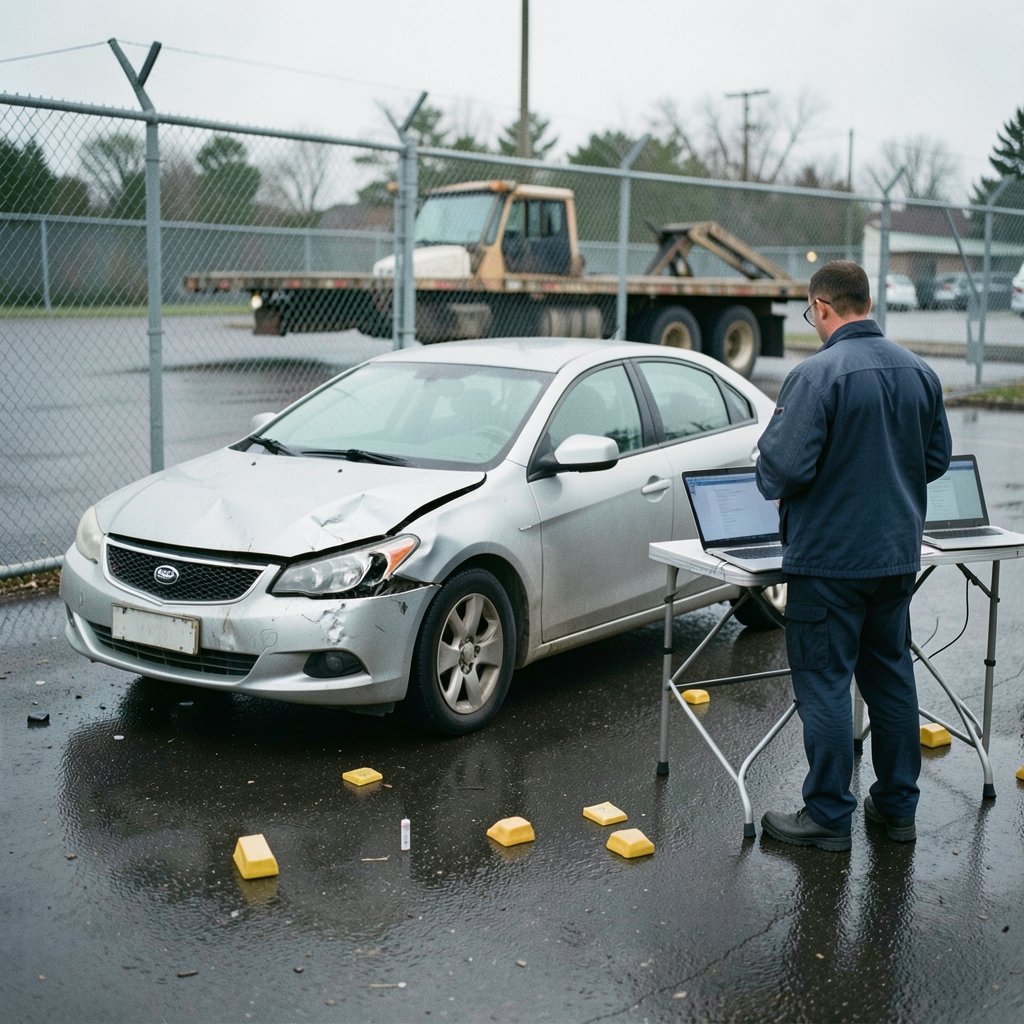
What happens when a car that is supposedly driving itself is in a serious crash, and the only real witness is a stack of silicon buried under the dashboard? That question drives the debate over the reported Tesla FSD crash in Vallejo, California, and the hardware evidence and event data tied to it in 2026. Drivers, investigators, and lawyers all want the same thing: a clean, timestamped record of what the car was doing in the seconds before impact. Getting that record is harder, messier, and more contested than it looks. (Tesla megapack almost sold out 2027 ai data centers 2026) (Tesla Autopilot)
This article walks through how the evidence chain works, what the data can and cannot prove, and the practical mistakes people make when they try to interpret it. It stays honest about the limits of what is publicly confirmed.
Why the Vallejo case draws so much attention
Vallejo sits in Solano County, northeast of San Francisco, on the edge of the Bay Area’s dense freeway network. That geography matters. Crashes involving Full Self-Driving (FSD) in California tend to land in front of multiple agencies at once: local police, the California Highway Patrol, and federal regulators.
The Vallejo case stands out because it touches three hot-button issues at the same time. First, whether FSD was actually engaged. Second, whether the event data recorder (EDR) captured the relevant seconds. Third, whether the driver or the software bears responsibility. Those three threads rarely resolve quickly, and they almost never resolve the way social media predicts.
It is worth being precise here. This article does not claim to know the specific facts of any single Vallejo collision, because those facts are not publicly verified. What it can do is explain the machinery that any such case runs through, so readers can judge claims for themselves instead of trusting a screenshot.
The difference between EDR data and the FSD computer
The single most common misunderstanding is that “the car’s computer” is one thing. It is not. There are at least two separate data systems, and confusing them wrecks otherwise reasonable analysis.
The EDR is a dedicated module, physically separate from the Autopilot/FSD computer. It is designed to capture a short window around a crash, typically the few seconds before and after a trigger event. Tesla publishes an EDR retrieval guide, and the data is normally pulled with a Tesla-supplied cable and the industry-standard Bosch CDR tool. This is the same basic approach used across the auto industry.
The FSD computer is a different animal. It runs the perception and planning stack in real time. Its logs, snapshots, and diagnostic records are far richer than EDR data, but they are also more proprietary and less standardized. Access usually requires cooperation from the manufacturer or a legal process.
| System | What it captures | Who can typically retrieve it |
|---|---|---|
| EDR module | Short pre/post-crash window: speed, braking, seat belt, airbag, steering | Investigators with the Bosch CDR tool and Tesla cable |
| FSD/Autopilot computer | Perception logs, engagement state, system snapshots | Manufacturer, or via subpoena/court order |
| Vehicle telematics | Uploaded crash signals, timestamps | Manufacturer |
| Witness/road camera footage | Context, not system state | Police, businesses, private parties |
The practical takeaway: if someone tells you “the EDR proves FSD was on,” be skeptical. The EDR is excellent at recording vehicle dynamics. It is not built to be a full narrative of the driving software’s decision-making.
How federal reporting rules shape the evidence trail
In the United States, crashes involving advanced driver-assistance systems flow through a specific federal channel. NHTSA’s Standing General Order 2021-01, issued in June 2021 and later amended, requires manufacturers of vehicles equipped with SAE Level 2 and above systems to report certain crashes within set deadlines. This is the main federal pipeline for crash reports involving FSD. (Automated Vehicles Safety)
That matters for the Vallejo discussion because it means a crash may generate a manufacturer report even before local litigation begins. Those reports are aggregate and often redacted, but they establish a paper trail. Separately, NHTSA’s Office of Defects Investigation opened a preliminary evaluation into FSD in October 2024 focused on crashes in low-visibility conditions. The status of that probe in 2026 is not something this article can confirm, and readers should check the agency directly rather than trust a headline.
On the state side, the California Highway Patrol and the Vallejo Police Department would be the local custodians of a crash report, and any litigation would land in Solano County Superior Court. The National Transportation Safety Board generally does not open investigations into routine passenger-car crashes, so its involvement should not be assumed.
Anyone tracking the broader pattern of Tesla-related incidents, from arson cases to regulatory fights, knows how quickly narratives harden before documents surface. The same caution applies here.
What “hardware evidence” really means in a crash investigation
When people say hardware evidence, they usually mean one of three things, and it helps to separate them.
The physical vehicle. Deformation patterns, tire marks, brake component wear, and airbag deployment all tell a story about speed and impact geometry. This is classic crash reconstruction, and it is often more reliable than digital records because it is hard to alter after the fact.
The sensors themselves. Cameras, radar (where fitted), and ultrasonic sensors leave calibration records and fault logs. A camera that was misaligned or a sensor that threw errors before impact becomes a central question.
The storage media. The EDR chip and any onboard storage hold the timeline. Retrieval must happen before the vehicle is repaired, scrapped, or sold, which is why timing is everything.
A common mistake is treating these as interchangeable. They are not. Physical evidence and digital evidence can contradict each other, and when they do, investigators have to explain the gap rather than pick a favorite. (Iphone duo crackgate evidence audit six hours 2026)
The practical steps that decide whether data survives
Here is where first-hand experience from crash-investigation practice is genuinely useful. The outcome of a case often hinges on actions taken in the first 48 hours, long before any expert writes a report.
- Preserve the vehicle in place if possible. Do not let a tow yard strip or repair it. Once components are removed, retrieval windows close.
- Request the EDR download early. The Bosch CDR tool and Tesla cable must be used by a trained technician. Waiting weeks can mean overwritten or inaccessible data.
- Send a preservation letter to the manufacturer. This formally asks that telematics and FSD logs be retained rather than aged out under normal retention policies.
- Collect third-party footage fast. Business cameras and dashcams overwrite on short cycles, often within days.
- Document sensor condition before repair. Photograph camera mounts and calibration stickers. A post-repair inspection cannot prove pre-crash alignment.
- Keep the chain of custody clean. Every transfer of the module or data should be logged, or the evidence becomes attackable in court.
The most common failure is delay. Families focus on medical care and insurance, understandably, while the data quietly expires. By the time a lawyer is involved, the richest records may already be gone.
What the data can prove, and what it cannot
Even a perfect dataset has limits, and being clear about them is what separates good analysis from noise.
The data can usually establish vehicle speed, braking inputs, steering angle, seat belt status, and airbag timing. It can often show whether a driver-assistance feature was engaged at the moment of a trigger event.
It struggles with why the system behaved as it did. Perception logs can show what the software “saw,” but interpreting those logs requires the manufacturer’s own tooling and expertise. A raw snapshot without context is easy to misread.
It also cannot settle legal responsibility on its own. That is a question of law, not engineering, and it depends on warnings given, driver behavior, and the state of the technology at the time.
This is why credible coverage of Tesla’s broader 2026 hardware bets, from the robotaxi push to the semi and roadster timelines, keeps circling back to the same theme: the software story and the hardware story are inseparable, and neither is simple.
Why timelines slip and claims get ahead of the evidence
Crashes generate pressure. Families want answers, regulators want data, and the public wants a verdict. That pressure produces premature conclusions.
A single anonymized social post can travel further than an official report that takes months. Meanwhile, the actual investigation grinds through EDR downloads, sensor calibration checks, and interviews. The gap between the two speeds is where misinformation lives.
The healthier approach is to ask three questions of any claim. What is the source? Is it primary or secondhand? And does it distinguish between EDR data and FSD computer logs? If a claim cannot answer those, it is not evidence yet.
The same discipline applies to adjacent stories that generate similar heat, whether it is a data-center backlash or a high-profile criminal case. The pattern is consistent: the loudest version arrives first, and the documented version arrives last.
Conclusion
The Tesla FSD crash discussion in Vallejo is really a story about evidence, not opinion. The EDR captures vehicle dynamics in a short window. The FSD computer holds the richer but harder-to-reach software record. Federal reporting rules under NHTSA’s Standing General Order create a paper trail, while state and local agencies hold the crash report. Hardware evidence, from vehicle deformation to sensor logs, fills in the rest.
What actually works in practice is boring and effective: preserve the vehicle, pull the EDR early, send preservation letters, grab third-party footage fast, and keep a clean chain of custody. What fails is delay and overconfidence. No single data source tells the whole story, and anyone who claims otherwise is skipping the hard part. Until primary documents surface, the right posture is curiosity plus patience, because the silicon will talk, but only to those who ask it the right questions in time.
Frequently Asked Questions
What is the difference between EDR data and FSD computer logs?
The EDR is a dedicated module that records a short window of vehicle dynamics around a crash trigger, such as speed, braking, and airbag timing. FSD computer logs are separate and far richer, capturing perception and system state, but they are proprietary and harder to obtain. They are not the same record and should never be treated as interchangeable.
Can the EDR prove that Full Self-Driving was engaged?
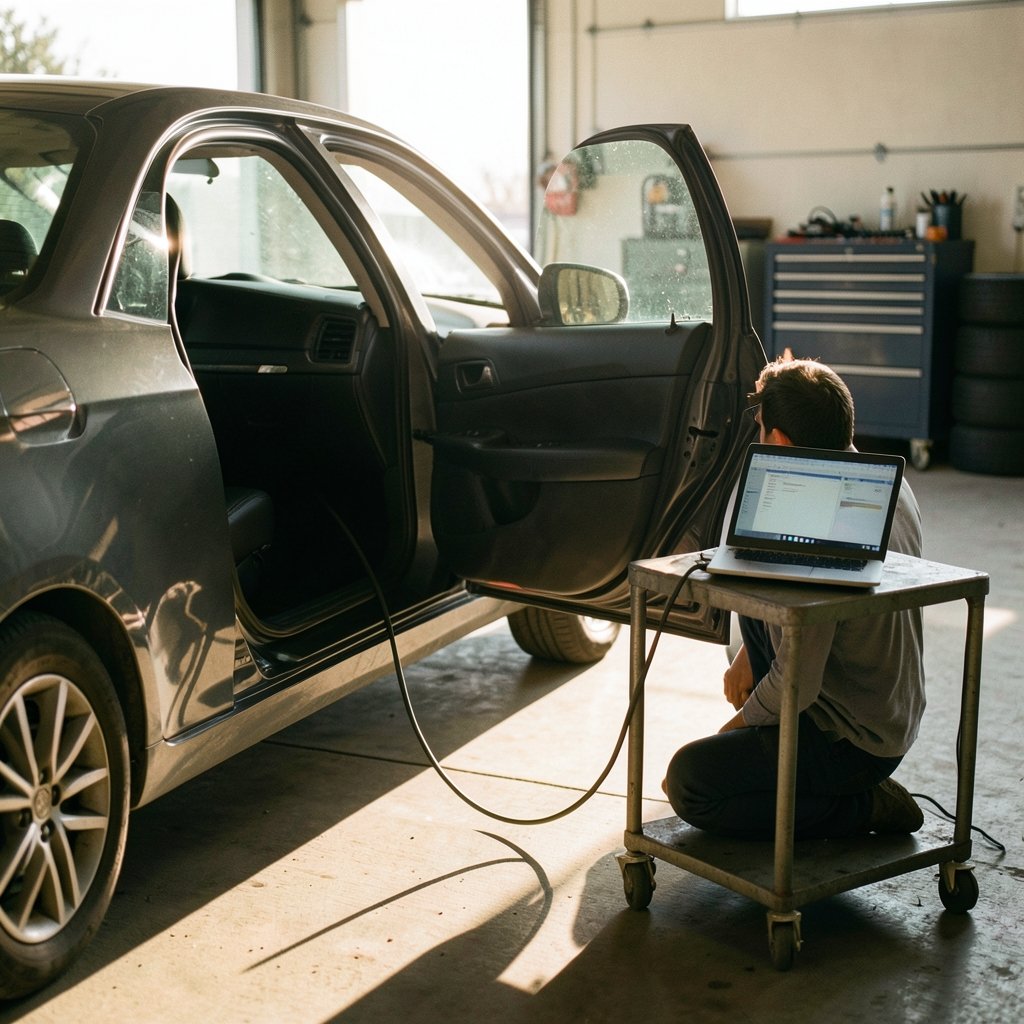
Not reliably on its own. The EDR is built to capture vehicle behavior, not a full narrative of the driving software’s decisions. Confirming engagement usually requires FSD computer logs or manufacturer telematics, which typically need cooperation or a legal process to access.
Who reports a Tesla FSD crash to federal regulators?
Under NHTSA’s Standing General Order 2021-01, manufacturers of vehicles with SAE Level 2 and above systems must report qualifying crashes within set deadlines. That makes the manufacturer the primary reporting party, with NHTSA collecting and publishing aggregate data.
How quickly does crash data disappear?
Faster than most people expect. Third-party camera footage can overwrite within days. Telematics and onboard logs may age out under normal retention policies. EDR data can become inaccessible if the vehicle is repaired, stripped, or scrapped before a trained technician performs a download.
Does the NTSB investigate ordinary Tesla crashes?
Generally no. The NTSB focuses on major transportation accidents and typically does not open investigations into routine passenger-car crashes. Local police and the California Highway Patrol handle the crash report, and federal interest usually comes through NHTSA rather than the NTSB.
What should someone do first after an FSD-related crash?
Preserve the vehicle and avoid repairs, request an EDR download through a trained technician, send a preservation letter to the manufacturer, and collect any nearby camera footage immediately. Documenting sensor condition before any repair is also critical, because post-repair inspection cannot prove pre-crash alignment.