

Quick Answer: What is container security?
Container security is the practice of protecting containerized applications across every stage of their life: the build, the image registry, the deployment platform, and the runtime environment. In plain terms, it means making sure the code inside your containers is trustworthy, the images are stored safely, the orchestrator is configured correctly, and nothing suspicious happens while the container runs. You act on it through image scanning, signed artifacts, hardened cluster settings, network policies, and runtime monitoring.
It is different from traditional host security because containers share the host operating system kernel instead of running their own. That makes them lighter and faster, but it also means a kernel-level flaw can affect many workloads at once. Virtual machines keep a harder boundary; containers trade some of that isolation for speed and density.
Before you invest in tooling, compare your exposure across image provenance, registry access controls, orchestration hardening, network segmentation, runtime detection, patch cadence, and team ownership.
Why Containers Change the Security Math
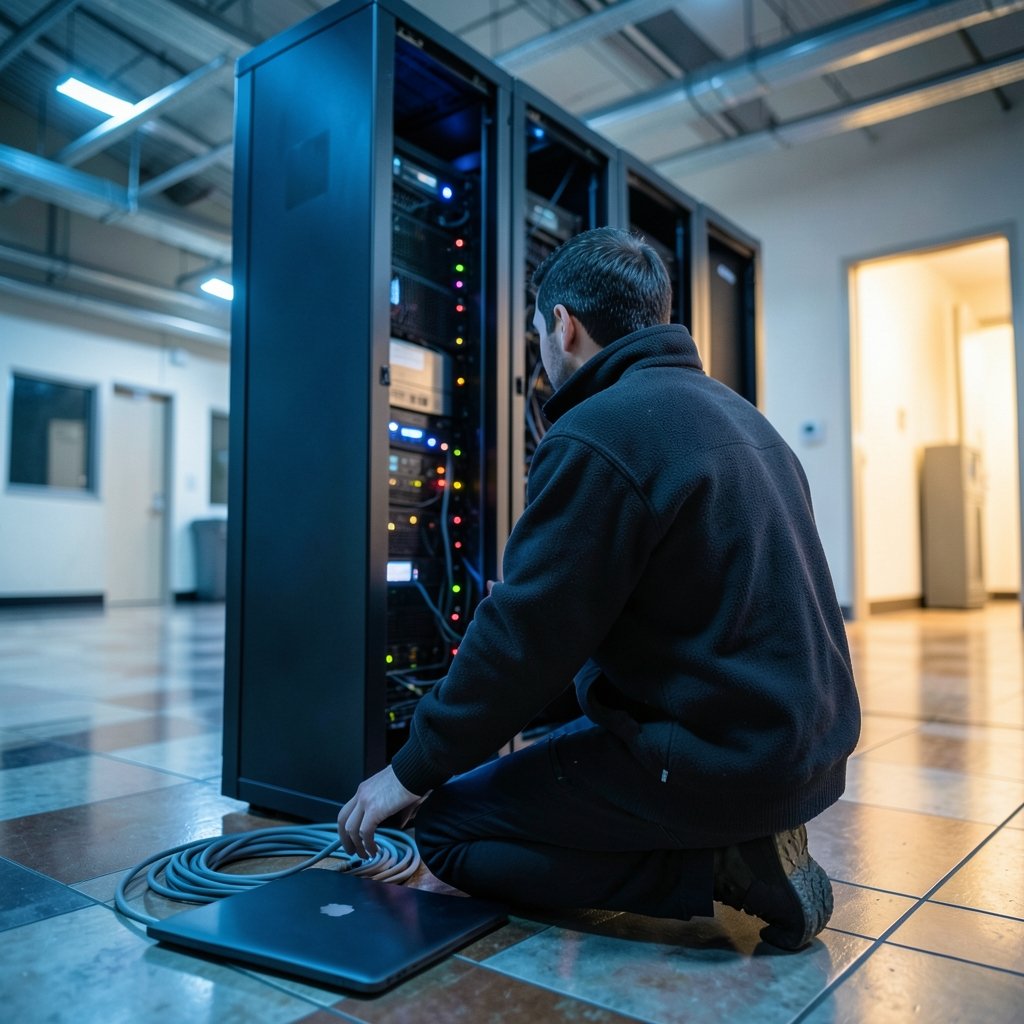
Ever noticed how a single misconfigured container image can quietly spread across an entire cluster in minutes? That is the reality many teams face. Containers made software delivery faster, but they also moved the security goalposts.
The core difference comes down to isolation. Containers rely on Linux kernel features, notably namespaces and cgroups, rather than full hardware virtualization. Namespaces arrived in Linux 2.4.19 back in 2002, and cgroups were merged into Linux 2.6.24 in January 2008. Those mechanisms are mature and well tested, but they create a thinner wall than a hypervisor does. If an attacker escapes a container and reaches the kernel, the blast radius can be large.
That single fact explains most container security advice. Patching an app is one part of the work. You are managing image contents, orchestration configuration, network reachability, and runtime behavior as one connected system. Security teams that treat containers like small virtual machines tend to miss this, and the gaps show up later.
The Four Stages of Container Security
Most frameworks split container security into stages. The NIST Special Publication 800-190, Application Container Security Guide, published in September 2017, organizes risks this way: image flaws, registry weaknesses, orchestration issues, and runtime exposure. That structure still holds up well.
| Stage | Main Risk | Core Controls |
|---|---|---|
| Build | Vulnerable or malicious base images | Minimal base images, dependency scanning, signed commits |
| Registry | Tampered or stale images | Access control, image signing, retention policies |
| Deployment | Over-permissive cluster config | RBAC, pod security standards, network policies |
| Runtime | Live compromise or lateral movement | Syscall monitoring, anomaly detection, least privilege |
Build: Start With What Goes In
The build stage is where most problems are cheapest to fix. A container image is a layered bundle of your app plus its dependencies, and every layer inherits whatever came before it. Pull a bloated base image from an untrusted source and you have imported someone else’s vulnerabilities before writing a line of code.
Practical habits that actually work: use minimal base images, pin versions by digest rather than tags, scan dependencies during CI, and never bake secrets into image layers. A common mistake is assuming a private registry makes images safe. It does not. It only limits who can pull them.
The Open Container Initiative standardized image and runtime formats with its Image Spec and Runtime Spec (v1.0.0, July 2017). That standardization is what makes portable scanning and signing tooling possible across vendors.
Registry: Guard the Warehouse
Registries are often the weakest link because they are treated as storage rather than security infrastructure. If anyone with push access can overwrite a production tag, your deployment pipeline is only as trustworthy as the least careful engineer.
What works in practice: enforce immutable tags, require signed images, scan on push, and prune old images so stale vulnerable builds do not linger. Image signing via Sigstore’s cosign, open-sourced in 2021, and build provenance through the SLSA framework (first specification in 2021, SLSA v1.0 in April 2023) give you verifiable proof that what runs in production is what your pipeline built.
Deployment: Configure the Orchestrator Properly
Kubernetes is powerful and, out of the box, fairly permissive. The project’s official security documentation now includes Pod Security Standards, which reached beta in Kubernetes v1.23 (December 2021) and stable in v1.25 (August 2022). They replaced PodSecurityPolicies, which were deprecated in v1.21 (April 2021) and removed in v1.25.
The CIS Benchmarks for Docker (first released 2016) and Kubernetes (2017) remain the go-to consensus baselines for hardening. Run them early, not after an incident.
Common mistakes here include running containers as root, mounting the Docker socket into pods, and leaving default service accounts with broad permissions. Each one turns a small compromise into a cluster-wide problem.
Runtime: Watch What Actually Happens
Runtime security assumes prevention will sometimes fail. eBPF, merged into Linux 3.18 in December 2014, lets tools observe system calls with low overhead. Projects like Falco, a CNCF project, use it to flag suspicious behavior such as a shell spawning inside a container or an unexpected outbound connection.
If you are building out a broader defense-in-depth program, it helps to think beyond the cluster. The same principles behind best internet security in Australia apply to infrastructure: layered controls, least privilege, and continuous monitoring beat any single product. For physical and network edge protection at branch offices, resources like home security systems: 8 best picks for every home show how the same layered logic works outside the data center.
Supply Chain Security Is Now Part of the Job
Software supply chain attacks pushed container security into boardrooms. U.S. Executive Order 14028, signed May 12, 2021, on improving software supply chain security drove adoption of SBOMs (software bills of materials) and build provenance practices that map directly onto container images.
The practical takeaway is simple. Know what is inside your images, know who built them, and be able to prove it. Teams that generate SBOMs at build time and attach provenance attestations can answer “are we affected?” in minutes instead of days when the next critical library vulnerability lands.
Identity sprawl complicates this. Non-human identities, service accounts, and CI tokens now outnumber humans in most clusters. If you are comparing tooling in that space, this breakdown of Astrix vs Oasis vs Entro non-human identity security in 2026 is a useful reference point.
A Practical Hardening Checklist
Theory is cheap. Here is what tends to move the needle fastest, in rough priority order.
- Scan images in CI and block builds that fail your severity threshold.
- Replace `latest` tags with digest pinning and immutable registry tags.
- Run containers as non-root with read-only root filesystems where possible.
- Apply the restricted Pod Security Standard to production namespaces.
- Write default-deny network policies, then allow traffic explicitly.
- Enforce RBAC least privilege and audit default service accounts.
- Sign images and verify signatures at admission.
- Deploy runtime detection and route alerts to a team that responds.
- Keep the host kernel and container runtime patched on a schedule.
- Run CIS Benchmark checks continuously, not once a year.
One underrated step: assign clear ownership. Container security fails most often when platform teams assume application teams handle it and vice versa. Write it down.
Where Teams Usually Get It Wrong
A few patterns show up again and again. The first is treating scanning as the whole program. A scanner tells you what is in an image. It says nothing about whether the image is signed, whether the pod runs as root, or whether an attacker is already inside.
The second is ignoring the host. Containers share the kernel, so an unpatched node undermines every control above it. Node hardening deserves the same rigor as application code.
The third is alert fatigue. Runtime tools that fire hundreds of low-value alerts get muted within weeks. Tune aggressively and start with a small set of high-confidence detections.
The fourth is secrets in environment variables and image layers. Both are readable by anyone with pod access or registry pull rights. Use a dedicated secrets manager with short-lived credentials.
If your organization also manages endpoint and perimeter security, the mindset overlaps more than people expect. Guides on best outdoor security cameras without a subscription and best smart locks for home security make the same point in a different domain: layered, verified controls beat single points of trust. Even something as mundane as how much social security will I get at 62 rewards the same discipline of checking assumptions before acting. (Security)
How Container Security Differs From VM Security
| Dimension | Containers | Virtual Machines |
|---|---|---|
| Isolation boundary | Shared host kernel | Hypervisor and separate kernel |
| Startup time | Seconds | Minutes |
| Image size | Megabytes | Gigabytes |
| Patch surface | Host kernel plus runtime plus image | Guest OS plus hypervisor |
| Density per host | High | Lower |
| Primary risk | Kernel escape, image supply chain | Guest OS sprawl, patching lag |
Neither model is inherently safer. Containers concentrate risk at the kernel and supply chain. Virtual machines spread it across many guest operating systems that each need patching. Most modern estates run both, and the security program has to cover the seam between them.
Building a Program That Scales
Start small and measurable. Pick one production cluster, enable image signing, apply the restricted pod security standard, and turn on runtime detection with a tight alert set. Measure how many alerts are actionable in the first month. That number tells you more than any vendor demo.
Then expand. Add SBOM generation to the build pipeline, enforce admission policies, and run CIS Benchmark checks on a schedule. Document exceptions rather than silently allowing them. Security debt that is written down can be prioritized; security debt that is invisible becomes an incident.
Finally, invest in people and process. Container security is a shared responsibility between platform, application, and security teams. The technology is largely solved. The coordination is not. For a broader look at how layered protection works in practice, best wireless outdoor security camera reviews show the same principle: redundancy and verification matter more than any single feature.
Conclusion
Container security is the discipline of protecting containerized workloads from build to runtime, and it exists because containers share the host kernel rather than isolating behind a hypervisor. That design choice delivers speed and density, but it concentrates risk in the image supply chain, the orchestrator configuration, and the kernel itself. The good news is that the controls are well documented. NIST SP 800-190 lays out the risk categories, the CIS Benchmarks provide hardening baselines, the OCI specifications standardize images and runtimes, and Sigstore and SLSA give you verifiable provenance. What separates mature programs from struggling ones is rarely tooling. It is ownership, tuning, and the discipline to keep patching the boring parts.
Frequently Asked Questions
Is container security only about scanning images?
No. Image scanning is one control among several. A complete program also covers registry access and signing, orchestrator hardening, network segmentation, runtime detection, and host kernel patching. Teams that stop at scanning usually discover the gap during an incident rather than before one.
Do containers need antivirus software?
Traditional host antivirus is a poor fit for containers because containers are short-lived and share the host kernel. Runtime detection built on eBPF or similar syscall monitoring is more effective. Some regulated environments still require host-level agents on the node, which is a separate layer from container-level controls.
How often should container images be rescanned?
Continuously. A clean scan at build time says nothing about a week later, because new vulnerabilities are disclosed constantly. Rescan images already in the registry on a regular schedule and re-evaluate what is deployed. Many teams rescan daily and gate redeployment on severity thresholds.
What is the biggest container security risk in practice?
Misconfiguration, not exotic exploits. Running as root, broad RBAC permissions, missing network policies, and secrets baked into images account for a large share of real-world findings. These are unglamorous issues, but fixing them removes the easiest paths for lateral movement.
Does Kubernetes handle container security automatically?
No. Kubernetes provides primitives such as RBAC, network policies, and Pod Security Standards, but they must be configured and enforced. Default settings are permissive by design. Treat the cluster as a platform you must harden, and validate it against the CIS Kubernetes Benchmark.
How do signing and SBOMs actually help?
Signing proves an image came from your pipeline and was not tampered with, and admission controllers can reject unsigned images. SBOMs list what is inside an image, so when a critical library vulnerability is announced you can determine exposure quickly instead of guessing. Together they shorten response time and reduce supply chain risk.



