
A self-driving car generates roughly 4,000 gigabytes of data every day, according to estimates cited in automotive engineering circles. Sending all of that to a distant data center and waiting for a response wastes resources. At highway speed, it is dangerous. That fact explains why edge computing has moved from a niche architecture idea to a mainstream priority for companies building anything that must react in real time.
The core promise is simple: instead of sending every byte to a centralized cloud, you process data near where it is created. But the benefits are more nuanced than marketing slides suggest. Some are rock solid. Others are contested. This article separates the two, with practical guidance on where edge computing pays off and where it quietly becomes a money pit.
What Edge Computing Actually Changes
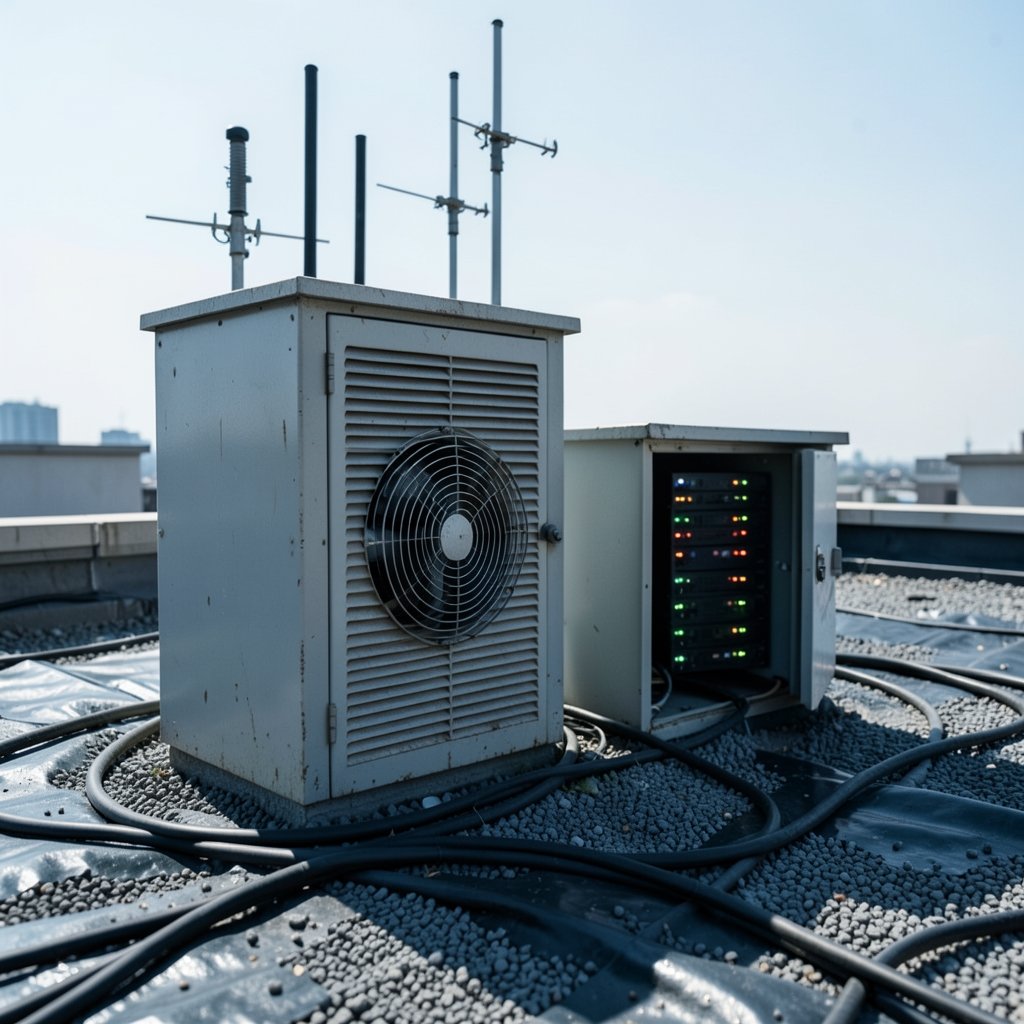
Before weighing benefits, it helps to be precise about the architecture. Edge computing pushes computation, storage, and networking closer to the devices and users producing data. That could mean a gateway in a factory, a small server in a retail store, or a compute node in a cell tower.
The contrast with the traditional model is stark. In a centralized setup, a sensor reading travels across the wide area network to a hyperscale facility, gets processed, and the result travels back. In an edge setup, much of that round trip disappears. For a deeper technical comparison of the paradigms, see this breakdown of quantum computing vs classical computing, which uses a similar centralized-versus-distributed lens to explain architectural trade-offs.
That physical proximity is the root of nearly every benefit below. It is also the root of nearly every cost.
Benefit 1: Dramatically Lower Latency

Latency is the headline benefit, and for good reason. A round trip to a distant cloud region can add tens to hundreds of milliseconds depending on distance and network conditions. For applications like industrial robot control, augmented reality, or collision avoidance, that delay is the difference between working and failing.
Processing locally cuts the round trip to single-digit milliseconds in many deployments, though actual figures vary enormously by workload and hardware. The magnitude of the gain depends far more on your network topology than on the edge hardware itself.
A common mistake here: teams buy edge servers expecting magic, then discover their latency problem was actually a poorly designed application layer, not distance. Measure first. Profile where time is actually spent before assuming geography is the culprit.
Benefit 2: Bandwidth and Backhaul Savings
Modern sensors are chatty. A single high-definition camera can stream several megabits per second, and a factory floor might have hundreds. Sending raw footage to the cloud for analysis burns backhaul capacity fast.
Edge processing flips the economics. Instead of transmitting raw video, the edge node runs inference locally and sends only metadata: “one defective unit detected at 14:32.” Bandwidth drops by orders of magnitude.
| Approach | Data Sent to Cloud | Typical Use Case |
|---|---|---|
| Raw streaming | Full video/sensor feed | Archival, later model training |
| Edge-filtered | Events and metadata only | Real-time monitoring, alerts |
| Hybrid | Summaries plus sampled raw data | Analytics with audit needs |
The hybrid row is where most mature deployments land. Pure edge filtering saves the most bandwidth but can starve you of data for retraining models later. A practical tip: always keep a rolling buffer of raw samples at the edge, even if you do not ship it by default. You will want it when a model starts drifting.
Benefit 3: Resilience and Offline Operation
Centralized architectures have a single point of failure: the network link. When a WAN connection drops, cloud-dependent systems go dark. Edge nodes can keep operating autonomously, syncing when connectivity returns.
This matters enormously in remote industrial sites, mining operations, ships, and agricultural deployments where connectivity is intermittent by nature. A conveyor-belt anomaly detector that needs a cloud round trip to raise an alarm is a liability. One that runs locally is an asset.
The practical lesson from real deployments: design for graceful degradation from day one. Decide explicitly which functions must survive a disconnection, and test that path regularly. Teams that only test the connected path discover their offline logic is broken at the worst possible moment.
Benefit 4: Data Sovereignty and Compliance
Keeping data local can simplify compliance with data residency rules. Regulations in many jurisdictions restrict where personal data can be stored or processed, and edge processing can keep sensitive information within a defined boundary.
That said, compliance is rarely as simple as “data stays on site.” Edge devices still need management, updates, and monitoring, which often means some data flows outward. Legal teams should map exactly what leaves each site before assuming edge architecture solves a residency problem outright.
Benefit 5: Cost Shifts, Not Always Cost Savings
Here the picture gets murky, and honest coverage has to say so. Edge computing can reduce cloud egress fees and backhaul costs. But it introduces distributed infrastructure: more hardware, more physical sites, more things to patch, and more ways for configuration to drift.
The net financial effect is workload-dependent, and vendor case studies tend to overstate savings relative to independent analysis. The pattern that actually works in practice is selective placement: run latency-critical and bandwidth-heavy workloads at the edge, and keep heavy analytics, long-term storage, and model training centralized where economies of scale are real.
A common failure mode is “edge everywhere” enthusiasm. Companies distribute workloads that had no latency or bandwidth justification, then drown in operational overhead. Start with the two or three workloads where proximity demonstrably matters. For a broader look at how distributed processing is evolving, this overview of what edge AI is and how it works explains how inference models get deployed to constrained devices.
Benefit 6: Security Trade-Offs That Cut Both Ways
Security claims around edge computing deserve skepticism in both directions. On one hand, keeping sensitive data local reduces the volume of information crossing public networks. On the other hand, every edge node is a new attack surface, often physically accessible and harder to patch than a hardened data center.
The honest summary: edge computing changes the security profile rather than uniformly improving it. Distributed nodes need device identity, encrypted storage, secure boot, and remote attestation. Organizations that treat edge devices as disposable appliances tend to learn hard lessons. The Wikipedia entry on edge computing offers useful background on the architectural models and standardization efforts behind these deployments.
What Actually Works in Practice
After the theory, the operational reality. A few patterns separate successful edge rollouts from expensive experiments.
Start with a measurement, not a vendor pitch. Document your actual latency, bandwidth, and cost baselines before deploying anything. If the numbers do not justify edge placement, do not place it there.
Treat edge nodes as a fleet, not as individual devices. Remote management, over-the-air updates, and centralized observability are non-negotiable. The moment you have more than a handful of sites, manual management collapses.
Plan for model and software lifecycle. Edge deployments often outlive the teams that built them. Versioning, rollback, and staged rollout matter as much as the inference performance.
Budget for the boring parts. Power, cooling, physical security, spare hardware, and field service visits rarely appear in the exciting pilot. They dominate the total cost of ownership.
Watch the standards landscape. Industry groups have spent years formalizing multi-access edge computing specifications. Aligning with established frameworks early saves painful re-architecture later. For readers tracking adjacent hardware trends, this piece on neuromorphic computing explores chip designs that may eventually reshape what edge devices can do.
Where Edge Computing Fits Alongside the Cloud
The most useful mental model is not “edge versus cloud.” It is a continuum. Training large models, running business analytics, and archiving data remain cloud strengths. Inference close to users, real-time control loops, and local data reduction are edge strengths.
This division of labor mirrors how other computing paradigms are being positioned. Just as quantum computing and classical computing are expected to coexist rather than replace one another, edge and cloud architectures are converging into hybrid designs where each layer does what it does best. The same logic applies to how quantum computing could change artificial intelligence over time: new capability layers get added, not swapped in wholesale. (Edge computing)
Conclusion
Edge computing delivers real, measurable benefits: lower latency, reduced bandwidth consumption, resilience during outages, and better control over where sensitive data lives. Those benefits are strongest for applications with hard timing requirements or heavy data volumes, and weakest for general-purpose workloads that already run comfortably in centralized clouds.
The discipline that separates success from failure is selectivity. Measure before you deploy. Distribute only the workloads that justify proximity. Invest heavily in fleet management and lifecycle tooling. And stay skeptical of savings claims that ignore operational overhead. Edge computing is not a universal upgrade. It is a precision tool, and like any precision tool, its value depends entirely on whether you are using it for the right job.
Frequently Asked Questions
What are the main benefits of edge computing?
The most defensible benefits are lower latency, reduced bandwidth and backhaul usage, continued operation during network outages, and greater control over data locality for compliance purposes. Cost savings and security improvements are possible but depend heavily on the specific deployment and should be evaluated case by case rather than assumed.
Is edge computing always faster than cloud computing?
For workloads where network round-trip time is the bottleneck, yes, often dramatically. But if an application’s slowness comes from inefficient code, database queries, or model complexity, moving it to the edge will not fix the problem. Profiling the actual source of delay before choosing an architecture is essential.
Does edge computing replace the cloud?
No. Most mature architectures are hybrid. Edge nodes handle latency-sensitive inference, local control, and data reduction, while centralized cloud infrastructure handles model training, long-term storage, business analytics, and fleet management. The two layers complement each other rather than compete.
Is edge computing more secure than cloud computing?
It is different, not automatically better. Local processing reduces data movement across public networks, but distributed edge nodes expand the attack surface and are often physically accessible. Strong device identity, encryption, secure boot, and remote patching are required to make edge deployments genuinely secure.
What kinds of companies benefit most from edge computing?
Organizations with hard real-time requirements, large sensor data volumes, or unreliable connectivity see the clearest returns. That includes manufacturing, autonomous vehicles, healthcare monitoring, retail analytics, and remote industrial operations. Companies with modest data volumes and no latency constraints usually gain little.
How do you start an edge computing project without wasting money?
Begin with a measured baseline of latency, bandwidth, and cost for a specific workload. Pick one or two use cases where proximity demonstrably matters. Build remote management and observability from the start, and budget explicitly for hardware maintenance, field service, and lifecycle management, which frequently dominate long-term costs.
The final consideration is organizational rather than technical: edge deployments succeed when ownership is explicit. Assign a named team to the edge fleet, define service-level targets for update latency and node availability, and review them on the same cadence as cloud infrastructure. Treat edge capacity as a managed resource with quotas and cost attribution, not as an unmonitored side project. Document the decision record for every workload placed at the edge, including the latency or bandwidth measurement that justified it, so future teams can revisit those choices as conditions change. Revisit placements annually; networks improve, models shrink, and what required edge processing two years ago may run perfectly well centrally today. Edge computing rewards disciplined operators and punishes enthusiasm without measurement. Approach it as an engineering decision grounded in data, and the benefits described throughout this article become durable rather than promotional.



