
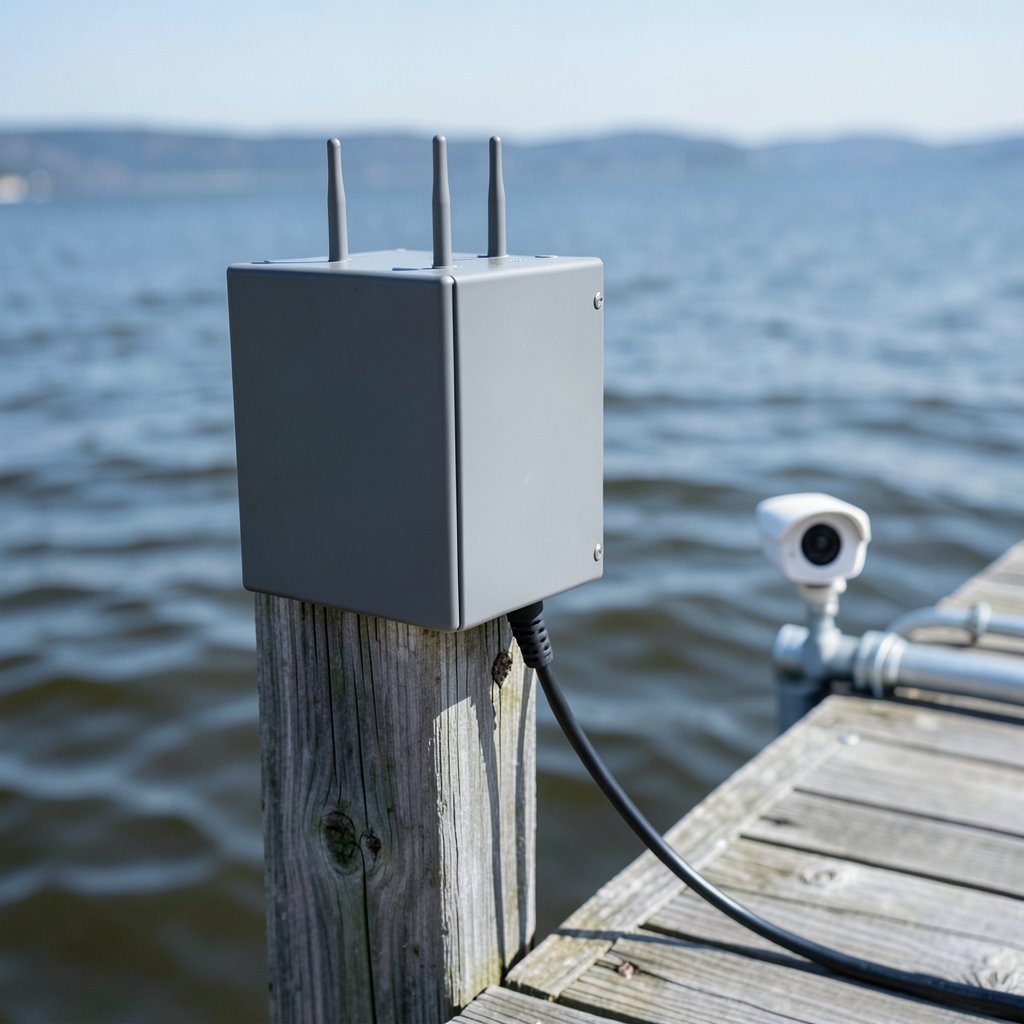
A self-driving car has roughly 100 milliseconds to react to a child stepping into the road. A round trip to a distant data center can eat most of that budget before a single decision is made. That gap between what physics allows and what centralized cloud delivers is exactly where cloud edge orchestration earns its keep. It is the discipline of coordinating workloads across many small, distributed locations instead of one big region, and the benefits reach well past raw speed. This article walks through what those benefits actually are, where they break down in practice, and what teams commonly get wrong when they first try it. (NIST Cloud Computing Program)
What cloud edge orchestration actually means
Cloud edge orchestration is the automated placement, deployment, scaling, and lifecycle management of applications across edge nodes, on-premises hardware, and central cloud regions, all treated as one coordinated system. Think of it as the control plane that decides which workload runs where, keeps configurations in sync, and reroutes traffic when a node fails.
The word orchestration matters. Running a container on a single edge box is easy. Running hundreds of them across retail stores, cell towers, factory floors, and vehicles, with consistent policy and observability, is the hard part. That coordination layer is what turns scattered hardware into something that behaves like infrastructure.
If the underlying concepts feel fuzzy, it helps to separate the pieces. A primer on what is edge AI and how does it work covers the inference side, while what is AI orchestration explains how models and pipelines get scheduled. Cloud edge orchestration sits above both, managing the environments they run in. (Edge computing)
The core benefits, ranked by real-world impact

Latency reduction that changes what is possible
The headline benefit is proximity. When compute sits near the user or device, round-trip time drops, and applications that were previously impractical become viable: real-time video analytics, augmented reality overlays, industrial safety cutoffs, and interactive gaming.
The detail most teams miss is that latency depends on more than distance. Queuing, TLS handshakes, and cold starts often dominate. Edge orchestration helps because it keeps workloads warm and pre-positioned, so the expensive setup work happens before a request arrives. Speed comes from preparation, not proximity alone.
Bandwidth and backhaul savings
Sending every raw sensor reading to a central region is expensive. Edge processing can filter, aggregate, and summarize locally, so only meaningful events travel upstream. A camera that uploads one alert instead of 24 hours of footage saves enormous amounts of backhaul capacity.
Treat vendor bandwidth claims with caution. The savings are real, but they depend heavily on how much preprocessing you actually do. Teams that ship raw data to the edge and then forward it anyway see almost no benefit.
Resilience when the network drops
Edge nodes can keep operating when connectivity to the central cloud is lost. For retail point-of-sale, manufacturing lines, and field equipment, that local autonomy is often more valuable than latency gains. Orchestration makes this manageable by syncing state when the link returns rather than requiring manual intervention.
Data sovereignty and compliance
Regulations increasingly require that certain data stays within a jurisdiction or on-premises. Edge orchestration lets teams apply policy per location, keeping sensitive data local while still managing deployments centrally. This is a governance benefit as much as a technical one.
How edge orchestration compares to centralized cloud
| Dimension | Centralized cloud only | Cloud edge orchestration |
|---|---|---|
| Typical latency | Higher, distance-dependent | Lower, proximity-based |
| Bandwidth use | All data travels upstream | Local filtering reduces backhaul |
| Offline behavior | Fails without connectivity | Nodes can operate autonomously |
| Operational complexity | Lower, fewer locations | Higher, many distributed sites |
| Compliance control | Central, coarse-grained | Per-location policy enforcement |
| Cost profile | Predictable egress and compute | Lower egress, higher hardware and ops |
The table makes the trade-off obvious: you trade operational simplicity for responsiveness and control. That trade is worth it for some workloads and clearly not for others. A nightly batch reporting job does not need an edge node. A robotic arm safety loop does.
For a broader comparison of how the major platforms structure their regional footprints, a look at AWS vs Azure vs Google Cloud 2026 is useful context, since each provider approaches edge placement differently.
Where the benefits show up in practice
Manufacturing and industrial control
Factory floors are a natural fit. Machines generate high-frequency telemetry, and control loops cannot tolerate variable network delay. Edge orchestration keeps inference and control logic on-site while pushing aggregated metrics to the cloud for long-term analysis. The practical win is fewer line stoppages and faster fault detection.
Retail and hospitality
Store networks are unreliable. An orchestrated edge deployment can keep point-of-sale, inventory lookup, and loss-prevention analytics running during outages, then reconcile with the central system later. The mistake teams make here is underestimating physical logistics: someone has to install, power, and service those boxes.
Telecommunications
Carrier networks have driven much of the standards work around edge computing, defining how compute is placed at network edges to serve mobile users. Orchestration in this context has to handle multi-tenancy and strict service guarantees, which is a different problem from running a few containers in a store.
Healthcare and remote monitoring
Processing patient monitoring data locally reduces exposure of sensitive information and keeps alerts fast. Compliance requirements make the local-processing model attractive, though audit trails and central oversight still matter.
The practical playbook: what actually works
Getting value from edge orchestration is less about picking a platform and more about sequencing the work. Here is the order that tends to hold up:
- Start with one workload and one location type. Prove the pattern on a single use case, like video filtering at a handful of sites, before expanding.
- Define the failure model first. Decide what each node does when it loses connectivity, and test that path deliberately.
- Automate provisioning end to end. If installing a new site requires a human to run commands, you will not scale past a dozen locations.
- Instrument everything from day one. Distributed systems fail in distributed ways; without centralized logs and metrics, debugging becomes guesswork.
- Set a data retention policy per site. Local storage fills up quietly and becomes a compliance problem later.
- Model total cost including operations. Hardware, power, physical access, and field support often dwarf the compute bill.
That last point deserves emphasis. The most common mistake is comparing cloud egress costs against edge hardware costs and declaring a winner. The real comparison includes the technician who drives to a site when a node fails. The cheapest architecture on paper is rarely the cheapest to operate.
Common mistakes that erode the benefits
Treating edge nodes like tiny cloud regions. They are not. Power, cooling, and physical security are all constrained. Workloads need to be sized accordingly.
Skipping the sync design. Teams often assume connectivity is mostly available, then discover that state reconciliation after an outage is the hardest part of the system.
Over-centralizing observability. If every log line travels upstream, you rebuild the bandwidth problem you were trying to solve. Sample and aggregate locally.
Ignoring update mechanics. Pushing a bad configuration to 500 sites at once is a career-defining event. Staged rollouts and automatic rollback are not optional.
Forgetting the storage layer. Edge nodes accumulate data. A clear policy on what cloud storage is and how it works helps teams decide what stays local, what syncs, and what gets deleted. Comparing options in a best cloud storage services comparison is a reasonable starting point for the central tier.
Cost and complexity: the honest trade-off
Edge orchestration adds a control plane, a fleet of physical locations, and a new class of failure modes. In exchange, it can cut bandwidth spend, reduce latency-sensitive infrastructure, and avoid some regulatory friction.
The break-even point depends on workload mix. Organizations with heavy video, telemetry, or real-time interaction tend to see returns quickly. Organizations running mostly batch analytics usually do not. It is worth modeling both scenarios before committing, and worth revisiting the model after the first year, because the operational costs are the ones that surprise people.
There is also a skills dimension. Distributed systems demand engineers comfortable with eventual consistency, partial failure, and network partitions. Teams without that experience should budget for training or managed services rather than assuming the platform handles it.
How to measure whether it is working
Vanity metrics like “number of edge nodes deployed” tell you nothing. Useful measures include:
- p95 and p99 latency for user-facing interactions, compared against the pre-edge baseline
- Backhaul volume per site, tracked monthly
- Offline uptime, meaning how long nodes keep serving when disconnected
- Mean time to deploy a new site or update a workload
- Field intervention rate, or how often someone has to physically visit
If latency improves but field interventions double, the program is not succeeding. The metrics have to be read together.
Conclusion
Cloud edge orchestration is not a universal upgrade. It is a targeted response to specific constraints: physics, bandwidth, connectivity, and regulation. Where those constraints bind, the benefits are substantial and durable. Where they do not, the added complexity is pure overhead.
The teams that succeed tend to start small, design for failure from the beginning, and count operational costs honestly. They treat the edge as a fleet to be managed rather than a set of servers to be installed. That mindset, more than any particular platform choice, is what determines whether the promised benefits actually materialize.
Frequently asked questions
What is cloud edge orchestration in simple terms?
It is the automated system that decides which applications run at distributed edge locations versus the central cloud, then deploys, updates, and monitors them across all those locations as one coordinated fleet. Think of it as a traffic controller for workloads spread across many sites.
What are the main benefits of edge orchestration?
Lower latency from proximity, reduced bandwidth and backhaul costs through local filtering, continued operation when connectivity fails, and finer control over data residency and compliance. Operational simplicity is usually the trade-off.
Does edge orchestration replace the cloud?
No. Most implementations are hybrid: edge nodes handle latency-sensitive or data-sensitive work locally, while the central cloud handles aggregation, long-term storage, model training, and fleet management. The two layers complement each other.
Is edge orchestration only for large enterprises?
Not necessarily, but it scales better for organizations with many distributed sites or strict latency needs. Smaller teams often start with a managed service and a single workload to avoid building a control plane from scratch.
What is the biggest mistake when adopting edge orchestration?
Underestimating operations. Hardware failures, physical access, power issues, and update rollbacks consume far more effort than the initial deployment. Teams that plan for field maintenance and staged rollouts fare much better.
How do you measure success for an edge deployment?
Track latency percentiles against a pre-edge baseline, backhaul volume per site, offline uptime, deployment speed for new locations, and how often someone must physically intervene. Read them together, since improving one metric at the expense of another usually signals a problem.
A final consideration is organizational, not technical: ownership. When edge infrastructure spans operations, IT, and security teams, unclear ownership is how programs stall. Assign one accountable owner for the fleet, agree on service levels up front, and document who responds when a node at 2 a.m. goes dark. The platform is the easy part; the operating model is what sustains the benefits.



