
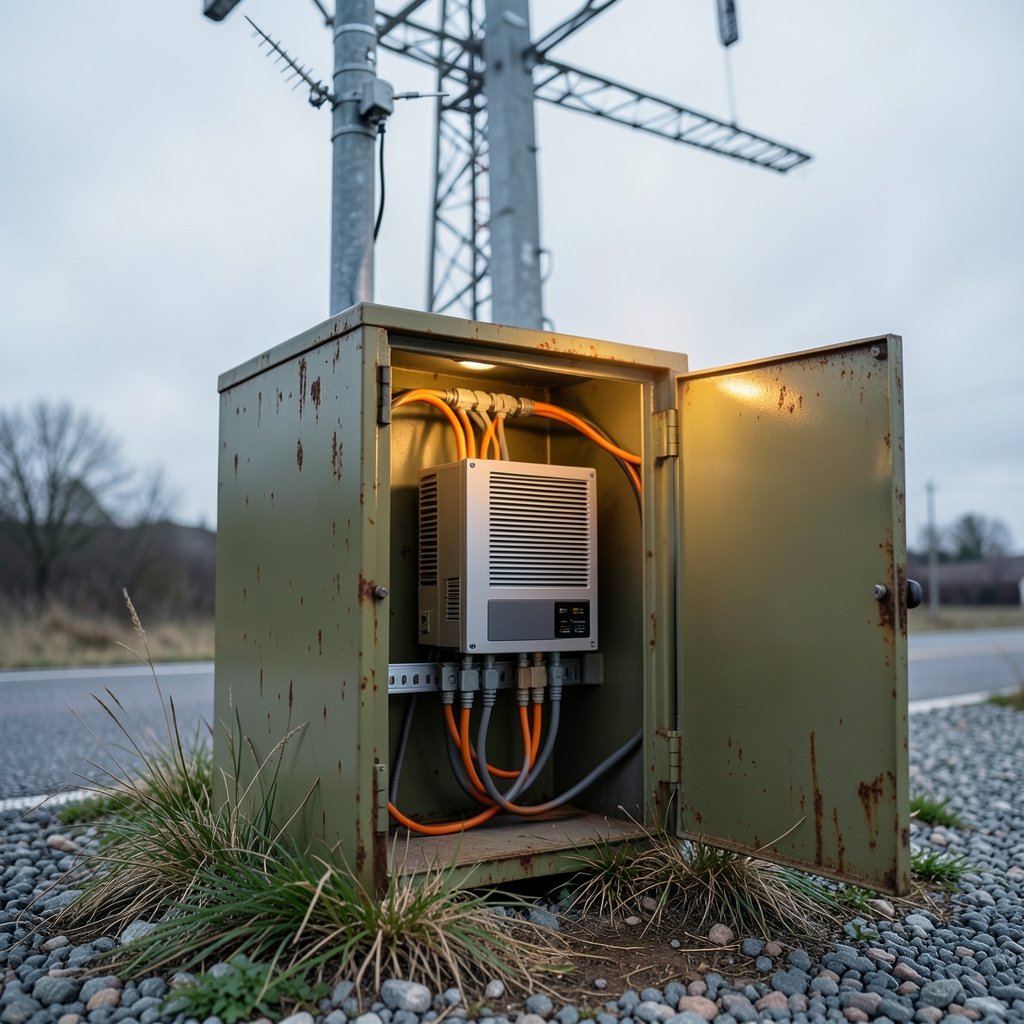
Quick Answer: What is edge computing and how does it work in simple terms?
Edge computing is a way of processing data close to where it is created instead of sending everything to a distant data center. In simple terms, a nearby device, gateway, or local server handles the urgent work, and only the summarized results travel to the cloud for storage, training, and coordination. It differs from cloud computing, which centralizes processing, and from fog computing, which some sources describe as a middle layer between the two. Before choosing an approach, compare latency needs, bandwidth costs, privacy and data-locality rules, connectivity reliability, and how much local hardware you can maintain.
Here is a fact that surprises almost everyone: a self-driving car can generate several terabytes of data in a single day of driving. Shipping all of that to a faraway server and waiting for an answer would be absurd. The car needs to spot a child stepping into the road right now, not after a round trip across the internet. That gap between “right now” and “eventually” is exactly where edge computing lives.
The idea itself is refreshingly simple. Instead of hauling every byte to a giant data center, you do the thinking near the source. It is less about exotic hardware and more about a sensible question: why send data on a long journey when a short one will do?
Where the Edge Actually Begins
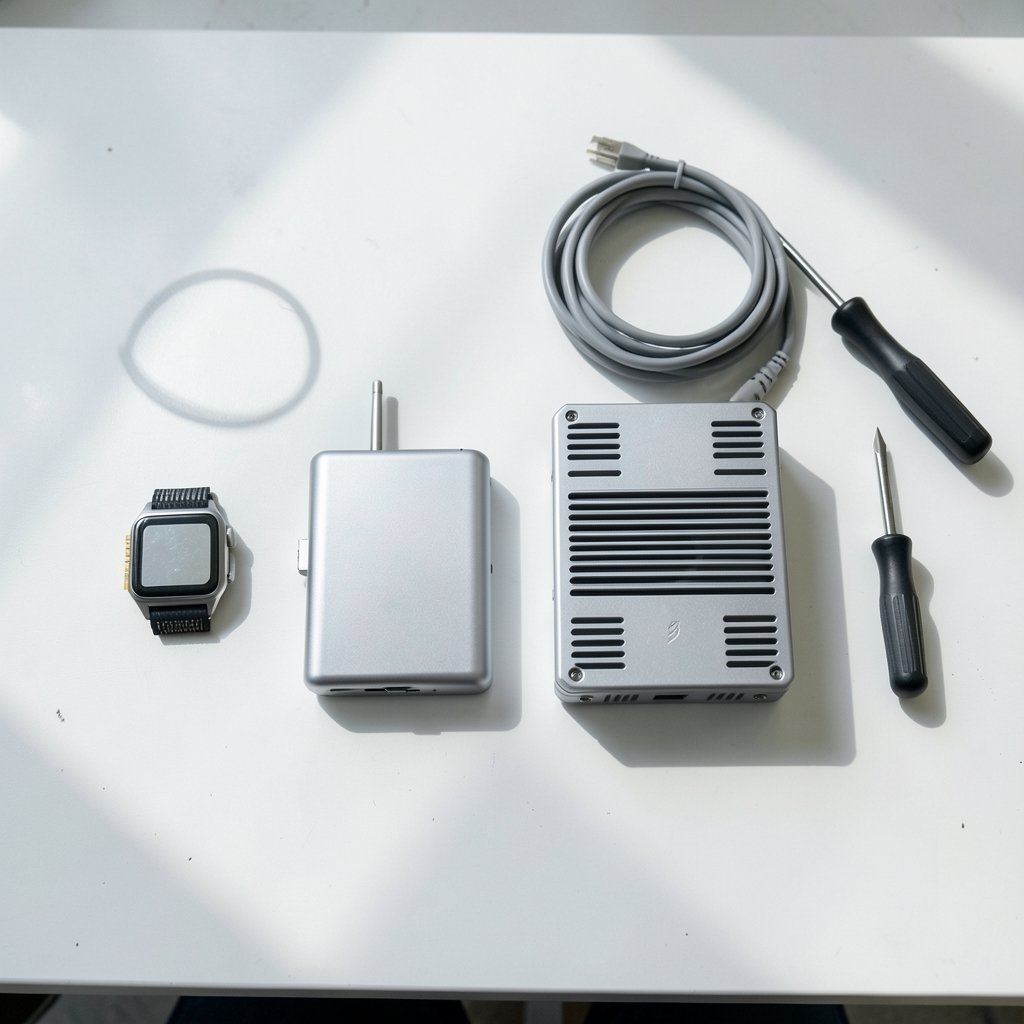
Ask ten engineers where “the edge” starts and you may get ten answers. That ambiguity is real, and it is worth naming up front. Some define the edge as the device itself, like a sensor or a phone. Others point to a cell tower or a gateway in a factory. Still others count a small local data center at the base of a cell mast.
All of these are defensible. The common thread is distance: the edge is anywhere data gets handled before it crosses a long network link. A useful mental model is a spectrum. On one end sits the tiny chip inside a smartwatch. On the other sits the sprawling cloud region hundreds of miles away. Edge computing covers everything in between that shortens the trip.
This also explains the confusing overlap with fog computing. Some sources treat fog as a layer sitting between the edge and the cloud, while others use the two terms almost interchangeably. If a vendor’s marketing material uses either word, ask them to draw their architecture. The diagram usually clears things up faster than the glossary.
How Edge Computing Works, Step by Step
The architecture follows a repeating pattern. It is worth walking through it because once you see the flow, the whole concept clicks.
- Devices generate data. Sensors, cameras, machines, and phones produce a constant stream of readings, images, and events.
- A nearby edge node handles the first pass. This could be a gateway, a router, a micro-server, or a chip inside the device itself. It filters noise, aggregates readings, or runs a trained model to make an instant decision.
- Only what matters travels onward. Urgent alerts and summarized results go to the cloud. Raw video of an empty hallway usually stays local.
- The cloud does the long-term work. It stores history, trains and retrains models, coordinates many sites, and pushes updated rules back down to the edge.
Think of it like a restaurant kitchen. The line cook plates the dish and sends it out immediately. The head office handles payroll, supplier contracts, and menu design. Nobody asks headquarters to season the soup.
This split is why edge computing pairs so naturally with modern AI. Running inference on-device is a close cousin of the technology behind how AI image generation works, where trained models turn inputs into outputs without a human in the loop. The same principle applies to a camera spotting a defective part on an assembly line: the model runs locally, and only the verdict travels.
Why Latency, Bandwidth, and Privacy Drive the Shift
Three forces push organizations toward the edge, and each one is practical rather than trendy.
Latency is the delay between a request and a response. For industrial control, autonomous vehicles, and augmented reality, even a fraction of a second matters. A robot arm that waits for a distant server before stopping is a safety problem, not a convenience one.
Bandwidth costs money. A factory with hundreds of high-definition cameras can drown a network link in raw footage. Filtering locally cuts the bill dramatically, because you pay to move conclusions rather than noise.
Privacy and data-locality rules add a third push. Some regulations require certain data to stay within a region or even on-site. Processing locally makes compliance far easier than negotiating a cross-border transfer for every sensor reading. For a deeper look at how data moves across networks in the first place, it helps to understand what an IP address is and how it works, since addressing and routing shape what “local” even means.
Intermittent connectivity is the quiet fourth driver. Farms, ships, mines, and remote pipelines cannot assume a stable uplink. An edge node keeps working when the connection drops, then syncs when it returns.
Edge vs. Cloud: A Practical Comparison
The two are partners, not rivals. The table below shows where each one earns its keep.
| Factor | Edge Computing | Cloud Computing |
|---|---|---|
| Response time | Milliseconds, locally | Depends on network distance |
| Bandwidth use | Low, filtered data only | High, raw data often uploaded |
| Data locality | Strong, data stays nearby | Data crosses regions |
| Scalability | Grows site by site | Grows in large centralized pools |
| Upfront hardware | Needed at each site | Minimal at the site |
| Best for | Real-time control, privacy, offline work | Storage, training, coordination, analytics |
A common mistake is treating edge as a replacement for the cloud. In practice, most successful deployments run both. The edge handles the reflexes; the cloud handles the memory and the learning.
Real-World Examples You Can Recognize
Edge computing already surrounds people without announcing itself.
Smart factories run vision checks at the machine, rejecting bad parts in milliseconds. Retail stores process video locally to count foot traffic without streaming footage off-site. Vehicles make split-second decisions on-board. Hospitals analyze monitoring data at the bedside so alerts fire instantly and patient data stays inside the building.
The pattern repeats: a task that cannot tolerate delay, or cannot afford to ship raw data, moves closer to the source. Even consumer gadgets follow the logic. A phone that recognizes a face unlock locally is doing edge computing, and it is the same underlying idea that powers what is edge AI and how does it work when the model itself lives on the device.
It is also worth noting where this trend is heading. As chips shrink and models get more efficient, more intelligence moves outward. The long-term trajectory of distributed systems, including ambitious ideas like latest breakthroughs in quantum computing, keeps pushing toward specialized hardware handling specialized jobs in specialized places. Edge computing is the practical, shipping version of that instinct.
What Actually Works in Practice
Plenty of edge projects stall, and the reasons are rarely exotic. The failures tend to cluster around a few predictable mistakes.
Overbuilding the first site. Teams often install powerful edge servers before knowing what workloads they need. A modest gateway running one well-chosen model usually beats a rack of idle hardware. Start small, measure, then expand.
Forgetting remote management. A hundred edge nodes scattered across sites become a nightmare if each one needs a technician to update it. Plan for remote deployment, monitoring, and rollback from day one. This is the single most common oversight.
Ignoring the physical world. Edge gear lives in hot cabinets, dusty warehouses, and unheated sheds. Industrial-rated hardware costs more up front and saves far more later. A consumer-grade box in a factory will fail, and it will fail at the worst moment.
Skipping the data diet. Sending everything “just in case” defeats the purpose. Decide at the design stage what gets filtered, what gets summarized, and what gets kept. Teams that skip this step end up with the same bandwidth bill and a more complex system.
Neglecting security at the edge. Every remote node is a potential entry point. Physical access, outdated firmware, and default passwords are recurring weaknesses. Treat each device as untrusted until proven otherwise.
What works, consistently, is boring discipline: a clear latency target, a small pilot, remote management built in, and a plan for what happens when the network goes down. The technology is mature enough that success is mostly about execution rather than novelty.
The Practical Trade-offs Nobody Mentions
Edge computing is not free. Each site needs hardware, power, cooling, and someone to maintain it. Software updates must roll out safely across many locations. Debugging a problem that only appears on one gateway in one warehouse is harder than debugging a centralized service.
There is also a skills gap. Cloud engineers are plentiful; people who can design a resilient distributed system across dozens of physical sites are less so. Budget for training, or the project will quietly stall after the pilot.
None of this argues against the edge. It argues for honesty about scope. The organizations that succeed treat edge computing as an operational commitment, not a one-time purchase.
Conclusion
Edge computing is best understood as a matter of geography and timing. Data gets processed near where it is born, urgent decisions happen in milliseconds, and only the useful summary travels to the cloud. The cloud still matters enormously. It stores, learns, and coordinates. The edge simply handles the reflexes.
The concept is not new, and it is not magic. It is a sensible response to three stubborn facts: light takes time to travel, bandwidth costs money, and some data should never leave the building. Once you see the pattern, you start noticing it everywhere, from the phone in your pocket to the robot on the factory floor. The organizations that get it right are rarely the ones with the flashiest hardware. They are the ones that started small, planned for remote management, and respected the physical world their devices actually live in.
Frequently Asked Questions
Is edge computing the same as cloud computing?
No. Cloud computing centralizes processing in large data centers, while edge computing processes data near where it is created. Most real deployments use both together: the edge handles fast, local decisions, and the cloud handles storage, model training, and coordination across many sites.
Do I need special hardware to run edge computing?
It depends on the workload. A simple filtering task might run on an existing gateway or router. Running AI models locally usually calls for hardware with a capable processor or accelerator, often industrial-rated if it lives in a harsh environment. Starting with modest, proven hardware and scaling up after measurement is the safer path.
How does edge computing reduce latency?
Latency drops because data travels a shorter physical distance. Instead of crossing the internet to a distant data center and back, a local node responds in milliseconds. For applications like industrial control or vehicle safety, that difference is the gap between a working system and an unusable one.
Is edge computing more secure than cloud computing?
Not automatically. Keeping data local can reduce exposure and simplify compliance with data-locality rules, but every remote device is also a potential entry point. Physical access, outdated firmware, and weak credentials are common risks. Security depends on how the deployment is designed and maintained, not on location alone.
What kinds of businesses benefit most from edge computing?
Organizations with latency-sensitive operations, expensive bandwidth, strict data rules, or unreliable connectivity see the clearest gains. Factories, hospitals, retailers, farms, logistics firms, and vehicle makers are frequent adopters. A business with none of those pressures may find centralized cloud processing simpler and cheaper.
Can edge computing work without an internet connection?
Yes, and that is one of its strongest selling points. An edge node can keep filtering data and making decisions while offline, then sync results once connectivity returns. This makes it valuable for ships, remote pipelines, farms, and any site where a stable uplink cannot be assumed.



