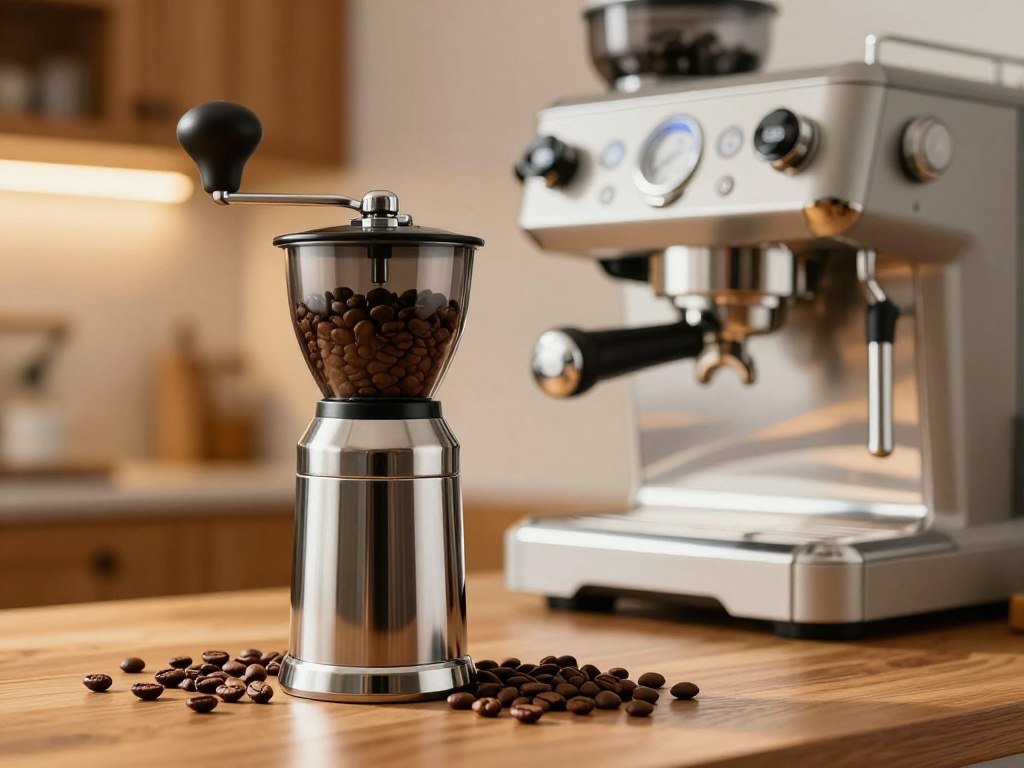
A capable grinder can make a bigger difference to a home espresso routine than a more elaborate machine when the grounds are inconsistent.
Consistent grounds help an espresso machine extract coffee at a controlled pace. A burr grinder crushes whole beans between two burrs to produce coffee grounds.
Espresso needs a grind fine enough for controlled extraction, but the right choice depends on budget, counter space, and brewing methods. You may make home coffee with espresso alone or share your grinder with drip and pour-over.
This shortlist covers electric and manual options for different routines. It can help you match grind settings and daily effort to the coffee you actually make.
Key Takeaways
- Choose an electric model for speed and a manual model for hands-on control.
- Check that the espresso range supports fine, repeatable adjustment.
- Pick a model built for espresso and filter if you make both.
- Think about counter space, bean storage, and how you dose each shot.
- Start by deciding whether espresso is your only brewing method or one of several.
Best Coffee Grinder for Espresso: Which Pick Fits Your Setup?
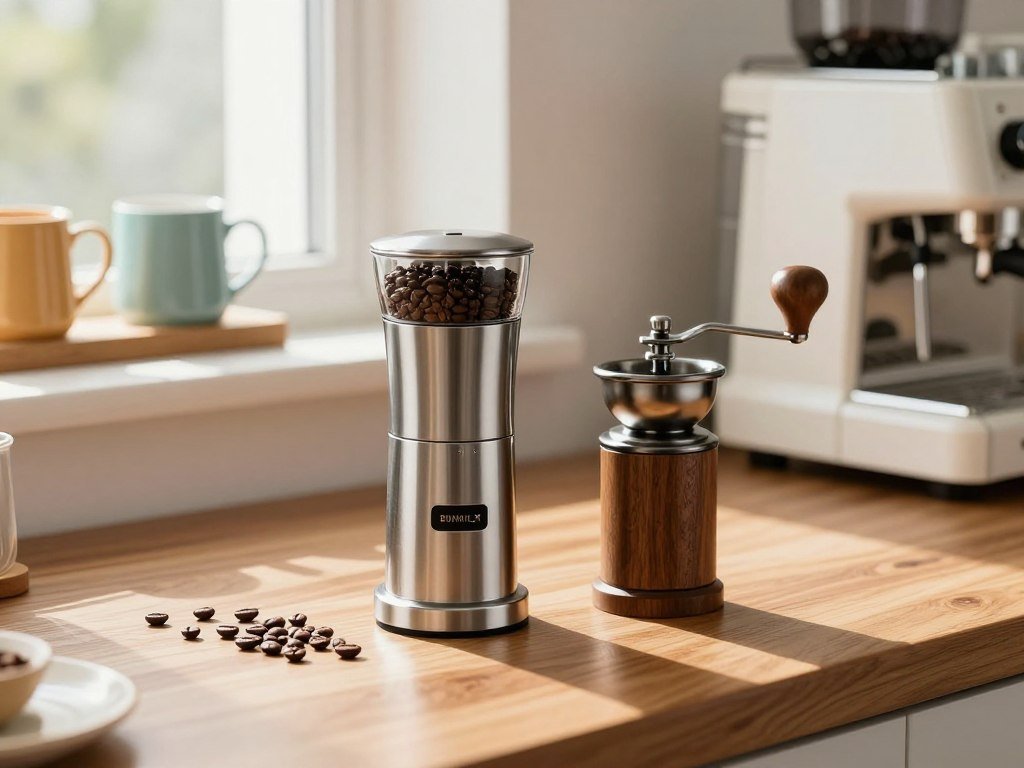
For most home users who want electric espresso and filter grinding, start with the DF54; choose the Encore ESP for an approachable entry-level electric setup or the J Ultra if you prefer hand grinding. Your routine matters more than a long feature list.
These are use-case matches, not a claim that one model wins for every home. The table compares coffee grinders by format, price, and intended use.
| Model | Format | Budget signal | Best-fit use |
|---|---|---|---|
| Kingrinder P2 | Manual | $45 in 2026 | Low-cost entry |
| Baratza Encore ESP | Electric | Around $200 | Entry-level espresso |
| DF54 | Electric | Sub-$300 category | Espresso and filter |
| 1Zpresso J Ultra | Manual | Below $200 RRP in 2026 | Manual espresso control |
| Breville Smart Grinder Pro | Electric | $199.95 | Hopper and display workflow |
The DF54 is the first electric espresso grinder to consider if you also make filter coffee. Its useful range covers both styles, so you avoid keeping separate coffee grinders for each method.
For a first electric setup, the Baratza Encore ESP gives espresso its own marked adjustment range. The J Ultra suits you better when you want to control each dose by hand.
Compare this home espresso grinder shortlist for more detail on electric and manual formats. Prices can differ between sellers, so treat the listed figures as budget signals.
A manual model can save counter space, but you supply the work for every shot. An electric grinder is easier when you make several drinks in a row.
Pick the format you will enjoy using every morning before comparing extra features.
How Much Should You Spend on an Espresso Grinder?
Around $200 is a reasonable target for a well-built home grinder, while a $45 manual option shows how low the entry point can be. Hands-on effort is the main trade-off at the lowest price.
Stretching toward $300 can open up more capable options, but you do not need to start there. The right grinder price depends on whether you want electric grinding, espresso control, or one tool for several brew styles.
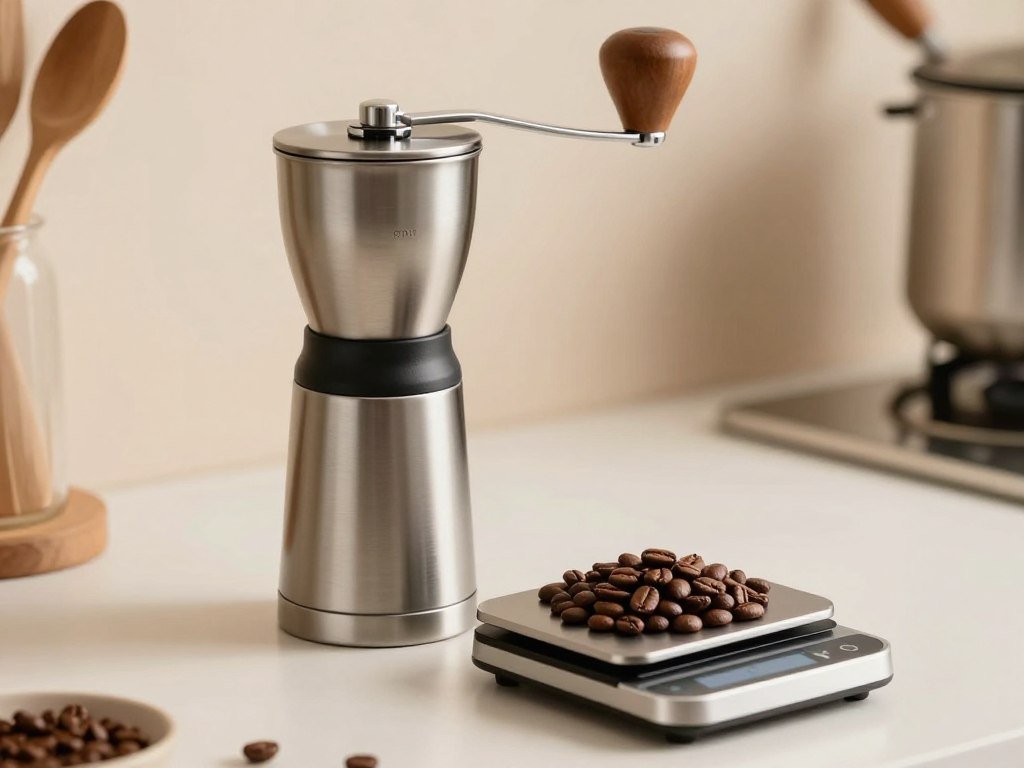
Use this three-step budget check before you shop:
- Below $50: expect a manual workflow and check espresso capability.
- Around $200: this is a sensible target for a well-built home grinder.
- Near $300: consider higher-performance options your routine can use.
The Baratza Encore ESP is a practical electric starting point for an affordable coffee grinder for espresso. It has an adjustment system intended to handle espresso, unlike every inexpensive grinder simply because it has burrs.
For the best coffee grinder under $50, the Kingrinder P2 was listed at $45 in 2026. That makes it an accessible manual choice, but a low purchase price does not prove it suits every espresso machine or routine.
Consider the cost of coffee beans and upkeep, not just the grinder itself. A model you use daily can be greater value than a cheaper tool that frustrates your workflow.
Also think about how many drinks you make at once. One shot each morning may make hand grinding easy to accept, while a busy household may value an electric grinder more.
Set aside part of the budget for a scale if you do not already weigh espresso doses.
Is the DF54 a Good Value for Espresso?
The DF54 is a compelling value candidate if you want an electric grinder in the sub-$300 category and do not need a long-established brand history. Its materials give the machine a solid feel.
The aluminum body has a powder-coated finish, which gives you a simple, durable-looking counter appliance. This grinder may suit you if you want electric single-dose grinding without moving into a higher price class.

Dialing in means changing grind size to improve an espresso shot. Use this short checklist to keep each test useful:
- Weigh a dose before grinding.
- Keep the coffee and machine constant during a test.
- Change grind size in small increments.
- Record the setting that works.
Small changes make it easier to tell whether the grind caused a faster or slower shot. If you change beans and the taste shifts, adjust one variable at a time.
Precise adjustment can take patience when you switch beans, especially when the new coffee reacts differently at the same setting. A short log can save you from repeating tests after a bag change.
The DF54 also fits a routine where you weigh beans for each brew instead of leaving a large supply in a hopper. That may appeal if you rotate between coffee beans rather than using one bag for weeks.
Fresh beans can need a new setting even when you keep the dose and machine steady. Keep your test simple, so you can tell which change affected the shot.
For more help choosing coffee for home espresso, compare the roast and flavor notes in this guide to espresso beans for home brewing.
Keep a brief note of the bean, dose, and grind setting for each successful recipe.
What Makes the Baratza Encore ESP a Beginner-Friendly Pick?
The Encore ESP is easier to approach than a general-purpose grinder because its adjustment range gives espresso its own clearly defined section. That clear split helps new users make repeatable changes.
Its adjustment system has 20 espresso clicks and 20 filter clicks, so you can move between fine espresso and coarser brewing without guessing which range you are using. The grinder was listed at around $200.

The Encore ESP uses an M2 burr, a part of the grinder that crushes coffee beans. Its labeled espresso range gives you a simple reference point while dialing in a shot.
The Baratza Encore is often considered for mixed home coffee, but this ESP version gives espresso a more focused adjustment system. A labeled range can make it less daunting to learn how small grind changes affect shot flow.
Espresso grounds can scatter when you move them into a portafilter. A dosing funnel sits on top of the basket and helps keep the grounds inside while you distribute them.
If you change beans, the same marked setting may not produce the same shot. Use the setting as a starting point, then make small adjustments as needed.
If your routine changes between espresso and filter, write down the setting for each method before switching.
Are Budget Manual Grinders Practical for Espresso?
A manual grinder can lower the entry cost, but it asks you to supply the effort for every dose. Time at the handle can matter as much as grind quality on a busy morning.
Choose a manual espresso grinder only if you accept its pace and hand work. Some models can grind fine enough for espresso, while others suit French press and other brewing methods better.
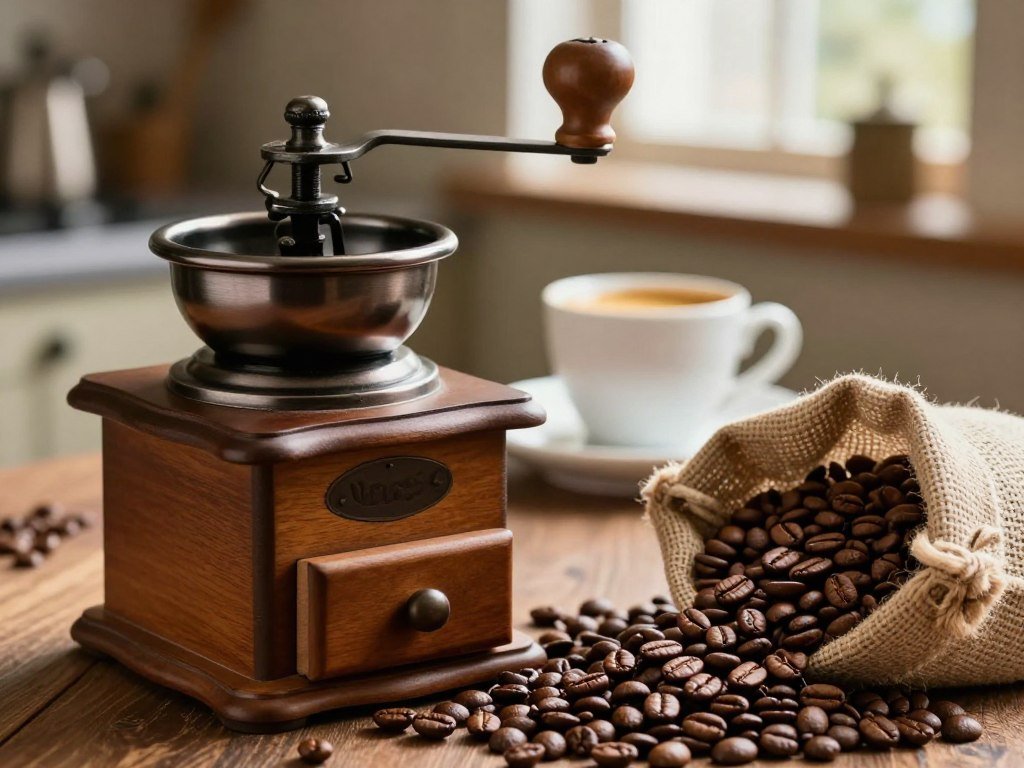
Kingrinder P2 for a low-cost starting point
The Kingrinder P2 was listed at $45 in 2026, making it a low-cost entry for someone willing to grind by hand. That price answers the under-$50 question, but it does not settle whether the grinder fits your setup.
Before choosing it, check that its adjustment suits your espresso machine and that you can repeat the dose workflow each day. A manual conical burr grinder can be practical for one shot, yet tiring if you make several.
Ask yourself whether you can hold the grinder steadily and turn the handle at a fine setting. Those small details shape whether the routine feels manageable after the novelty wears off.
1Zpresso Q Air when slower grinding is acceptable
The 1Zpresso Q Air can grind for espresso, though a 16g dose takes 60-70 seconds. That pace may work if you make one shot and value a small hand-powered routine.
It may feel slow if you prepare coffee for several people or want back-to-back shots before work. Hand grinding also adds effort when beans are hard to turn at a fine setting.
Do not judge manual coffee grinders by price alone. Your tolerance for the work, the number of daily doses, and the espresso setting range should all fit.
If you regularly prepare several back-to-back shots, compare grinding time as carefully as the purchase price.
Does the 1Zpresso J Ultra Offer Enough Espresso Control?
The J Ultra is the manual pick here for espresso drinkers who want very fine adjustment rather than a motorized workflow. Small steps can help you dial in a shot without large jumps.
Each click changes the setting by 8 microns across a functional range of around 365 clicks, giving you room to adjust for different coffees. Its listed RRP was below $200 in 2026.
The 1Zpresso J Ultra has 48mm titanium-coated stainless steel burrs. Its 40g capacity can cover more than one small dose, depending on how you brew.
The grinder is 2.2 inches wide at its widest point and weighs 24.7 ounces, or 700g. That weight may feel steady in your hand, though it is more to carry than a lighter travel grinder.
A 40g capacity gives you room for a larger brew, but you still need to turn the handle for every dose. This single-dose grinder works best when you value control enough to accept that routine.
Its fine adjustment can help when a small grind change makes a visible difference in shot flow. You can move one click, taste the result, and return to a known setting.
Check that the grinder’s size and hand-powered routine fit your counter and daily habits before choosing it.
Who Should Choose the Mavo Phantox Pro?
The Phantox Pro is the most specific recommendation for a buyer whose priority is light-roast espresso and who does not mind hand grinding. That roast focus makes it a selective choice.
It was the only grinder in Coffee Chronicler’s 2026 cheap-grinder roundup that its reviewer said handled light-roast espresso properly. That claim points to a particular use, not a universal win.
Hand grinding may suit you if you value the result and accept the physical work. It is less natural for traditional medium- or dark-roast espresso, where the Phantox Pro is not the strongest fit.
Its appeal also depends on whether you make more than espresso. One grinder can be useful across brewing methods, but you should still check whether the adjustment range covers your other drinks.
Use this three-point fit check:
- You prefer light-roast coffee beans for espresso.
- You are willing to grind by hand for each dose.
- You want one grinder for more than one brewing method.
The Phantox Pro is for a focused taste preference rather than someone who wants the easiest routine. If you mostly brew darker shots, a different espresso grinder may fit your daily cup better.
Match the grinder to the roast style you actually brew, not the one you may try someday.
Is the Eureka Mignon Specialita Worth Considering?
The Specialita is worth considering if you want a dedicated electric espresso grinder with flat stainless steel burrs. Its flat-burr design will appeal to buyers seeking this style.
It uses 55mm flat stainless steel burrs, a clear specification for comparing it with other coffee grinders. The burr size alone does not tell you how well it will fit your espresso routine.
The Eureka Mignon Specialita is a compact option for a home setup focused mainly on espresso. It may suit you if you want an electric grinder and do not plan to move between many brewing methods.
Think about how often you change beans or switch from espresso to filter. The adjustment style should let you return to your usual recipe without making each change a chore.
A dedicated espresso grinder can keep your counter routine simple when you make the same drink most days. If you often prepare drip coffee too, check that its range and workflow suit both uses.
No single burr measurement can predict the cup by itself. Compare the grinder’s control and the way you plan to dose, rather than treating diameter as a performance score.
Confirm that its adjustment style suits how often you switch between beans or brewing methods.
What Should You Know About the Sage Coffee Grinder?
In the US, the model to compare is the Breville Smart Grinder Pro, also known as the SCG820. Its display lets you choose a time or weight target.
The grinder has 60 grind settings and a 450g bean hopper, so it suits a routine where you keep coffee ready between uses. Its grounds bin holds around 230g.
The Breville Smart Grinder Pro uses 40mm conical steel burrs. Its settings give you a range for dialing in espresso and choosing coarser grind sizes.
The display shows grind time in 0.2-second increments or a weight target. A time setting lets you save a familiar dose routine, while a weight target offers another way to manage each grind.
The catch cup and bin are part of the daily workflow, so capacity matters if you grind several batches at once. The hopper can store beans between uses instead of requiring a fresh measured dose every time.
Although some buyers call it a Sage coffee grinder, the name used for this model in the US is Breville Smart Grinder Pro, SCG820. The listed price was $199.95.
Check whether the grounds bin and hopper capacities fit the amount you brew between refills.
Is the Shardor 64 a Good Base for Burr Upgrades?
The Shardor 64 makes the most sense as a modifiable platform for a buyer who is comfortable changing burrs. Its standard mount leaves room for a replacement burr set.
It has a standard 64mm burr mount and a motor that spins at around 500 RPM. That combination may attract a tinkerer more than someone seeking a polished grinder out of the box.
A complete chamber emptying left 0.5g of total retention and dead space. That result applies to the condition of fully emptying the chamber, not every dose or grind cycle.
Stock performance may disappoint if you expect a ready-to-use espresso grinder. Upgraded burrs add cost, and the complete setup can stop being a budget choice once you count both parts.
Changing a burr set also takes time and care. The platform makes more sense if you enjoy testing parts and can accept that the grinder may need work before it meets your preferences.
Do not treat the standard mount as a guarantee that every replacement will fit or improve your coffee. Match the chosen burr set to the grinder and the result you want.
Price the grinder and the burr upgrade together before deciding that this route saves money.
Who Is the Rancilio Rocky Best Suited To?
The Rocky is a candidate for buyers who want an electric flat-burr grinder and prefer to assess a grinder by workflow as well as burr size. Its specification is only one part of the choice.
The Rancilio Rocky uses 50mm flat stainless steel burrs, but diameter alone cannot predict cup quality. Check the settings and routine you need before treating that number as a buying answer.
Use this checklist to see whether it fits your home:
- Confirm that the adjustment range meets your espresso machine’s needs.
- Decide whether you want a hopper workflow.
- Consider whether you also brew coarser methods such as French press.
The Rocky may make sense if you prefer a straightforward electric grinder and brew espresso often. A broader home coffee routine calls for checking how easily you can move between fine and coarse settings.
Flat burrs are a useful feature to compare, but they do not tell you whether the grind settings are close enough for your espresso recipe. A grinder can have a familiar burr format and still feel awkward in use.
Make sure the adjustment mechanism gives you enough control for your espresso recipe before committing.
Can One Grinder Handle Both Espresso and Drip Coffee?
Yes, one grinder can handle espresso and drip when its useful adjustment range covers both fine espresso and coarser brewing. A true all-rounder needs enough range for both.
The DF54 is the primary electric example here, with 54mm flat burrs and espresso-and-filter use. Espresso and filter coffee need different grind ranges, so one machine must adjust across both.
Choose a true all-rounder for both brew styles
The DF54 is described as an espresso-and-filter grinder. It suits a home where espresso and drip both matter, rather than forcing you to choose one daily brew.
The Fellow Opus 2 has a 48mm burr and stepless adjustment. That setup gives it a versatile role across multiple brew methods, including espresso and filter styles.
| Model | Espresso suitability | Brew suitability | Useful detail |
|---|---|---|---|
| DF54 | Espresso and filter | Both | 54mm flat burrs |
| Fellow Opus 2 | Multiple brew methods | Versatile use | 48mm burr, stepless adjustment |
| Fellow Ode Gen 2 | Not designed for espresso | Brew-focused | 31 grind settings |
When a brew-only grinder is the better fit
The Fellow Ode Gen 2 is a brew-focused grinder with 31 settings, but it is not designed to grind finely enough for espresso. It can suit drip or pour-over when espresso is not part of your routine.
Industry discussion of burr design for espresso and filter explains how burr geometry can shape particle size and extraction. That is why a high setting count alone cannot prove a model covers both ranges.
Some coffee grinders work across brew styles, while others focus on one range. Check the intended use and adjustment travel before buying a grinder designed mainly for drip or pour-over.
If espresso is an occasional afterthought, verify the grinder’s espresso range before buying a brew-focused model.
Do Burr Type and Grind Settings Matter for Espresso?
Burr type and adjustment matter because espresso rewards fine, repeatable changes, but neither a flat nor a conical burr guarantees a better cup by itself. Repeatability is more useful than a large number on the dial.
A burr grinder crushes beans between burrs, while a blade grinder chops them less evenly. That difference matters when small grind changes affect the flow of an espresso shot.
Grind size usually moves from fine for espresso to medium for pour-over, then coarser for French press. A grinder needs enough adjustment to reach the range your brewing methods use.
The Baratza Sette 270 has 31 macro settings and a stepless micro-adjustment ring. Its larger steps set the broad range, while the ring helps you make smaller changes near a shot’s target.
The Fellow Ode Gen 2 uses stainless-steel flat burrs and focuses on brew coffee, not espresso. That example shows why burr shape does not tell you whether a grinder can reach a fine espresso setting.
Sympatec describes how labs measure coffee particle size with sieving and laser diffraction in its coffee particle-size analysis overview. At home, your practical test is whether changes produce repeatable shot flow and taste.
When comparing burr grinders, focus on the range you use most and how clearly you can repeat a setting. A blade grinder does not offer the same control over particle size.
Choose a setting system you can return to reliably after cleaning or changing beans.
Should You Choose Single Dosing or a Hopper Grinder?
Choose single dosing if you regularly switch beans or weigh every espresso dose, and choose a hopper workflow if you value repeatable timed batches. Your bean routine should guide the choice.
Single dosing makes bean changes simple, while a hopper suits a steady daily routine. Frequent changes between beans and grind sizes can make a hopper workflow less convenient.
Single dosing for frequent bean changes
A single-dose grinder loads one measured dose at a time, which helps when you rotate coffee beans. The Fellow Opus 2 holds 100g and stops after grounds clear the burrs.
The Oxo Compact holds 50g and has no dosing mechanism, so you switch it off by hand. The Fellow Opus 2 has a 2-year warranty.
| Model | Dosing approach | Capacity | Relevant workflow feature |
|---|---|---|---|
| Fellow Opus 2 | Single dose | 100g | Auto-stop after grounds clear |
| Baratza Encore ESP Pro | Single-dose or timed | Optional 300g hopper | Supports either workflow |
| Oxo Compact | Single dose or manual shutoff | 50g | No dosing mechanism |
Hopper dosing for a familiar daily routine
The Baratza Encore ESP Pro offers single-dose or timed dosing with an optional 300g hopper. Its 1-year warranty is shorter than the Fellow Opus 2 warranty.
A hopper grinder stores beans in a container, so you can grind from a supply instead of weighing each dose first. That can suit a steady routine, especially when the same coffee goes into each cup.
Pick the approach that matches how often you change beans, rather than assuming timed dosing is always faster. The grounds bin or catch cup also affects how easily you move grounds into a portafilter.
Decide whether you prefer to measure beans before each grind or refill a hopper less often.
Which Compact Grinder Fits a Small Kitchen or Travel Setup?
For a tight counter, the Oxo Compact has the smallest footprint among these three measured models. Small size helps in a kitchen with limited counter space.
The Oxo Compact measures 3.75 by 3.75 by 10.75 inches, making it the smallest measured option in this comparison. Its small size does not establish espresso suitability.
The best mini coffee grinder in this comparison is the Oxo Compact, especially for a brew-focused setup with a 50g capacity. A compact grinder may also suit travel, but check the brewing methods it supports before packing it.
| Model | Length | Width | Height |
|---|---|---|---|
| Eureka Mignon Specialita | 5.6 inches | 5 inches | 13.8 inches |
| Rancilio Rocky | 9.8 inches | 4.7 inches | 13.8 inches |
| Oxo Compact | 3.75 inches | 3.75 inches | 10.75 inches |
Before choosing a place for the grinder, check these three details:
- Measure the clearance above the grinder.
- Leave room to remove the grounds bin.
- Check whether the power cord reaches the outlet.
These measurements compare the outer size, not the space you need to use the grinder. A cabinet shelf may fit its height but still block the lid or make bean loading awkward.
It is a compact brew grinder, but that does not make it a fit for espresso or French press by default. The usable grind range matters as much as the footprint.
Measure the space with the grounds bin removed and in place before settling on a spot.
Conclusion
The best choice is the grinder whose adjustment range and daily workflow match the coffee you actually make. Your current routine matters more than a feature you may rarely use.
Write down your espresso machine, usual dose, budget, and whether filter coffee is part of the routine. Then choose a matching model from the shortlist instead of paying for functions that do not fit your setup.
That quick note gives you a clear way to compare grinders without losing sight of counter space or daily effort. A grinder that fits your actual habits is easier to use consistently.
Before ordering, confirm the model’s current price, availability, and return terms with the seller.
FAQ
What grind size should espresso look like?
Espresso grounds should look fine, but appearance alone cannot set the right grind. The useful setting depends on your coffee, dose, machine, and shot recipe. Start with a repeatable recipe, then change the grind in small steps while watching shot flow and tasting the result. A setting that works for one coffee may not suit another.
How often should I clean an espresso grinder?
Brush loose grounds from an espresso grinder regularly, then deep-clean it based on your use and the grinder manual. Frequent brewing leaves more residue than occasional use. Follow the maker’s cleaning steps, especially around the burrs and motor. Avoid water on the burrs unless the instructions allow it, since moisture can damage parts or leave grounds clumped.
Can an espresso grinder also make French press coffee?
Yes, some all-purpose grinders cover espresso and French press, but the grinder needs a useful range for both. Fine espresso adjustment alone does not ensure a clean coarse grind. Check that the settings reach a coarse range and that the grounds look reasonably even. A brew-focused grinder may handle French press well but lack the fine range espresso requires.
Is a flat-burr grinder better than a conical-burr grinder for espresso?
No, neither a flat-burr nor a conical-burr grinder guarantees better espresso. Burr shape, alignment, grind consistency, and adjustment range all affect the result. Your coffee’s flavor profile also matters, since different burr designs can produce different cups. Choose a grinder you can adjust and use repeatably, rather than buying by burr shape alone.
Do I need stepless adjustment for espresso?
No, you do not need stepless adjustment for espresso. A stepped grinder can work when its settings make small enough changes near the espresso range. Stepless adjustment lets you move continuously between settings, which can help when one step runs too fast and the next runs too slow. Repeatable control matters more than the label.
Is a single-dose grinder better for changing coffee beans?
Yes, a single-dose grinder is usually more convenient when you change coffee beans often. You weigh each dose separately, so you can switch bags without emptying a hopper first. A hopper grinder may suit a steady routine where you use the same beans each day. Choose based on how often you rotate coffee and whether you prefer weighing every dose.