
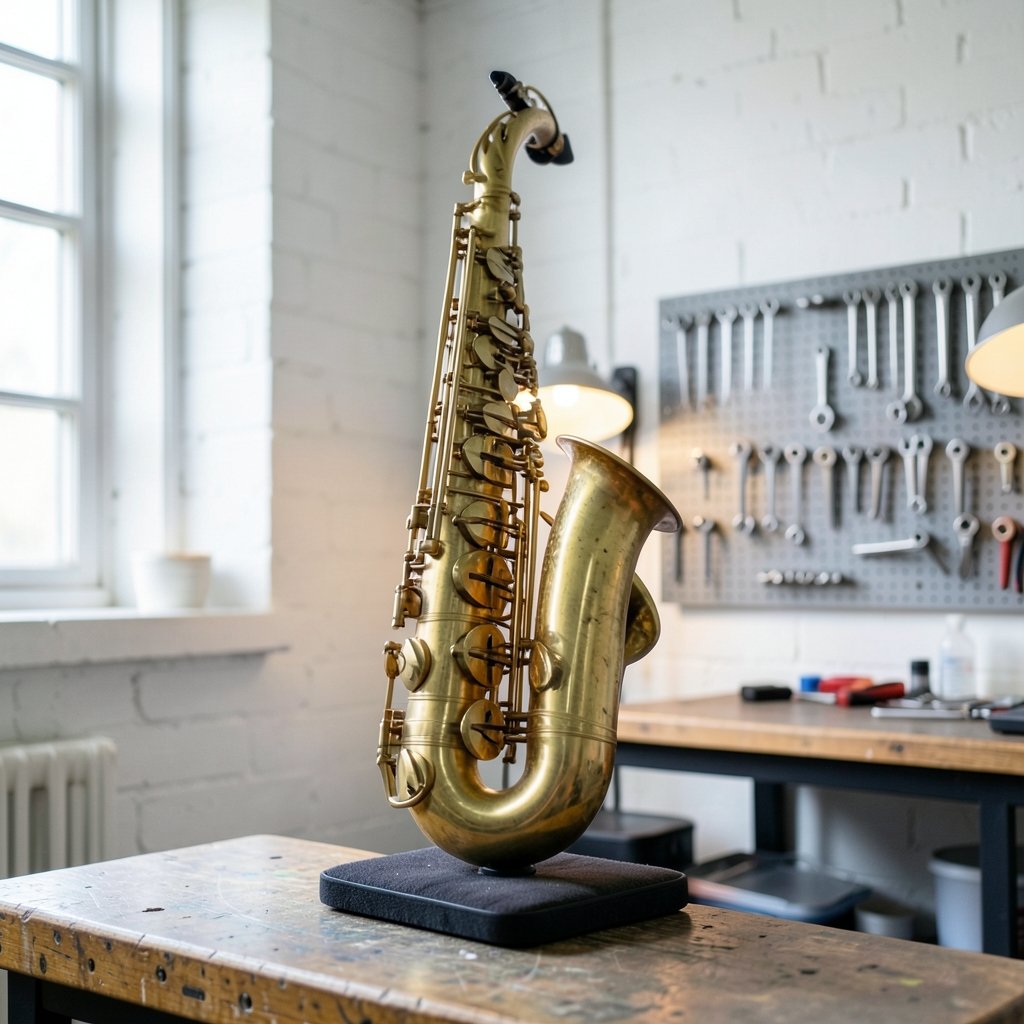
What instrument can rattle a floorboard in a dance hall, fill the bottom of a wind band, and still be mistaken for a piece of plumbing by half the audience? The bass saxophone. It is the largest sax most players will ever see in person, a coiled brass monster pitched lower than the baritone, and it has one of the strangest career arcs in music history. It was a rhythm-section workhorse in the 1920s, nearly vanished, and now lives on the edges of jazz, contemporary classical music, and film scores.
This article covers what the bass saxophone actually is, how it works, why it disappeared from bands, and what a player or curious listener should know before going near one.
What Exactly Is a Bass Saxophone?
The bass saxophone is a single-reed woodwind built from a conical brass tube, just like every other saxophone. It is pitched in B♭, which means it sounds a major ninth below written pitch: an octave plus a whole tone lower than the note on the page. Players read treble clef, exactly as they would on an alto or tenor, and the transposition happens automatically in their heads.
Adolphe Sax patented the saxophone family in Paris in 1846, and the patent covered a range from sopranino all the way down to contrabass. The bass saxophone was part of that original vision, not a later add-on. It sits below the baritone and above the contrabass in the family hierarchy, making it the lowest saxophone in anything close to common use.
The physical reality is what surprises people. A bass sax is roughly a meter and a half of tubing folded into a loop, with a neck pipe that curves back over the player’s shoulder. It is heavy enough that most players use a floor stand or a body harness rather than a neck strap. Carrying one up a flight of stairs is a workout. Getting it into a car requires planning.
How the Bass Saxophone Is Built and Played
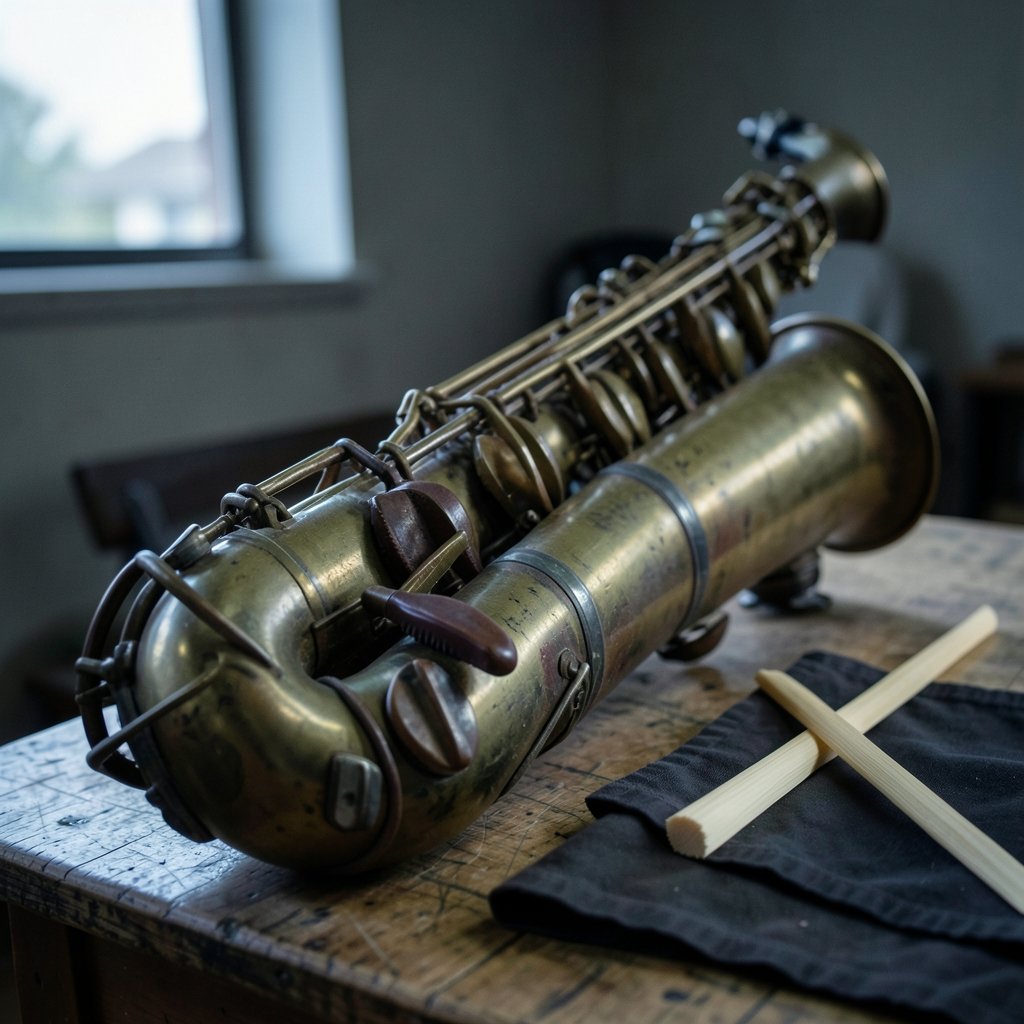
The tube and the bend
Like all saxophones, the bass has a conical bore that flares into a bell. The U-bend at the bottom turns the tube back upward, and the neck curves over the shoulder so the mouthpiece meets the player’s mouth at a workable angle. Because the tube is so long, the keys are spread over a large surface, and the low keys require long rod assemblies that are vulnerable to bending if the instrument is handled carelessly.
Mouthpiece and reed
Bass saxophone mouthpieces are large, and reeds are typically heavier than tenor reeds. Players often describe the setup as closer to bass clarinet in feel than to alto sax. The low end demands a lot of air, and the instrument punishes a weak embouchure quickly. Beginners who try one usually discover within five minutes that their usual breath support is not enough.
Support and posture
The most common practical mistake is trying to hold a bass sax like a big baritone. It does not work. The instrument needs a stand or harness so the player’s hands are free to move across the keys without also bearing the weight. Players who skip this step end up with tension in the shoulders and a tone that sounds strained rather than full.
Reading and transposition
Bass saxophone music is written in treble clef and transposed, so a written C sounds as the B♭ a major ninth below. This is standard orchestration practice and means a saxophonist can double on bass without learning a new clef. The adjustment is physical, not theoretical.
A Short History: From Patent to Near Extinction
Adolphe Sax’s 1846 patent laid out a full family, and the bass saxophone was included from the start. In the late 19th and early 20th centuries it appeared occasionally in orchestral scores, particularly in French and Russian works, and it found a home in concert bands where a deep reed voice was useful.
The instrument’s golden age, though, was the 1920s. Early jazz and dance bands needed a bass instrument that could project without amplification, and the bass saxophone filled that role. Adrian Rollini became the best-known practitioner, and his recordings show how melodic and agile the instrument could be in the right hands. Then the double bass and tuba took over the bass function, and the bass saxophone fell out of fashion fast.
For decades afterward it was a curiosity. From the late 20th century, though, contemporary classical composers, free jazz players, and experimental musicians began using it again, and modern manufacturers build it as a special-order instrument rather than a stock item. If you are weighing how different instruments fit different players, a broader comparison like this look at iPhone vs Android 2026: which phone fits you actually live shows the same principle: the tool that fits the job beats the one with the best reputation.
Bass Saxophone vs. the Rest of the Family
The table below compares the bass saxophone with its closest relatives on the dimensions that matter most to players and arrangers.
| Feature | Soprano | Alto | Tenor | Baritone | Bass |
|---|---|---|---|---|---|
| Pitch | B♭ | E♭ | B♭ | E♭ | B♭ |
| Transposition | Major 2nd down | Major 6th down | Major 9th down | Major 13th down | Major 9th plus octave down |
| Typical role | Solos, quartets | Melody, section lead | Melody, solos, section | Low section, funk, marching | Bass line, special scores |
| Common in schools | Yes | Yes | Yes | Sometimes | Rarely |
| Support needed | Neck strap | Neck strap | Neck strap | Harness or strap | Stand or harness |
| Availability | Easy | Easy | Easy | Moderate | Special order |
The baritone is the practical low sax for most band programs. The bass is a specialist instrument, and that scarcity shapes everything about owning one.
The Realities of Owning and Playing One
Cost and availability
Bass saxophones are expensive, and they are usually built to order. Even used instruments are scarce, and repair technicians who are comfortable working on them are not on every corner. Before buying, it helps to confirm that a local shop can service the instrument, because a bass sax with a bent low-key rod can sit unplayable for months while parts are sourced.
Maintenance quirks
The long key rods and the sheer amount of tubing mean more places for pads to leak. Leaks that would be minor on an alto can make the low register unresponsive on a bass. Players typically have the instrument checked more often than a smaller sax, and they store it in a case that is genuinely large. If you have ever dealt with a device that seems fine until one tiny alignment issue ruins the whole experience, the frustration is familiar; the same lesson shows up in this piece on wireless charger alignment problems your phone won’t charge.
Transport and storage
A bass saxophone case does not fit in a normal car trunk without planning, and it will not go in an overhead bin. Players who gig regularly often keep a dedicated vehicle arrangement or accept that the instrument travels in the back seat. This is a real logistical cost that rarely appears in descriptions of the instrument’s sound.
Who actually plays one
Most bass saxophonists are doublers. They play baritone or tenor as their main instrument and bring out the bass for specific charts. That is the practical path: learn the family on a smaller horn, then add the bass when a group needs it. Buying a bass saxophone as a first saxophone is almost always a mistake.
Where the Bass Saxophone Fits Today
Modern use clusters in a few areas. Contemporary classical composers write for it when they want a low reed color that is not a contrabassoon or a bass clarinet. Free jazz and experimental players use it for extended techniques and sheer physical presence. Film and game scores occasionally call for it because it can sound both comic and menacing. Wind bands use it sparingly, usually when a conductor wants a true bottom reed voice.
In popular music it remains a niche. Amplification removed the original reason for its existence, so it survives on character rather than necessity. That is not a bad thing. Instruments that survive on character tend to attract devoted players, and the bass saxophone has plenty of those.
Practical Tips for Anyone Curious
If you want to hear or try a bass saxophone, a few practical notes help.
- Listen to 1920s recordings first. The Adrian Rollini era shows what the instrument can do melodically, not just as a low drone.
- Try a baritone before a bass. The baritone teaches the low-reed breath support you will need, at a fraction of the cost.
- Budget for a stand or harness from day one. Do not try to hold the instrument up with your neck.
- Ask a repair shop about bass sax experience before you buy. Service access matters as much as the instrument itself.
- Expect a learning curve on air. The bass takes more breath than any other sax, and the low register responds only to steady, supported air.
The same principle of matching the tool to the job applies to gear of every kind, from instruments to the devices in your pocket. If you are curious how small technical details shape daily use, this explainer on what the My phone SOS that status bar message really means is a good example of how one overlooked setting changes everything.
Common Mistakes to Avoid
The biggest mistake is assuming a bass saxophone is just a louder baritone. It is not. The breath requirement, the support system, and the key reach are all different, and players who skip the adjustment period sound thin.
The second mistake is buying without a trial. Bass saxophones vary in ergonomics, and what works for one player’s hands may not work for another’s. Play before you pay whenever possible.
The third is underestimating maintenance. Long rods bend, pads leak, and the instrument is heavy enough that a small drop can cause real damage. Treat it like the precision machine it is.
Conclusion
The bass saxophone is a strange, wonderful outlier. It was part of Adolphe Sax’s original 1846 patent, it anchored early jazz rhythm sections in the 1920s, it nearly disappeared, and it has quietly returned through contemporary classical music, free jazz, and special-order manufacturing. It is heavy, expensive, hard to transport, and demanding to play. It is also one of the most distinctive sounds in the woodwind world.
For most musicians, the sensible path is to master the baritone first and treat the bass as a specialty. For listeners, the reward is simpler: seek out the old Rollini recordings and a few modern low-sax ensembles, and hear what a century-old idea still sounds like when someone gives it room to breathe.
Frequently Asked Questions
What is the lowest note on a bass saxophone?
Written low B♭ sounds as the A♭ nearly two octaves below the staff, and many instruments extend slightly lower with a low A key. Because the instrument transposes down a major ninth, the sounding pitch is always far below what the player reads.
Is the bass saxophone hard to play?
Yes, mainly because of air demand and physical size. The fingerings are the same as any saxophone, but the instrument requires much stronger breath support and a stand or harness. Players who already play baritone usually adapt fastest.
How much does a bass saxophone cost?
New instruments are typically special-order and priced well above professional baritones, and used examples are scarce. Repair and shipping costs add significantly to ownership, so buyers should budget beyond the purchase price.
Did the bass saxophone ever appear in orchestras?
Yes, occasionally. It shows up in some late 19th and early 20th century French and Russian scores and in concert-band repertoire, but it is rare compared with the alto, tenor, and baritone. Specific works vary by source and edition.
What is the difference between a bass and a contrabass saxophone?
The contrabass is pitched in E♭, is even larger, and sounds lower than the bass. It is far rarer. The bass saxophone is the more commonly encountered of the two very low members of the family.
Can a beginner start on a bass saxophone?
It is not recommended. The cost, weight, breath demand, and maintenance needs make it a poor first instrument. Most players start on alto or tenor, move to baritone, and add the bass later as a doubling instrument.



