Can a teenager really be trusted to wear a piece of plastic in their mouth for 22 hours a day? That is the question every parent asks when the orthodontist slides a clear aligner brochure across the desk. Invisalign for teens sounds almost too good to be true: no metal brackets, no wire poking cheeks, no food restrictions. But the treatment only works if the patient actually cooperates, and teenagers are famously not the world’s most reliable group. Here is an honest look at what the aligners can and cannot do, where the evidence is thin, and how to decide whether your teen is a good candidate.
What Invisalign Actually Is
Invisalign is a brand of clear, removable aligners made by Align Technology. The company launched the system in 1999, and the product is regulated in the United States as a Class II medical device cleared by the FDA. Instead of brackets and wires, the patient wears a series of custom-made plastic trays that gently push teeth into place. Each tray is worn for roughly one to two weeks before switching to the next in the series.
The teen version adds a few practical features aimed squarely at adolescent habits. Small blue compliance indicators fade as the aligners are worn, giving the orthodontist a rough visual record of wear time. Replacement trays are available if a set ends up in a school trash can or a gym bag. These small design choices exist because the biggest risk to teen treatment is not the appliance itself. It is the teenager.
How Teen Aligners Compare With Traditional Braces
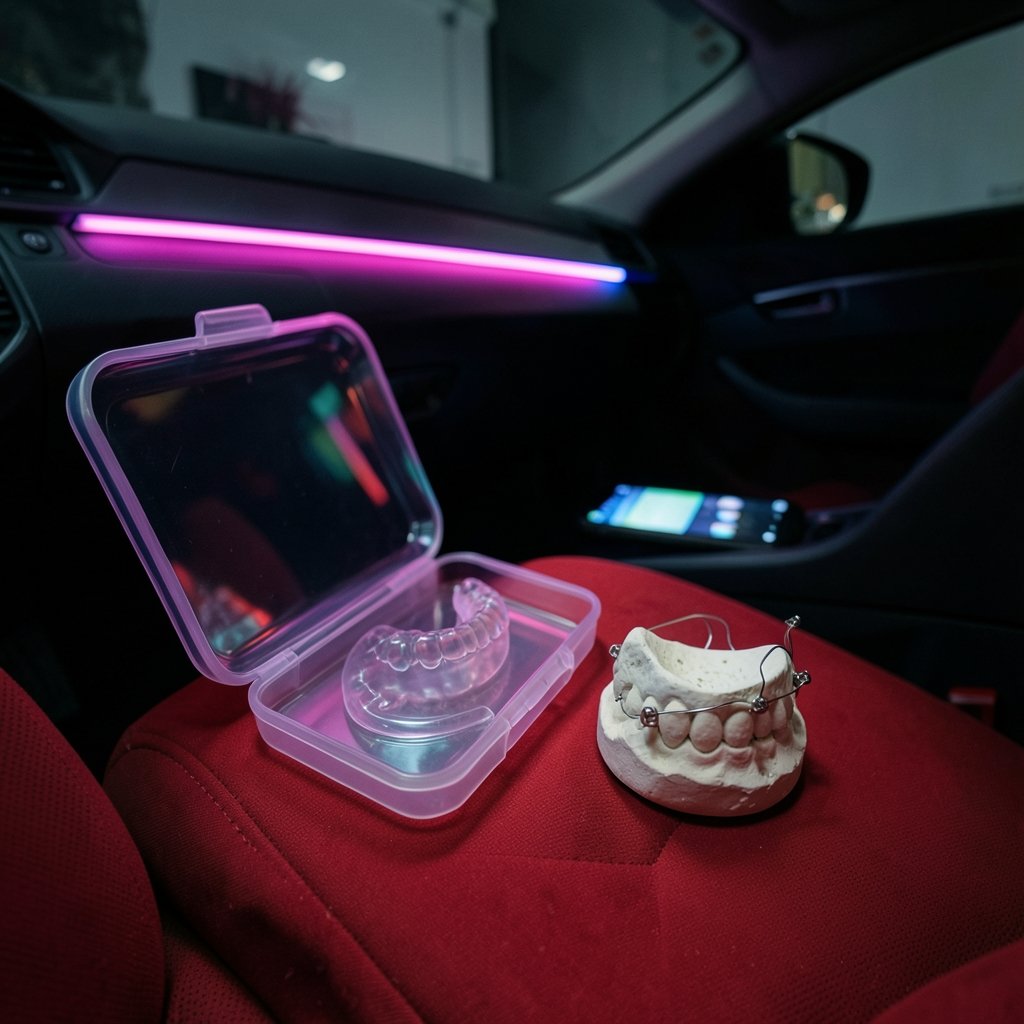
Both approaches move teeth. The difference is in the daily experience and in who controls the outcome.
| Feature | Clear aligners | Fixed braces |
|---|---|---|
| Visibility | Nearly invisible at normal distance | Metal or ceramic brackets visible |
| Removability | Removed for eating and brushing | Fixed in place |
| Wear discipline | Patient must wear 20 to 22 hours daily | Works without patient effort |
| Food restrictions | None, since trays come out | Sticky and hard foods limited |
| Cleaning | Brush teeth normally; clean trays separately | Special brushing around brackets |
| Lost or broken parts | Replacement trays possible | Repair visits for broken brackets |
| Cost | Often private-pay and typically higher | Standard publicly funded option in many systems |
| Suitability | Mild to moderate crowding; some complex cases | Broad range, including complex movement |
The compliance row is the one that matters most. Fixed braces do their job whether the wearer is motivated or not. Aligners do nothing while sitting in a case.
The Honest Evidence on Clear Aligners
Parents deserve to know that the research base is not as strong as the marketing suggests. A 2016 systematic review published in The Angle Orthodontist examined the clinical effectiveness of Invisalign treatment and found the overall quality of evidence to be low, calling for better-designed studies. A Cochrane Oral Health review comparing clear aligners with fixed appliances reached a similar cautious conclusion: the evidence is limited, and more high-quality research is needed.
There is an even bigger gap specific to teenagers. Head-to-head randomized trials of Invisalign in adolescents are scarce. Much of what orthodontists rely on is observational data or findings extrapolated from adult studies. That does not mean the treatment is ineffective. It means the confident claims in advertising are ahead of the published science, and a good clinician will say so.
Why Adherence Decides Everything
Clear aligners depend on wear time. The standard recommendation is 20 to 22 hours per day, which leaves roughly two hours for eating, drinking anything other than water, and brushing. Studies of adolescents consistently report variable compliance, and non-compliance is the leading reason treatment fails or drags on far longer than planned.
In practice, this is where most teen cases run into trouble. The aligners come out for lunch and stay out for the rest of the school day. They come out for a snack and get forgotten on a desk. They come out for a sports match and never go back in. The compliance indicators make this visible at the next appointment, which can feel like a report card your teen did not want.
What actually helps, based on how orthodontic practices manage teen cases:
- Set a phone alarm for reinsertion after meals rather than relying on memory.
- Keep a spare case in the school bag and another in the sports kit.
- Link wear time to existing routines like brushing and bedtime, so it becomes automatic.
- Agree on a check-in at home between appointments rather than waiting weeks to discover a problem.
- Be honest at appointments. Hiding poor wear time only wastes months of treatment.
A common mistake parents make is treating the aligner as a set-and-forget purchase. It is closer to a daily habit that needs coaching, at least for the first few months.
Who Makes a Good Teen Candidate
Aligners tend to work best for teenagers with mild to moderate crowding or spacing and fully erupted permanent teeth. Some complex bite problems still need fixed appliances or a combination approach. Your orthodontist should assess the bite, jaw growth, and tooth eruption pattern before recommending anything.
Motivation matters as much as the teeth. A teen who wants the treatment and understands the trade-off will usually do well. A teen pushed into it by a parent, with no interest in the outcome, is a poor bet for a removable appliance. It is worth having that conversation honestly before spending money.
Practical life also plays a role. Teens in contact sports can wear aligners during most activities, though a mouthguard is needed for collision sports, and the trays come out for that. Teens who snack constantly or sip sugary drinks all day will need to adjust their habits, because aligners trap liquid against enamel.
What Treatment Actually Involves
The process is more structured than it looks from the outside. A typical path runs like this:
- Consultation and records. The orthodontist takes scans, X-rays, and photographs, then assesses whether aligners suit the case.
- Digital treatment plan. Software maps the tooth movement step by step, and the clinician reviews it before trays are made.
- Fitting. The teen learns how to insert and remove the trays and how to clean them.
- Wear and switch. Trays are worn as directed and changed on schedule, usually every one to two weeks.
- Check-ins. Regular visits confirm progress and catch problems early.
- Retention. After active treatment, a retainer is needed to hold the result.
That last step is not optional and not temporary. Retainers are standard orthodontic guidance after any treatment, braces or aligners, because teeth drift over time. Teens sometimes assume the retainer is a short phase. It is not, and framing it as a long-term habit from day one saves arguments later.
The Money and Access Question
Cost varies enormously by country and by case complexity. In the UK, fixed braces are the standard publicly funded option for eligible teenagers, while clear aligner treatment is often paid for privately. In the US, prices swing widely between practices and regions. Rather than quoting a figure that will be out of date by the time you read it, ask for a written quote that covers aligners, retainers, and any revision or replacement fees.
Two questions worth asking before signing anything: what happens if trays are lost repeatedly, and what happens if the case does not progress as planned? Clear answers to both tell you a lot about the practice.
Regulation and Safety
In the UK, only dentists and orthodontists registered with the General Dental Council may prescribe orthodontic treatment, and direct-to-consumer aligner companies have faced regulatory scrutiny. In the US, the FDA has issued warnings about do-it-yourself aligner products and requires a prescription for aligner therapy. The message is consistent on both sides of the Atlantic: aligner treatment belongs under professional supervision, not in a mail-order box.
This matters for teens in particular. Adolescent jaws are still growing, and tooth movement without proper assessment can cause harm that is expensive to correct. If a service promises straight teeth without an in-person examination, treat that as a warning sign rather than a convenience.
Setting Expectations Realistically
Aligners are not faster than braces in most cases. Treatment length depends on the complexity of the movement, and teen cases often run somewhere between 12 and 24 months, with refinements adding time. Some teens finish early. Some need a second phase once growth settles. Nobody can promise a timeline before records are taken.
Teens also need to hear the unglamorous parts up front: the trays feel tight for a day or two after each switch, speech can sound slightly lispy for the first week, and the aligners must be cleaned properly to avoid odor and staining. None of this is a dealbreaker. All of it is easier to handle when it is expected rather than discovered.
For families thinking about the wider picture of teen independence and responsibility, the same skills that make aligner treatment work, like planning ahead and following through, show up in other areas of teenage life, whether that is making money as a teen in jobs that fit school-age rules or managing a first real commitment. The aligner is a small daily test of exactly that kind of discipline. (Arden cho from teen wolf partner track beyond)
Common Mistakes to Avoid
A few patterns come up again and again in teen aligner cases:
- Wearing trays only at night and assuming that counts as full-time wear. It does not.
- Drinking sugary or hot drinks with trays in, which stains the plastic and bathes the teeth in sugar.
- Cleaning trays with hot water, which can warp them.
- Skipping check-in appointments because everything feels fine.
- Losing the retainer and not replacing it quickly, letting teeth drift back.
- Choosing a provider on price alone without asking who supervises the treatment and what training they have.
Conclusion
Invisalign for teens can be an excellent choice for the right patient: a motivated teenager with a suitable bite, a supportive family, and a properly qualified orthodontist overseeing the case. It offers real advantages in comfort, appearance, and everyday eating. But the honest version of the story includes limited high-quality evidence, a heavy reliance on daily discipline, and a cost that usually sits above publicly funded braces. The aligners are the easy part. The habits are what decide whether the treatment works. Before committing, ask the hard questions, watch how your teen handles responsibility for a month, and make the decision together rather than for them.
Frequently Asked Questions
How many hours a day do teens need to wear Invisalign?
The standard recommendation is 20 to 22 hours per day, leaving about two hours for eating and brushing. Wear time is the single biggest factor in whether treatment finishes on schedule. Teens who wear trays only part-time often see treatment stretch out or stall entirely.
Is Invisalign as effective as braces for teenagers?
For mild to moderate crowding, clear aligners can produce good results. For complex bite problems, fixed braces often remain the more predictable option. The published evidence comparing the two is limited in quality, and high-quality trials specifically in adolescents are scarce, so the right answer depends on the individual case.
What are the blue dots on teen aligners?
They are compliance indicators, small blue markings that fade gradually with wear time. They give the orthodontist a rough visual sense of how much the trays have actually been worn. They are a conversation starter at appointments, not a punishment tool.
Can teens play sports while wearing aligners?
In most sports, yes. For collision sports and activities where a mouthguard is needed, the aligners come out and the mouthguard goes in. A spare case in the sports bag prevents trays from being lost or crushed.
Will my teen need a retainer after Invisalign?
Yes. Retainers are needed after any orthodontic treatment, braces or aligners, because teeth naturally drift over time. Retention is generally long-term, and teens should understand that from the start rather than treating it as a brief final phase.
Is Invisalign for teens safe?
Aligner therapy is a regulated medical treatment when prescribed and supervised by a qualified dental professional. Safety concerns arise mainly with do-it-yourself aligner products sold without an examination. Regulators in both the UK and the US have warned against unsupervised aligner treatment, especially for growing teenagers.