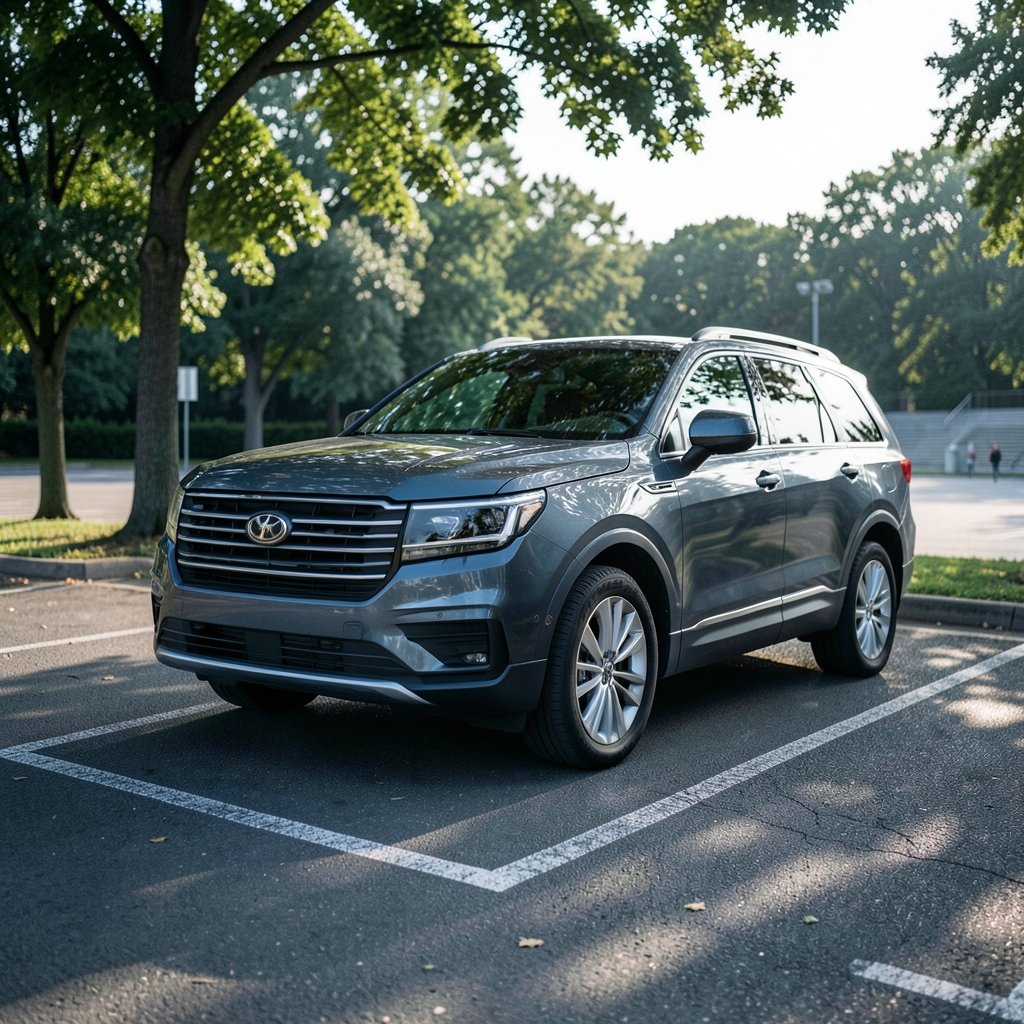
What will the 2027 Volkswagen Atlas actually be? That question sounds simple, but it sits on top of a genuinely murky situation. The Atlas is Volkswagen’s biggest vehicle in the United States, a three-row family hauler that arrived for the 2018 model year after debuting at the 2016 Los Angeles Auto Show. It got a serious refresh for 2024. And then, as far as public information goes, things get fuzzy. Anyone shopping for a 2027 model deserves a straight answer about what is confirmed, what is reported, and what is pure guesswork. This article separates those three buckets carefully, because the difference matters when you are about to spend forty-something thousand dollars on a family SUV.
The Atlas in plain terms
The Atlas is a midsize crossover built for the US market and assembled at Volkswagen’s Chattanooga, Tennessee plant, which has been turning them out since 2017 and also builds the ID.4 electric crossover. Two body styles exist. The standard Atlas seats up to seven across three rows. The Atlas Cross Sport is the five-seat, coupe-styled sibling that arrived for the 2020 model year and trades a little cargo room for a sportier roofline.
The 2024 refresh was the most recent major change. Shown at the 2023 Chicago Auto Show in February 2023, it brought revised exterior styling, an updated interior, and a standard 2.0-liter turbo four-cylinder. That refresh also retired the VR6 engine, leaving the 2.0T as the sole US powertrain at roughly 269 horsepower. Anyone cross-shopping a used 2023 Atlas against a 2024 or later model is comparing two different engine designs, and that is worth knowing before you sign anything.
What is actually confirmed for 2027?

Here is the honest part: very little. No official announcement has confirmed whether a 2027 Atlas is a carryover of the refreshed combustion model, an all-new generation, or something electrified. Volkswagen has signaled a broader shift toward electrification of large SUVs, and there has been reporting and speculation about a future electric three-row SUV for the US, sometimes discussed under names like “ID.8” or an electric Atlas successor. None of that amounts to a confirmed 2027 Atlas.
| Question | Status | What it means for you |
|---|---|---|
| Does a 2027 Atlas exist? | Unconfirmed publicly | Wait for an official release before ordering |
| Powertrain | Unconfirmed | Could be the 2.0T, could be electric |
| Pricing | Unknown | Do not budget from rumor figures |
| Fuel economy | Unknown | Check official EPA data closer to launch |
| On-sale date | Likely 2026 | US model years usually start selling the prior calendar year |
| Body styles | Likely both | Cross Sport has historically run alongside |
That last row is an educated guess based on history, not a promise. The Cross Sport has been sold alongside the three-row Atlas since 2020, so a continued pairing is plausible. Plausible is not the same as confirmed.
Why the timing question trips people up
US model years typically begin sales in the prior calendar year. A 2027 Atlas would therefore likely reach dealers sometime in 2026. That creates a practical trap. Shoppers who start researching in late 2026 may find dealers pushing 2026 inventory with incentives while quietly knowing something about the next model year that has not hit the press yet. Sales staff sometimes know more than the public does, and sometimes they know less than the forums do.
The practical move is to check Volkswagen’s official media channels first, then independent crash-test and fuel-economy data, then enthusiast forums last. Official releases confirm facts. Forums confirm rumors, sometimes accurately and sometimes not. Treating a forum screenshot as a specification sheet is one of the most common mistakes buyers make with a model this anticipated.
The electrification question, handled carefully
Volkswagen has clearly signaled a move toward electrifying its larger SUVs. Whether that lands on the 2027 Atlas specifically is unknown. This matters because the buying decision changes completely depending on the answer.
If the 2027 Atlas is a carryover combustion model, buyers get a known quantity: a proven 2.0T, a familiar platform, established reliability data, and a dealer network that knows how to service it. If it is an all-new generation, buyers inherit first-model-year risk, which historically includes infotainment bugs, trim teething issues, and parts availability quirks. If it is electric, the entire ownership picture shifts toward charging infrastructure, home electrical work, and a different cost structure.
None of those outcomes is inherently bad. They just demand different preparation. A family that rents an apartment with no garage should think very differently about an electric three-row than a family with a driveway and a 240-volt outlet.
How to research a 2027 Atlas without getting fooled
A repeatable process beats scrolling. Here is what actually works.
- Check the manufacturer’s official newsroom first for model-year announcements. Only an official release confirms a 2027 Atlas, its powertrain, and its launch date.
- Cross-check fuel economy against the official government database by model year once figures exist.
- Look up independent crash-test ratings rather than relying on marketing language about safety.
- Compare trims line by line, not headline to headline. Base prices hide feature gaps.
- Wait for first-drive reviews from outlets that actually drove the vehicle, not outlets summarizing a press release.
- Confirm the on-sale date with a dealer in writing if you are placing a deposit.
That sixth step matters more than people expect. Deposits on unreleased models are common, and the terms vary wildly. Get the refund policy in writing.
Where the Atlas fits in the market
The three-row midsize crossover segment is brutally competitive, and the Atlas has always competed on space per dollar rather than driving excitement. Its third row is genuinely usable for adults on shorter trips, which is more than some rivals can claim. The 2024 refresh sharpened the interior and simplified the powertrain lineup, which arguably made the buying decision easier.
Buyers comparing the Atlas against other family vehicles often end up in unexpected places. Some cross-shop AI-assisted shopping tools and chatbot comparisons while researching, which is a strange sentence to write but an accurate one for 2026. If you are using AI tools to compare specs across brands, the same discipline applies: verify against primary sources. A roundup like 10 best ai chatbots gpt 5 claude under hood 2027 can explain how these tools reason, but no chatbot replaces a spec sheet. Similarly, if you are weighing whether automated help is worth it at the dealership, when NOT to use an AI chatbot in 2027: 7 honest cases is a useful reality check on where automation stops being helpful.
Practical ownership notes that carry over
Whatever the 2027 Atlas turns out to be, some Atlas realities persist across generations. The Chattanooga-built Atlas has a large dealer footprint, which helps with service and parts. The three-row layout swallows car seats and cargo in ways that sedans cannot. And the Cross Sport’s sloped roof looks great until you try to load a stroller standing upright.
Common mistakes owners make with large three-row crossovers are remarkably consistent. They underestimate garage depth. They skip the second-row captain’s chair option and regret it. They assume the third row folds flat when it sometimes does not. They buy based on a test drive alone without loading actual cargo. A fifteen-minute test drive with your own car seats and a suitcase teaches more than an hour of spec comparison.
If you are also shopping accessories or comparing tool ecosystems for your vehicle setup, resources like 15 best ai tools e commerce stores 2027 conversion boosters are aimed at sellers rather than buyers, but they illustrate how much product comparison now happens online before anyone walks into a showroom. That shift is real, and it is why verifying specs early saves time later.
What about pricing and fuel economy?
Unknown, and that is the correct answer. Pricing and EPA fuel-economy figures for a 2027 model are not established publicly. Anyone quoting a number with confidence is guessing or extrapolating from the 2024–2026 range without saying so. Budget from the current model year’s pricing as a rough anchor, then add a buffer for the usual year-over-year creep. Do not build a household budget on a rumor.
The same caution applies to horsepower figures. The 2.0T has been rated around 269 horsepower in recent years, but output and trim availability vary by model year and should be confirmed against official documentation. A number that was right for 2024 is not automatically right for 2027.
Should you wait or buy now?
This is the question most shoppers actually have, and the answer depends on urgency and risk tolerance. If you need a three-row SUV this month, waiting for an unconfirmed 2027 model is a bad plan. Buy the 2026 or a certified pre-owned example and enjoy the depreciation curve working in your favor. If you can wait a year and you specifically want the newest powertrain or the electric option, waiting is reasonable, provided you accept that the 2027 Atlas might not be what the rumors say.
A middle path works well for many families: lease now, decide later. A lease bridges the uncertainty without locking in a long-term bet on an unconfirmed vehicle. It is not free, but it converts an unknown into a manageable monthly cost.
Conclusion
The 2027 Volkswagen Atlas is a vehicle surrounded by more questions than answers as of late 2026. What is certain is the foundation: a Chattanooga-built three-row crossover, a 2024 refresh that modernized the interior and standardized the 2.0-liter turbo four, a five-seat Cross Sport sibling, and a brand clearly steering toward electrification of its large SUVs. What remains unconfirmed is whether the 2027 model continues that combustion formula, arrives as a new generation, or shows up as an electric successor. The smart play is disciplined research: official releases first, government fuel-economy and independent crash-test data second, forums and speculation last. Do not budget from rumors, do not place a deposit without written terms, and do not assume the next Atlas looks like the last one. Verify, then decide. That approach works whether the 2027 Atlas turns out to be a familiar friend or a genuine reinvention.
Frequently Asked Questions
Is the 2027 Volkswagen Atlas confirmed?
No. No official announcement has confirmed whether a 2027 Atlas exists as a carryover, a new generation, or an electric model. Volkswagen has signaled a shift toward electrifying large SUVs, and there has been reporting about a future electric three-row SUV for the US, but that does not confirm a 2027 Atlas specifically. Check official manufacturer channels before making plans.
When would a 2027 Atlas go on sale?
US model years typically begin sales in the prior calendar year, so a 2027 Atlas would likely reach dealers sometime in 2026. That is general industry practice, not a confirmed date. Confirm the actual on-sale timing with a dealer in writing if you are considering a deposit.
What engine does the Atlas currently use?
Since the 2024 refresh, the 2.0-liter turbo four-cylinder has been the sole US powertrain, rated at roughly 269 horsepower. The refresh retired the VR6 engine. Output figures and trim availability vary by model year, so confirm against official documentation for whichever year you are considering.
What is the difference between the Atlas and the Atlas Cross Sport?
The standard Atlas is a three-row crossover that seats up to seven. The Atlas Cross Sport is a two-row, five-seat variant with coupe-inspired styling that arrived for the 2020 model year. The Cross Sport trades some cargo space and rear headroom for a sportier roofline.
Where is the Volkswagen Atlas built?
The Atlas is assembled at Volkswagen’s Chattanooga, Tennessee plant, which has built the model since 2017 and also produces the ID.4 electric crossover. The US-based production helps with parts availability and dealer service across the country.
Should I wait for the 2027 Atlas or buy a current model?
If you need a three-row SUV soon, buying a 2026 model or a certified pre-owned Atlas is the lower-risk choice, since the 2027 model is unconfirmed. If you can wait and specifically want the newest powertrain or a possible electric option, waiting is reasonable, but accept that the 2027 Atlas may differ from rumors. Leasing is a practical middle path that limits long-term risk.