What makes an American home run smoothly? Ask ten people and you will get ten answers, but almost all of them will mention the same machines: the refrigerator humming in the kitchen, the washer thumping in the basement, the dishwasher that decides when dinner is over. American home appliances are the quiet backbone of daily life. Yet most people shop for them in a fog of jargon, yellow stickers, and sales pressure.
This guide cuts through that fog. It covers how the U.S. appliance market actually works, what the regulations mean for your wallet, where the real efficiency gains came from, and which mistakes buyers keep making. Whether you are replacing one machine or outfitting a whole house, the goal is the same: spend money on the things that last and skip the features that just look good on a showroom floor.
The Scale of the American Appliance Market
The United States is one of the largest appliance markets on earth. Industry estimates have put the major-appliance segment in the tens of billions of dollars annually, though exact figures swing with the housing cycle and tariff policy. What matters more than the total is the structure. Big-box chains like Home Depot, Lowe’s, and Best Buy dominate retail, alongside online sellers. Sears, once the biggest appliance seller in the country, collapsed into bankruptcy in 2018, a reminder that brand loyalty in this category is thinner than it looks.
Ownership is close to universal. Census housing data have long shown refrigerators in well over 99 percent of occupied homes, with ranges and clothes washers in the large majority. This is not a niche purchase. Nearly every household in the country may buy one at some point, which is exactly why the sales tactics are so polished.
A large share of what Americans buy is manufactured abroad, particularly in China and Mexico. That makes prices sensitive to tariffs, and tariff policy has shifted repeatedly through the 2020s. If a deal looks unusually good or unusually bad, trade policy is often the hidden reason.
How Federal Rules Shape What You Can Buy
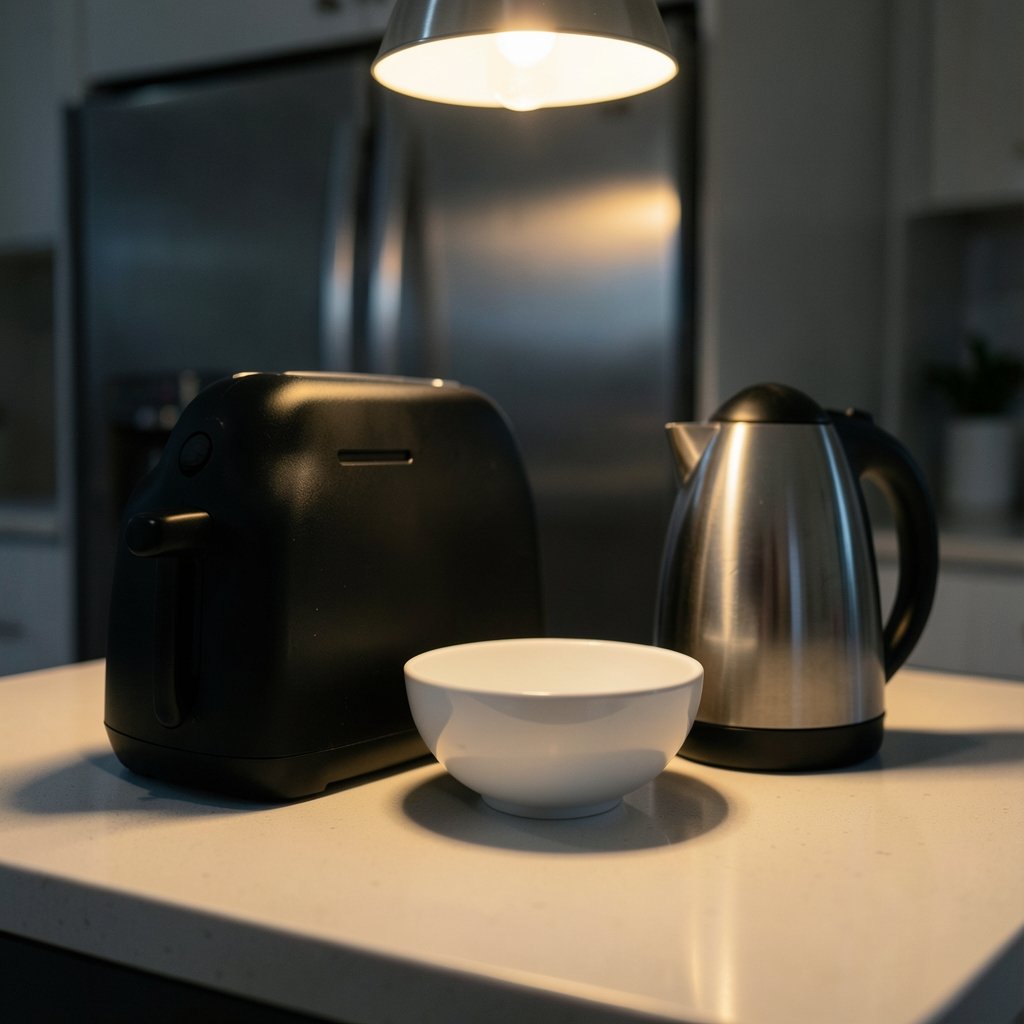
American appliances are not a free-for-all. The U.S. Department of Energy sets minimum energy-conservation standards for major appliances under the Energy Policy and Conservation Act of 1975, as amended. Those standards have been tightened repeatedly since the late 1980s, which is why a modern refrigerator looks nothing like its 1970s ancestor on the inside.
Two labels do most of the consumer-facing work:
- The yellow EnergyGuide label, required under Federal Trade Commission rules dating to the late 1970s, shows estimated annual energy use or cost so you can compare models side by side.
- The ENERGY STAR logo marks products that beat the federal minimum. The program, run jointly by the EPA and DOE, began in 1992 for computers and expanded to major appliances during the 1990s.
Safety is a separate lane. The Consumer Product Safety Commission, created by the Consumer Product Safety Act of 1972, sets safety standards and issues recalls. Checking the recall list before buying a used appliance is one of the smartest five-minute habits a shopper can build.
The Efficiency Story Nobody Talks About Enough
Here is a fact that deserves more attention than it gets: new refrigerators use roughly a quarter or less of the electricity of models from the 1970s, even though average capacity has grown. That improvement did not happen because manufacturers got generous. It happened because minimum standards forced the entire industry to compete on efficiency rather than just on size and styling.
The practical takeaway is simple. An old second fridge in the garage can quietly cost more to run each year than it is worth. Before you keep a hand-me-down unit “just in case,” check its age and its label. If it predates the 1990s, it is probably a money leak.
The same logic applies to washers and dishwashers. A machine that is fifteen years old may still clean well, but it is likely using far more water and power than a current model. The break-even math depends on local utility rates, so run the numbers before assuming a replacement pays for itself quickly.
Matching Appliances to How You Actually Live
The biggest mistake in appliance shopping is buying for the kitchen you imagine rather than the one you have. A few practical rules tend to hold up:
- Measure the opening, not the old unit. Width, height, and depth all matter, and door clearance matters more than people expect. A refrigerator that fits the cavity but cannot open past a wall is a return waiting to happen.
- Count your real cooking habits. Someone who reheats leftovers needs a reliable microwave, not a six-burner range. Someone who bakes weekly will regret a cheap oven with uneven heat.
- Think about service as well as sale price. A brand with no authorized repair network nearby turns a minor failure into a major headache. Ask who fixes it before you buy it.
- Skip the smart features you will never use. Wi-Fi-connected ovens and app-controlled washers sound futuristic until the app is abandoned. If you do want connected appliances, it pays to understand the platforms first. Our guide to the best smart speakers for home automation explains how voice control fits into a realistic setup, and the comparison of HomeKit vs Google Home vs Alexa covers compatibility, privacy, and cost trade-offs before you commit to one system.
For households that want deeper automation, the choice between Home Assistant and SmartThings often matters more than the appliance brand itself, because the platform determines what your machines can actually talk to.
The Right to Repair Question
Since 2023, several states have enacted right-to-repair laws covering electronics and, in some cases, appliances. Oregon, Minnesota, and California are among the states that have moved on this. Coverage of appliances varies by statute, so the details matter.
Why should a shopper care? Because repairability affects total cost of ownership. A machine with accessible parts and published service information can be fixed for years. A sealed unit with proprietary components may be scrap after a single failure. Before buying, look for whether the manufacturer publishes service manuals and sells parts to independent technicians. That single check tells you more about long-term value than any badge on the door.
A Realistic Comparison of Buyer Priorities
Different households weight features differently. The table below reflects how most buyers actually rank the trade-offs once they move past the showroom lighting.
| Priority | What it means in practice | Who should weight it most |
|---|---|---|
| Reliability | Fewer service calls over 10 years | Everyone, especially large households |
| Energy use | Lower monthly bills, smaller footprint | High-usage homes, warm climates |
| Repairability | Parts and manuals available | Long-term owners, rural buyers |
| Capacity | Fits real loads, not ideal ones | Families, frequent entertainers |
| Smart features | App and voice control | Tech-forward households only |
| Price | Upfront cost versus lifespan | Renters, first-time buyers |
Notice what is missing: brand prestige. It sells machines, but it rarely predicts satisfaction.
Budgeting Beyond the Sticker Price
The purchase price is only the first bill. Delivery, haul-away of the old unit, installation kits, extended warranties, and possible electrical or plumbing work all add up. A few habits keep the total honest:
- Ask whether haul-away is included or costs extra. It frequently is not.
- Check whether the unit needs a new water line, a different outlet, or a dedicated circuit.
- Read the warranty for what it excludes. Labor coverage is often shorter than parts coverage.
- Keep the receipt and register the product. Recalls and warranty claims both depend on it.
If a kitchen remodel is part of the plan, appliance timing gets trickier. Cabinets, counters, and hookups all have to line up, and professional help is often worth it. Homeowners managing a larger project can find vetted home addition contractors to coordinate the build, which keeps appliance delivery from becoming the bottleneck.
Common Mistakes That Cost Real Money
Even careful buyers stumble in predictable ways. These are the ones that show up again and again:
Buying the floor model without asking about the warranty. Display units are often discounted for good reason, and coverage terms vary.
Ignoring the door swing and hinge side. A refrigerator that opens into a walkway becomes a daily annoyance.
Assuming all ENERGY STAR models are equal. Certification is a threshold, not a ranking. Compare the actual EnergyGuide numbers.
Overbuying capacity. A huge washer that runs half-full wastes water and wears clothes faster.
Skipping the recall check on used appliances. Secondhand machines are where safety notices matter most.
Forgetting about noise. Open-plan homes amplify compressor hum and wash cycles. Listen to a running unit if you can, or read owner reports about decibel levels.
Where Appliances Fit in the Wider Home
Appliances do not exist in isolation. They interact with your electrical panel, your plumbing, your ventilation, and your daily routines. A few adjacent decisions are worth thinking through at the same time.
If quiet mornings matter, the machines that make them possible deserve attention too. Our guide to the best espresso machine for home covers what separates a machine that lasts from one that frustrates, and the same logic of build quality applies across the kitchen. Sleep quality is another household system worth protecting; readers dealing with noisy bedrooms can review home remedies to stop snoring at night for practical fixes that do not require new equipment.
Big purchases also raise financing questions. When a full kitchen replacement lands all at once, homeowners often weigh borrowing options. The comparison of a home equity loan vs a line of credit explains how each works and which suits a one-time purchase versus an ongoing project. And for anyone curious about the faces on the bills they are about to spend, there is a straightforward explainer on which presidents appear on American money.
Conclusion
American home appliances are a rare category where the boring advice is also the best advice. Buy for reliability and repairability. Read the yellow label instead of the marketing copy. Measure twice. Skip the features you will never touch. The federal standards that shaped today’s machines did the hard work decades ago, and the payoff shows up on every utility bill.
The market will keep shifting with tariffs, state repair laws, and whatever connectivity gimmick comes next. What will not change is the basic math: a well-chosen appliance, maintained properly, costs less over its life than a flashy one that fails early. Shop like an owner, not a spectator, and the kitchen will reward you for years.
Frequently Asked Questions
How long should major American home appliances last?
Most refrigerators, ranges, and washers are built to last roughly ten to fifteen years with normal use, though actual lifespan depends heavily on maintenance and repair history. Dishwashers and microwaves often run shorter. Keeping filters clean, coils dusted, and drains clear is the difference between the top and bottom of that range.
Is ENERGY STAR worth paying extra for?
It depends on how much you use the appliance and how long you plan to keep it. ENERGY STAR certifies models that beat the federal minimum, but the certification is a threshold rather than a ranking. Compare the actual EnergyGuide estimates for annual energy use, then divide the price difference by the yearly savings to see the payback period.
What does the yellow EnergyGuide label actually tell me?
It shows the model’s estimated annual energy use or cost, plus a comparison range against similar products. Federal Trade Commission rules require it on most major appliances. The label is most useful when you compare two specific models side by side rather than reading it in isolation.
Are smart appliances worth it?
For most households, no. App and voice control adds convenience in narrow cases, like checking whether the oven is off or starting a load remotely. The trade-off is higher price, more failure points, and dependence on a manufacturer’s app staying supported. Buy the appliance for how well it cleans, cools, or cooks first.
Do right-to-repair laws cover appliances?
It varies by state. Several states have enacted right-to-repair legislation since 2023, and appliance coverage differs from statute to statute. Before buying, check whether the manufacturer publishes service manuals and sells parts to independent technicians, which is a practical signal of long-term repairability regardless of where you live.
Why are appliance prices so sensitive to tariffs?
A large share of appliances sold in the United States is manufactured abroad, particularly in China and Mexico. When tariff policy changes, import costs change with it, and retailers adjust prices. Because tariff rules have shifted repeatedly in the 2020s, it is worth confirming current rates from an official source before assuming a price trend will hold.