

What if the robot vacuum you bought to protect your hardwood floors is the very thing dulling them? It sounds dramatic, but it happens more often than people admit. Stiff bristle brushes scatter grit across a finish, a spinning side brush flings crumbs into baseboards, and a damp mop pad sits on oak planks long enough to leave a haze that never quite buffs out. Picking the best Roomba for hardwood floors is less about chasing the highest suction number and more about matching the machine’s brushes, navigation, and mopping behavior to a surface that scratches easily and hates standing water.
This guide walks through what actually matters on wood, which model families tend to fit different homes, and the mistakes that cost people their finish. Hardwood is forgiving in some ways and unforgiving in others, and the details below are the ones worth knowing before checkout.
Why hardwood changes the Roomba decision
Most robot vacuum marketing pushes carpet performance, because carpet is where suction bragging rights live. Bare floors are a different job. On hardwood, a robot is mostly managing fine dust, hair, and grit, and grit is the enemy. Every particle that gets dragged instead of lifted acts like sandpaper under the wheels and brushes.
Rubber extractor rollers, which iRobot introduced with its 800 series around 2013 and refined in later models, were designed to resist hair tangling and are generally gentler on hard floors than stiff bristle brushes. That single design choice matters more on wood than almost any spec sheet figure. Bristle brushes can scratch a softer finish and tend to bat debris around rather than pull it in.
Navigation is the second big factor. Camera-based and LiDAR navigation, which arrived in Roomba models starting with the 980 in 2015, lets a robot map a room, run in systematic passes, and respect no-go zones. On wood, that means fewer collisions with furniture legs, fewer cord tangles, and no repeated scrubbing over the same spot. A random-bounce robot on a wood floor is a scratch risk with a battery.
The Roomba features that protect wood floors
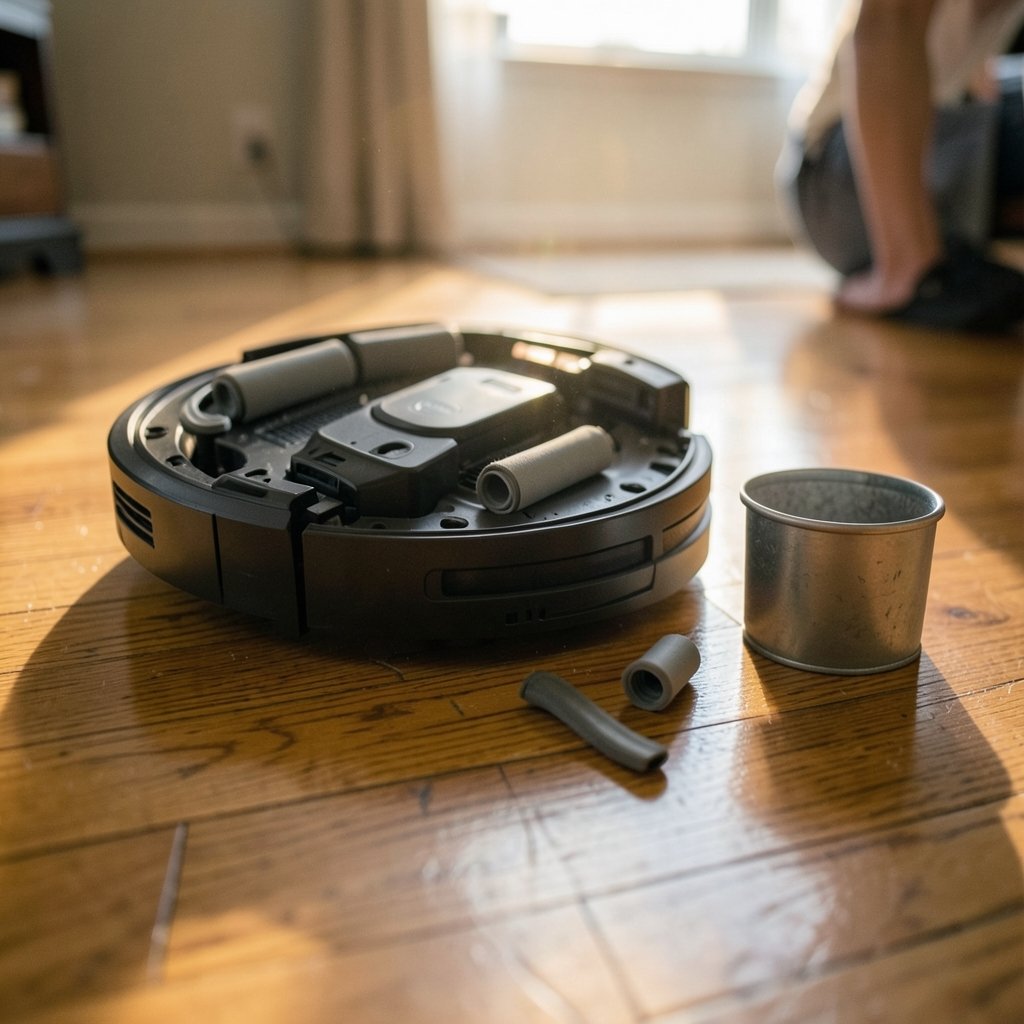
Before comparing models, it helps to know which features genuinely earn their place in a wood-floored home and which are nice-to-have.
Rubber extractors over bristle brushes
Dual rubber extractors are the closest thing to a hardwood essential. They flex against the floor, grip hair without wrapping it around a brush core, and sweep fine dust into the bin. If a model you are considering uses a bristle brush, it can still work, but expect more hair maintenance and a slightly higher risk of scattering grit near edges.
Real mapping and no-go zones
A robot that knows where it is cleans in orderly rows instead of ricocheting. That predictability is what lets you trust it around a dining table with thin legs or a pile of charging cables. No-go zones keep the robot away from pet bowls, plant stands, and anything that might tip.
HEPA filtration and a self-emptying base
Fine dust resuspends easily on hard floors, so filtration matters even without allergy concerns. High-efficiency filters, standard on self-emptying models since the Clean Base dock arrived in 2018, capture finer particles instead of blowing them back into the room. The dock itself holds weeks of debris, which means you are not popping the bin over a trash can every other day and stirring up a dust cloud in the process. If you are weighing how much floor care automation is worth, a look at best robot vacuum mop combos that actually clean floors helps set expectations about what these docks and pads really deliver.
Edge behavior and the side brush
Every robot has a weak spot, and for most Roombas it is the edge. A single spinning side brush reaches along baseboards, but it can also fling debris backward onto floor you just cleaned. On wood, watch whether the side brush is adjustable or can be slowed. Some owners simply accept a second pass along walls with a handheld vacuum.
Mopping on wood: proceed with caution
Combination vacuum-mops are tempting, and iRobot has sold them since the Braava jet line and the Roomba Combo j7+ and j9+ arrived in 2022 and 2023. The catch is moisture. Many wood flooring manufacturers advise against wet mopping or recommend only minimal dampness, and a robot that parks a wet pad on the same spot while it thinks is a real risk.
Practical rules that work:
- Check your flooring manufacturer’s care instructions first. If wet cleaning is discouraged, skip the mop entirely.
- Use the lowest water setting available and a barely damp pad, never a soaked one.
- Run the mop on a schedule when you are home, so you can lift the robot if a puddle forms.
- Keep the robot away from seams, transitions, and any area where finish is already worn.
- Never leave a wet pad attached between runs.
If your home has a mix of wood and tile, a combo unit can make sense for the tile zones while the vacuum-only mode handles the wood. Just treat the mop as a tile tool, not a wood tool.
How the main Roomba families compare on wood
Model names and specs shift constantly, and anything released after early 2025 should be verified against current documentation before you buy. Still, the broad family logic holds well enough to guide a shortlist.
| Family (representative) | Brushes | Navigation | Self-empty | Wood-floor fit |
|---|---|---|---|---|
| Entry models (e.g., 600 series) | Bristle brush | Random bounce | No | Basic; fine for small rooms, more scattering risk |
| Mid-range (e.g., i3+, i4+) | Rubber extractors | Camera mapping | Yes, on plus models | Strong value; good dust pickup, simple maps |
| Upper mid (e.g., j7+) | Rubber extractors | Camera with obstacle avoidance | Yes | Best all-rounder for furniture-heavy wood rooms |
| Premium (e.g., s9+) | Rubber extractors | Camera mapping | Yes | Powerful, but taller and louder; overkill for bare floors |
| Combo mop (e.g., Combo j7+) | Rubber extractors plus mop | Camera with obstacle avoidance | Yes | Only if your wood can tolerate light damp cleaning |
The pattern is clear: once you reach rubber extractors and real mapping, you have cleared the bar for hardwood. The jump from mid-range to premium buys more suction and smarter obstacle avoidance, which matters most in cluttered homes, not on open wood.
Matching the model to your home, not the spec sheet
A few scenarios cover most buyers.
Small apartment, mostly wood, no pets. A mid-range self-emptying model is plenty. You get extractors, mapping, and a dock that holds weeks of debris. Spending more mostly buys features you will not notice.
Pets and long hair. Prioritize extractors and a self-empty base. Hair is the number one maintenance chore on any robot, and rubber rollers cut it dramatically. Empty the dock less often and clean the rollers weekly.
Open-plan wood with area rugs. You want strong navigation and a model that handles the rug-to-wood transition without dragging. Check that the robot can lift its brushes or adjust height, and consider whether the rug pile is low enough to cross cleanly. Flooring choices interact with cleaning routines more than people expect, and a comparison of bedroom flooring compared: carpet, hardwood, and alternatives is a useful sanity check if you are planning a change.
Furniture-dense rooms. Obstacle avoidance earns its keep here. Camera-based systems that recognize cords, socks, and pet waste prevent the kind of mess that turns a robot into a chore. If you are also sorting out a computer setup in the same room, the way room lighting changes viewing for a gaming monitor vs a TV is a reminder that room layout and gear placement affect daily routines in ways worth planning around.
Common mistakes that damage wood floors
Most hardwood complaints trace back to a handful of avoidable errors.
- Running a wet mop pad on sealed or oiled wood. Even “damp” can be too much if the pad sits. Skip it unless the manufacturer approves.
- Leaving the side brush tangled. A brush packed with hair spins unevenly and can flick grit. Check it weekly.
- Ignoring the wheels. Rubber wheels pick up grit and can leave marks over time. Wipe them monthly.
- Skipping the pre-clean. Before the first run in a new home, vacuum or sweep up loose grit. Letting a robot grind construction dust or tracked-in sand across a finish is the fastest way to dull it.
- Assuming suction solves everything. On bare floors, brush design and navigation matter more than raw power.
Maintenance habits that keep the finish intact
A robot is only as gentle as its condition. Empty the bin regularly even with a self-empty dock, because fine dust cakes in the chute. Rinse or replace filters on schedule; a clogged filter pushes dust back into the room. Pull hair off the extractors every week or two. Wipe the bumper and wheels. And run a quick visual check of your floor’s high-traffic zones monthly, since small scratches show up before they become visible problems.
If you are the type who documents your setup, treat the robot like any other piece of tech you maintain. People who carefully clone a hard drive to an SSD in 2026 know that small maintenance habits prevent big failures, and robot vacuums reward the same discipline. The same goes for troubleshooting: when a device misbehaves, a calm, methodical fix beats guessing, much like working through a hard drive that is not showing up in Windows without losing data. A robot that stops mid-run usually just needs a sensor wipe or a wheel cleared.
What to verify before you buy
Because the lineup changes yearly, confirm these points against current documentation rather than trusting a review from two years ago.
- The model uses rubber extractors, not a bristle brush.
- It has real mapping, not random navigation.
- The filter is high-efficiency and replaceable.
- Any mop function can be disabled or run dry.
- The dock fits your space and your power outlet.
- Replacement parts, especially extractors and filters, are easy to find.
Conclusion
The best Roomba for hardwood floors is rarely the most expensive one. It is the model with rubber extractors that grip grit instead of scattering it, mapping that cleans in orderly rows, filtration that keeps fine dust out of the air, and, ideally, a self-empty dock that spares you the weekly dust cloud. Mopping is optional and should be treated cautiously on wood, if at all. Match the machine to your rooms, keep the brushes and wheels clean, and verify current specs before buying, since the lineup moves fast. Do that, and your robot becomes a genuine protector of the finish rather than another source of wear.
FAQ
Which Roomba is gentlest on hardwood floors?
Models with dual rubber extractors and camera mapping are the gentlest overall. The extractors flex against the floor instead of scrubbing it, and mapping means fewer collisions and less repeated passes over the same spot. Any current model with those two features is a safe starting point.
Can a Roomba scratch hardwood floors?
It can, but usually indirectly. The robot itself is light, but trapped grit under the wheels or a stiff bristle brush dragging debris can dull a finish over time. Keeping brushes, wheels, and filters clean removes most of the risk.
Is it safe to use a Roomba mop on wood floors?
Only if your flooring manufacturer allows damp cleaning. Many advise against wet mopping. Use the lowest water setting, keep the pad barely damp, and never leave a wet pad attached between runs. When in doubt, vacuum only.
Do I need a self-emptying base for hardwood floors?
It is not required, but it helps. Emptying a bin by hand stirs up fine dust that resettles on hard floors. A self-empty dock holds weeks of debris and reduces how often you handle dust indoors.
How often should I clean a Roomba used on wood floors?
Clean the extractors and side brush weekly, wipe the wheels monthly, and rinse or replace the filter every one to three months depending on dust levels. Empty the bin regularly even with a dock, since fine dust cakes in the chute.
Does suction power matter more on carpet than hardwood?
Yes. On bare floors, brush design, filtration, and navigation matter more than raw suction, because the job is lifting fine dust and grit rather than deep-cleaning fibers. Spend your budget on extractors and mapping before chasing higher power ratings.



