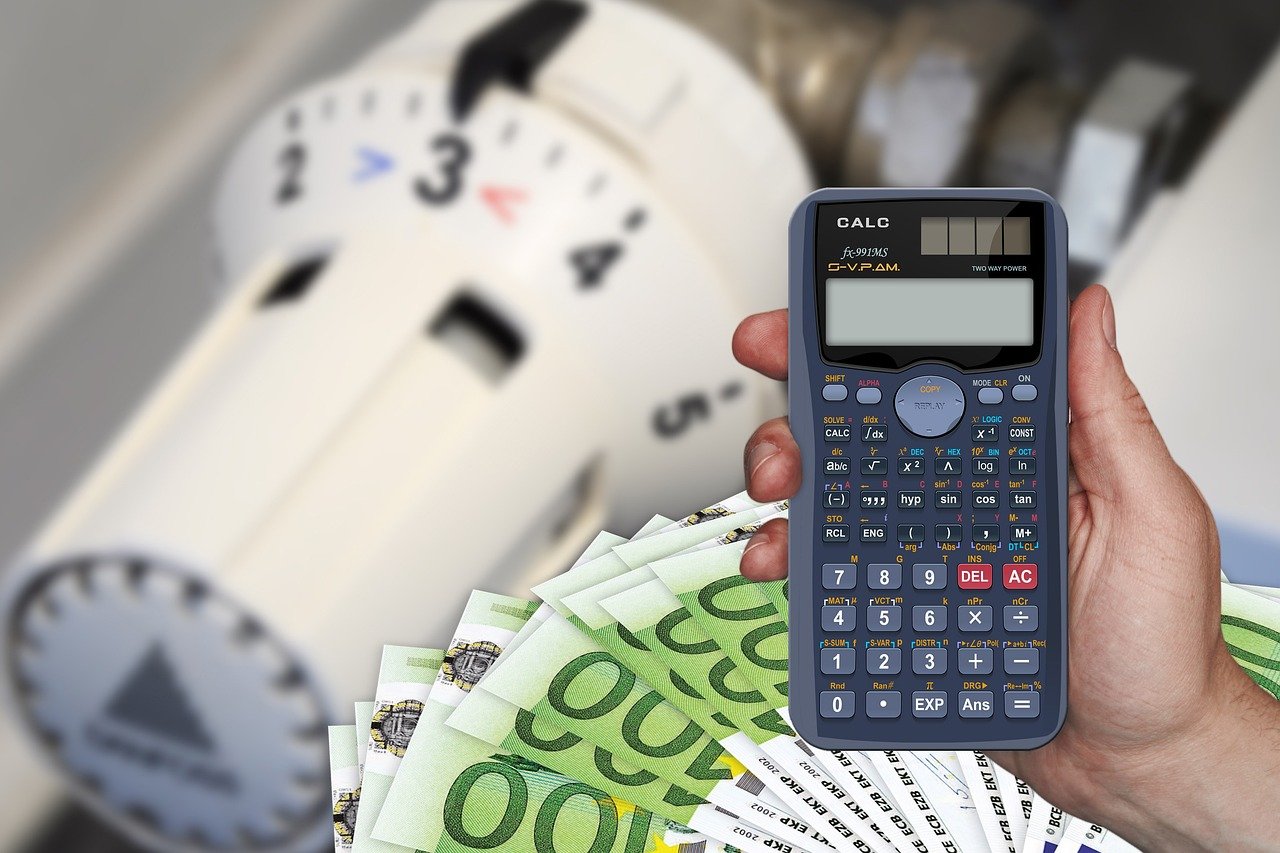
What if the single most boring box on your wall could quietly knock 10% off your heating and cooling costs, without you lifting a finger after setup? That is the promise behind the energy saving thermostat, and unlike most home-improvement hype, a good chunk of it holds up. The catch is that the savings depend less on the gadget and more on how it is set up, where it sits, and what kind of heating system it controls. Get those details right and the numbers work in your favor. Get them wrong and you have bought a expensive wall decoration.
This guide walks through the real mechanics of thermostat savings, the difference between programmable and smart models, the mistakes that quietly erase your gains, and how to match a thermostat to your home’s equipment.
How a thermostat actually saves energy
A thermostat does not generate savings by magic. It saves money by reducing the amount of time your heating or cooling equipment runs. Every hour the furnace, boiler, or air conditioner stays off is an hour of fuel or electricity you do not pay for.
The core mechanism is setback: lowering the heat (or raising the cooling setpoint) when nobody needs comfort. The U.S. Department of Energy has long advised that turning a thermostat back 7 to 10 degrees Fahrenheit for eight hours a day can save roughly 10% a year on heating and cooling, with bigger savings for longer setback periods. That figure is a rule of thumb for ideal use, not a measured average, so treat it as a ceiling rather than a guarantee.
There is a second mechanism that matters more than most people realize: consistency. A thermostat that holds a steady, sensible schedule beats one that gets fiddled with constantly. Households that manually adjust the dial several times a day often end up heating an empty house simply because nobody remembered to turn it down before leaving.
Programmable vs. smart thermostats

Both types can save energy. They just get there differently.
| Feature | Programmable thermostat | Smart thermostat |
|---|---|---|
| Scheduling | Fixed weekly schedule you set manually | Learned or app-based schedule, often auto-adjusting |
| Occupancy detection | None | Motion sensors, phone geofencing |
| Remote control | Usually none | Yes, via phone app |
| Typical cost | Low | Higher upfront |
| Best for | Predictable routines, tight budgets | Irregular schedules, renters-friendly apps, demand response |
| Main risk | Schedule never gets programmed | Over-automation and comfort complaints |
A programmable thermostat is cheap and effective, but only if someone actually programs it. Behavioral research on household heating has repeatedly found that many homes never use the setback features on their programmable units, which shrinks realized savings well below theoretical estimates. If you know you will not spend twenty minutes setting a schedule, a smart model that learns on its own may be the better buy.
Smart thermostats add occupancy sensing, geofencing through your phone’s location, and remote control. They can also enroll in utility demand-response programs, which pay you a small credit to let the utility nudge your setpoint down during peak events. That is a genuine extra saving, though it comes with brief comfort trade-offs on the hottest or coldest afternoons.
If you are weighing upgrade costs against other efficiency purchases, it helps to compare them alongside options like the best smart thermostats to save energy before committing.
What the savings numbers really look like
Manufacturer claims and independent estimates diverge, and knowing the difference keeps your expectations honest.
A widely cited field study of smart thermostats in Ontario, Canada, published around 2015, reported average HVAC energy savings in the range of roughly 5 to 10% for heating and cooling, with wide variation across homes. That range is a reasonable planning figure for a typical household.
Manufacturer white papers are more optimistic. Google Nest has published claims of average heating savings around 10 to 12% and cooling savings around 15%, based on aggregated customer data. Those are vendor claims, not independent studies, and they should be read as marketing benchmarks rather than expected outcomes.
The gap between the two is not dishonesty so much as selection. Households that buy a smart thermostat are often already motivated to save, and manufacturer datasets skew toward engaged users. Your own result will depend on climate, equipment type, insulation, and how aggressively you let the thermostat do its job.
The heat pump problem nobody mentions
Here is where a lot of people get burned. If your home uses a heat pump, aggressive setbacks can backfire.
Heat pumps move heat rather than generate it, and they are most efficient when running steadily at low output. A deep overnight setback forces the system into a long recovery run in the morning, and in cold weather that recovery often triggers auxiliary or backup heat, which is far more expensive per unit of warmth. The result can be higher bills despite a lower average setpoint.
The practical fix is a smaller setback, typically 2 to 4 degrees, or a thermostat specifically designed with heat pump logic that ramps recovery gradually. Some modern heat pump thermostats handle this automatically. Older programmable units often do not, and that mismatch is a common and costly mistake.
The same caution applies to homes with radiant floor heating, which responds slowly, and to any system with a large thermal mass. Short setbacks on slow-response systems rarely pay off.
Placement and setup mistakes that erase savings
You can buy the best thermostat on the market and still see no savings if it is installed badly. These are the errors that show up most often in practice.
- Mounting on an exterior wall. The thermostat reads the cold wall, not the room, and runs the heat longer than needed.
- Placing it near a heat source. Lamps, televisions, ovens, and direct sun all fool the sensor into thinking the room is warmer than it is.
- Putting it in a hallway with no airflow. Dead zones produce inaccurate readings and uneven comfort.
- Blocking it with furniture or curtains. A surprisingly common issue after a room rearrangement.
- Skipping the schedule entirely. The single biggest cause of missed savings.
- Setting extreme setbacks. A house that drops 15 degrees takes so long to recover that the savings evaporate.
- Ignoring zoning. A single thermostat controlling a two-zone house will always overheat or underheat one area.
Smart thermostats with remote sensors solve some of these problems by averaging temperatures across rooms, but they cannot fix a unit mounted above a radiator.
Matching the thermostat to your routine
The best thermostat is the one that fits how your household actually lives. A few patterns tend to work well.
Predictable nine-to-five households do great with a simple programmable unit and a fixed schedule. Setback during work hours and overnight, normal comfort in the evening. Low cost, high reliability.
Irregular schedules benefit from geofencing. The thermostat notices when everyone’s phone has left and switches to away mode automatically, then starts recovery when someone heads home.
Work-from-home households need a different approach. Constant occupancy means occupancy sensing saves little, so the gains come from modest overnight setbacks and careful zoning rather than daytime away modes.
Retirees and households with someone home all day often see the smallest savings from smart features, because the house is rarely empty. Their best lever is usually a lower steady setpoint plus better insulation, not automation.
If your budget is already stretched and an upgrade feels out of reach, the principles still apply. The guide on how to start saving money when your budget already feels tight covers low-cost efficiency moves that pair well with a thermostat tweak.
Where thermostats fit in a wider efficiency plan
A thermostat is a control device, not an insulation upgrade. It manages how much energy you use, but it cannot reduce the rate at which your house loses heat. That distinction matters when you are deciding where to spend money.
A smart thermostat typically costs far less than new windows or added attic insulation, and it delivers savings immediately. But the biggest total gains usually come from combining modest controls with envelope improvements. A well-sealed house with a basic programmable thermostat will often beat a drafty house with a premium smart unit.
The same logic applies to electricity. If you are tracking appliance and HVAC load, a home assistant energy dashboard setup can show you exactly when your heating system runs and whether your schedule changes are working. Seeing the data is often what converts a skeptical household into a consistent one.
For households building a broader savings habit, pairing thermostat discipline with a structured plan helps. A money saving challenge with a simple rule can turn the monthly bill reduction into visible progress, which keeps the habit alive through winter.
Standards, certification, and what the labels mean
Two labels are worth knowing when you shop.
ENERGY STAR certifies connected thermostats that meet efficiency criteria, including occupancy sensing or learning capability and reporting features. Certified models have been through a defined specification rather than a marketing review, so the label is a reasonable starting filter.
In Europe, thermostats fall under the EU ecodesign and energy labelling framework for space heaters and related controls. Thermostat class affects the efficiency credit given to a heating system, with higher classes covering modulating and connected controls. If you are replacing a boiler or heat pump in the EU, the control class can change the rated efficiency of the whole system, which is worth checking before you buy.
Interoperability standards matter too. Matter, launched in 2022, is designed to let smart home devices work across platforms, and OpenADR is the standard many utilities use for demand-response signals. A thermostat that supports these is more likely to stay useful as your smart home and utility programs evolve.
Common questions people ask before buying
A few recurring concerns come up again and again, and they are worth addressing directly.
The first is whether a smart thermostat works with older wiring. Many do, but systems with two-wire heating-only setups sometimes need a power adapter, and heat pump systems need a model with dedicated heat pump support. Checking compatibility before purchase avoids a return.
The second is whether the savings justify the cost. For a typical household, a 5 to 10% reduction on heating and cooling can pay back a mid-range thermostat within a few years, faster in harsh climates with long heating seasons. In mild climates with low bills, the payback stretches out and the comfort and convenience features become the main argument.
The third is whether renters can benefit. Yes, in most cases, provided the existing thermostat can be swapped and restored. Some smart thermostats are designed for easy removal, which makes them renter-friendly.
Conclusion
An energy saving thermostat is one of the few efficiency upgrades that pays you back through behavior rather than construction. The mechanism is simple: run the equipment less when comfort is not needed. The execution is where households succeed or fail. Set a realistic setback, keep it consistent, mount the unit somewhere honest, and match the model to your heating system, especially if you have a heat pump.
Expect savings in the 5 to 10% range from a well-configured smart thermostat, and treat manufacturer claims above that as best-case scenarios. Combine the thermostat with basic envelope improvements, watch your actual usage data, and let the numbers tell you whether the schedule is working. Do that, and the boring box on the wall starts earning its keep.
FAQ
Do smart thermostats really save money?
Yes, but the amount varies widely. Independent field testing puts average heating and cooling savings at roughly 5 to 10%, while manufacturer claims run higher. Real savings depend on climate, equipment, insulation, and how consistently the schedule is followed. Households that let the thermostat run its program without constant manual override see the best results.
Is a programmable thermostat or a smart thermostat better for saving energy?
It depends on your routine and discipline. A programmable thermostat is cheaper and can deliver the same setback savings if someone actually programs and maintains the schedule. Smart thermostats win when schedules are irregular, because occupancy sensing and geofencing adjust automatically. Many households never use their programmable unit’s features, which is exactly the gap smart models are designed to close.
Can a thermostat save energy with a heat pump?
Yes, but with a caveat. Large setbacks on a heat pump can trigger expensive auxiliary or backup heat during morning recovery, which can wipe out the savings. A smaller setback of 2 to 4 degrees, or a thermostat built with heat pump-specific recovery logic, usually works better. Homes with radiant floors face a similar constraint because those systems respond slowly.
Where should a thermostat be placed for accurate savings?
Mount it on an interior wall in a room you actually use, away from direct sunlight, drafts, lamps, televisions, and heat-producing appliances. Avoid exterior walls and dead-end hallways with poor airflow. Placement errors are one of the most common reasons a new thermostat fails to deliver savings, because the sensor reads the wrong temperature and runs the equipment longer than necessary.
How long does it take for a smart thermostat to pay for itself?
For a typical household, a mid-range smart thermostat can pay back within a few years through a 5 to 10% reduction in heating and cooling costs, faster in cold climates with long heating seasons. In mild climates with low energy bills, the payback period stretches out, and convenience and remote control become the stronger reasons to buy.
Do thermostat settings matter more than insulation?
They work on different problems. A thermostat controls how much energy you use, while insulation and air sealing reduce how fast your home loses heat. A well-sealed house with a basic programmable thermostat often outperforms a drafty house with a premium smart unit. The best results come from combining sensible controls with basic envelope improvements rather than choosing one over the other.