What makes a vacuum worth four figures when a $200 model picks up the same cereal? That question drives every premium vacuum purchase, and the honest answer is messier than the marketing suggests. High-end vacuum cleaners are real products with real engineering behind them, but the price combines performance, filtration, build quality, noise control, repairability, and a fair amount of brand storytelling. Separating those factors is the only way to spend wisely.
What “High End” Really Means in Vacuums
Start with an uncomfortable fact: there is no regulated definition of a high-end vacuum. In the United States, vacuums fall under voluntary safety standards such as UL 1017 and general truth-in-advertising rules, not a performance label. Europe tried something more ambitious. Commission Delegated Regulation (EU) No 665/2013 introduced an energy label for vacuum cleaners from September 2014, with a stricter second stage in September 2017. Then, in November 2018, the General Court of the EU annulled the whole regulation after finding the testing method for dust-loaded performance flawed. The label disappeared.
That history matters because it explains why shoppers are largely on their own. Without a mandatory label, “high end” is a marketing category. What separates a genuinely premium machine from an expensive mediocre one is a set of measurable traits — suction that holds up as the bin fills, sealed filtration, durable motors, quiet operation, available spare parts, and a design that does not fight your furniture.
The Engineering That Justifies the Price
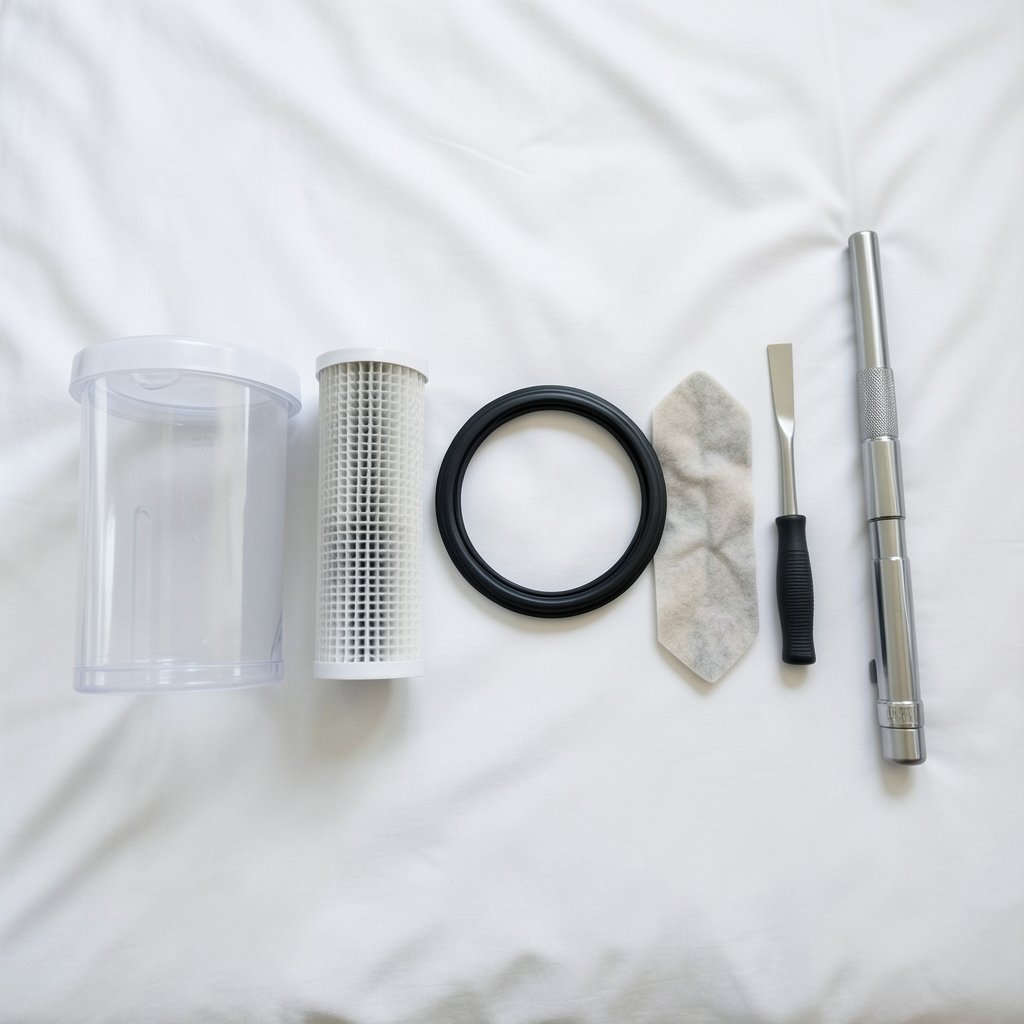
Suction That Doesn’t Fade
Cheap vacuums often perform well on a clean floor with an empty bin. The gap opens over twenty minutes of real use. Premium machines use multi-cyclone separation to keep filters from clogging, so airflow stays stable as debris accumulates. They also seal the whole air path, which matters more than raw motor wattage. A 900-watt motor pushing air through leaking gaskets loses pickup at the nozzle.
Filtration You Can Verify
HEPA filter media is commonly rated to remove at least 99.97% of particles at 0.3 micrometres, a classification tied to established filter-testing practices. But a HEPA filter inside a leaky vacuum is decoration. What counts is whole-machine emissions — the air that escapes around the bin seal and the exhaust. Premium brands invest in gaskets, post-motor filters, and sealed housings, and some publish emission test results. If a manufacturer only mentions the filter and not the seal, treat the claim with mild suspicion.
Noise, Measured Properly
Vacuum noise is tested under IEC 60704-2-1, the household-appliance noise standard. Two machines can both claim “quiet” while differing by ten decibels, which is roughly a doubling of perceived loudness. Premium models often use acoustic shrouding, softer motor mounts, and better airflow design. If you live in an apartment with thin floors, this is not a luxury — it is the difference between cleaning at 7 a.m. and not.
Build and Repairability
This is where high end earns its keep over five to ten years. Metal wand connections instead of friction-fit plastic. Sealed ball bearings. Motors designed to be replaced rather than discarded. Right-to-repair pressure is rising in Europe, and ecodesign rules for appliances increasingly push spare-part availability, though whether vacuums are covered depends on the specific regulation. Before buying, check whether belts, filters, batteries, and brush rolls are sold as user-replaceable parts. If the answer is no, you are renting the vacuum, not owning it.
Corded vs. Cordless: The Premium Split
Cordless stick vacuums overtook corded uprights in several markets somewhere around 2019 to 2021, driven by battery chemistry and compact cyclone designs. That shift reshaped what “high end” means. Today the premium market splits into two philosophies.
| Factor | Premium corded | Premium cordless |
|---|---|---|
| Suction consistency | Constant until the bin fills | Drops as the battery drains |
| Runtime | Unlimited | Typically 20–60 minutes, often less on max power |
| Weight | Heavier, often 6–8 kg | Lighter, easier on stairs |
| Filtration | Usually larger filters, better sealing | Compact filters, sealing varies widely |
| Lifespan | 10+ years with parts | Battery replacement every 2–4 years |
| Best for | Deep carpet cleaning, large homes | Quick daily cleanup, apartments, cars |
A crucial caveat: battery runtime claims are not standardized. Manufacturers usually measure them in low-power mode on a fresh battery, so the number on the box is closer to a best case than a typical one. A vacuum that runs 60 minutes on eco mode may manage eight minutes on boost. If runtime matters, look for independent tests or user reports rather than spec sheets.
If you are weighing a cordless all-rounder, a comparison of the best vacuum mop combo options helps clarify which machines actually handle both dry debris and wet spills without compromising either job.
Where Premium Vacuums Genuinely Disappoint
Balance demands acknowledging the failures. Price is a weak proxy for performance. Consumer-testing organizations in the UK and US have repeatedly found mid-priced models matching premium ones on carpet pickup, and laboratory methods such as ASTM F608 for measuring dirt removal from carpet exist precisely because performance varies in ways marketing hides.
Common disappointments among premium buyers:
- App and connectivity bloat. Wi-Fi-enabled vacuums that require an account to run a basic clean. When the servers retire, the features die.
- Proprietary consumables. Filters and bags priced at a premium with no third-party alternative, turning a $900 vacuum into a subscription.
- Fragile flagship features. Motorized lift systems, self-emptying docks, and retractable hoses add failure points. More complexity means more to break, and repairs can cost a third of the purchase price.
- Battery lock-in. Sealed battery packs that cannot be swapped, forcing replacement or disposal when cells degrade.
The practical lesson: buy the cleaning performance, not the feature list.
Matching the Machine to the Mess
High end means different things in different homes, and the biggest mistake buyers make is choosing a vacuum for the wrong floor type.
Wall-to-wall carpet. Prioritize a powered brush roll, strong sealed suction, and height adjustment. Corded uprights and premium canisters still lead here. If you have pets or long hair, check how the brush roll handles tangles — some designs cut hair automatically, others require scissors every week. A guide to vacuums that handle robot vacuum long human hair actually works situations covers the tangle problem in more depth, and the same principles apply to full-size machines.
Hard floors and mixed homes. Suction-only heads with soft rollers prevent scattering debris. Cordless sticks shine because you will actually use them daily. If you want automated help between deep cleans, the best robot vacuum mop combos that actually clean floors are worth researching, though they complement rather than replace a full-size vacuum.
Homes with dark carpets or thresholds. Robot vacuums and some full-size models rely on cliff sensors that can misread black surfaces. Understanding why robot vacuum cliff sensors fail on black carpet and what fixes exist prevents a frustrating purchase.
Allergy households. Sealed HEPA systems with washable pre-filters and bagged or fully sealed bins reduce exposure during emptying. This is one area where premium genuinely earns the money.
How to Test Before You Commit
Sales floors are designed to flatter. Here is what actually works in practice.
- Ask for a carpet test, not a hard-floor demo. Bring a pinch of rice or sand and watch pickup on medium-pile carpet, then check whether the bin seal leaks.
- Weigh it in your hand, then imagine stairs. Anything above about 7 kg gets tiring on a staircase after two flights.
- Check the filter access. If changing the filter requires a manual and a screwdriver, you will skip it, and performance will drop.
- Look up the spare parts page before buying. Belts, filters, batteries, and brush rolls should be listed with prices. No parts page is a red flag.
- Listen at max power. Noise on boost mode is what you will hear during a real deep clean.
- Confirm the return window. A week of real use in your own home tells you more than any showroom.
One more practical tip: buy from a retailer with a genuine return policy rather than an auction listing. Premium vacuums are frequently counterfeited, and warranty support depends on authorized purchase.
The Maintenance Habits That Protect Your Investment
A $900 vacuum treated carelessly performs like a $150 one within a year. The habits that matter are unglamorous. Empty the bin before it reaches the fill line, because airflow drops sharply once debris packs the cyclone. Wash or replace filters on the schedule the manual specifies, and let washable filters dry completely before refitting — a damp filter grows odour and restricts airflow. Clear the brush roll weekly if you have long hair or pets. Check the hose for blockages when suction feels weak, since a hidden sock in the bend is the most common cause of “broken” vacuums.
There is a parallel lesson from the software world about maintenance debt: small neglected tasks compound. If you have ever searched for how to fix antimalware service executable high CPU usage and found the answer was routine upkeep rather than a dramatic repair, the same logic applies to vacuums. Consistent small maintenance beats emergency intervention every time.
Conclusion
High end vacuum cleaners are worth the money — conditionally. They are worth it when you are paying for sealed filtration, stable suction, quiet operation, durable components, and a parts supply that keeps the machine alive for a decade. They are not worth it when you are paying for an app, a dock, a badge, or a feature you will use twice. The smartest approach is unromantic: identify your dominant floor type, decide whether cordless convenience or corded consistency matters more, verify that consumables and spares are available and reasonably priced, and test the machine on your own carpet before the return window closes. Do that, and the premium price becomes an investment in cleaner air and fewer replacements rather than a tribute to good marketing.
Frequently Asked Questions
Are high end vacuum cleaners actually better than mid-range ones?
Sometimes, and the gap depends on what you measure. Premium machines typically win on filtration sealing, noise control, suction consistency as the bin fills, and spare-part availability. On raw carpet pickup, mid-priced models often match them, which independent testing has shown repeatedly. If allergies, noise, or longevity matter, the premium is easier to justify.
How long should a premium vacuum last?
A well-maintained corded premium vacuum can reasonably last ten years or more, especially if belts, filters, and brush rolls remain available. Cordless models are limited by their batteries, which typically need replacement every two to four years. The single biggest factor is whether the manufacturer sells replacement parts at sensible prices.
Is a cordless vacuum enough as a main vacuum?
For apartments and hard floors, often yes. For large carpeted homes, usually no. Cordless machines trade runtime and suction consistency for convenience, and their runtime figures are measured in low-power mode on a fresh battery, so real-world deep-clean time is much shorter. Many households end up with a cordless for daily tidying and a corded machine for weekly deep cleans.
What does HEPA actually mean on a vacuum?
HEPA filter media is commonly rated to capture at least 99.97% of particles at 0.3 micrometres. The catch is that the rating applies to the filter, not the whole vacuum. If air leaks around the bin seal or the exhaust, unfiltered air bypasses the filter entirely. Look for sealed-system claims and whole-machine emission data rather than the filter alone.
Why did vacuum energy labels disappear in Europe?
The EU introduced an energy label for vacuums in 2014 under Regulation 665/2013, with stricter rules from 2017. In November 2018 the General Court of the EU annulled the regulation after finding the testing method for dust-loaded performance flawed. The label was withdrawn, which is why shoppers now rely on independent testing rather than an official rating.
Should I buy a vacuum with an app and self-emptying dock?
Only if you value the convenience more than the risk. Docks and connected features add failure points and often require an account, and features can stop working when support ends. They also raise consumable costs through proprietary bags. Buy the cleaning performance first, then decide whether the extras are worth the complexity.