What if the biggest problem with your vacuum isn’t suction at all, but the cord? Tripping over it, unwinding it, hunting for a free outlet in a hallway that has none. That single frustration is why so many people end up asking about a cordless stick vacuum cleaner in the first place. It promises grab-and-go cleaning: pull it off the wall, run it over the crumbs, hang it back up. And for a lot of homes, that promise holds. But a stick vacuum is also a machine with real trade-offs, and the marketing around it is loud enough to drown out the practical stuff. This guide cuts through the noise and focuses on what changes your day-to-day experience. (Robot vacuum cleaning solution alternatives that actually)
What a cordless stick vacuum cleaner actually is
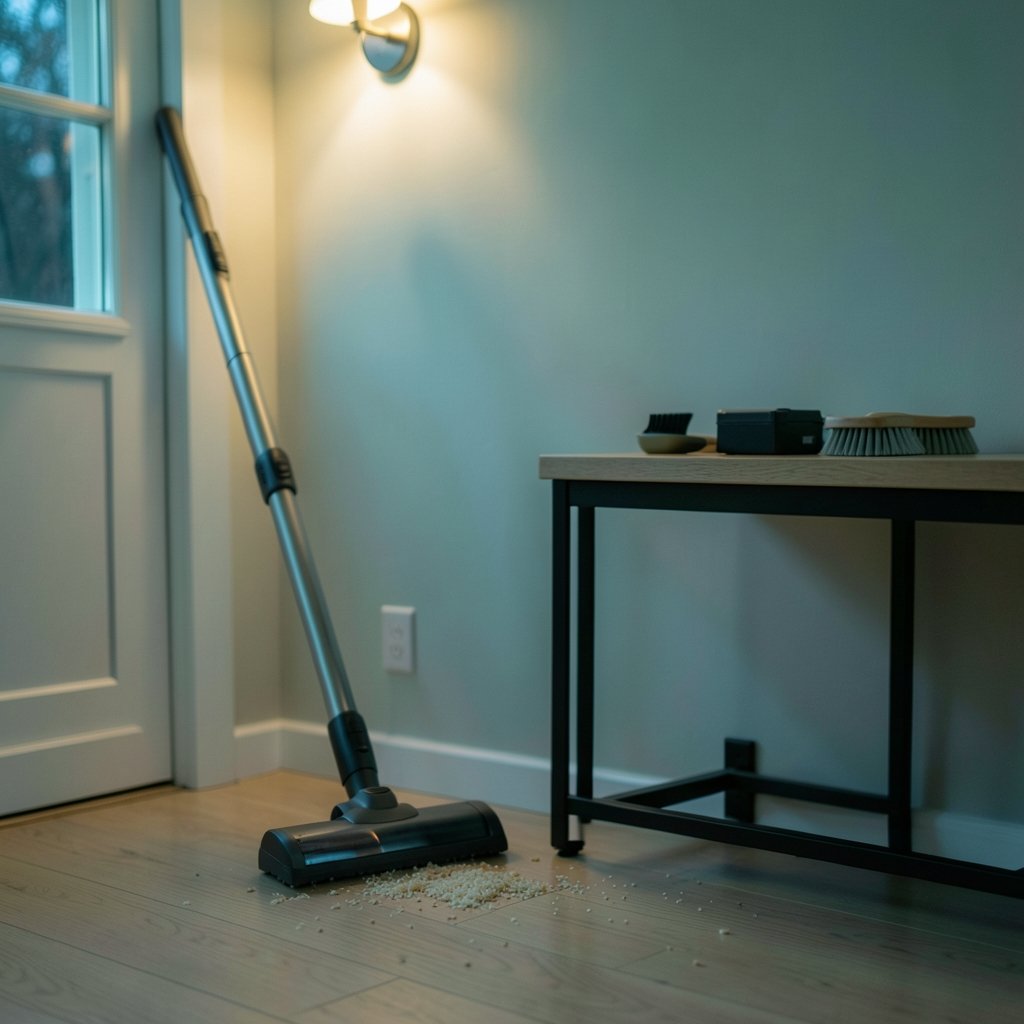
A cordless stick vacuum is a battery-powered upright built around a slim wand. The motor, dust bin, and handle sit in one compact unit at the top, with the floor head at the bottom. You hold it like a broom rather than pulling a canister behind you on wheels.
That form factor is the whole point. It’s light, it stores on a wall mount or in a closet corner, and it converts to a handheld for stairs, car seats, and sofa crevices on many models. It is not, however, a direct replacement for a full-size corded vacuum in every situation. Think of it as the tool you reach for daily, with a heavier machine handling deep carpet work if you have wall-to-wall pile.
Most models run on lithium-ion cells, often in removable or built-in packs of roughly 18 to 40 volts nominal. Runtime is quoted in minutes at a stated power mode, and those quoted figures swing wildly between “eco” and “max” settings. This is the single most misleading number in the category. A vacuum claiming 60 minutes might deliver that only in the lowest mode with a non-motorized head. Switch to max power with a brush roll spinning and you may get a fraction of it.
The EU rules that quietly shaped the cordless boom
Here’s a piece of context most shoppers never hear. EU Regulation No 666/2013, which applied from 1 September 2014, capped mains-powered vacuum cleaners at 1600 W input power, then tightened that to 900 W from 1 September 2017. The regulation covered corded vacuums. Cordless models generally sat outside its input-power cap, and that gap is one reason the cordless segment grew so fast.
The same framework introduced an energy label for vacuum cleaners in 2014. The European Court of Auditors criticised the label’s testing method in a 2018 report, and the label was later withdrawn under the EU’s better-regulation simplification. The practical takeaway for buyers: you can’t lean on a standardized label to compare cordless models. You have to read the specs critically and, ideally, look at independent testing.
Runtime, suction, and the numbers that don’t compare
Suction gets quoted in pascals or air watts. Runtime gets quoted in minutes. Filtration gets quoted with vague “captures 99.9%” language. None of these figures are measured to one common public method, so cross-brand comparisons are shaky at best.
| Spec | What brands claim | What it means in practice |
|---|---|---|
| Runtime | 40 to 70 minutes | Usually the lowest power mode, no motorized head |
| Suction | High pascal or air-watt figures | Peak numbers, often at max mode with short battery life |
| Dust bin | 0.3 to 0.8 L typical | Frequent emptying, especially with pet hair |
| Noise | “Quiet” | Still commonly 70 to 80 dB(A) at the ear |
| Filtration | “HEPA-grade” | Check which standard is actually cited |
That last row deserves attention. Many stick vacuums use cyclonic separation plus a washable or replaceable filter. Genuine HEPA claims should name the standard they meet, because EN 1822 is the reference for HEPA filter classification and “HEPA-like” marketing is everywhere. If a product page won’t name its standard, treat the claim as soft.
On bin size, be realistic. Stick vacuums typically hold roughly 0.3 to 0.8 liters, versus 1.5 to 3 liters or more for corded canisters. If you have shedding pets or a lot of hard floor, you’ll empty the bin mid-clean. That’s normal, not a defect, but it’s a habit you should expect.
Matching the vacuum to your floors
The floor head matters more than the spec sheet suggests. A soft roller is brilliant on hard floors and fine dust. A stiff bristle brush roll digs into carpet pile and pulls up embedded grit. Many stick vacuums ship with one head and sell the other separately, so check what’s in the box before you commit.
If carpet is your main surface, the calculus changes. Deep pile needs sustained airflow and a head that agitates, and a compact stick vacuum can struggle where a full-size machine won’t. It’s worth reading up on what actually works on carpet before assuming a stick vacuum covers everything, and comparing it against a dedicated carpet machine if you have rooms of thick pile.
Pet owners and long-haired households have a specific headache: hair wrapping around the brush roll until it stops spinning. Some designs handle this far better than others, with combs or anti-tangle fins. If that’s your situation, look specifically at how a machine copes with long human hair rather than trusting a generic “pet-friendly” badge.
Hard floors bring their own quirks. Fine dust and pet hair can scatter ahead of the head if airflow is weak, and some mop-combo units leave streaks if the water flow isn’t adjustable. If you want one device for sweeping and light mopping, it’s worth understanding what a vacuum-mop combo genuinely does well before paying extra for the feature.
Battery reality: the part nobody warns you about
Lithium-ion capacity fades with charge cycles and age. That’s chemistry, not a brand flaw. A removable pack extends service life because you can swap in a fresh one instead of retiring the whole machine. If you plan to keep a vacuum for five years or more, a replaceable battery is one of the most valuable features on the box.
There’s no universal industry standard for “battery life” claims, so cross-brand comparisons are unreliable. A few practical habits genuinely help:
- Store the vacuum at room temperature, not in a freezing garage or a hot car.
- Run it down and recharge fully rather than topping up constantly if the manual recommends it.
- Use max mode sparingly; it drains cells fast and heats them up.
- Buy a spare pack at purchase if the model is likely to be discontinued.
Charging time is the other half of the story. Some units take three to four hours to fill, which means a mid-clean drain can end your session. Check the charge time as well as the runtime.
Weight, noise, and the ergonomics of daily use
A stick vacuum lives or dies on how it feels in the hand. Weight at the handle matters more than total weight, because you’re holding it out in front of you. A 1.5 kg machine that balances poorly tires your wrist faster than a 2 kg machine with good balance.
Noise is the other underrated factor. Cordless sticks are often quieter than corded models, but they still commonly land in the 70 to 80 dB(A) range at the ear. In a small apartment with thin walls, that’s enough to annoy a neighbor at 7 a.m. If you clean early or late, test the noise level in person if you can, or buy from a retailer with a generous return window.
Common mistakes people make
The most frequent error is buying on suction specs alone. A vacuum with huge peak suction and a 12-minute max-mode runtime is a frustrating tool. The second mistake is expecting a stick to replace a full-size vacuum entirely, then feeling let down when it can’t handle a deep-clean day.
The third mistake is skipping the filter maintenance. Washable filters need rinsing on a schedule, and a clogged filter quietly kills suction long before the battery does. The fourth is ignoring the bin size and then resenting the machine for needing emptying twice in one room.
A fifth, sneakier mistake involves navigation and sensors on the smarter models. Some robot companions and premium sticks rely on optical sensors that misbehave on very dark flooring, and knowing why cliff sensors can fail on black carpet saves a lot of confusion if you’re building a whole-home cleaning setup. Likewise, if you’re pairing devices, understanding lidar versus camera navigation helps you pick the right tool for the job rather than the one with the longest feature list.
Who should buy one, and who shouldn’t
A cordless stick vacuum is a great fit if you live in an apartment or a home with mostly hard floors, want a quick daily clean, and value the convenience of no cord. It’s also excellent as a second vacuum for a house that already has a full-size machine for deep carpet work.
It’s a weaker fit if you have wall-to-wall deep pile, multiple shedding pets, or a large home you clean in one go. In those cases, a corded canister or an upright with a big bin will do the heavy lifting more comfortably, and the stick becomes the tidy-up tool rather than the main event.
If you’re weighing a stick against a full-size machine, or a vacuum-mop combo against a plain vacuum, the honest answer usually comes down to floor type and how much you hate emptying a bin. There’s no universal winner, only a better match. (Best robot vacuum mop combos actually cleans floor)
What to check before you pay
Before you commit, run through this list in the product specs:
- Runtime at the power mode you’ll actually use, not the headline figure.
- Whether the battery is removable and what a replacement costs.
- Bin capacity and how easy it is to empty without dust clouds.
- Which floor heads are included versus sold separately.
- The filter type and whether replacements are cheap and available.
- Charge time and whether the wall mount includes charging contacts.
- Weight at the handle and the warranty length.
That last one matters more than people think. A two-year warranty on a machine with a sealed battery is a very different proposition from five years with a swappable pack.
Conclusion
The cordless stick vacuum cleaner earned its place in modern homes for a simple reason: it removes friction. No cord, no setup, no excuse to leave the crumbs on the kitchen floor. But the category rewards careful shoppers. Runtime claims are mode-dependent, suction figures aren’t standardized, and bin sizes are small by design. Match the machine to your actual floors, insist on a removable battery if you plan to keep it, and treat filtration claims with healthy skepticism until a standard is named. Do that, and a stick vacuum stops being a gadget and becomes the tool you reach for every single day.
Frequently Asked Questions
How long does a cordless stick vacuum battery last?
Most quoted runtimes range from about 20 to 60 minutes, but those figures are usually measured in the lowest power mode without a motorized head. On max power, expect a fraction of that. Battery packs typically degrade over several years of charge cycles, which is why a removable pack extends the machine’s useful life.
Does a cordless stick vacuum have as much suction as a corded one?
Generally no, especially for deep carpet cleaning. Corded vacuums can draw far more power and hold larger bins. A stick vacuum is best for daily surface cleaning, hard floors, and quick pickups, while a corded machine handles deep cleans and thick pile more comfortably.
How often should I clean the filter?
Check the manual, but most washable filters benefit from rinsing every two to four weeks with regular use, and more often in homes with pets. A clogged filter reduces suction noticeably and can make the motor work harder. Always let the filter dry completely before refitting it.
Can a stick vacuum handle pet hair?
Many can, but the brush roll design matters. Hair wraps around plain bristle rolls and stalls them. Look for anti-tangle combs or finned rollers, and check whether the bin is large enough for the shedding volume in your home.
What does HEPA mean on a vacuum?
HEPA refers to high-efficiency particulate air filtration, and genuine claims should cite a standard such as EN 1822 for classification. Many stick vacuums use cyclonic separation plus a washable filter, and “HEPA-like” marketing is common, so verify the specific standard before trusting the label.
Do cordless vacuums use a lot of electricity?
Very little. They run on rechargeable batteries and draw only a small amount of power while charging. The bigger practical limits are runtime per charge and long-term battery wear, not energy cost.