
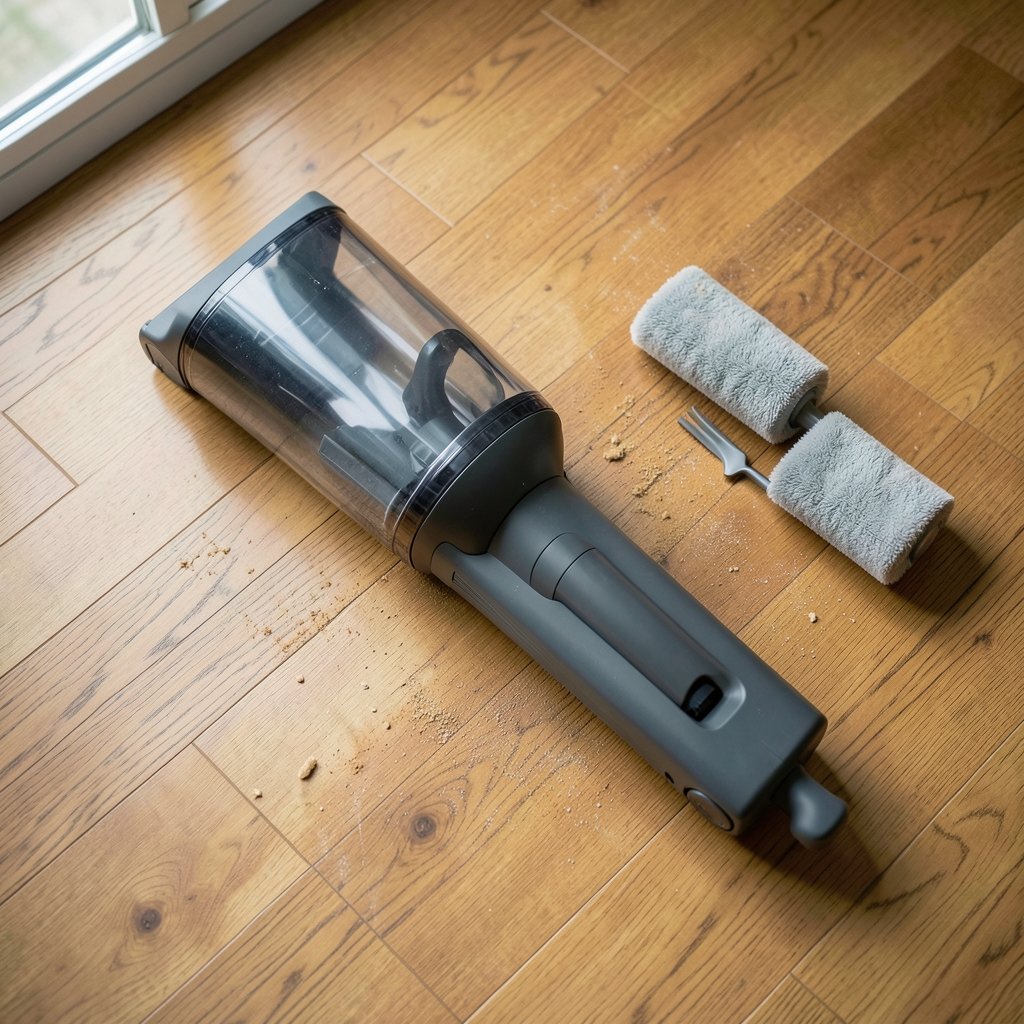
A vacuum you like can still dull hardwood floors with each pass. That sounds extreme, but it happens often. People buy a cordless stick vacuum with strong suction, run it over oak or maple planks, and wonder why the finish looks scuffed a few months later. The usual cause is a spinning brush roll made for carpet, not for a surface that scratches easily.
Hardwood is a soft, scratch-prone surface, and most manufacturers advise against beater bars and brush rolls on bare wood. The right cordless vacuum for hardwood is not the one with the biggest suction number. It is the one that lets you switch off or slow the brush, rolls light enough to steer with one hand, and seals dust in instead of blowing it back across the room. This guide walks through what matters, what marketing hides, and how to pick a machine you will still be happy with two winters from now.
Why Hardwood Floors Change the Whole Buying Decision
On carpet, aggression is a feature. A stiff brush roll digs into fibers, lifts embedded grit, and leaves vacuum lines you can admire. On hardwood, that same aggression is a problem. Grit trapped under a fast-spinning brush gets dragged across the finish like sandpaper. Over time, you get dull patches, hairline scratches, and wear rings around furniture.
There is a second issue people rarely think about: airflow. A strong vacuum can lift lightweight debris, but it can also scatter dust sideways if the head does not seal well against a flat, hard surface. Good hard-floor performance comes from a close-fitting head, a soft roller or a brush that disengages, and enough airflow to pull fine dust into the bin rather than push it into corners.
Practical rule: if the vacuum cannot run with the brush roll off, it is not a hardwood vacuum. It is a carpet vacuum you can use on wood in a pinch.
The Features That Actually Matter on Wood
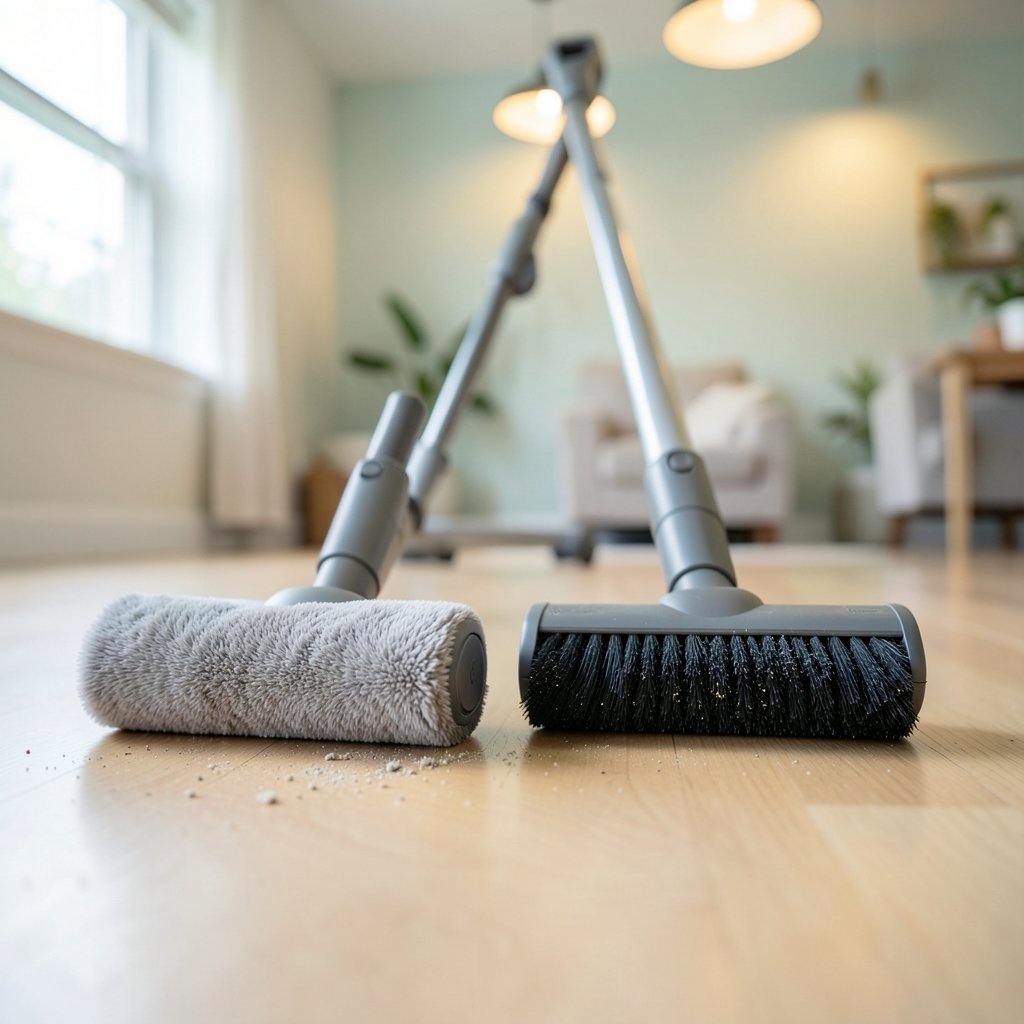
Brush roll control is the make-or-break feature
Look for a dedicated hard-floor mode that either stops the brush roll or swaps it for a soft roller. Soft rollers made of microfiber-style material pick up dust and larger debris without scuffing. Some brands include a second roller in the box; others sell it separately, which is worth checking before you buy.
Suction numbers are not comparable across brands
Manufacturers quote suction in air watts or pascals, but there is no single standardized test across brands. That means a “200 AW” claim from one company cannot be lined up against a “150 AW” claim from another and treated as a ranking. Use the numbers to compare models within one brand’s lineup, and lean on independent testing for anything cross-brand.
Runtime is a range, not a promise
Cordless vacuums typically run 20 to 60 minutes on low or eco mode, and often under 10 to 15 minutes on max. Those are manufacturer claims, and they vary widely by model. A realistic plan is to expect roughly a third of the advertised maximum runtime when you actually need power. For a small apartment with hard floors, 20 honest minutes is plenty. For a whole house, you will want a spare battery or a charging dock in a central spot.
Weight and balance beat raw specs
Many cordless stick vacuums weigh roughly 2.5 to 4 kg. On hardwood you lift, pivot, and reach under furniture constantly, so balance matters as much as the number on the box. A top-heavy vacuum with the battery in the handle feels heavier than its spec sheet suggests. If you can, hold one in a store before buying.
Filtration and what “HEPA” really means
HEPA filtration is defined by standards such as EN 1822 in Europe and IEST-RP-CC001 in the US, but “HEPA” claims on consumer vacuums are not always independently certified. If allergies drive your purchase, look for a sealed system and a filter the brand actually documents. A washable filter that you clean monthly does more for real-world air quality than a badge on the box.
Dustbin size and emptying rhythm
Stick vacuum bins are often small, roughly 0.3 to 0.7 liters. On hard floors you will fill them faster than you expect, because fine dust and hair compact densely. A bin that empties from the bottom without you touching the debris is a small luxury you will appreciate daily.
A Comparison Framework You Can Actually Use
Instead of a ranking that goes stale, here is how to score any cordless vacuum against hardwood floors. Rate each row from 1 to 5 and add up.
| Criterion | What to check | Why it matters on wood |
|---|---|---|
| Brush roll control | Hard-floor mode, soft roller included | Prevents scratches and scuffs |
| Head design | Low profile, soft bumper, wide mouth | Reaches under furniture without marking baseboards |
| Runtime honesty | Eco vs max mode minutes, spare battery option | Finishing the job without a recharge break |
| Weight and balance | Under about 3 kg, battery low in the body | Less wrist strain when pivoting |
| Filtration | Sealed system, washable filter | Keeps fine dust out of the air |
| Bin and emptying | 0.4 L or more, bottom-empty | Fewer interruptions |
| Battery economics | Replacement pack price, warranty length | Total cost over several years |
That last row deserves attention. Battery packs can be a significant share of total cost over a product’s life, and replacement prices vary enormously. A cheap vacuum with an expensive, hard-to-find battery can cost more than a mid-range model with a standard pack.
Cordless Stick vs Robot vs Corded: Setting Expectations
Cordless sticks win on stairs, quick cleanups, and reaching cobwebs in corners. They are the tool you grab for crumbs and pet hair. But if hardwood cleaning is a daily chore across a large area, a robot that runs while you are out can carry the baseline load, and a corded canister can handle deep cleans. Many households end up with a cordless stick plus one helper machine.
If you are weighing a robot for the daily pass, it helps to know which ones genuinely handle both roles. A good starting point is this look at the best robot vacuum mop combos that actually clean floors, and if you plan to use cleaning fluid in a robot or mop, read up on robot vacuum cleaning solution alternatives that actually work before you put anything in the tank. Wood finishes are less forgiving than tile.
Navigation tech also matters more than people expect, especially in open-plan rooms with dark wood. Lidar and camera systems behave differently around dark surfaces and low furniture, which is covered in this comparison of robot vacuum lidar vs camera navigation and the key differences. The same dark-floor quirk shows up in cliff sensors, and this piece on robot vacuum cliff sensors failing on black carpet and what works explains the workaround.
Mistakes People Make With Cordless Vacuums on Wood
Leaving the brush roll on “auto.” Auto mode often spins the brush because the vacuum assumes carpet. On wood, switch to hard floor manually every time. Tape a note to the dock if you have to.
Vacuuming loose grit before sweeping. Big debris like kitty litter or dry cereal can bounce under the brush and grind into the finish. A quick dry sweep first, then the vacuum, is gentler.
Skipping the filter clean. A clogged filter cuts airflow, which makes you push harder and go over the same spot three times. Rinse washable filters monthly and let them dry completely.
Ignoring hair wrap. Long hair wraps around brush rolls and soft rollers alike, and a tangled roller drags instead of gliding. This guide to robot vacuum long human hair and what actually works covers the tools and habits that prevent tangles, and the same advice applies to stick vacuums.
Forgetting the wheels. Small wheels pick up grit and can leave marks when you pivot. Wipe them weekly with a damp cloth.
Charging wrong. Lithium-ion cells last longer if you avoid leaving the vacuum on the charger at 100 percent for weeks. Follow the manual rather than habit.
Matching the Vacuum to Your Home
A studio apartment with sealed hardwood and one shedding cat needs something different from a three-bedroom house with area rugs and a dog. Think in terms of jobs rather than specs.
For a small space, prioritize light weight, a soft roller, and a wall-mounted dock. Runtime barely matters because you will finish in ten minutes.
For a family home, prioritize a swappable battery, a bin you can empty one-handed, and a second roller for the rugs. You will switch modes constantly, so make sure the switch is a physical button, not a buried menu setting.
For homes with both carpet and hardwood, a cordless stick is a bridge tool, not the whole answer. A dedicated best vacuum for carpet handles the deep work on rugs, while the stick covers hard floors and stairs. If you want one machine that does both tolerably well, look at the best vacuum mop combo options and check whether the mop function can be switched off entirely, because wet cleaning on some wood finishes is a no-go.
One more practical check: measure your door thresholds and the gap under your sofa. A vacuum that cannot fit under the furniture leaves a dust ring you will notice every time you sit down.
How to Test a Vacuum Before You Commit
- Ask to run it on both a hard floor and carpet in the store. Listen for the brush spin-up.
- Check whether hard-floor mode is a button or a menu setting.
- Lift it with one hand at arm’s length. If your wrist dips, it is too heavy for daily use.
- Look at the filter. Can you remove and rinse it without tools?
- Ask the price of a replacement battery. Write it down.
- Read the warranty terms for the battery specifically, since it is often shorter than the vacuum warranty.
Conclusion
For hardwood floors, the best cordless vacuum does not need the highest suction number on the shelf. Look for a brush roll you can switch off, a head that glides instead of scrapes, a weight you can steer with one hand, and a battery you can afford to replace. Get those four things right and the suction number becomes a footnote.
Start with brush control, then work through weight, runtime honesty, and battery economics. Skip the marketing superlatives entirely. Your floor finish will tell you within a season whether you chose well, and a finish that still looks even after a year of weekly cleaning is the only review that counts.
Frequently Asked Questions
Can I use any cordless vacuum on hardwood floors?
Technically yes, but not safely with the brush roll spinning. Most manufacturers advise against beater bars and brush rolls on bare hardwood. Use a hard-floor mode that stops or slows the brush, or fit a soft roller, to avoid dragging grit across the finish.
Is a soft roller better than a brush roll for wood?
For most homes, yes. A soft roller lifts dust and larger debris without the stiff bristles that can scuff a finish. Many cordless vacuums include one in the box or sell it as an accessory, so check before buying.
How long do cordless vacuums really run on hardwood?
Expect 20 to 60 minutes on low or eco mode and often under 10 to 15 minutes on max, based on manufacturer claims that vary widely by model. Plan for roughly a third of the advertised maximum when you actually need power, and consider a spare battery for larger homes.
Does HEPA filtration matter on hard floors?
It can, if allergies are a concern. HEPA filtration is defined by standards such as EN 1822 and IEST-RP-CC001, but consumer vacuum claims are not always independently certified. A sealed system and a washable filter you clean monthly matter just as much in practice.
How often should I clean the filter and brush roll?
Rinse a washable filter about once a month and let it dry fully before refitting. Check the brush roll or soft roller weekly for hair wrap, since a tangled roller drags instead of gliding and can mark the floor.
Is a robot vacuum a better choice for hardwood than a cordless stick?
They solve different problems. A robot handles the daily pass across open floor, while a cordless stick covers stairs, corners, and quick cleanups. Many households with hardwood use both rather than choosing one.



