
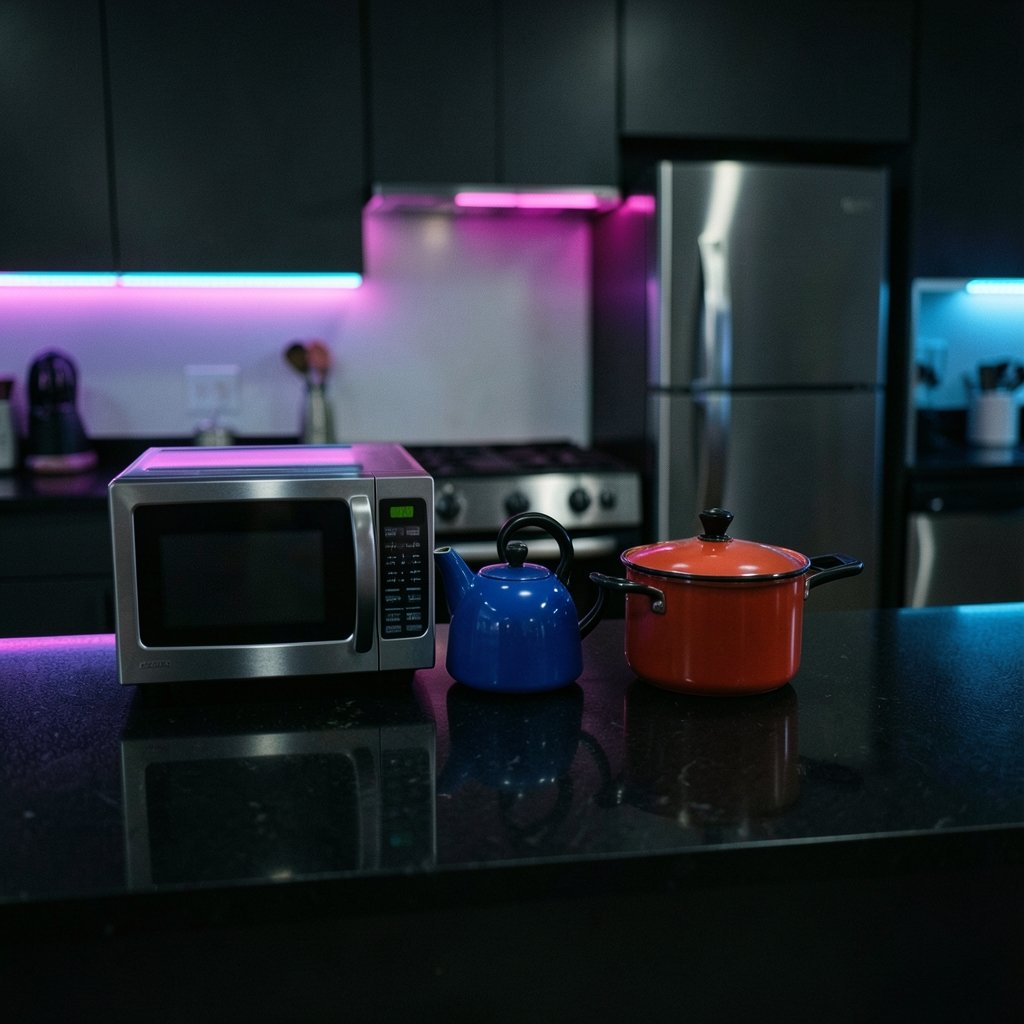
What if the appliance that looks best on the showroom floor is actually the worst fit for your kitchen? It happens more often than most shoppers realize. The best kitchen appliances are not the ones with the flashiest features or the highest price tags. They are the ones that match how a household actually cooks, cleans, and stores food, day after day, for a decade or more.
That gap between marketing and reality is where most buying mistakes happen. This guide walks through what genuinely matters when comparing refrigerators, ranges, dishwashers, and microwaves, from energy labels and noise ratings to warranty law and repair economics. It also covers the practical details that only surface after installation, like clearance, ventilation, and whether a repair bill is worth paying at all.
Start With the Kitchen, Not the Catalog
The single most common mistake is shopping by brand or by looks before measuring anything. Appliance dimensions are unforgiving. A refrigerator that is half an inch too wide will not slide into its alcove, and a range that sits proud of the counter will catch hips and elbows forever.
Before comparing models, a buyer should record four things:
- The exact width, height, and depth of every opening, measured at the narrowest point, not the widest.
- The path from the front door to the kitchen, including doorway widths and stair turns.
- Where doors, drawers, and oven handles will swing, and whether they will hit a wall, island, or another appliance.
- The location of power outlets, gas shutoffs, and water lines, since moving any of them adds real cost.
Depth deserves special attention. Standard counters are about 24 inches deep, while many refrigerators are closer to 30 inches without the doors. A counter-depth model costs more but sits nearly flush. A standard-depth model often costs less but juts into the walkway. Neither is wrong, but the choice should be deliberate.
For anyone working with a tight footprint, the same measuring discipline applies to renovation planning. Practical guidance on fitting appliances into cramped layouts, covered in these small kitchen remodeling ideas for budget-smart upgrades, is worth reading before ordering anything.
Energy Labels: What They Tell You and What They Hide
Most major appliances sold in the United States carry a yellow EnergyGuide label, a Federal Trade Commission requirement that has applied to most categories since the 1980s. The label shows estimated yearly energy use or cost, based on standardized testing. It is genuinely useful for comparing two similar models side by side.
What it does not tell you is how long the appliance will last, how often it breaks, or how much a repair will cost. Those factors usually matter more to total ownership cost than a few dollars a year in electricity. A cheap-to-run refrigerator that needs a compressor replacement in year five is a worse deal than a slightly thirstier model that runs quietly for fifteen years.
In the European Union, energy labels were rescaled to a stricter A to G scale for several appliance categories beginning in March 2021, with the old A+/A++/A+++ tiers retired. The practical effect is that a label that once looked premium may now read as a mid-range C. Shoppers comparing labels across regions or across older stock should check which scale they are looking at.
Efficiency standards themselves are updated periodically, and compliance dates for different appliance types are staggered. A model that met standards a few years ago may no longer be sold new. That is one reason buying current stock from a reputable dealer beats chasing discontinued bargains.
Reliability Is Survey Data, Not Spec Sheets
Here is an uncomfortable truth about appliance shopping: in the United States, there is no government database of appliance failure rates. The reliability information shoppers rely on comes mainly from subscriber surveys run by consumer testing organizations, which ask owners what broke and how often. That methodology is useful but imperfect. It depends on self-reporting, it skews toward the kinds of households that subscribe to such services, and it rarely captures appliances older than a decade.
What does that mean in practice? Treat reliability rankings as directional rather than definitive. A brand that consistently lands near the bottom of survey after survey across multiple years is probably worth avoiding. A brand that swings wildly from year to year is probably showing noise rather than signal.
There is also a well-known pattern worth naming: complex appliances break more. Ice makers, water dispensers, touchscreens, Wi-Fi modules, and steam features all add failure points. A stripped-down model with a mechanical thermostat and no dispenser is, statistically, a safer bet than a flagship with a dozen sensors. Buyers who want the features should buy them with eyes open, and should budget for the possibility of repair.
Matching the Appliance to the Cook
The best appliance for one household is often wrong for another. A few honest questions sort this out faster than any spec comparison.
| Household habit | What matters most | What matters least |
|---|---|---|
| Reheats and assembles meals | Microwave power and even heating | Pro-style range features |
| Cooks most nights, one or two people | Burner control at low heat, oven size | Double ovens, warming drawers |
| Bakes bread and pastries | Oven temperature accuracy and consistency | Speed of stovetop boiling |
| Entertains large groups often | Dishwasher capacity and cycle speed | Compact footprint |
| Buys in bulk, freezes meals | Freezer volume and organization | Counter-depth styling |
A few specifics are worth flagging. Induction cooktops heat fast and are easy to wipe down, but they require magnetic cookware, and a buyer’s existing pans may not work. Gas ranges offer instant visual feedback but need proper ventilation. Dishwashers vary enormously in noise, and an open-plan kitchen makes that difference obvious.
Noise is measured in decibels (dB), and there is no single mandatory labeling standard for appliance sound in the United States, so cross-brand comparisons require care. A dishwasher rated around 40 dB is quiet enough to run during dinner conversation. Models in the low 50s are noticeably audible from an adjacent room. For range hoods, sound ratings matter just as much, since a hood that is too loud simply will not get used.
Lighting counts too. Under-cabinet lighting makes a real difference to how usable a counter feels, and glare from poorly diffused strips is a common complaint after installation. The fixes for visible dots and hot spots, explained in this guide to an LED strip diffuser for kitchen cabinets that fixes dots, glare, and hotspots, are simple once the problem is understood.
The Small Details That Drive People Crazy
Some of the most irritating appliance problems have nothing to do with performance. They come from unit conversions, recipe scaling, and the quiet mismatch between American and metric measurements.
A cook following a European recipe may hit a measurement that does not translate cleanly. Knowing how many ounces are in a cup, and why the answer depends on whether the cup is liquid or dry, prevents a lot of wasted ingredients. This explanation of the oz-to-cup conversion that actually works in the kitchen is a useful reference to keep nearby.
Spoons cause similar confusion. A tablespoon is three teaspoons in the US system, and a fluid ounce is two tablespoons, but dry and liquid measures do not always align the way people assume. Two practical references cover the ground: the tablespoons-to-cup conversion that trips everyone up, and the teaspoons-to-tablespoon conversion that saves a recipe when a measuring set goes missing.
None of this is glamorous. But an appliance that is hard to use, or a kitchen where basic measurements keep going wrong, drains more satisfaction than a slightly better compressor ever adds.
Repair or Replace? A Rule of Thumb and Its Limits
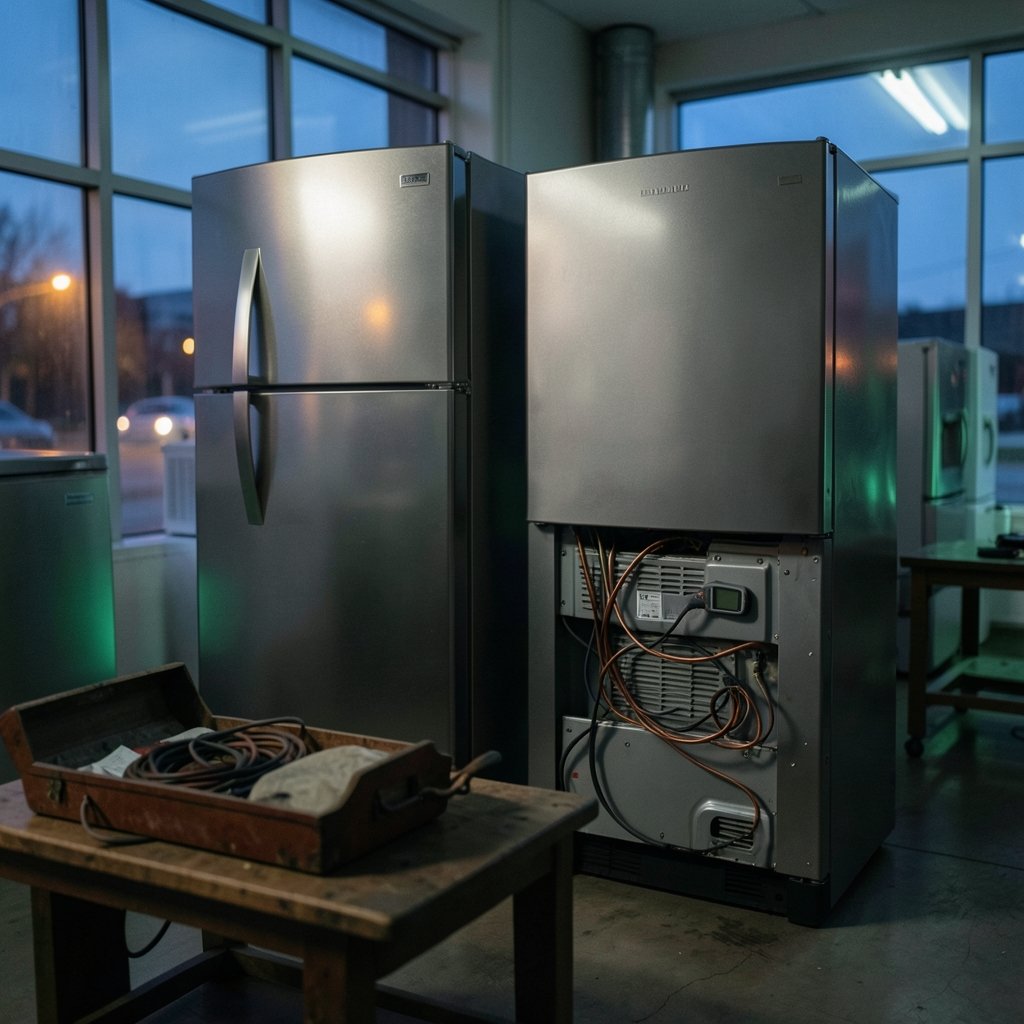
When something breaks, the standard advice is to replace the appliance if the repair costs more than half the price of a new one. That heuristic is widely repeated and genuinely useful as a starting point. It is not a law, and it should not be applied blindly.
Three adjustments make it smarter. First, factor in age. A repair on a four-year-old refrigerator is usually worth doing; the same repair on a fourteen-year-old unit often is not, because other components are close to failing. Second, factor in disruption. Replacing an appliance means delivery, installation, hauling away the old unit, and possibly adjusting cabinetry. A repair that costs slightly more than half the replacement price but happens in one afternoon may still be the better choice. Third, factor in efficiency. An old unit that guzzles electricity may be worth replacing even if the repair is cheap, because the savings compound.
Warranty coverage changes the math too. In the United States, written warranties on consumer products are governed by the Magnuson–Moss Warranty Act, a federal law that sets rules for how warranties are disclosed and what they must cover. Buyers should read the actual warranty document rather than the marketing summary, and note whether coverage applies to parts only, labor, or both, and how long the sealed refrigeration system is covered compared with the electronics.
Right-to-repair rules have also been expanding in several US states and in the EU. The practical benefit for owners is better access to parts, manuals, and independent repair shops. Buyers who plan to keep an appliance for a long time should check whether the manufacturer sells parts directly and publishes service documentation.
Where to Spend and Where to Save
A simple allocation principle works well: spend on the appliances used daily and save on the ones used occasionally.
A refrigerator runs 24 hours a day, every day, and is expensive and disruptive to replace. It deserves the largest share of the budget. A range or cooktop is used daily in most households and is worth investing in for burner control and oven consistency. A dishwasher earns its money through quiet operation and reliable drying, both of which cost more.
Microwaves, on the other hand, are largely commodity items. A mid-priced model with adequate wattage and a simple control panel performs nearly as well as a premium one. The same logic applies to small countertop appliances and to accessories. A buyer who wants to redirect money toward the big four should look at where savings are painless, and these budget-focused kitchen upgrade ideas help identify which swaps actually pay off.
One more practical note: buy from a dealer with a clear return policy and a real service network. The best-specified appliance in the world is a frustration if the nearest authorized technician is two hours away.
Conclusion
The best kitchen appliances are not a fixed list. They are the models that fit the space, match the cooking, run quietly and efficiently, and can be repaired by someone local at a price that makes sense. Measure before shopping, read the energy label for what it actually says, treat reliability surveys as directional, and be honest about which features will get used and which will just add failure points. Do that, and the appliance that looks best on the showroom floor has a fair chance of also being the one that still works well a decade later.
Frequently Asked Questions
What are the most important appliances to invest in?
Refrigerators, ranges, and dishwashers deserve the most budget because they are used daily, are costly to replace, and are disruptive to swap out. Microwaves and small countertop appliances are closer to commodity purchases, so a mid-priced model usually performs nearly as well as a premium one.
Are expensive kitchen appliances more reliable?
Not necessarily. Complexity is a stronger predictor of failure than price. Features like ice makers, water dispensers, touchscreens, and Wi-Fi modules add components that can break, so a simpler model from a well-regarded brand often outlasts a feature-heavy flagship.
How do I read an energy label when comparing appliances?
In the US, the yellow EnergyGuide label shows estimated yearly energy use or cost based on standardized testing, which is useful for comparing similar models. It does not indicate lifespan or repair costs, so it should be one input among several rather than the deciding factor.
Is it better to repair or replace a broken appliance?
The common rule of thumb is to replace when a repair costs more than half the price of a new unit. Adjust that for the appliance’s age, the disruption of replacement, and efficiency gains from a newer model, and always check what the written warranty actually covers before deciding.
How quiet should a dishwasher be?
Look for a rating around 40 decibels for a dishwasher quiet enough to run during conversation in an open-plan kitchen. Models in the low 50s are noticeably audible from an adjacent room. Since the US has no single mandatory sound labeling standard, compare carefully across brands.
Does right-to-repair legislation affect appliance buyers?
Yes. Expanding right-to-repair rules in several US states and in the EU aim to improve access to parts, service manuals, and independent repair shops. Before buying, check whether the manufacturer sells parts directly and publishes service documentation, especially if you plan to keep the appliance for many years.



