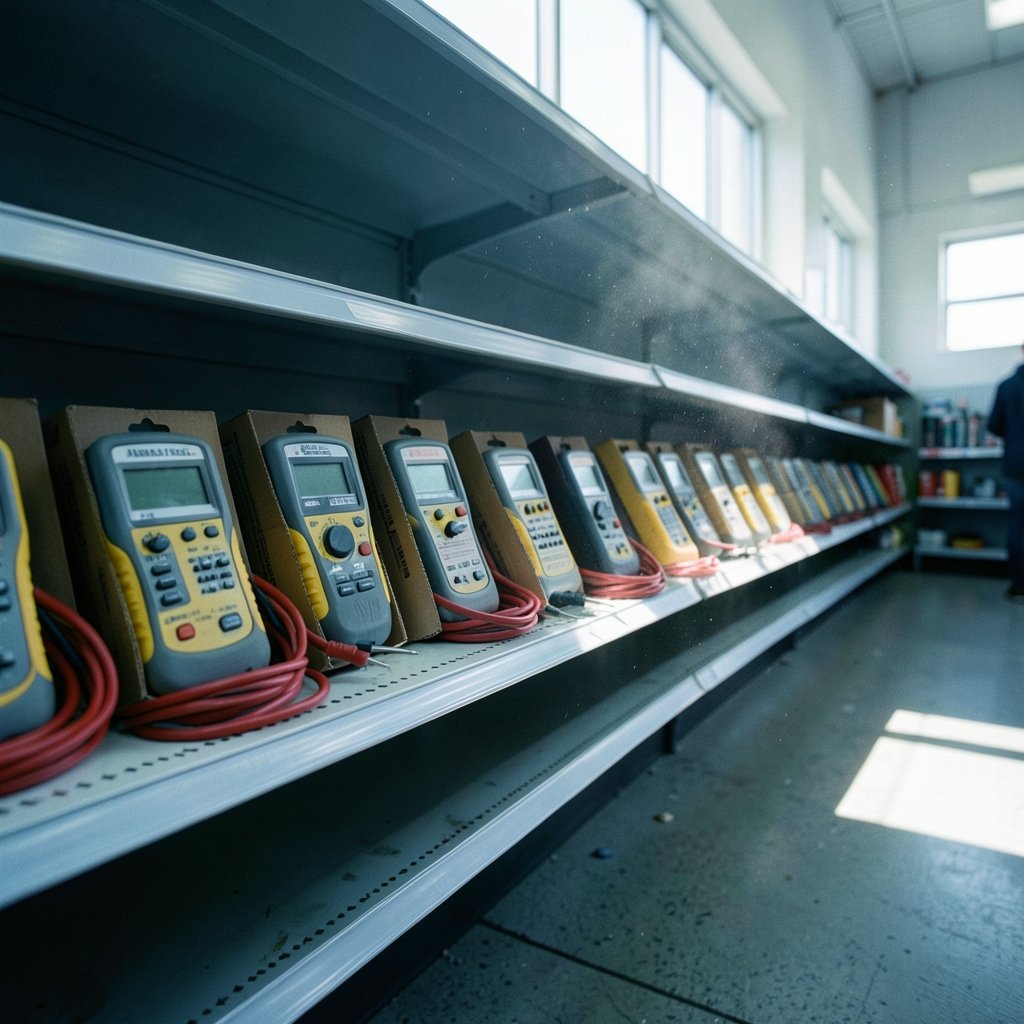
What separates a $30 multimeter from a $300 one, and does a weekend electrician actually need the expensive model? Walk into any hardware store or scroll through an online marketplace, and you will find dozens of meters that look nearly identical. The specs printed on the box, though, tell very different stories. Some meters are built to survive a direct encounter with mains voltage. Others are best kept to low-voltage hobby work. Knowing which is which takes about ten minutes of focused reading, and this guide walks through exactly what to check.
Start With Safety, Not Features
The single most important spec on any multimeter is its CAT rating, short for measurement category. The IEC 61010-1 standard defines these categories by where in an electrical installation a measurement is taken, and each meter is rated for a maximum voltage within a category. A higher category means the meter is built to withstand bigger transient surges without arcing over or exploding in the user’s hand.
| Category | Typical Use | Common Voltage Ratings |
|---|---|---|
| CAT II | Appliances, outlets, portable tools | 300V, 600V |
| CAT III | Distribution panels, fixed wiring, bus bars | 600V, 1000V |
| CAT IV | Utility service, outdoor feeders, meters | 600V, 1000V |
Here is the practical rule that matters more than any other in this guide: the meter’s CAT rating should match or exceed the circuit being measured. A CAT II meter used inside a live distribution panel is not a bargain. It is a hazard. Electricians who work in panels regularly should be shopping in CAT III territory, and anyone poking around service entrances needs CAT IV. Hobbyists measuring batteries and breadboards can safely stay in CAT II.
One common mistake: buyers check the CAT number and ignore the voltage. A “CAT III 300V” meter is not appropriate for a 480V panel even though it says CAT III. Read both numbers together.
True RMS or Average-Responding?
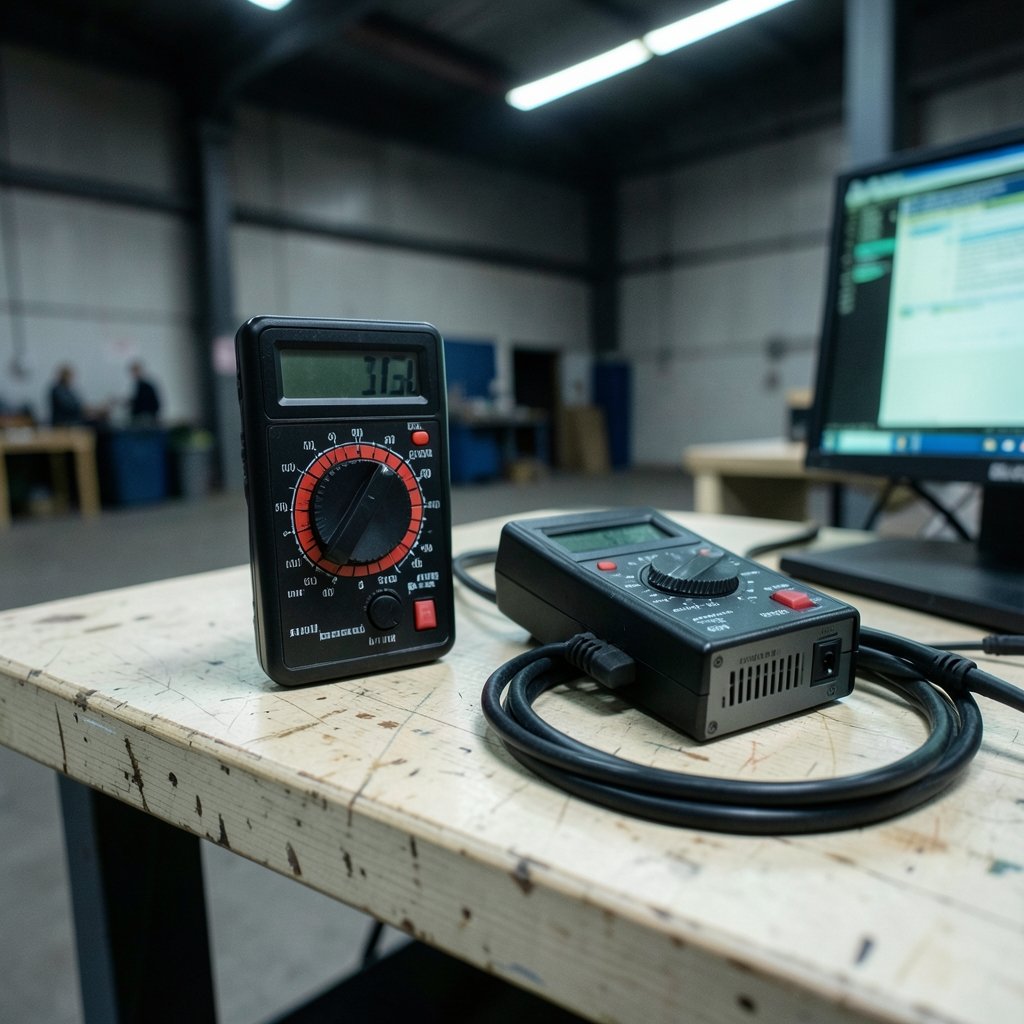
A true RMS meter calculates the root-mean-square value of a waveform directly, so it reads correctly even when the AC signal is distorted or non-sinusoidal. An average-responding meter is calibrated for clean sine waves. Feed it a chopped waveform from a dimmer, a variable-frequency drive, or a lot of modern electronics, and the reading can be off by a meaningful margin.
Does everyone need true RMS? No. If the work is basic household wiring, automotive diagnostics, and continuity checks, an average-responding meter does the job. If the work involves motor drives, inverters, HVAC controls, or anything with switching electronics, true RMS stops being a luxury and becomes the correct tool. Expect to pay a bit more for it, but the gap has narrowed considerably in recent years.
Counts, Resolution, and What the Digits Mean
A “3½-digit” meter is usually a 2000-count instrument, meaning it can display values up to roughly 1999. A 6000-count meter resolves to about 1 part in 6000. On a 6V range, that difference shows up as finer resolution in the last digit. For most general work, 2000 to 6000 counts is plenty. Bench work and precision troubleshooting benefit from higher counts, but do not pay for resolution you will never read.
Accuracy Specs Decoded
Accuracy is normally written as ±(% of reading + number of counts). That format matters because the error depends on both the value being measured and the least-significant digit of the range. A spec like “±(0.5% + 2)” on a reading of 100.0V means the true value could sit roughly half a volt plus two counts away. Cheap meters often hide looser specs in the fine print, so compare the accuracy line, not the headline features.
Autoranging vs. Manual Ranging
Autoranging meters pick the range for you. Manual-ranging meters make you select it. Autoranging is faster and friendlier for beginners, and it is what most people should buy. Manual ranging still has fans among technicians who want predictable response times and no range-hunting delays when probing fluctuating signals. Many good meters offer both modes, which is the ideal compromise.
Input Impedance and Ghost Voltages
Most handheld meters present about 10 MΩ of input impedance in voltage mode. That is fine for the vast majority of measurements. Some meters add a high-impedance mode above 1 GΩ for sensitive circuits, and a low-impedance mode that bleeds off ghost voltages — phantom readings induced by nearby wiring that make a dead circuit look live. If you troubleshoot lighting circuits or three-way switches, a low-impedance mode earns its keep quickly.
Current Measurement and Burden Voltage
Measuring current means the meter inserts a shunt resistance into the circuit, which creates a burden voltage that can disturb what you are measuring. Lower-burden designs reduce that effect. More important for safety: current ranges are protected by fuses, and the fuse voltage rating must be adequate for the circuit. A blown fuse replaced with the wrong type is a genuine safety issue, not a minor inconvenience. Buy spare fuses of the exact specified type when you buy the meter.
A frequent beginner error is leaving the test leads in the current jacks and then probing a voltage source. Good meters warn you or block the measurement. Cheap ones may not. This is one of the clearest places where spending more buys real protection.
Build Quality, Leads, and the Stuff Reviews Skip
The meter body gets all the attention, but the test leads are half the tool. Flimsy leads with thin insulation, loose banana plugs, and no finger guards are a common weak point in budget kits. Look for silicone-insulated leads rated for the same CAT level as the meter, with shrouded plugs and finger barriers.
Other practical checks:
- Confirm the meter has a backlight if you work in panels or crawlspaces.
- Check whether it offers a continuity beeper fast enough to be useful when hunting wires.
- Look for a hold function and min/max recording if you chase intermittent faults.
- Verify the battery type is common and the fuse compartment opens without disassembly gymnastics.
- Check whether the case includes a stand and a magnet or hanging hook.
These details rarely appear in spec sheets, but they decide whether a meter lives in the toolbox or the drawer.
Calibration and Long-Term Trust
Meters drift over time and usually need periodic calibration. Calibration intervals are set by the user or by a quality system, and labs accredited to ISO/IEC 17025 perform traceable calibrations. For a homeowner, annual calibration is excessive. For anyone doing commercial work or documenting measurements for a client, a calibration certificate has practical value. Before buying, check whether the manufacturer publishes a calibration procedure and whether the meter can be adjusted, rather than merely checked.
Budget Tiers: What Money Actually Buys
| Tier | Typical Price Range | What You Get | Best For |
|---|---|---|---|
| Entry | Under $50 | 2000 counts, CAT II, basic functions | Learners, low-voltage hobby work |
| Mid | $50–$150 | 6000 counts, true RMS, CAT III, better leads | DIYers, apprentices, field techs |
| Pro | $150+ | High counts, CAT III/IV, low-Z mode, logging | Electricians, engineers, commercial work |
The jump from entry to mid tier is where most of the value sits. The jump from mid to pro buys durability, tighter accuracy, and features that only pay off with daily use.
Buying gear in adjacent categories follows the same logic: match the tool to the actual job, not the fantasy job. That principle shows up in our guide to the best android phones for photography, where camera specs matter only if you shoot in the conditions that need them. The same holds for meters.
Common Buying Mistakes to Avoid
The most expensive mistake is buying a meter with a CAT rating that sounds impressive but does not match the work. The second is trusting a bargain meter’s claimed accuracy without checking the fine print. The third is skipping spare fuses. The fourth is buying a kit with a huge accessory bundle and a mediocre meter at the center of it.
There is also a quieter mistake: overbuying. A 50,000-count bench meter with logging software is a wonderful instrument and a poor choice for someone who mainly checks continuity and battery voltage. Spend the difference on better leads instead.
Where a Multimeter Fits in a Bigger Toolkit
A meter rarely works alone. It pairs with soldering gear, power supplies, and whatever device is being repaired. If the repair work leans toward computers and peripherals, the buying logic in our webcam buying guide for beginners is a useful parallel: cheap components fail in ways that cost more time than the savings. For anyone building out a workbench around a PC, the checklist in this gaming keyboard buying guide shows how to verify specs before paying, which is exactly the habit that separates a good meter purchase from a regret.
How to Test a Meter Before You Trust It
New meter in hand? Run a few quick checks before relying on it.
- Measure a known voltage source, such as a fresh battery, and compare against expected values.
- Short the leads in resistance mode and confirm the reading is near zero, accounting for lead resistance.
- Test continuity on a known good fuse and a known blown one.
- Check the leads for secure seating in the jacks and inspect insulation for nicks.
- Confirm the fuse ratings printed on the case match the fuses installed.
If any check looks off, return the meter. A questionable instrument is worse than no instrument because it produces confident wrong answers.
Conclusion
Buying a digital multimeter comes down to matching three things: the CAT rating to the circuits being measured, the measurement functions to the actual work, and the build quality to how often the tool gets used. A 6000-count true RMS meter with a genuine CAT III rating and decent leads covers an enormous range of real-world tasks without stretching the budget. Spend the savings on spare fuses and better probes, and the meter will earn its place in the toolbox for years.
Frequently Asked Questions
Do I really need a true RMS multimeter?
Only if you measure distorted or non-sinusoidal AC, such as output from drives, inverters, or modern electronics. For basic household wiring and DC work, an average-responding meter is fine.
Is a CAT III meter safe for home electrical panels?
Yes, provided its voltage rating also covers the circuit. A CAT III 600V meter suits most residential panel work. Check both the category and the voltage, never just one.
How often should a multimeter be calibrated?
For hobby use, rarely or never. For commercial or documented work, follow the interval set by your quality system, and use a lab accredited to ISO/IEC 17025 for traceable results.
What count rating should a beginner buy?
A 2000-count meter handles basic checks, but a 6000-count model offers noticeably finer resolution for a modest price increase and is the better long-term buy.
Why does my meter read voltage on a dead circuit?
That is likely a ghost voltage induced by nearby wiring. A meter with a low-impedance mode can bleed it off and show the true reading.
Can I measure current with the leads in the voltage jacks?
No. Current measurement requires the dedicated current jacks and the correct range. Probing voltage with leads in current mode can blow the fuse or damage the meter.