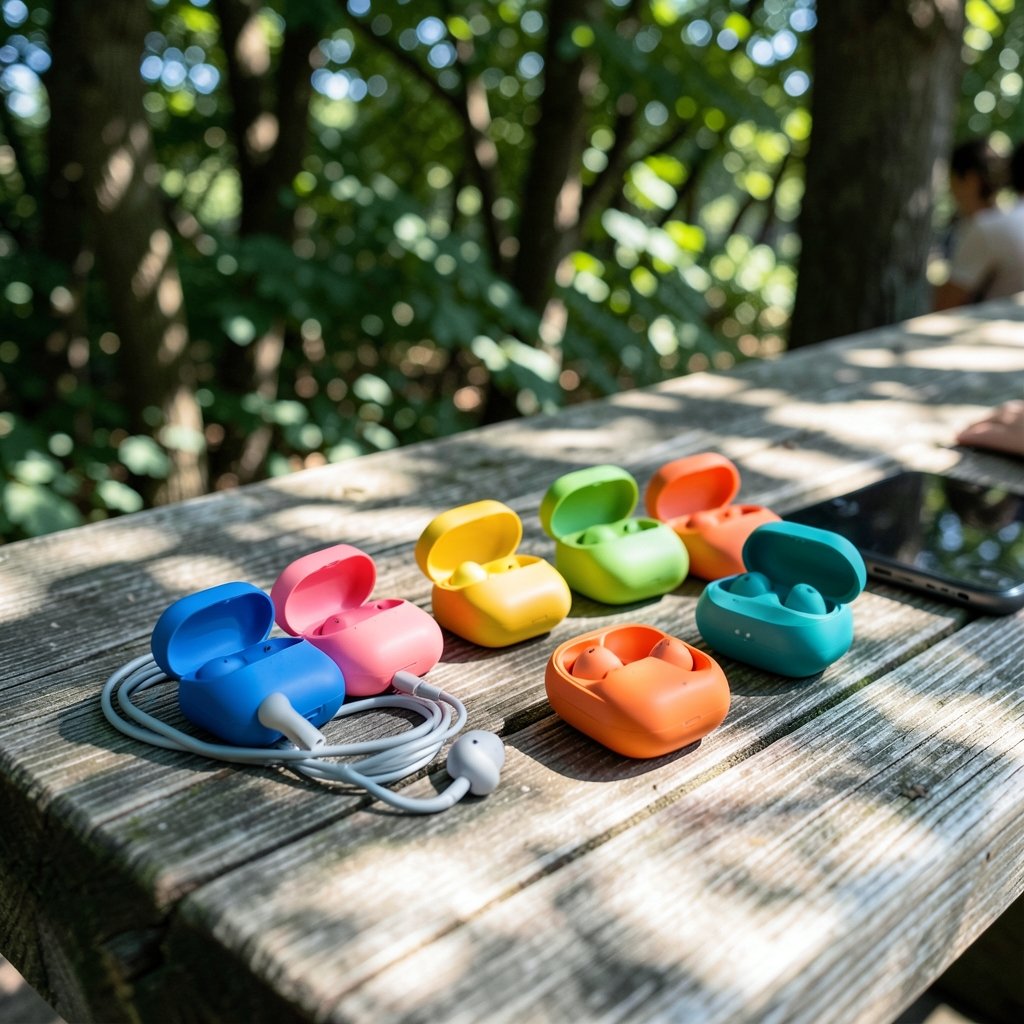
What if the pair of earbuds that finally makes you stop scrolling costs less than a decent lunch for two? That question used to have a sad answer. Budget earbuds meant muddy bass, dropped connections, and a charging case that gave up by Tuesday. The 2027 crop is different. Active noise cancelling, multipoint pairing, and honest battery numbers now show up well below the fifty-dollar line, and the best picks are separated by small details rather than big compromises.
Below is a shortlist of named options, each with who it suits, what it nails, and the one thing that might annoy you. Prices appear only where a published listing states them, so check the live price before you commit.
The Shortlist at a Glance
| Pick | Best for | Standout feature | Main trade-off |
|---|---|---|---|
| Soundcore P30i | Overall value | Up to 42 dB ANC, case props up a phone | Bass-forward tuning |
| Anker Soundcore Life P3i | First ANC pair on a tight budget | App equalizer, comfortable fit | Manual re-pairing between devices |
| CMF Buds (by Nothing) | Balanced sound | Clean tuning for the money | Fewer extras than Soundcore |
| Moondrop Mirage | Long-haul battery | 12.5 hours per charge, 53.5 hours total | No published IP rating |
| JLab Go Pop / Flex Open | Open-ear and clip styles | IP55 sweat rating, multipoint | Open design leaks sound |
| Soundcore V30i | Hook-style workouts | 12 hours per charge, 14.2 mm drivers | IPX5 only, no multipoint |
| Wired backup (Apple EarPods USB-C) | Zero-lag simplicity | Around $20, no charging | A cable, always |
Soundcore P30i: The Value Benchmark

If one pair defines what fifty dollars buys in 2027, it is this one. The P30i sits at $26.99 and packs 10 mm drivers plus up to 42 dB of noise cancelling, according to a published listing. The case even has a flat shelf that props up a phone, which sounds like a gimmick until you are watching something on a train tray table.
Who it suits: commuters, students, and anyone who wants ANC without thinking hard about it. The ANC figure is the headline, but the practical win is that you can leave it on without the battery collapsing.
The limitation: Soundcore’s house sound leans bass-heavy out of the box. If you listen to acoustic or classical material, plan to spend five minutes in the app dialing it back. Also treat the 42 dB claim as a lab number, not a promise of silence on a packed bus.
Anker Soundcore Life P3i: The Comfortable Starter Pair
The Life P3i is the pick for people buying their first noise-cancelling earbuds and unwilling to gamble. Reviewers consistently single out three things: sound quality that is impressive for the price, a companion app with a usable equalizer, and a comfortable fit for long sessions.
Who it suits: college students, teenagers, and anyone who wants to test whether ANC matters to them before spending more.
The limitation: switching devices is genuinely annoying. There is no multipoint, and moving from a laptop back to a phone means manually disconnecting and re-pairing. If you hop between devices all day, this will wear on you fast. The noise cancelling itself is described as just okay, so do not expect elite quiet.
CMF Buds: The Balanced-Sound Pick
CMF, the budget sub-brand tied to Nothing, earns the “best overall” nod in independent testing for one reason: tuning. Where several rivals push bass to impress in a showroom, CMF aims for a more even response that holds up across podcasts, pop, and rock.
Who it suits: listeners who care about how voices and instruments actually sound rather than how hard the low end hits.
The limitation: you give up some of the app polish and feature depth that Soundcore bundles in. For pure listening, that trade is usually worth it. For tinkering, it is not.
Moondrop Mirage: The Battery Champion
Battery life is where cheap earbuds usually embarrass themselves, and the Mirage is the exception. It delivers 12.5 hours from the buds alone and 53.5 hours total with the case, the longest single-charge figure in its comparison roundup. Sound quality scores at the top of that same list, with the careful, even tuning Moondrop is known for in its wired models.
Who it suits: people who charge their case weekly, not nightly, and anyone who refuses to babysit a battery gauge.
The limitation: Moondrop publishes no IP rating for the Mirage, so sweat and rain protection is unproven. Keep these for dry days and indoor sessions. The teal artwork is also a lot to wear if subtlety is your thing.
JLab Options: Open-Ear and Clip Styles
Not everyone wants a sealed bud jammed into their ear canal. JLab covers the open side of the market well. The Flex Open is a clip-on cuff with IP55 sweat resistance, multipoint, and more than 21 hours total playtime. The Go Pop line covers the hook style at a price that undercuts most gym accessories.
Who it suits: runners, cyclists, and office workers who need to hear a doorbell or a car horn.
The limitation: open designs leak sound in both directions. Your podcast is everyone else’s podcast on a quiet train, and loud rooms will swallow your audio. That is physics, not a defect.
Soundcore V30i: The Hook-Style Workout Pick
For a sub-$50 hook design, the V30i is the battery play. It offers 12 hours per charge, 14.2 mm drivers, and four microphones for calls.
Who it suits: gym regulars who want an ear hook that stays put through sprints and burpees.
The limitation: the rating is IPX5 rather than IP55, and there is no multipoint. If you want a sweat rating and device switching together, the cheaper V20i hook covers both with IP55 and multipoint, at the cost of battery life.
The Wired Wildcard: Apple EarPods With USB-C
Sometimes the right answer is a cable. Apple’s USB-C EarPods cost around $20, work with essentially every modern phone, and eliminate charging, pairing, and latency in one move. They are the pair to keep in a bag as a backup, the way you keep a lip balm or a spare charger.
Who it suits: anyone who takes calls on the go, plays mobile games where audio lag matters, or has ears that reject silicone tips.
The limitation: a cable. It snags, it tangles, and it dates you in front of teenagers. It also means no ANC at all.
How to Choose Without Overthinking It
Most buyers get this wrong in the same way: they compare spec sheets instead of their own habits. A quick sequence fixes that.
- Decide whether you need ANC at all. On a quiet commute, it is wasted money. On a noisy one, it is the single feature worth protecting.
- Check the battery figure with ANC on, not the headline number. The two are very different, and listings often quote the bigger one.
- Confirm multipoint if you move between a laptop and a phone daily. No multipoint means manual re-pairing, and that gets old in a week.
- Match the fit style to your ears. Sealed tips block noise but can feel pressured. Open hooks stay comfortable but leak sound.
- Look for an IP rating if you sweat. No published rating means no promise, regardless of what the marketing photos suggest.
- Buy from a retailer with a return window. Fit is personal, and no review can predict how a bud sits in your particular ear.
If you are building out a small team’s toolkit and want the same discipline applied to software, the logic in this breakdown of the best AI tools teams under 10 people actually pay off for follows the same rule: pay for the feature you will use weekly, not the one on the box.
Common Mistakes That Cost Real Money
The biggest one is paying for ANC and then never using it because the app default is off. The second is judging earbuds in a store, where the noise floor is nothing like your actual commute. The third is ignoring tip sizes. A poor seal makes even good ANC sound broken, and swapping to a larger tip fixes more “defective” earbuds than any firmware update.
A fourth mistake deserves its own line: buying on day-one pricing. Budget earbuds discount often, and the difference between a $49 launch price and a $29 sale price is most of the value case. If you are patient, patience pays.
Where These Picks Fit in a Bigger Setup
Earbuds rarely live alone. They pair with a phone, a laptop, and often a chat app running in the background. If your day involves switching between AI assistants while wearing them, it helps to know which subscriptions are worth the monthly fee, and this guide to the best budget AI chatbot subscriptions under $10 a month covers that ground. For a broader look at how the major assistants compare, the roundup of the 10 best AI chatbots and what runs under the hood is a useful companion read. And if you are weighing a slightly higher budget for audio, the picks in this guide to the best wireless earbuds under $200 show what another $150 actually buys.
Conclusion
The fifty-dollar ceiling in 2027 is no longer a punishment. The Soundcore P30i delivers ANC and a phone-stand case for $26.99. The Life P3i is the safest first step into noise cancelling. CMF wins on tuning, Moondrop wins on battery, JLab and Soundcore cover the open and hook styles, and a $20 wired pair remains the most reliable backup in any bag. Pick the one that matches how you actually listen, check the live price, and keep the receipt until the fit proves itself.
Frequently Asked Questions
Are cheap earbuds under $50 worth buying in 2027?
Yes, for most everyday listeners. The category now includes real active noise cancelling, app equalizers, and battery life measured in double-digit hours. The trade-offs are narrower than they used to be: you give up elite ANC and premium build materials, not basic competence.
Which pick has the best noise cancelling under $50?
On paper, the Soundcore P30i leads with up to 42 dB of cancellation, per its listing. Treat that as a lab figure. Real-world performance depends heavily on how well the tips seal in your ears, so try multiple tip sizes before judging.
Do any of these earbuds support multipoint pairing?
Several do. The JLab Flex Open and the Soundcore V20i both list multipoint. The Anker Soundcore Life P3i does not, and switching devices requires manual re-pairing, which reviewers flag as its main drawback. Check the spec sheet for the exact model you buy, since features vary within a brand’s lineup.
How long do budget earbuds last per charge?
It varies widely. The Moondrop Mirage leads with 12.5 hours from the buds and 53.5 hours total with the case. The Soundcore V30i offers 12 hours per charge. Cheaper models often drop sharply once ANC is switched on, so look for the figure quoted with noise cancelling active.
Can I wear these for workouts?
Some, yes. Look for a published IP rating. The JLab Flex Open carries IP55, and the Soundcore V20i hook carries IP55 with multipoint. The Moondrop Mirage has no published IP rating, so it is best kept for dry use. No rating means no promise, regardless of marketing claims.
Should I buy wired earbuds instead?
If you want zero charging, zero pairing, and zero audio lag, a wired pair like Apple’s USB-C EarPods at around $20 is hard to beat as a backup. The catch is obvious: a cable, and no noise cancelling at all. Many people keep both, using wireless for commutes and wired for calls and gaming.