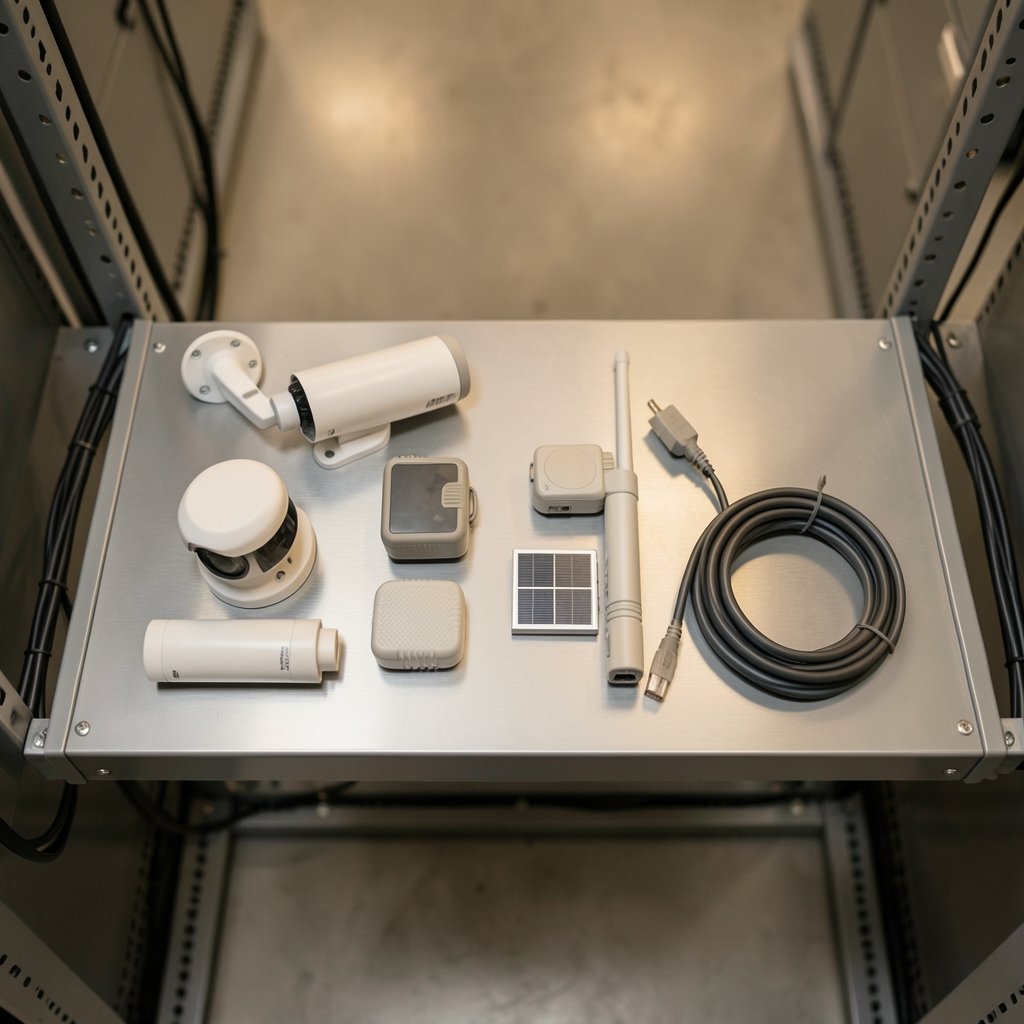
What good is a security camera that dies in the rain, misses the license plate, or charges you a monthly fee just to watch your own driveway? That is the question worth asking before spending money on outdoor surveillance in 2027. The market has split into clear camps: cheap Wi-Fi cams that work fine on a small porch, solar and 4G units for spots without power, long-range systems for big lots, and PoE gear for people who want one cable and zero battery anxiety.
This roundup skips the theory and names specific options. Each pick below gets a clear “who it suits,” what it does well, and the one limitation that might send you elsewhere. A comparison table up front keeps things scannable, and a short buying section at the end covers the details that actually matter.
Comparison table: best outdoor security cameras 2027
| Camera or system | Best for | Power and connection | Standout feature | Main limitation |
|---|---|---|---|---|
| Reolink Argus 3 Pro | Tight budgets, renters | Battery, Wi-Fi | Low price, wide view | Fewer smart features |
| TP-Link Tapo C320WS | Basic porch coverage | Plug-in, Wi-Fi | Cheap and simple | Wired power only |
| Arlo Pro 4 | Easy wire-free setup | Battery, Wi-Fi | Sharp image, broad accessory lineup | Subscription pressure |
| Ring Spotlight Cam Pro | Active deterrence | Battery or wired, Wi-Fi | Spotlight and siren | Cloud reliance |
| Energizer 2K 4G LTE Solar | No Wi-Fi at all | Solar plus 4G LTE | Works anywhere with signal | Data plan needed |
| Lybuorz 5G Solar | Fast, stable streaming | Solar, Wi-Fi 6 | 4MP, dual-band | Newer, less proven brand |
| Swann MaxRanger 4K Mini | Large properties | Wi-Fi HaLow | Up to 1,000 ft line of sight | Kit pricing |
| Hikvision ColorVu PoE | Wired purists | PoE, NVR | Full color at night | Install effort |
Prices shift constantly, so treat the ranges below as orientation only and confirm on the seller’s page before buying.
1. Reolink Argus 3 Pro: the budget pick that covers a garden
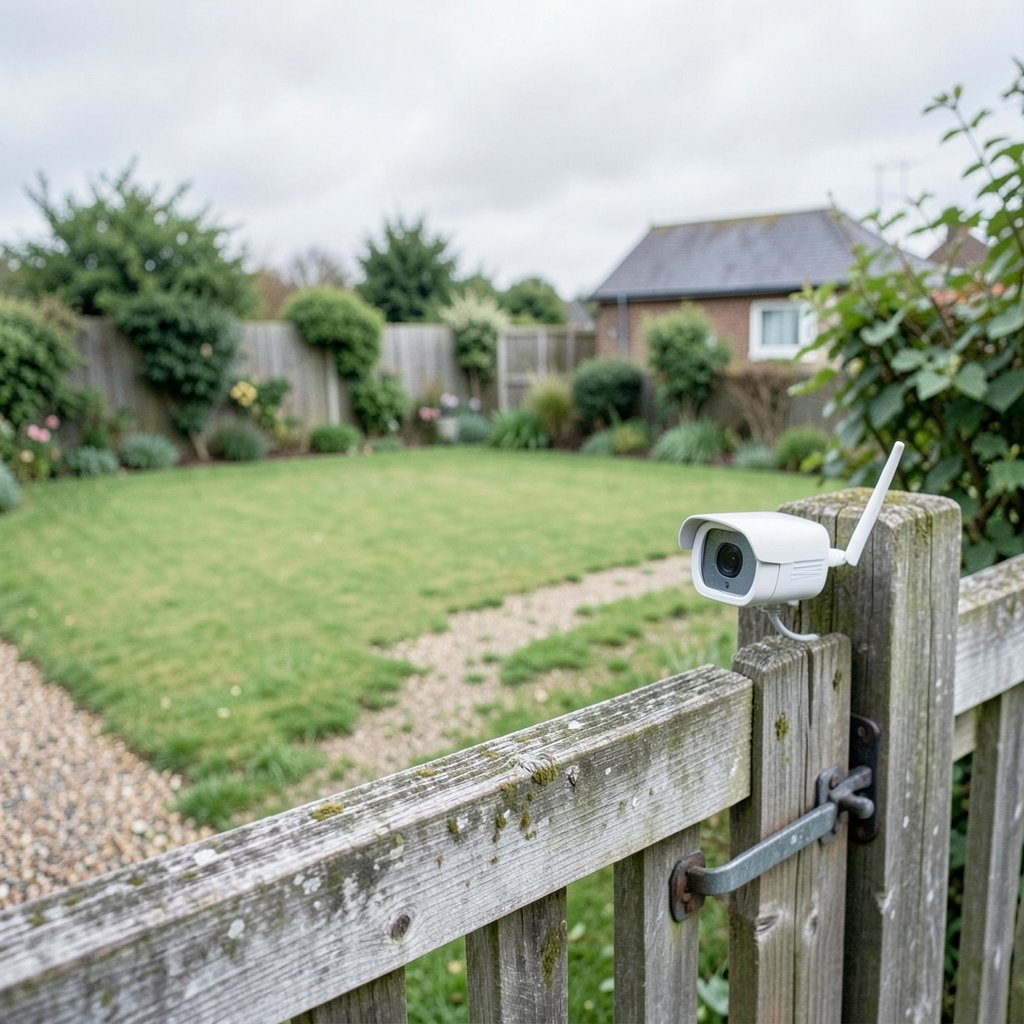
Who it suits: homeowners who want a first camera without a contract, and renters who cannot drill or wire.
The Argus 3 Pro shows up in budget roundups for a reason. It sits in the roughly €50–150 band alongside the TP-Link Tapo C320WS, and it delivers a wide view plus battery flexibility. For a back garden or a side gate, that combination is hard to beat. You mount it, pair it, and you are done in under an hour.
What it does well: wide coverage from a single unit, no wiring, and local storage options that keep monthly costs at zero.
The limitation: budget battery cams trade smart features for price. Person detection and rich alerts are thinner than on premium models, so expect more false triggers from moving branches and cats.
2. TP-Link Tapo C320WS: the simple plug-in workhorse
Who it suits: anyone with an outdoor socket near the door who wants zero charging chores.
This is the “set it and forget it” option. It is a 3MP Wi-Fi camera with IP66 weather resistance and night vision reaching about 30 meters, and it can run over Wi-Fi or Ethernet. The C320WS is also the cheapest sensible entry point in the budget tier.
What it does well: reliability through simplicity. No battery to charge, no solar panel to angle, no subscription required to record.
The limitation: it needs a power outlet. If your ideal camera spot is 15 meters from the nearest socket, this is not the camera for you. For those spots, compare the trade-offs in this guide to PoE vs Wi-Fi security cameras before you commit to either camp.
3. Arlo Pro 4: polished wire-free coverage
Who it suits: buyers who value app quality and flexible placement over the lowest price.
Arlo’s Pro 4 lands in the mid tier, roughly €150–300, and it earns the spot with a 120-degree wide-angle lens and full-color night vision reaching about 33 feet. Dual-band 2.4G and 5G Wi-Fi keeps the stream stable, and the wire-free design means you can move it whenever your coverage needs change.
What it does well: image quality and a mature app. Two-way audio and smart alerts work as advertised.
The limitation: the best features lean on cloud storage, which means a subscription. Local storage is limited. If paying monthly is a dealbreaker, the best outdoor security cameras without a subscription roundup is the better starting point.
4. Ring Spotlight Cam Pro: deterrence beyond recording
Who it suits: people who want the camera to actively push intruders away, not merely film them.
Ring’s Spotlight Cam Pro pairs a camera with a floodlight and siren. That matters in practice: most intruders leave when a light snaps on. It runs on battery or wired power, so you can start wire-free and add wiring later.
What it does well: active deterrence plus a large catalog of doorbells and accessories that all work in one app.
The limitation: cloud dependence. Without a plan, you get live view and alerts but limited recording history.
5. Energizer 2K 4G LTE Solar: for places with no Wi-Fi at all
Who it suits: cabins, barns, allotments, construction sites, and any gate or field where Wi-Fi simply does not reach.
This camera skips Wi-Fi entirely and connects over 4G LTE. A built-in 7,000mAh battery pairs with an included 3W solar panel for continuous operation, and the 2K Quad HD sensor covers a 270-degree pan and 90-degree tilt. The housing is IP65 rated against rain, dust, snow, and heat.
What it does well: it works where nothing else does. Motion alerts and two-way audio come standard, and installation needs no network cabling.
The limitation: you need a SIM and a data plan, and 4G coverage varies by location. Check signal strength at the exact mounting spot before buying. Also budget for the security camera infrared reflection fix if you mount it under an eave, since glare off nearby surfaces ruins night footage fast.
6. Lybuorz 5G Solar: fast streaming, zero wiring
Who it suits: buyers who want solar convenience plus modern Wi-Fi performance.
The Lybuorz unit combines an 8,000mAh battery with a solar panel and Wi-Fi 6 dual-band support, so streams stay stable even on busy home networks. Setup runs through Bluetooth and a QR code, which takes minutes rather than an afternoon. Video is 4MP HD with both infrared and full-color night vision, and a PIR sensor paired with AI detection cuts false alarms by focusing on human movement.
What it does well: genuinely maintenance-free power and a fast, modern connection.
The limitation: it is a newer brand with a shorter track record than Arlo or Ring. Buy from a seller with a clear return window.
7. Swann MaxRanger 4K Mini: long range for big properties
Who it suits: large lots, detached garages, and outbuildings where standard Wi-Fi dies at the fence line.
Swann’s MaxRanger system uses Wi-Fi HaLow to hold a connection up to 1,000 feet line of sight, or about 330 feet through walls and obstacles. The 4K sensor covers a 110-degree view, and True Detect+ AI sensing picks out heat, motion, people, and vehicles, which keeps alerts meaningful on a property where everything moves.
What it does well: range without trenching cable, plus sharp 4K detail for identifying faces and plates.
The limitation: it is a system, not a single camera, so the entry cost is higher than a standalone unit.
8. Hikvision ColorVu PoE: the wired purist’s choice
Who it suits: anyone willing to run cable once in exchange for years of trouble-free operation.
The ColorVu line, including the DS-2CD2047G2-L, delivers 4MP full-color night video over PoE with IP67 weather resistance. One cable carries both power and data. Pair it with an NVR and you get continuous local recording with no cloud bill. If you are weighing recorder types, this breakdown of NVR vs DVR security cameras explains which fits your setup.
What it does well: night image quality and reliability. Wired cameras simply do not miss events because a battery ran flat.
The limitation: installation effort. You need to route cable and set up a recorder, which is a weekend project for most people.
How to choose without overthinking it
Start with power, not megapixels. The best camera in the world is useless with a dead battery in February. Work through these in order:
- Check power at the mounting spot. A socket means plug-in cameras are viable. No socket and strong sun means solar. No socket and shade means PoE or battery with a spare.
- Check your Wi-Fi at the exact spot. Stand where the camera will go and test signal on your phone. Weak bars mean you need a long-range system, a mesh node, or 4G.
- Decide on storage before you buy. Local SD or NVR storage keeps costs flat. Cloud storage adds a monthly fee forever.
- Match resolution to purpose. 2K identifies a person at the door. 4K reads a plate at the gate.
- Confirm weather rating. IP66 or better for exposed walls, IP65 minimum under an eave.
The most common mistake is buying on resolution alone and discovering the camera cannot hold a connection at the back fence. The second most common is mounting a camera facing a wall or gutter, then wondering why night footage is a white blur. Test the view live on your phone before you drill the final holes.
One more practical note: if you plan to add smart-home or chatbot integrations to your setup, security hygiene matters as much as camera specs. The questions in this guide to AI chatbot security apply equally to any app that controls your cameras.
Conclusion
There is no single best outdoor security camera in 2027, only the best one for your wall. The Reolink Argus 3 Pro and TP-Link Tapo C320WS cover small spaces cheaply. Arlo Pro 4 and Ring Spotlight Cam Pro add polish and deterrence for a subscription. The Energizer and Lybuorz solar units solve the no-power, no-Wi-Fi problem outright. Swann handles acreage, and Hikvision ColorVu rewards anyone willing to run cable. Pick your power source first, verify signal on site, and the shortlist above will do the rest.
Frequently asked questions
Do outdoor security cameras need Wi-Fi?
No. Battery cameras with local SD storage can record without any network, and 4G LTE models like the Energizer 2K Solar connect over cellular instead of Wi-Fi. You only need Wi-Fi if you want remote live viewing and cloud alerts.
How long do solar security cameras actually last on a charge?
It depends on sun exposure and trigger frequency. A unit with an 8,000mAh battery and a solar panel, like the Lybuorz 5G model, is designed for continuous operation without manual charging, but shaded mounting spots will drain the battery faster. Angle the panel toward direct sun and expect to top up in winter.
Is 2K or 4K better for an outdoor camera?
2K is enough to identify a person at a door or gate. Choose 4K when you need detail at distance, such as reading a license plate or recognizing a face across a driveway. Higher resolution also means more storage and bandwidth, so match it to your recorder.
What does IP66 mean on a security camera?
IP66 means the housing is completely dust-tight and survives powerful water jets. That is the rating to look for on exposed walls. IP65, found on the Energizer solar camera, is fine under an eave but slightly less protected against driven rain.
Can I use an outdoor camera without a monthly subscription?
Yes. Cameras that record to a microSD card or an NVR keep working with no recurring fee. Cloud-dependent models like Arlo and Ring still show live view without a plan, but recording history is limited, so check what you get free before buying.
How high should I mount an outdoor security camera?
Around 2.5 to 3 meters is the usual sweet spot. Higher angles catch heads and hoods but lose faces, and lower mounts are easy to tamper with. Mount under an overhang where possible, and check the live view at night before finalizing the position.