
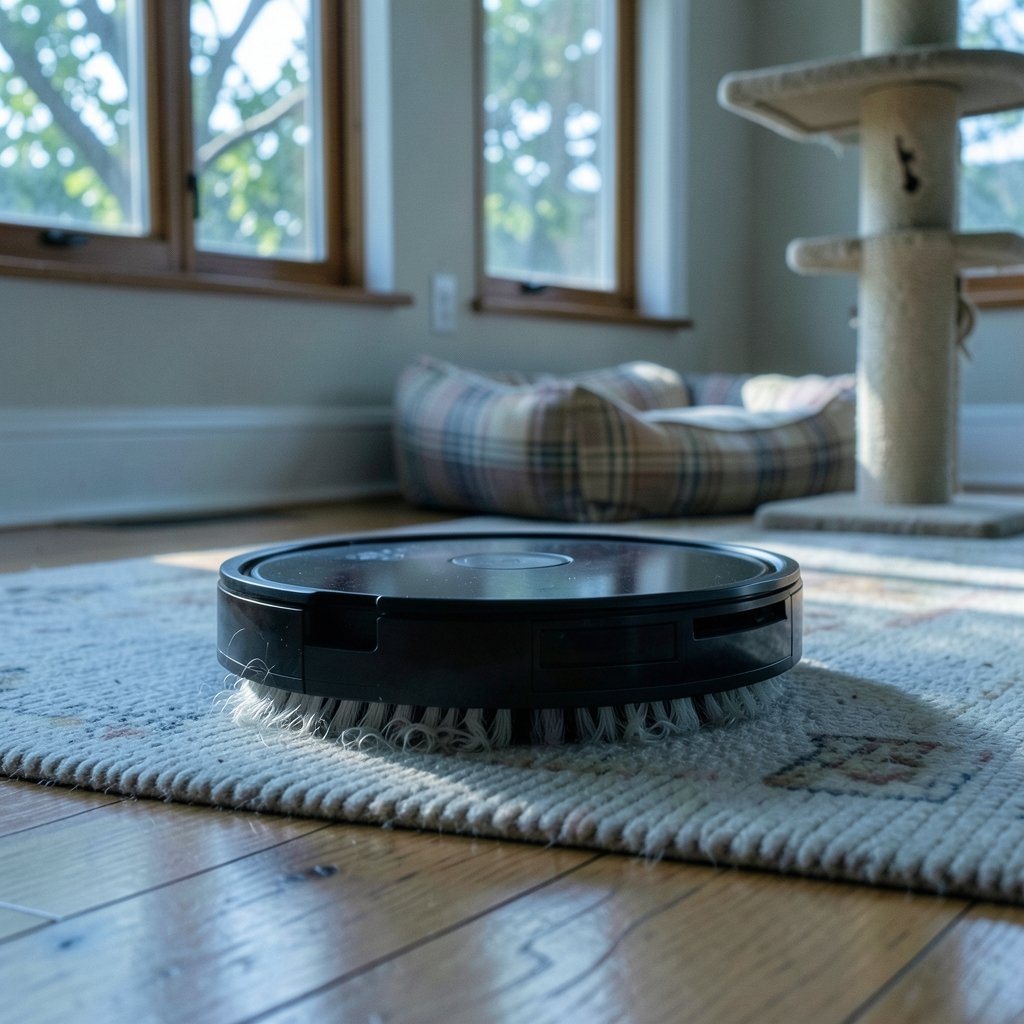
Does your floor look like a shedding contest happened and your vacuum lost? If you share a home with a dog or cat, you already know the drill: tumbleweeds of fur in the corners, hair woven into the rug, and a brush roll that looks like it’s wearing a wig. A robot vacuum can genuinely help, but only if it’s built for the job. This guide breaks down what actually matters when shopping for the best pet hair robot vacuum, where most buyers go wrong, and how to get the most out of whatever model ends up in your home.
Why Pet Hair Is a Different Job Than Ordinary Dust
Pet hair isn’t just bigger dust. It’s a mix of long guard hairs, fine undercoat fluff, and dander, and each part behaves differently. Long hairs wrap around spinning brush rolls like thread on a spool. Fine undercoat fibers pack into filters and bins, cutting airflow within a few runs. Dander, the tiny flakes that trigger allergies, passes straight through weak filtration and back into the room.
That’s why a vacuum that performs well on cereal crumbs can struggle badly on a golden retriever’s coat. The winning design has to resist tangling, keep airflow strong as the bin fills, and filter fine particles rather than recirculating them. Miss any one of those and you’ll be cutting hair off a brush by hand every week, which defeats the entire point of owning a robot.
The Features That Actually Matter for Pet Hair
Tangle-Resistant Brush Rolls
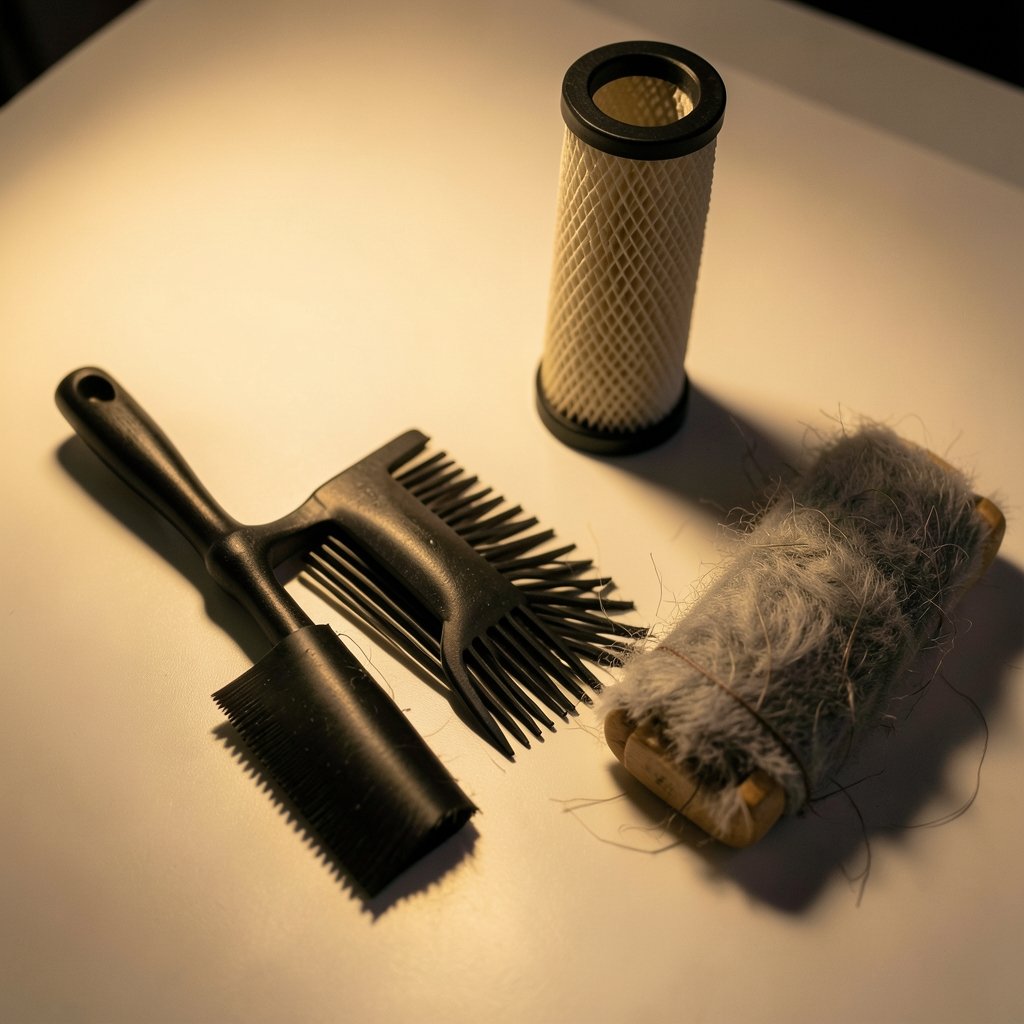
This is the single biggest factor. Rubber brush rolls with a blade-like profile, and brushes fitted with anti-tangle combs, shed hair far better than traditional bristle brushes. Bristles grab hair and hold it. Rubber flickers it into the airflow. If a model still uses a plain bristle roller, expect to spend quality time with scissors.
Certified HEPA Filtration
For allergy-sensitive households, filtration is not a marketing footnote. HEPA is a defined standard: a true HEPA filter captures at least 99.97% of particles at 0.3 micrometers. The word “HEPA-type” or “HEPA-like” on a box does not mean the filter is certified to that level. Check for a stated standard or a certified filter, rather than only the letters on the packaging.
Real Suction, Not Spec-Sheet Suction
Suction is measured in pascals (Pa), but manufacturers test it their own way, so a big Pa number from one brand tells you almost nothing about another. Independent lab testing is far more trustworthy than the figure printed on the box. If a brand shouts about a record-breaking Pa rating and nothing else, treat it as advertising, not evidence.
A Self-Emptying Base
Self-emptying docks reduce hands-on maintenance, which matters a lot when a bin fills with fur in a single run. But they add cost, noise, and consumables. Bag-based bases trap dust more cleanly when you swap bags; bagless bases save money but can release a puff of dust when you empty them. Neither is wrong. Just budget for the running cost.
Navigation That Handles Pet Chaos
Pet toys, cables, and water bowls turn a floor into an obstacle course. LiDAR navigation generally copes better in low light, while camera-based systems may need decent lighting to map a room well. The differences are real but nuanced, and they’re worth understanding before you pick a side.
A Quick Comparison of What to Look For
| Feature | Why It Matters for Pet Hair | What to Avoid |
|---|---|---|
| Rubber or comb-equipped brush | Sheds hair instead of wrapping it | Plain bristle rollers |
| Certified HEPA filter | Traps dander and fine particles | “HEPA-type” claims with no standard |
| Independently tested suction | Predicts real carpet pickup | Unverified Pa figures |
| Self-empty base | Fewer bin trips with heavy shedding | Bases with pricey, scarce bags |
| LiDAR navigation | Reliable mapping in dim rooms | Camera-only systems in dark homes |
| Replaceable parts | Long-term cost control | Models with hard-to-find filters |
Where Most Buyers Go Wrong
The most common mistake is buying on suction numbers alone. A vacuum with huge claimed Pa but a bristle brush will still tangle, and a tangled brush loses pickup power fast. The second mistake is ignoring the cost of consumables. Filters, brushes, bags, and eventually batteries are all replacement items, and a cheap vacuum with expensive, hard-to-find parts is a false economy.
Another frequent error: expecting one pass to do the job. Pet hair on carpet often needs higher suction and multiple passes, and most robot vacuums default to a lower-power mode for runtime reasons. Setting a scheduled daily run at higher suction beats one heroic weekly clean every time.
Finally, people underestimate maintenance. Empty the bin after every run in a shedding season, rinse or replace the filter on schedule, and clear the brush weekly. A well-maintained mid-range vacuum outperforms a neglected premium one, every single time.
Matching the Machine to Your Floor Type
Floor type changes the recommendation more than most shoppers expect. On hard floors, hair blows around and a strong edge brush plus decent airflow does most of the work. On low-pile carpet, you need suction and a brush that agitates the fibers. On deep-pile and shag rugs, many robots simply bog down, and the ones that cope are designed specifically for that surface. If your home is mostly deep pile, read up on how a robot vacuum handles shag rugs before you buy anything else.
Homes with both hard floors and area rugs are the most common setup, and they’re also where a mop combo can make sense. A robot vacuum and mop combo that actually cleans the floor can handle muddy paw prints and drool spots, but only if the vacuum half is strong enough for the fur. Never let a mop feature distract you from the core job.
Special Cases Worth Knowing About
Long Human Hair Plus Pet Hair
Households with long-haired humans and shedding pets face a double load, and the tangling problem gets worse. Models with anti-tangle combs and rubber rollers handle this far better, and there’s a practical guide to robot vacuums and long human hair that actually works if this is your situation. The short version: rubber beats bristle, and combs beat neither.
Black Carpet and Dark Rugs
Some robots refuse to climb onto dark surfaces because their cliff sensors misread the color as a drop-off. If your pet’s favorite napping spot is a black rug, this quirk can leave a whole zone uncleaned. There’s a known workaround covered in this piece on robot vacuum cliff sensors failing on black carpet, and it’s worth checking before you blame the vacuum’s suction.
Cluttered Rooms and Navigation
If pet toys and cables litter the floor, navigation quality decides whether your robot finishes a run or spends it tangled in a charging cable. The trade-offs between sensor types are covered in this comparison of LiDAR versus camera navigation, which is genuinely useful reading before you commit to a brand.
Practical Tips That Make Any Vacuum Better
- Run it daily during shedding season. Short, frequent runs keep hair from matting into carpet fibers.
- Clear the floor first. Pick up toys, socks, and cables. Ten seconds of prep saves a rescue mission.
- Set no-go zones around pet bowls. Water plus vacuum equals a very bad afternoon.
- Empty the bin after every run. Full bins choke airflow, and weak airflow means hair stays on the floor.
- Clean the brush weekly. Even good anti-tangle designs collect some hair over time.
- Wash or replace filters on schedule. A clogged filter is the most common cause of sudden performance drops.
- Use the highest suction your carpet needs. More power on carpet, less on hard floors to save battery.
What About Dogs That Shed Constantly?
Breeds with a continuous shed cycle, like huskies, labs, and most double-coated dogs, are the hardest test. For these homes, prioritize three things: a rubber brush roll, a self-empty base, and strong independent test results on carpet. A vacuum that scores well on all three will handle the fur load. One that only wins on price will spend its life in a corner with a tangled brush. This is also where a broader look at the best vacuums for pet hair helps, because upright and cordless options still beat robots on deep carpet in many cases.
Conclusion
The best pet hair robot vacuum isn’t the one with the biggest suction number or the flashiest app. It’s the one with a tangle-resistant brush, genuine HEPA filtration, honest independent test results, and a maintenance routine you’ll actually keep up with. Match the machine to your floors, budget for consumables, and run it often rather than hard. Do that, and the fur tumbleweeds become a rare sight instead of a daily greeting. Your socks, and your allergies, will thank you.
Frequently Asked Questions
Do robot vacuums really work on pet hair?
Yes, but results vary enormously by design. Models with rubber brush rolls, certified HEPA filters, and strong independently tested suction handle pet hair well, especially with daily runs. Models with plain bristle brushes tangle quickly and lose pickup power. The technology works; the cheap end of the market often doesn’t.
Is HEPA filtration necessary if I have pets?
It’s strongly recommended for allergy-sensitive households. A certified HEPA filter traps at least 99.97% of particles at 0.3 micrometers, which includes dander. Be careful with “HEPA-type” labels, which don’t guarantee that standard. If allergies are a real issue, look for a stated certification rather than marketing language.
How often should I empty the bin with a shedding pet?
During heavy shedding, empty it after every single run. Pet undercoat fills bins fast, and a full bin chokes airflow, which directly reduces pickup. Self-emptying bases help here, but you’ll still need to swap bags or empty the base regularly. Weekly is rarely enough in a double-coated-dog household.
Why does my robot vacuum keep getting tangled?
Hair wraps around spinning brush rolls, and bristle brushes hold onto it. Anti-tangle combs and rubber rollers shed hair into the airflow instead. If tangling is constant, check whether your model uses a bristle roller and whether a rubber replacement is available. Weekly brush cleaning also prevents buildup from becoming a jam.
Can a robot vacuum handle both carpet and hard floors?
Most can switch between them automatically or via app settings, but performance differs. Carpet needs higher suction and brush agitation; hard floors need airflow and edge cleaning. Homes with both should prioritize strong carpet test results, since that’s usually the weaker area. Deep-pile rugs remain a challenge for many models.
How long do robot vacuum batteries and filters last?
It varies by model and use, but filters typically need cleaning monthly and replacing every few months, while batteries usually last a few years before runtime drops noticeably. Check replacement-part prices and availability before buying. A vacuum with cheap, easy-to-find filters costs far less to own over five years.
Final Thoughts on Buying Timing and Value
One last practical note: pricing on robot vacuums swings widely across the year, and last-generation flagships often drop sharply once a successor arrives. If a model ticks the boxes above—rubber brush, certified HEPA, verified carpet results—buying the previous version is frequently the smartest money in the category. Just confirm replacement parts will stay available, since a discontinued filter is a dead end. Whatever you choose, give it a fortnight of daily runs before you judge it. Pet hair accumulates faster than any single test reveals, and real-world performance in your own home beats every spec sheet.



