
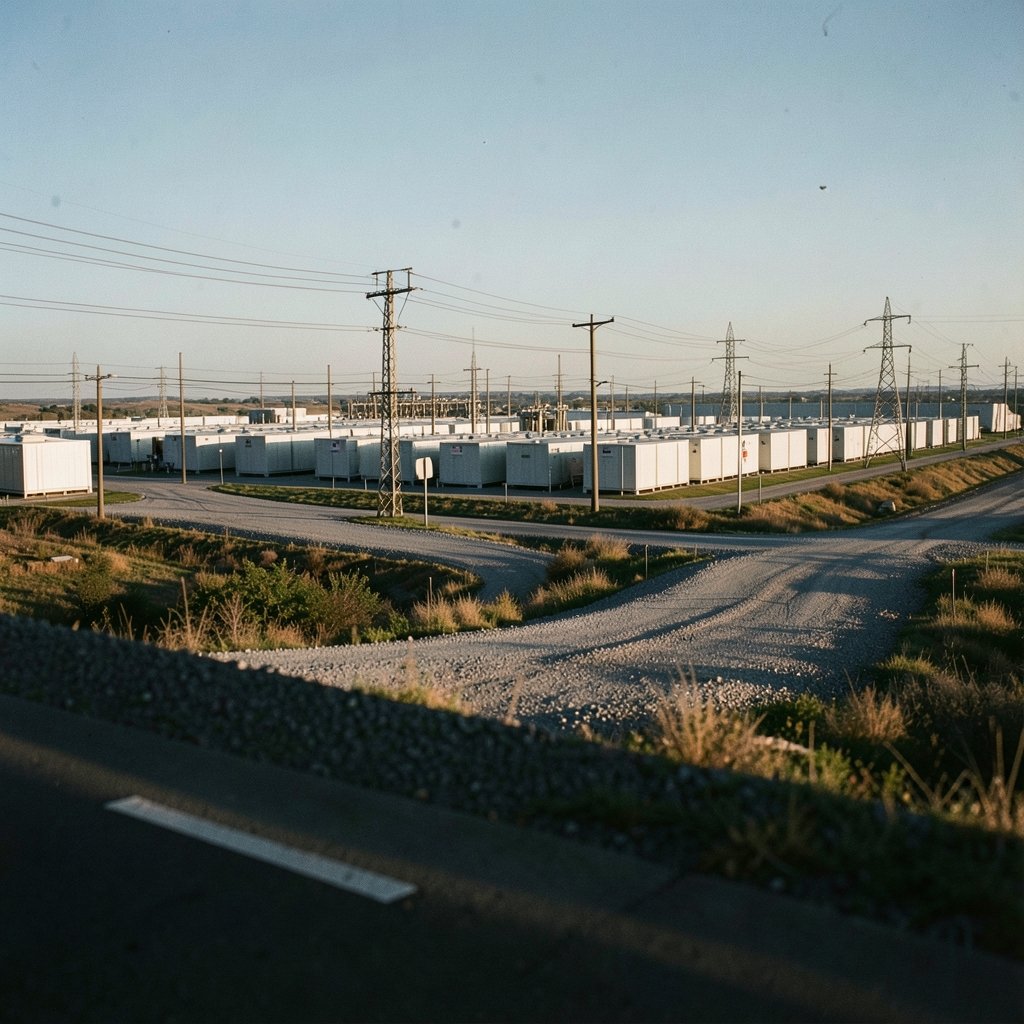
What happens when the world’s most valuable technology companies pour tens of billions of dollars into physical infrastructure in a single quarter? In 2026, that question stopped being theoretical. Meta’s $34.9 billion capital expenditure figure and Tesla’s $4.73 billion hardware spend landed in the same news cycle, and together they tell a story about two very different bets on where computing power actually lives.
Both numbers are large. But the gap between them is the real story. One company is buying land, buildings, and GPUs at a pace that rivals the GDP of small nations. The other is spending more selectively on factories, robots, and energy storage. Understanding that split is the key to reading the next twelve months of tech investing.
Why These Two Numbers Matter More Than the Headlines Suggest
Capital expenditure, or capex, is the money a company spends on long-term physical assets instead of day-to-day operations. When a company reports capex, it’s telling investors something about the future it expects. Spending on data centers today means expecting demand for AI compute tomorrow. Spending on manufacturing equipment means expecting to sell more physical products. (SEC EDGAR Company Search)
Meta’s $34.9 billion quarter puts it in rare company. For context, that single quarter of spending is larger than the entire annual capital budget of most Fortune 500 firms. Tesla’s $4.73 billion, by contrast, looks modest, but it’s concentrated in physical hardware: production lines, energy products, and the robotics programs the company keeps hinting at.
The two figures are not directly comparable in purpose, but they are comparable in signal. Both companies are telling the market that the next phase of growth depends on atoms as much as code.
Meta’s $34.9B: Betting the Balance Sheet on AI Infrastructure
Meta’s spending spree is best understood as a defensive move dressed up as an offensive one. The company’s core advertising business depends on recommendation models that get more expensive to run as they get more capable. Every improvement in AI ranking quality requires more compute, and more compute requires more data centers.
The $34.9 billion quarterly figure reflects a mix of three things:
| Spending Category | What It Covers | Why It Matters |
|---|---|---|
| Data center construction | Land, shells, power, cooling | Long lead times mean commitments made years in advance |
| Compute hardware | GPUs, custom accelerators, networking | The largest single line item in most AI budgets |
| Servers and storage | Racks, memory, storage arrays | Supports both training and inference workloads |
The practical lesson for anyone watching this space is that capex guidance is a forecast disguised as an accounting line. When Meta raises guidance, it is effectively saying it expects AI demand to keep growing faster than it can currently serve. That’s a bullish signal for chip suppliers and a caution flag for anyone worried about overbuilding.
A common mistake observers make is treating capex as pure cost. In reality, it’s an option on future revenue. The risk isn’t that Meta spends too much. The risk is that it spends too little and loses the AI race to a competitor with more compute.
Tesla’s $4.73B: Hardware Bets With Longer Fuses
Tesla’s $4.73 billion is a different animal entirely. Where Meta is building digital infrastructure, Tesla is building physical capacity. That includes manufacturing equipment, energy storage production, and the tooling for next-generation vehicle programs.
Tesla has been unusually transparent about spreading its hardware bets across multiple fronts. The company’s product roadmap includes the robotaxi program, the Semi truck, and the long-delayed Roadster, each of which requires its own capital commitments. For readers tracking those programs, the Tesla website robotaxi semi roadster three hardware bets 2026 breakdown is a useful reference for how the spending maps to specific vehicles.
What makes Tesla’s number interesting is its restraint relative to Meta’s. Tesla is not trying to outspend anyone on compute. It’s trying to build factories that produce physical goods at scale. That’s a slower, lumpier path, and it explains why Tesla’s capex has historically been more volatile quarter to quarter.
There’s also a governance angle worth noting. Tesla’s spending decisions sit inside a company with an unusually concentrated leadership structure, and any major strategic shift tends to get scrutinized by shareholders. Discussions around a potential Tesla SpaceX merger December 6 AGM Barclays 2026 have added a layer of complexity to how investors think about capital allocation across the companies involved.
The Capex Gap: Two Strategies, One Market
Put the two numbers side by side and a pattern emerges. Meta is spending roughly seven times what Tesla is spending, but the money is going to completely different places.
| Dimension | Meta ($34.9B) | Tesla ($4.73B) |
|---|---|---|
| Primary target | Data centers and AI compute | Factories and hardware production |
| Payback horizon | 3–5 years | 5–10 years |
| Revenue link | Advertising and AI services | Vehicles, energy, robotics |
| Risk profile | Demand shortfall | Execution and timeline risk |
Neither approach is obviously correct. Meta’s bet pays off if AI-driven advertising keeps growing. Tesla’s bet pays off if it can scale manufacturing for new products without the delays that have plagued past launches. The Tesla roadster 9 year delay EV rivals 2026 timeline is a reminder that hardware bets carry schedule risk that software bets simply don’t.
What “Hardware 2026” Actually Means for Investors
The phrase hardware 2026 has become shorthand for a broader theme: the year that physical infrastructure spending caught up with software ambition. Across big tech, the pattern is consistent. Companies that spent the 2010s optimizing software are now spending the 2020s building the physical layer that software runs on.
For investors, this creates a few practical considerations:
- Watch the depreciation curve. Heavy capex today becomes depreciation expense tomorrow, which pressures margins.
- Track power availability. Data centers are increasingly limited by electricity, not chips.
- Separate maintenance capex from growth capex. Only the growth portion signals new capacity.
- Follow the suppliers. Chipmakers, cooling vendors, and construction firms are the second-order beneficiaries.
One common mistake is assuming all capex is created equal. A dollar spent on a GPU that’s obsolete in three years is very different from a dollar spent on a building that lasts thirty. Reading the breakdown matters more than reading the headline.
Energy, Power, and the Hidden Bottleneck
Here’s a detail that rarely makes headlines: the biggest constraint on AI capex in 2026 isn’t money. It’s electricity. Data centers need enormous amounts of power, and grid connections can take years to secure.
That’s why energy storage has become a strategic asset rather than a side business. Tesla’s energy division, which falls under its hardware spending, has become increasingly important as AI data centers scramble for reliable power. The Tesla megapack almost sold out 2027 AI data centers 2026 situation illustrates how demand for grid-scale batteries has outpaced supply.
This creates an interesting overlap between the two companies’ strategies. Meta needs power. Tesla sells power storage. The capex gap between them masks a commercial relationship that’s likely to grow.
The Enterprise AI Angle Nobody Talks About
While Meta and Tesla dominate the capex conversation, the enterprise software layer is where a lot of the spending eventually gets monetized. Companies building AI agents for business customers are racing to capture the productivity gains that all this infrastructure enables.
Competition here is intense. The OpenAI dots Meta Muse enterprise agent 2026 race shows how quickly the agent market has become crowded, with Meta itself pushing into enterprise tools that run on its own infrastructure. That vertical integration is the real payoff for the $34.9 billion: Meta is buying compute, and it is also buying the ability to sell AI services on top of it.
For Tesla, the enterprise angle is less direct but still present. Fleet management, energy trading, and eventually autonomous ride-hailing all depend on software that runs on hardware Tesla builds.
Risks That Could Unwind the Spending
No discussion of capex this large is complete without the downside case. There are three credible risks.
First, demand could disappoint. If AI adoption slows, the data centers Meta is building become expensive idle assets. Second, depreciation could bite. Heavy spending now means higher expenses later, which can compress margins even if revenue grows. Third, execution risk is real, especially on the hardware side, where timelines slip and costs overrun.
Tesla has already faced scrutiny on this front, including incidents that damaged public trust. The Las Vegas Tesla arson 5 year sentence 2026 case is a reminder that physical assets carry physical risks that digital infrastructure largely avoids.
How to Read Capex Reports Like a Pro
If you want to make sense of the next earnings season, here’s a practical approach that works better than chasing headlines.
Start with the year-over-year change, not the absolute number. A company spending $30 billion when it spent $20 billion last year is growing faster than one spending $35 billion when it spent $34 billion. Growth rate tells you about direction; absolute size tells you about scale.
Next, look at capex as a percentage of revenue. This normalizes across companies of different sizes and reveals how aggressively each one is investing relative to its current business.
Finally, check the guidance language. When management raises full-year capex guidance, that’s a signal of confidence. When they lower it, that’s a signal worth investigating.
A frequent error is comparing capex across companies without adjusting for business model. Meta’s spending supports a high-margin advertising business. Tesla’s supports lower-margin manufacturing. The same dollar of capex means different things in each context.
Conclusion
Meta’s $34.9 billion and Tesla’s $4.73 billion are not competing numbers. They’re two answers to the same question: where does growth come from next? Meta’s answer is compute, data centers, and AI services sold at scale. Tesla’s answer is factories, energy storage, and physical products that take years to reach the market.
Both bets carry risk. Both require patience. Both reveal something important about the 2026 technology industry: the companies winning today are the ones willing to spend heavily on the infrastructure that tomorrow’s products will depend on. The capex gap between them does not mean one is right and the other is wrong. It means the definition of “big tech” has split into two very different businesses, each with its own physics, its own timelines, and its own way of turning money into moats.
For investors and observers alike, the takeaway is simple. Watch the spending, but watch the purpose behind it even more closely.
FAQ
What does Meta’s $34.9 billion capex figure actually include?
It covers data center construction, compute hardware such as GPUs and custom accelerators, and supporting infrastructure like servers, networking, and cooling. The bulk of the spending goes toward AI-related capacity, since Meta’s advertising and recommendation systems depend heavily on machine learning compute.
Why is Tesla’s capex so much smaller than Meta’s?

The two companies spend on fundamentally different things. Meta builds digital infrastructure that scales quickly and serves billions of users. Tesla builds physical factories and manufacturing lines, which are capital-intensive but serve a narrower product set. Tesla also has historically taken a more conservative approach to capital deployment.
Is heavy capex a good sign for a company’s stock?
Not automatically. It depends on whether the spending generates returns above the cost of capital. Rising capex can signal confidence in future demand, but it can also signal overbuilding. Investors should look at whether revenue growth is keeping pace with the asset base being built.
What is the “hardware 2026” theme?
It refers to the shift among major tech companies toward spending on physical infrastructure rather than software alone. Data centers, power systems, manufacturing equipment, and robotics are all part of this theme. The idea is that the next wave of growth depends on physical capacity, not code alone.
How does energy fit into all this capex spending?
Energy has become a binding constraint. Data centers need enormous amounts of electricity, and grid connections can take years. That’s why energy storage has become strategically important, and why companies that produce grid-scale batteries are seeing surging demand from AI infrastructure builders.
What should I watch in the next earnings cycle?
Focus on three things: changes in full-year capex guidance, the split between maintenance and growth spending, and any commentary on power availability or construction timelines. Those signals usually matter more than the headline number, which can swing for reasons unrelated to strategy.



