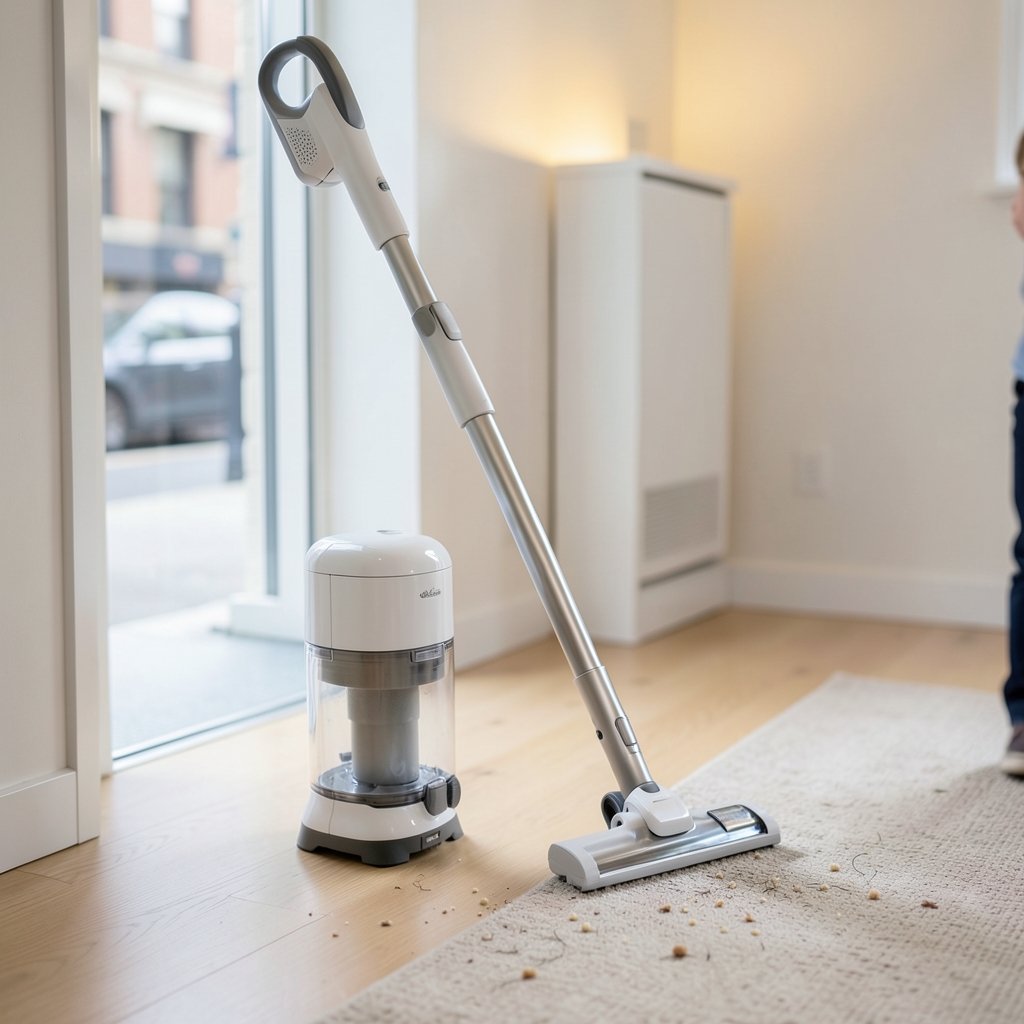
What if the run-time number on the box is telling you the truth, just not the whole truth? That is the trap most cordless vacuum reviews fall into. A vacuum advertised as “60 minutes of runtime” can drop to eight or ten minutes the moment you switch to boost mode with a motorized floor head attached. The number isn’t a lie, exactly. It’s just measured under conditions you’ll almost never recreate in your own hallway. (Robot vacuum cliff sensors fail black carpet works)
This matters because cordless vacuums have become the default choice for a lot of households. They’re light, they skip the cord dance around furniture legs, and they double as quick-clean tools for crumbs and pet hair. But the review landscape around them is messy. Specs are inconsistent, “suction power” claims aren’t standardized, and the EU energy label that used to help you compare machines doesn’t even apply to battery-powered vacuums anymore. So how do you read a cordless vacuum review without getting played?
Why Cordless Vacuum Specs Are Harder to Compare Than They Look
Here’s the thing nobody tells you at the store: there is no single, universal number that tells you how well a cordless vacuum will clean your floor. Manufacturers lean on a few different figures, and each one has a catch.
AirWatt is the most quoted. It’s a derived measure calculated from airflow and vacuum pressure, roughly airflow multiplied by pressure with a conversion constant. It sounds scientific, and it is, but it doesn’t directly predict cleaning performance on carpet versus hard floor. A machine with high airwatts can still struggle on deep pile because the floor head design, brush roll, and seal against the floor matter just as much.
Voltage gets plastered on boxes too, and it’s close to meaningless on its own. A 25V system from one brand and a 25V system from another can behave completely differently. Watt-hours (Wh) are the more comparable figure for battery capacity, but even that only tells you how much energy the pack holds, not how efficiently the vacuum uses it.
Run time is the other big one. Advertised maximum run times are typically measured in the lowest power mode, often without a motorized floor head attached. Real-world run time in high-power mode is usually a fraction of the headline figure. So when a review quotes “up to 70 minutes,” treat that as a best-case ceiling, not a promise.
The Label Problem
For years, shoppers in Europe could lean on the EU energy label to compare vacuums. That changed. The regulation that set energy-label requirements for vacuum cleaners was annulled by the General Court in November 2017 and formally repealed by Delegated Regulation (EU) 2018/693. The replacement rules explicitly exclude battery-powered vacuums from energy-label and ecodesign requirements. Translation: cordless vacuums are essentially unlabeled territory. You can’t fall back on an A-to-G rating. You have to read the review, not the sticker.
What Independent Testing Actually Measures
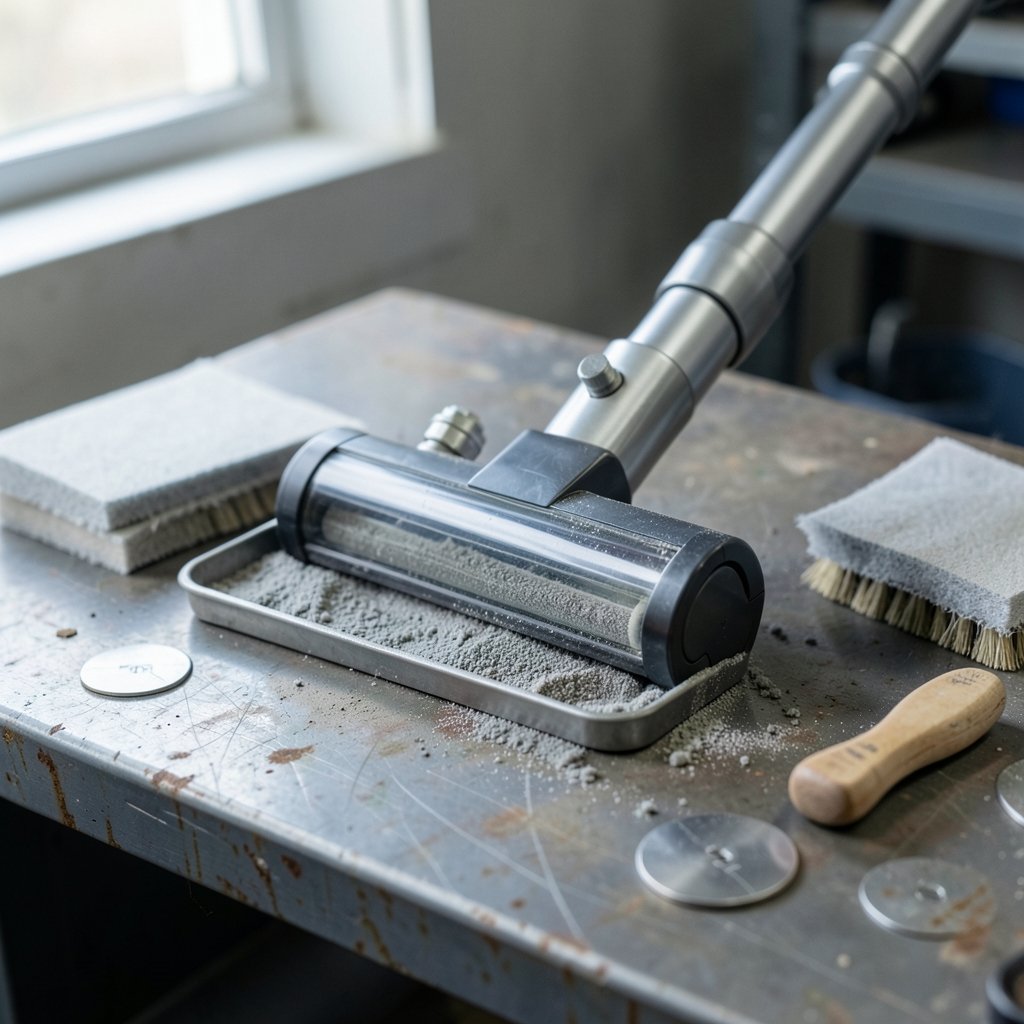
There’s a reason independent testing organizations exist for this category. Standardized tests run machines through controlled conditions so you can compare apples to apples. IEC 62885-4, published around 2020, covers measurement of performance for cordless dry vacuum cleaners. That’s the technical backbone test labs build on.
Consumer testing organizations like Which? in the UK and Consumer Reports in the US run their own standardized cordless vacuum tests. Their methodologies are described on their sites, though full results are usually paywalled. That’s worth knowing because it shapes what you can actually access. If you’re relying on free reviews, you’re often reading summaries of paywalled data or manufacturer-supplied numbers dressed up as independent analysis.
A good review will tell you which of these it’s doing. A bad one won’t.
The Review Checklist: What to Look For
When you’re reading cordless vacuum reviews, some signals separate useful analysis from marketing copy. Here’s a practical checklist.
| What the review says | What it usually means | What to check |
|---|---|---|
| “Up to 60 min runtime” | Measured in lowest mode, often no floor head | Ask for high-mode runtime with the motorized head on |
| “Powerful suction” | Vague, no standard behind it | Look for airwatts plus real cleaning test results |
| “HEPA filtration” | Filter media claim, not whole-machine | Check whether whole-machine leakage was tested |
| “Lightweight” | Often quoted without battery | Check weight with the battery and floor head attached |
| “Great for pet hair” | Sometimes just a brush roll claim | Look for tangle and hair-wrap testing |
That last row matters more than people expect. Long human hair wraps around brush rolls and kills performance fast. If you’ve got a house full of shedding, it’s worth reading up on how robot vacuums handle long human hair, because the same tangle physics apply to cordless stick vacuums, just with a human pushing instead of a motor. Reviews that skip hair-wrap testing are skipping a real-world failure mode.
Filtration Claims Deserve Scrutiny
“HEPA” gets thrown around loosely. True HEPA filtration, such as HEPA H13 under EN 1822, refers to filter media performance under defined test conditions. That is not the same as whole-machine HEPA, which requires the entire vacuum, seals and all, to leak below a threshold. Many cordless vacuums claim HEPA-level filtration based on the filter alone. Whole-machine HEPA claims are often not independently tested. If allergies are your reason for buying, look for a review that specifically addresses seal quality and exhaust leakage rather than the filter spec alone.
Run Time, Batteries, and the Boost Mode Trap
Let’s talk about the thing that generates the most buyer regret: run time.
Cordless vacuums almost always have multiple power modes. Eco mode sips battery. Boost mode gulps it. The advertised maximum run time lives in eco mode, sometimes with no powered tool attached. The moment you attach a motorized brush roll and hit boost for a stubborn patch of carpet, you’re in a different machine entirely.
A few practical rules that hold up across brands:
- Assume high-power run time is roughly a quarter to a third of the headline figure until a review proves otherwise.
- Check whether the battery is removable. A swappable pack means you can buy a second one, which often matters more than a marginal run-time advantage.
- Compare watt-hours, not voltage, when you’re cross-shopping.
- Factor in charge time. A vacuum that runs 40 minutes but takes four hours to charge has a very different rhythm than one with a fast charger.
Battery capacity and voltage are not directly comparable across brands, and specific brand claims change frequently, so treat any single number with suspicion until you see it repeated in independent testing.
Maintenance: The Part Reviews Often Skip
A cordless vacuum is only as good as its filter and its empty bin. Clogged filters and full bins reduce suction, and manufacturers typically recommend filter cleaning at set intervals. Interval recommendations vary by model, so check the manual rather than guessing.
Common mistakes people make:
- Never washing or replacing the filter, then blaming the vacuum for weak suction.
- Overfilling the bin, which chokes airflow before the “full” line.
- Letting hair build up on the brush roll until it stops spinning.
- Storing the vacuum on the charger in a hot garage, which shortens battery life.
If you’re the kind of person who wants the machine to handle maintenance itself, a robot might suit you better, and it’s worth understanding how robot vacuum mop combos actually clean floors before you decide a stick vacuum alone is enough. Many households end up with both: a cordless for quick pickups and a robot for daily maintenance.
Cordless vs. Robot: Which Review Category Fits You?
This is a genuine fork in the road, and reviews for each category measure different things.
| Factor | Cordless stick vacuum | Robot vacuum |
|---|---|---|
| Best for | Stairs, cars, quick spills, above-floor cleaning | Daily floor maintenance, hands-off cleaning |
| Run time pressure | High, you feel it immediately | Low, it docks and recharges itself |
| Navigation matters | Human does the navigating | Machine navigation is everything |
| Maintenance | You empty and clean it | You empty it and unclog brushes |
| Weak spot | Battery life in boost mode | Getting stuck, sensor failures |
If you’re comparing robots, navigation is the make-or-break spec, and the differences between lidar and camera navigation are worth understanding before you buy. If you’re comparing sticks, battery and floor-head design are the make-or-break specs. Don’t let a review convince you one category replaces the other. They solve different problems.
Reading Between the Lines of Star Ratings
Star ratings compress a lot of nuance into one number, and that compression hides the stuff you care about. A vacuum can average four stars because half the reviewers love it for hardwood and half hate it for carpet. Neither group is wrong. They’re just cleaning different floors.
When you’re scanning reviews, sort by the negative ones first. Look for patterns rather than one-off complaints. A single “arrived damaged” review is noise. Fifteen reviews mentioning “battery dies in ten minutes on high” is a signal. The same logic applies to error codes and mechanical failures, which is why it helps to know how to fix a robot vacuum wheel stuck error fast, since the same stuck-wheel frustration shows up in cordless stick heads too when hair jams the brush.
Also watch for reviews that mention the reviewer’s home setup. A 900-square-foot apartment with two cats and hardwood floors is a completely different test environment from a 3,000-square-foot house with wall-to-wall carpet and a golden retriever. A review that tells you its context is worth ten that don’t.
Conclusion
Cordless vacuum reviews are only as useful as the questions they answer. The headline numbers, airwatts, voltage, “up to X minutes,” and HEPA badges, are starting points, not verdicts. What actually predicts whether you’ll be happy six months in is narrower: how long the vacuum runs in the mode you’ll actually use, whether the battery is swappable, how the floor head handles hair and debris on your specific flooring, and whether the filtration holds up as a whole system rather than just a filter spec.
The regulatory safety net that once helped shoppers compare vacuums doesn’t cover cordless models anymore, so the burden shifts to you. Read reviews that name their test conditions. Trust patterns over single complaints. And remember that the best cordless vacuum for a carpeted house with pets is a genuinely different machine from the best one for a small apartment with hard floors. Match the machine to your mess, not to the marketing.
Frequently Asked Questions
Why don’t cordless vacuums have EU energy labels?
Because the rules changed. The regulation that set energy-label requirements for vacuum cleaners was annulled in November 2017 and formally repealed by Delegated Regulation (EU) 2018/693. The replacement rules explicitly exclude battery-powered vacuums from energy-label and ecodesign requirements, so cordless models don’t carry the A-to-G rating that corded vacuums once did.
Is a higher airwatt rating always better?
No. AirWatt is a derived measure calculated from airflow and vacuum pressure, and manufacturers quote it inconsistently. It doesn’t directly predict cleaning performance on carpet versus hard floor, because floor-head design, brush roll type, and the seal against the floor matter just as much as raw suction. (Best robot vacuum mop combos actually cleans floor)
Why does my cordless vacuum die so much faster than advertised?
Advertised maximum run times are typically measured in the lowest power mode, often without a motorized floor head attached. Real-world run time in high-power mode is usually a fraction of the headline figure. If you’re using boost mode with a powered brush roll, expect a dramatic drop.
What does the IEC 62885-4 standard cover?
It covers measurement of performance for cordless dry vacuum cleaners and was published around 2020. It gives test labs a standardized way to measure things like cleaning performance, so independent reviews can compare machines on equal footing rather than relying on manufacturer claims.
Are HEPA claims on cordless vacuums trustworthy?
Treat them carefully. True HEPA filtration, such as HEPA H13 under EN 1822, refers to filter media performance under defined test conditions, not necessarily whole-machine leakage. Many cordless vacuums claim HEPA-level filtration based on the filter alone, and whole-machine HEPA claims are often not independently tested.
Should I compare voltage or watt-hours when shopping?
Watt-hours. Voltage alone isn’t directly comparable across brands, and specific brand claims change frequently. Watt-hours give you a more comparable figure for battery capacity, though even that only tells you how much energy the pack holds, not how efficiently the vacuum uses it.