
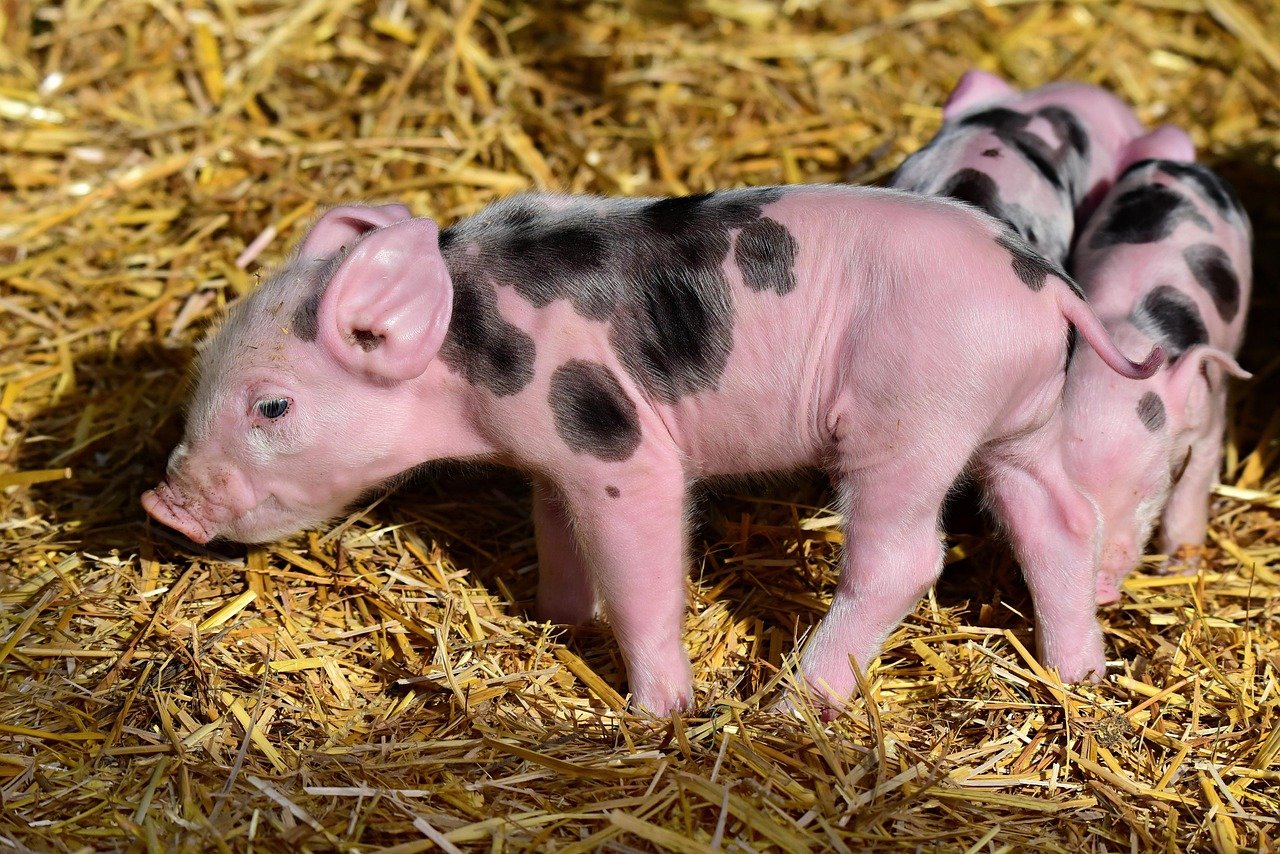
Quick Answer: What do pigs eat?
Pigs are omnivores, meaning they eat both plant and animal matter. On farms, most pigs eat formulated grain-based feed built around corn, wheat, barley, and soybean meal, mixed with vitamin and mineral premixes. In the wild or on pasture, pigs root for roots, tubers, grasses, nuts, insects, worms, and just about anything edible they can find.
The two diets are not interchangeable, though. A farmed pig’s ration is balanced by growth stage, while a foraging pig eats whatever the land offers that day. Feeding rules also vary sharply by country, and some traditional practices are now banned.
Before feeding or judging any pig diet, check the animal’s age and stage, local feed regulations, feed cost and availability, protein and mineral balance, and food-safety risks.
A Question That Trips Up Almost Everyone
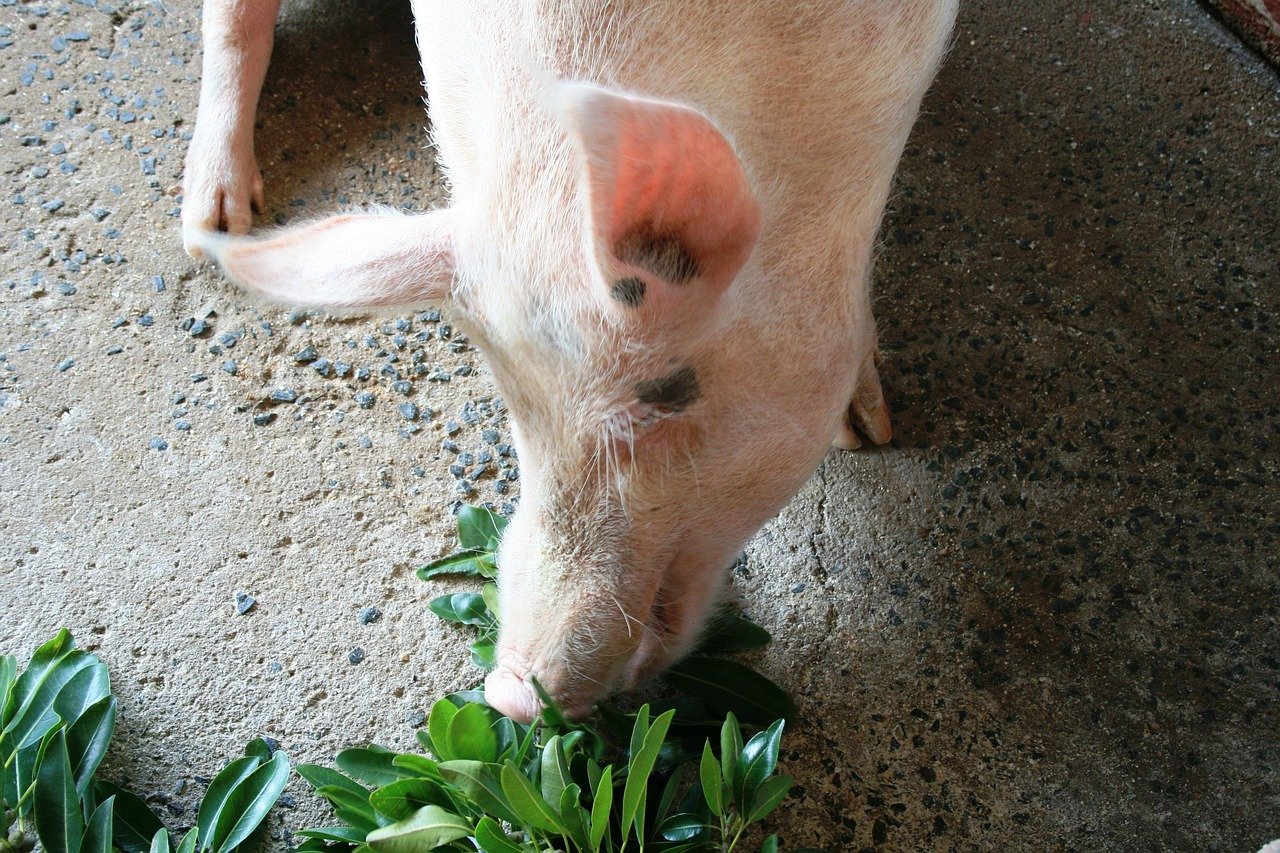
Ask ten people what pigs eat and you will probably get ten answers. One person pictures a cartoon pig with an apple in its mouth. Another remembers a grandparent tipping kitchen scraps into a trough. Someone else insists pigs are walking garbage disposals that will eat anything, including things they should not.
None of these pictures is completely wrong, but none is complete either. Pigs really are among the most flexible eaters on the planet. That flexibility is exactly why their feeding has become one of the most tightly regulated areas in agriculture. Understanding what pigs eat means looking at three separate worlds: the commercial barn, the pasture, and the wild woodland. Each one tells a different part of the story.
The Pig as a Born Omnivore
Start with biology. A pig’s digestive system is built for variety. It has a simple stomach, similar in layout to a human’s, plus a long intestine and a strong urge to root through soil with its snout. That snout is a serious tool. Pigs can smell and uncover food buried well below the surface, which is why wild pigs spend so much of their day digging.
In natural settings, the menu is broad. Pigs eat roots and tubers, fallen fruit and nuts, grasses and leafy plants, insects, worms, and occasionally small vertebrates or carrion. They are opportunists, not specialists. If it is edible and reachable, it counts as pig food.
That said, “will eat” and “should eat” are different questions. A pig can survive on scraps, but it will not thrive on them. Growth, reproduction, and health all depend on getting the right balance of energy, protein, vitamins, and minerals.
What Farmed Pigs Actually Eat
Most of the world’s pigs live in managed production systems, and their diets are carefully formulated. A typical commercial ration is built from a handful of core ingredients.
| Ingredient type | Common examples | Main role |
|---|---|---|
| Cereal grains | Corn (maize), wheat, barley | Energy |
| Oilseed meals | Soybean meal | Protein and amino acids |
| By-products | Wheat bran, distillers’ grains | Fiber, energy, cost control |
| Premixes | Vitamins, minerals, amino acids | Health and growth support |
Formulations shift by region and by what is locally affordable. A pig farmer in the Corn Belt and a pig farmer in Southeast Asia may use very different ingredient lists to hit the same nutritional targets.
Feeding by life stage
Pigs are not fed one diet from birth to market. Nutrition is phased to match growth. Piglets need highly digestible feed with careful protein levels. Growing pigs need energy and amino acids to build muscle. Finishing pigs move toward diets that balance growth with carcass quality. Breeding sows and boars have their own requirements, tied to reproduction rather than rapid weight gain.
Get the phase wrong and the consequences show up quickly. Too little protein in a young pig limits growth. Too much energy in a breeding sow leads to excess body condition and reproductive problems. This is why pig nutrition is treated as a technical discipline rather than a matter of filling a trough.
Feed conversion matters more than most people realize
Feed is the single largest cost in pig production, and pigs are efficient at turning it into body weight. That efficiency is the quiet engine behind the whole industry. Every improvement in feed formulation, ingredient quality, or feeding technique translates into real money saved and fewer resources used per kilogram of meat.
This is also why farmers obsess over ingredient quality. Moldy grain, inconsistent by-products, or poorly mixed rations waste money twice: once when the feed is bought, and again when the pig grows slower than it should.
The Kitchen Scrap Question
Here is where a lot of practical advice goes wrong. Feeding pigs leftover food was once standard practice around the world, and in many places it still feels natural. But it is now heavily restricted or banned in many countries, and for good reason.
The concern is disease. Pigs are susceptible to serious viral threats, including African swine fever and classical swine fever, and contaminated feed and pork products are well-documented transmission routes. Outbreaks since 2018 in Asia and Europe pushed governments to tighten feed controls further. Swine diseases do not stay politely inside one farm; they move with feed, vehicles, people, and products.
The rules differ sharply by country, so never assume. The European Union has banned feeding catering waste to farmed animals under its animal by-products regulation in force since 2009. The United Kingdom banned swill feeding in 2001 after the foot-and-mouth disease outbreak. The United States regulates the treatment of garbage fed to swine under its own swine health rules. Meanwhile, some countries in Asia, including Japan and South Korea, permit processed food waste as feed under heat treatment and strict regulation.
The practical takeaway for anyone keeping pigs: check your local rules before you tip anything into a bucket. A practice that is legal and normal in one country can be illegal in another, and the penalties are not trivial.
Pigs on Pasture and in the Wild
Not every pig eats from a feeder. Pasture-based systems let pigs graze and root, eating grasses, legumes, and roots alongside supplemental feed. These systems are a minority of global production, but they matter for anyone interested in how pigs behave when given room to act like pigs.
Wild and feral pigs take foraging further. They eat whatever their habitat provides, adjusting constantly as seasons change. This is where the popular image of the pig as a relentless eater comes from, and it is not far off. Pigs are persistent, curious, and highly motivated by food.
For anyone raising pigs with access to outdoor areas, the practical lesson is that forage supplements a diet; it rarely replaces one. Pasture alone usually cannot meet the energy and amino acid needs of a fast-growing pig, so most pasture systems still provide a balanced ration.
Common Feeding Mistakes That Actually Cause Problems
Advice about pig feeding is everywhere, and a lot of it is outdated. These are the mistakes that show up most often in practice.
- Feeding scraps without checking the law. This is the big one. What felt normal decades ago may now be prohibited, and the reason is disease control, not bureaucracy.
- Assuming pigs can eat anything. Pigs are flexible, not indestructible. Spoiled food, moldy grain, and raw meat waste carry real risks.
- Using one diet for every stage. Piglets, growers, finishers, and breeding animals have genuinely different needs.
- Ignoring water. Feed gets all the attention, but clean, constant water matters just as much for digestion and growth.
- Overfeeding breeding animals. Sows and boars are not being finished for market, and pushing energy into them creates health and reproductive problems.
- Changing feed abruptly. Sudden switches upset digestion. Gradual transitions work far better.
If you keep pigs and also care about how food choices shape eating, the same principle of balance applies to your own plate. A useful parallel is how a Thai food order balances flavors to eat well, where sweet, sour, salty, and spicy are deliberately combined rather than left to chance. Pig rations work the same way: energy, protein, minerals, and fiber have to be balanced on purpose.
How to Judge a Pig Diet in Practice
Whether you are raising a few pigs in a backyard or simply curious about what goes into commercial production, a handful of checks tell you whether a diet is sound.
- Stage-appropriate: does the ration match the pig’s age and purpose?
- Balanced: are energy, protein, vitamins, and minerals all covered?
- Legal: does it comply with local feed rules, especially on food waste?
- Safe: is the feed free of mold, spoilage, and prohibited material?
- Consistent: is the supply reliable enough to avoid sudden changes?
- Affordable: does the cost make sense relative to the pig’s value?
These checks are simple, but skipping any one of them tends to show up later as slower growth, health problems, or a regulatory headache.
Why Pig Feeding Is Really a Food-Safety Story
It is tempting to treat pig nutrition as a niche farming topic. In reality, it sits at the intersection of animal health, food safety, and international trade. A feed decision made on one farm can affect disease risk across a region. That is why feed rules exist, why they vary so much between countries, and why they are enforced.
The same logic explains why regulators treat certain feed ingredients as high-risk even when they seem harmless. A leftover sandwich is not dangerous to a person. Fed to a pig, it can carry a virus that devastates an industry.
For anyone who wants to understand food systems more broadly, this is a useful reminder that what animals eat shapes what ends up on shelves. The same curiosity applies when deciding where to buy your own meals; knowing how to find the best places to eat near me usually comes down to understanding sourcing and standards, rather than menus alone. And small details matter in both cases, much like the way a kumquat is a tiny citrus you eat peel and all, where knowing exactly what you are consuming changes the whole experience.
Conclusion
So what do pigs eat? The honest answer depends on where the pig lives. A commercial pig eats a precisely formulated grain and oilseed ration matched to its growth stage. A pasture pig grazes and roots while still receiving balanced feed. A wild pig eats whatever its habitat offers, from tubers to insects. Underneath all three is the same biological truth: pigs are adaptable omnivores with simple stomachs and strong instincts to root, explore, and eat.
What has changed is not the pig but the rules around it. Kitchen waste feeding, once universal, is now banned or tightly controlled in many countries because of disease risk. That single shift explains most of the confusion people have about pig diets today.
For anyone keeping pigs, the practical path is straightforward: match feed to the animal’s stage, keep the ration balanced, check local regulations before feeding anything unusual, and never treat scraps as a free lunch. For everyone else, the takeaway is simpler. Pigs eat far more variety than most people imagine, and the way farmers manage that variety is one of the quieter success stories in modern food production.
Frequently Asked Questions
Can pigs eat meat?
Pigs are omnivores and can digest animal matter, which is why wild pigs eat insects, worms, and carrion. On farms, though, feeding meat and food waste containing animal products is restricted or banned in many countries because of disease transmission risk. The safe rule is to check local regulations before feeding any animal material.
Are pigs really able to eat almost anything?
They are highly flexible eaters, but “anything” is misleading. Pigs cannot safely eat spoiled food, moldy grain, or raw meat waste, and many countries prohibit feeding kitchen scraps entirely. A pig will eat a wide range of foods, but a sound diet still needs to be balanced and legal.
Why is feeding kitchen waste to pigs banned in some countries?
The concern is disease. Pigs are vulnerable to serious viruses such as African swine fever and classical swine fever, and contaminated feed and pork products are known transmission routes. Several countries banned or restricted swill feeding after outbreaks to protect pig herds and the wider meat industry.
Do pigs need grain, or can they live on grass alone?
Pigs can graze and root on pasture, and they do eat grasses, legumes, and roots. However, pasture alone usually cannot meet the energy and amino acid needs of a fast-growing pig, so most pasture systems still provide a balanced supplemental ration. Grass is a useful addition, not a complete diet.
How does a piglet’s diet differ from an adult pig’s?
Piglets need highly digestible feed with carefully controlled protein levels to support early growth and development. Growing pigs need energy and amino acids for muscle. Finishing pigs balance growth with carcass quality, while breeding sows and boars need diets aimed at reproduction rather than rapid weight gain.
Is water as important as feed for pigs?
Yes. Clean, constant water is essential for digestion, nutrient absorption, and growth, and a pig that cannot drink enough will not perform well no matter how good the feed is. Water supply is often overlooked because feed gets more attention, but it belongs in the same conversation.



