To reset Android phone, first pick the right kind of reset, because the phrase covers four different actions with very different consequences. A soft reset is just a restart and deletes nothing. A factory reset wipes every photo, app, message and account and returns the phone to its factory state. Between them are smaller resets for Wi-Fi, Bluetooth and app preferences, which fix specific faults without touching your data.
Most Android problems do not need a factory reset. A frozen screen, a crashing app, Wi-Fi that will not connect or a slow phone will usually be fixed by a restart, a settings reset or a software update. A factory reset is the right move when you are selling or giving the phone away, when a serious fault survives everything else, or when you want a clean start. The steps below work on phones running Android 15 and Android 16 in 2026, including Samsung Galaxy and Google Pixel, though menu names vary slightly by maker.
This guide works through each reset in order, from the safest to the most destructive, so you can stop at the mildest one that fixes your problem. Read the backup warning before any factory reset: erasing is permanent once it starts.
Key takeaways
- A soft reset restarts your Android phone and deletes nothing, so always try it first.
- A factory reset erases everything permanently, so back up your phone before you start.
- Resetting Wi-Fi, mobile and Bluetooth fixes most connection problems without deleting data.
- You need your Google account password after a factory reset, because Factory Reset Protection locks the phone to that account.
- If the screen is frozen or the phone will not start, recovery mode can still wipe and restore it.
At a glance: which reset do you need?
| Reset type | What it erases | When to use it | Time needed |
|---|---|---|---|
| Soft reset (restart) | Nothing | Frozen screen, crashing app, sluggish phone | About 2 minutes |
| Reset Wi-Fi, mobile and Bluetooth | Connection settings only | Wi-Fi, Bluetooth or mobile data problems | About 5 minutes |
| Reset app preferences | App permissions and defaults only | Apps misbehaving, notifications wrong, defaults stuck | About 2 minutes |
| Factory data reset | Everything | Selling the phone, serious fault, clean start | 15 to 30 minutes |
| Recovery mode wipe | Everything | Phone will not start, forgotten PIN or pattern | 30 to 60 minutes |
Step 1: Soft reset your Android phone
A soft reset, or force restart, cuts power and starts the phone again. It deletes nothing, closes no accounts and changes no settings, which is why it is always the first thing to try. It clears temporary memory, stops a stuck app or process and reloads Android from scratch, and that alone fixes a large share of everyday problems.
On most Android phones, press and hold the power button until the power menu appears, then tap Restart. If the screen is frozen, press and hold power and volume down together for 10 to 20 seconds until the phone vibrates and the logo appears. On Samsung Galaxy phones, the same combination works.
After the restart, test the problem that brought you here. If it is gone, you are done. If the phone freezes again within minutes, note which app was open, because a single faulty app is often the cause.
Before reaching for a factory reset, check whether the phone is simply full. A phone with almost no free storage will stutter, crash apps and refuse updates, which looks like a fault when it is really a space problem. Free up space on Android first, and speed up your Android phone by closing background apps. Many phones feel new again after that alone.
Step 2: Factory reset your Android phone (erase all data)
A factory reset wipes your Android phone completely. Photos, videos, messages, apps, accounts, passwords and settings are all deleted, and the phone restarts at the welcome setup screen, exactly as it was when it was new. Do not start this step until you have a backup you have actually checked, because once the erase begins there is no way to stop it or recover the data.
Before you erase, back up your phone in Settings, then System, then Backup, and confirm Google One backup finished recently and includes your photos. Make sure you know your Google account email and password, because Factory Reset Protection will ask for them after the erase. If you are selling the phone, remove your Google account from the phone first, so the buyer is not locked out.

On a Google Pixel and most stock Android phones, open Settings, tap System, then Reset options, then Erase all data (factory reset). On a Samsung Galaxy phone, open Settings, tap General management, then Reset, then Factory data reset. Other brands use similar names, but the path always ends at the same Erase all data screen.
Tap Erase everything, then enter your PIN, pattern or password when asked. The phone will restart and wipe itself, which usually takes 5 to 15 minutes. When the welcome screen appears, the phone is empty. If it is your phone, sign in with your Google account and restore your backup during setup. If you are selling it, stop at the welcome screen.
Step 3: Reset settings without erasing your data
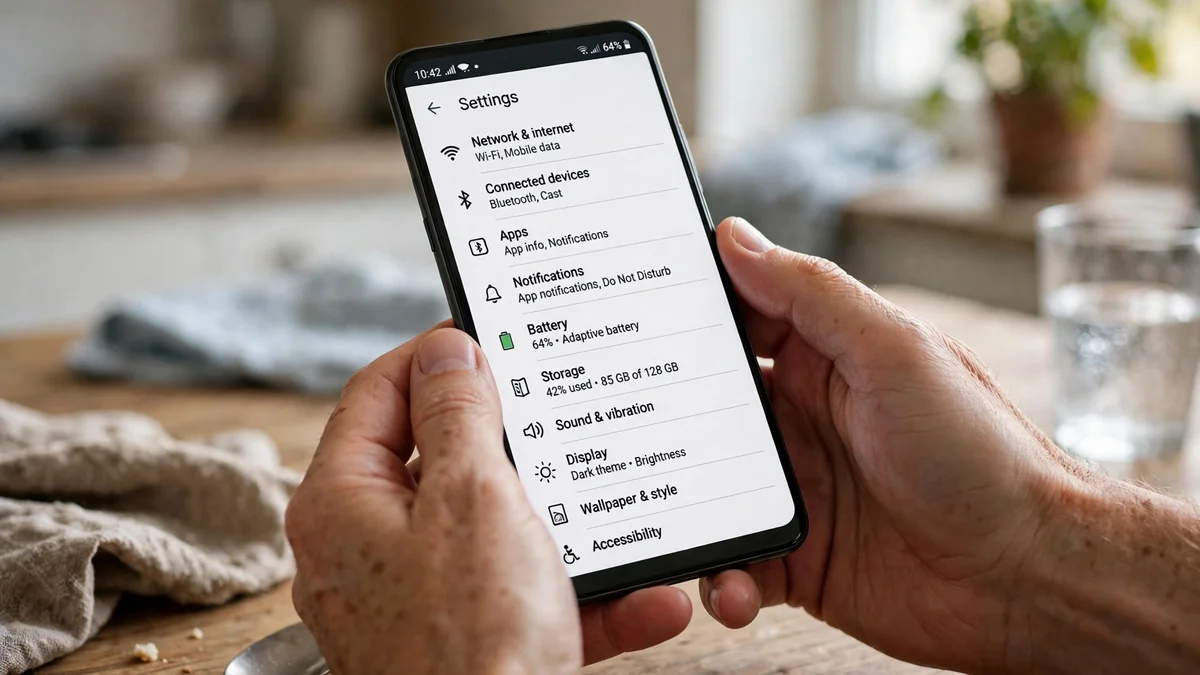
Sometimes the problem is a setting, not the phone. The settings resets fix that without deleting a single photo or app. On a Pixel, they live in Settings, then System, then Reset options. On Samsung, they live in Settings, then General management, then Reset. Other brands put them in similar places, and the names are close enough to recognise.
Reset Wi-Fi, mobile and Bluetooth is the fix for connection problems. It forgets every Wi-Fi network and password, deletes Bluetooth pairings and resets mobile and VPN settings. Use it when Wi-Fi keeps dropping, mobile data will not connect or a Bluetooth accessory refuses to pair.
Reset app preferences is the gentlest reset of all. It clears disabled apps, notification blocks, default app choices and background data restrictions, without deleting any app or its data. Use it when apps behave oddly, notifications stop arriving or links open in the wrong app.
Samsung phones also offer Reset all settings, which returns every setting to its factory default while keeping your apps, photos and files. Use it when the phone behaves oddly after a software update. You will need to rejoin Wi-Fi networks afterwards.
Step 4: Reset an Android phone with recovery mode
Recovery mode is the fallback when the phone will not respond to buttons, will not start past the logo, or you have forgotten your PIN, pattern or password. It is a separate minimal system built into every Android phone, and it can wipe the phone even when Android itself will not load. The process erases the phone, so a backup matters here too if one exists.
First, switch the phone off completely. If the screen is frozen, hold power and volume down together until it switches off. Then press and hold the recovery combination for your brand: on Samsung, hold volume up and power together; on Pixel, hold volume down and power together, then use the volume keys to select Recovery mode and press power. Release the buttons when the logo appears.
In the recovery menu, use the volume buttons to move and the power button to select. Choose Wipe data/factory reset, then confirm by selecting Factory data reset. The wipe takes a few minutes. Choose Reboot system now, and the phone will restart at the welcome screen.
After a recovery wipe, the phone will ask for the Google account that was signed in before the reset. This is Factory Reset Protection, and it cannot be skipped. If you do not know that password, reset it from another device before you wipe.
Troubleshooting reset problems
If the phone will not restart at all, charge it for at least 30 minutes with a known-good cable and charger, then try the force restart combination again. A very flat battery may not show the charging symbol for several minutes, so do not assume the phone is dead.
If you forgot your PIN or pattern and cannot get into the phone, recovery mode is the route, as described in step 4, and it will erase the phone. Google’s Find My Device can also erase a lost phone remotely. Either way, you will need the Google account password afterwards.
If the phone keeps restarting itself after a reset, the cause is often an app restoring itself from the backup. Set the phone up as new instead, install your apps one at a time, and watch for the one that triggers the loop.
If an app keeps crashing after the reset, clear its storage in Settings, then Apps, then the app name, then Storage, and tap Clear cache, then Clear data. If that does not help, reinstall it from the Play Store. Record your screen on Android to capture the crash before you contact support.
Checklist: before you reset your Android phone
- Back up your phone to Google One or a computer and confirm the backup finished.
- Write down your Google account email and password and your PIN or pattern.
- Remove your Google account and switch off screen lock if you are selling the phone.
- Charge the battery to at least 50 percent or keep the phone plugged in during the reset.
- Move photos, files and two-factor codes you need to another device first.
- Remove the SIM card and microSD card if the phone is going to a new owner.
Frequently asked questions
Does resetting an Android phone delete everything?
A soft reset deletes nothing. A factory reset deletes everything on the phone. Resetting Wi-Fi, mobile and Bluetooth only deletes connection settings, and resetting app preferences only clears permissions and defaults.
How long does a factory reset take?
The erase itself usually takes 5 to 15 minutes, and setup takes another 10 to 15 minutes. Restoring from a Google backup can take 30 minutes to several hours, depending on how much data you have and your Wi-Fi speed.
Can I reset my Android phone without the PIN?
Yes, using recovery mode, as described in step 4, and the process erases the phone. You will still need the Google account password afterwards, because Factory Reset Protection asks for it during setup.
Will a factory reset remove Factory Reset Protection?
No. Factory Reset Protection stays on until the owner removes their Google account from the phone before the reset. A factory reset does not remove it, because it stops a stolen phone from being wiped and reused.
Should I reset my Android phone before selling it?
Yes, always. Back up your data first, remove your Google account, then use Erase all data (factory reset), and leave the phone at the welcome screen. Take out the SIM and microSD cards before you hand it over.
Why is my Android phone slow after a reset?
A phone is often slow for a few hours after a reset because it is downloading apps and restoring photos from the cloud in the background. Leave it plugged in on Wi-Fi overnight.
The bottom line
Resetting an Android phone is a ladder, and the right move is almost always the lowest rung that works. A soft restart fixes most freezes and crashes in two minutes and costs you nothing. A connection or app-preferences reset sorts out the stubborn faults that survive a restart. A factory reset is the last resort, and it demands a checked backup and your Google account password before you tap Erase everything.
If you are selling the phone, the factory reset is non-negotiable, and removing your Google account beforehand matters just as much as the erase. If you are keeping it, try the gentle resets first and only reach for recovery mode when the phone will not respond at all.