
Why does a fridge that costs $1,800 on its own suddenly cost $1,450 when you buy it with a stove and a dishwasher? That gap is the whole appeal of kitchen appliance package deals, and it is also where most shoppers get confused. Bundles are not a standardized product category. They are a retail marketing tool, and the rules change from store to store and brand to brand. Understanding how the math actually works, and where the hidden costs hide, is the difference between a genuine $1,500 saving and a deal that quietly disappears at checkout.
What an Appliance Package Actually Is
There is no industry-wide definition of an appliance package. No single authority decides that a package must include a refrigerator, range, dishwasher, and microwave. Retailers build them, brands promote them, and the contents vary wildly. Some bundles are “four-piece kitchen sets” with the obvious big appliances. Others are three-piece suites or “kitchen essentials” collections that swap in a range hood or a built-in microwave.
That flexibility cuts both ways. It lets you match finishes and brands across your whole kitchen, which looks sharp and simplifies warranty paperwork. It also means two packages with nearly identical contents can carry very different price tags and very different strings attached.
The common thread is bundled discount pricing: buy a set number of appliances from one brand or one retailer, and the individual list prices drop. The mechanics are retailer-specific and change constantly, so treat any advertised percentage as a starting point for a conversation, not a guarantee.
How the Discount Math Usually Works
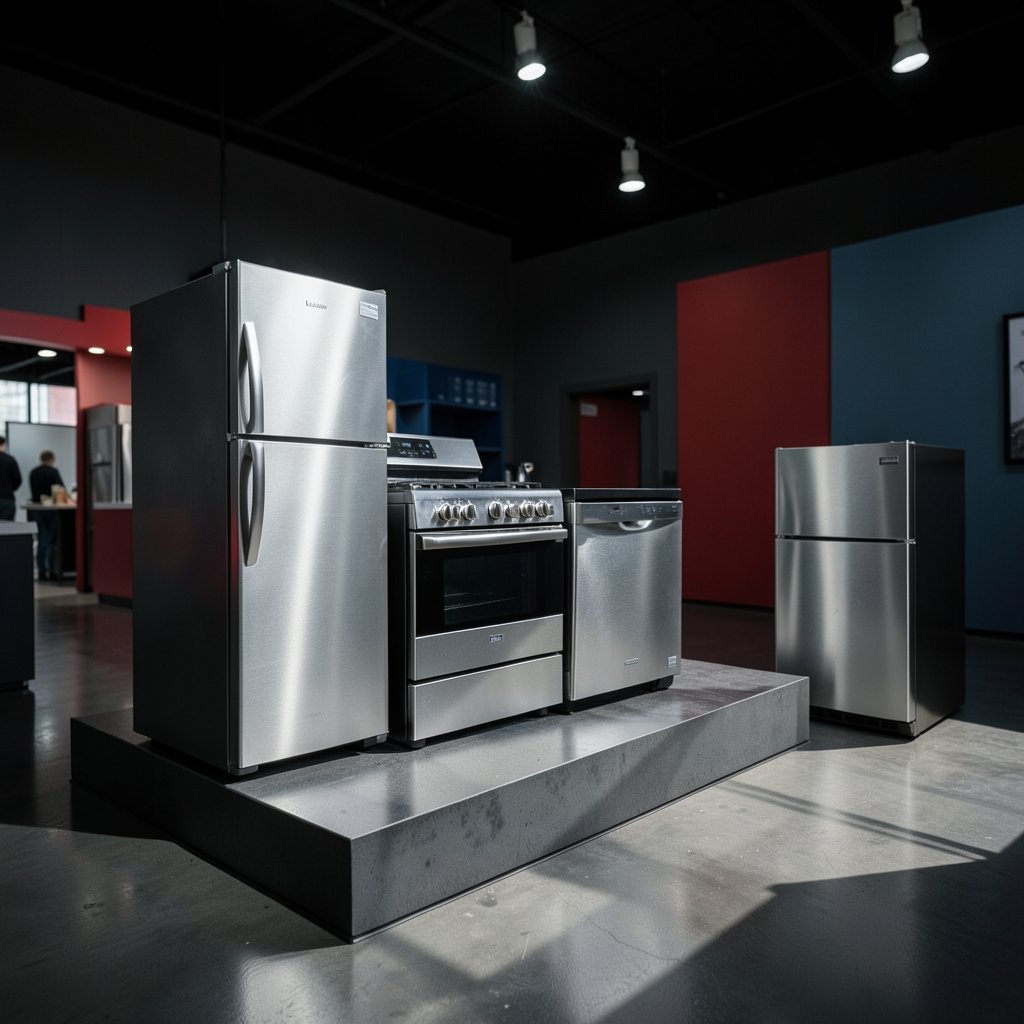
Most package savings come from one of four structures. Knowing which one you are looking at tells you whether the deal is real.
| Bundle Structure | How It Works | Where It Helps | Where It Hurts |
|---|---|---|---|
| Spend-threshold discount | Save a set percentage once your cart hits a dollar amount | Easy to combine with sales | Encourages padding with items you don’t need |
| Brand suite rebate | Manufacturer rebate for buying 3–4 matching units | Best finish matching, strong rebates | Locks you into one brand’s reliability record |
| Retailer bundle price | Store sets a single package price below the sum of parts | Simple to compare | Package price can hide weaker models |
| Financing bundle | Low or zero interest when you buy the set | Spreads cost over 12–36 months | Interest can erase the discount if you carry a balance |
A practical rule: compare the package price against the sum of the same model numbers bought individually, not against the original list prices. Sale prices on individual units are often aggressive enough that a “bundle discount” adds up to less than buying each piece on its own during a holiday event. That is why timing matters so much. Major promotional windows, especially Black Friday car deals style doorbuster events across retail, tend to reset appliance pricing too, and the same logic of stacking store discounts with manufacturer rebates applies.
Where the Real Savings Come From
Three levers do most of the work in a good package deal.
The bundle discount itself. This is the headline number, usually 10 to 30 percent off the combined list price depending on how many pieces you buy and how motivated the retailer is to move that brand.
Manufacturer rebates. Brands often layer their own rebates on top of retailer discounts for matched suites. These frequently require submission after purchase, with a receipt and model numbers, and they can take weeks to arrive. Read the rebate form before you buy, not after.
Utility and efficiency incentives. Federal efficiency standards set a floor for what can be sold, and voluntary efficiency labeling flags the models that beat that floor. Many utilities offer rebates for qualifying appliances, and old-unit recycling programs exist in most regions. Availability is local and shifts year to year, so check your utility’s current offer before assuming a rebate applies.
Stack all three and a mid-range four-piece kitchen can drop meaningfully below the sum of its parts. Stack none and you have paid list price with extra delivery fees.
The Costs That Don’t Make the Ad
Advertised package prices commonly exclude delivery, installation, and haul-away of your old appliances. On a full kitchen, those line items can add several hundred dollars. Ask for the out-the-door total in writing before you commit.
Other costs that surface late:
- Door reversal and handle swaps on refrigerators, sometimes billed as a separate service.
- Cord and connector kits for ranges and dryers, frequently sold separately.
- Water line and valve work for refrigerators with ice makers.
- Cabinet or counter modification if the new unit is a quarter inch wider than the old one.
- Permits or gas line adjustments for switching fuel types on a range.
A bundle that saves $900 but adds $600 in excluded fees is a $300 win, not a $900 one. That reframing alone changes which offer wins.
Matching the Package to Your Actual Kitchen
The biggest mistake shoppers make is buying the package instead of buying the appliances. A four-piece suite at a great price is a bad deal if the fridge does not fit your opening or the range’s depth leaves it sticking out past the counters.
Measure first, and measure the opening, not the old appliance. Standard refrigerator widths cluster around 30, 33, and 36 inches, and depth matters as much as width if you want a flush look. Ranges come in 30-inch and 36-inch widths most commonly, and slide-in versus freestanding models sit differently against the counter edge. Dishwashers are more forgiving but still need clearance for the door to drop.
Finish matching is the other practical consideration. Buying all four pieces from one brand almost guarantees a consistent finish and a simpler warranty process. Mixing brands can work, but stainless steel shades vary noticeably between manufacturers, and a “stainless” handle from one brand next to another brand’s panel can look off in person even when it looks fine online.
If the kitchen itself needs work before new appliances go in, budget sequencing matters. Small layout and storage upgrades often deliver more day-to-day satisfaction per dollar than a premium appliance tier, and there are small kitchen remodeling ideas budget smart upgrades that keep the appliance budget intact. The same discipline applies to vehicle and storage purchases people bundle into a household move: used car deals and storage unit deals reward the shopper who compares total cost rather than the headline rate.
Timing the Purchase
Appliance pricing is seasonal in a fairly predictable way. New model years arrive in waves, and retailers clear older inventory around major holiday weekends and at the end of quarters. The deepest discounts tend to cluster around holiday sales events, end-of-year clearance, and the weeks when a brand refreshes a product line.
There is a tradeoff. Waiting for the perfect sale can mean settling for whatever is left in stock, and popular sizes sell out first. If you need a specific width or a specific finish, the best price is sometimes the one available on the model that actually fits.
One underrated tactic: ask about floor models and scratch-and-dent units. These are often the same appliances with cosmetic imperfections, sold with full warranties at steep discounts. Inspect in person, confirm the warranty in writing, and check that the damage is cosmetic rather than structural.
Financing, Rebates, and Paperwork Traps
Zero-percent financing on a package sounds like free money. It is free only if you pay it off inside the promotional window. After that, deferred-interest structures can retroactively apply interest from the purchase date, which is a genuinely expensive outcome. Read the terms on the promotional period and what happens at its end.
Rebate paperwork is the other common failure point. Most manufacturer rebates require:
- Purchase within a specific date range.
- All qualifying model numbers on one receipt.
- Submission within a set window, often 30 to 60 days.
- Proof of delivery or installation in some cases.
Miss any step and the rebate is gone. Photograph the receipts, the model number plates on each appliance, and the delivery paperwork on day one. Keep them together until the rebate check clears.
On the consumer protection side, advertised “was” prices and discount claims are subject to truth-in-advertising rules, and the rules on comparative pricing vary by state. If a package price looks implausible, ask the salesperson to show the individual prices the bundle is being compared against. A legitimate deal survives that question.
New Versus Open-Box Versus Scratch-and-Dent
| Option | Typical Savings | Warranty | Risk |
|---|---|---|---|
| New package | 10–30% off list | Full manufacturer | Lowest |
| Open-box | 15–40% off | Usually full, sometimes shortened | Missing parts, cosmetic wear |
| Scratch-and-dent | 30–50% off | Often full | Visible damage, limited stock |
| Floor model | 20–50% off | Varies by store | Handling wear, discontinued finishes |
The savings ladder is real, but so is the variance. Open-box units sometimes arrive without the manual, the ice maker filter, or the mounting hardware, and replacement parts eat the discount. Ask what is missing before you pay.
What Actually Works in Practice
Shoppers who come out ahead on packages tend to follow the same script. They pick the models first based on fit, reliability, and reviews, then hunt for the bundle that contains those models. They get the out-the-door quote in writing, including delivery, installation, haul-away, and any cord or connector kits. They confirm the rebate terms and the financing end date before signing. And they keep every piece of paperwork until the rebates land.
The shoppers who regret it usually did the reverse: they picked the discount first, then made the appliances fit. A great price on the wrong size is not a deal, it is a return.
It also pays to look beyond the kitchen when a household is refreshing big-ticket items at once. Lease and purchase promotions on vehicles follow similar bundle logic, and shoppers comparing Range Rover lease deals or BMW M3 lease deals face the same question: is the advertised number the real number once fees and conditions land? The discipline transfers directly.
Conclusion
Kitchen appliance package deals are worth chasing, but only with your eyes open. The savings are real when the bundle contains the models you would have chosen anyway, when the discount is measured against actual individual sale prices rather than inflated list prices, and when delivery, installation, and haul-away are folded into the total before you compare offers. Measure your openings, pick your models, get the out-the-door number in writing, and treat rebates and financing as paperwork with deadlines rather than free money. Do that, and a package deal becomes what it should be: a straightforward way to furnish a whole kitchen for less than the sum of its parts.
Frequently Asked Questions
How much can you typically save with a kitchen appliance package?
Most bundle discounts land somewhere between 10 and 30 percent off the combined list price, depending on how many pieces you buy and the brand. Manufacturer rebates and local utility incentives can push the total savings higher, but delivery, installation, and haul-away fees often eat into the headline number. Always compare the package price against the sum of the same models bought individually on sale.
Is it cheaper to buy appliances as a package or separately?
It depends on timing. During major promotional events, individual sale prices can be aggressive enough that a bundle discount adds up to less. Packages win most often when you need matching finishes and a full kitchen at once, and when a brand rebate requires buying several pieces together. Price out both paths using identical model numbers before deciding.
Do appliance packages include delivery and installation?
Usually not. Advertised package prices commonly exclude delivery, installation, haul-away of old units, and small parts like range cords and connector kits. On a full kitchen those extras can add several hundred dollars. Ask for an out-the-door total in writing that lists every fee separately so you can compare offers fairly.
What should I measure before buying a kitchen appliance package?
Measure the actual openings, not the old appliances. Refrigerator widths cluster around 30, 33, and 36 inches, and depth matters if you want a flush look. Ranges are most commonly 30 or 36 inches wide, and slide-in versus freestanding models sit differently against the counter. Also check door swing clearance and whether the refrigerator needs a water line.
Are open-box and scratch-and-dent appliances a good deal?
They can be excellent value, often 15 to 50 percent off, and many still carry a full manufacturer warranty. The risks are missing accessories, discontinued finishes, and limited stock. Inspect in person, confirm the warranty terms in writing, and ask exactly what is missing from the box before you pay.
How do appliance rebates usually work?
Most manufacturer rebates require purchase within a set date range, all qualifying model numbers on one receipt, and submission within a window that is often 30 to 60 days. Some require proof of delivery. Miss a step and the rebate is lost. Photograph receipts, model plates, and delivery paperwork immediately and keep them until the rebate arrives.