Quick Answer: Are smart glasses the future?
It depends. Smart glasses are likely to become a mainstream everyday device for audio, photos, and AI assistance, but true augmented-reality eyewear with displays is still years from everyday use. You can already buy camera-and-audio glasses today; display glasses remain mostly developer hardware and prototypes. Before buying or betting on the category, compare battery life, camera privacy rules, prescription-lens support, app compatibility, weight and comfort, price, and how each model handles data.
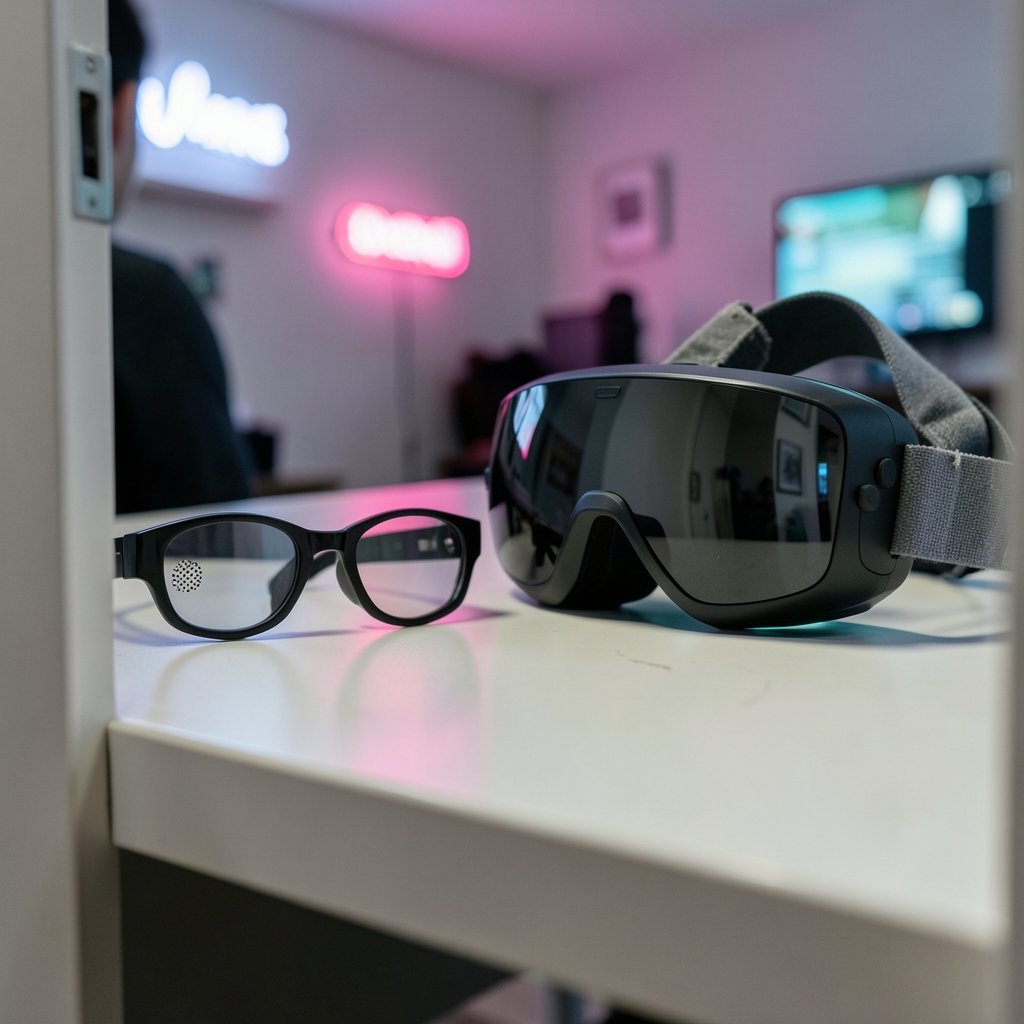
The category splits into two very different products: lightweight AI glasses that shoot photos and answer questions, and AR headsets that overlay digital images on the world. Most “future of smart glasses” claims blur that line. This article keeps them separate.
Meta’s Ray-Ban glasses sold in the hundreds of thousands within months of launch, according to reports from the companies involved. That sounds small next to a billion phones shipped a year, yet it was the first time a face-worn computer found a real consumer audience. The question is no longer whether people will wear computers on their faces. It is which kind, and how fast.
Two very different products wearing the same name

The smart glasses label covers gear with almost nothing in common. On one side sit audio-and-camera glasses: ordinary frames with speakers, microphones, a camera, and now AI assistants. Meta’s Ray-Ban line is the best-known example. On the other side sit AR display glasses: devices that project images into your field of view. Meta’s Orion prototype, shown in September 2024, belongs here, as does the heavier mixed-reality headset category led by Apple Vision Pro, which shipped in February 2024.
The first group is a shipping product. The second is largely a technology demonstration. When someone asks whether smart glasses are the future, the honest answer is that one version already arrived quietly, while the other is still being engineered.
| Feature | AI audio/camera glasses | AR display glasses |
|---|---|---|
| Display | None | Built-in projection |
| Main use | Photos, calls, AI queries | Overlaid maps, messages, video |
| Weight | Light, close to normal frames | Heavier, often tethered |
| Availability | On sale now | Mostly prototypes or niche |
| Price | Mid-range consumer | High, often enterprise |
| Maturity | Proven demand | Early engineering |
What actually works in practice
First-hand reports from early buyers point to the same handful of wins. Hands-free photos and short videos are the killer feature, especially for parents, cooks, and cyclists. Audio that leaves your ears open is genuinely useful on a bike or in a busy street. And voice AI that answers without a screen feels natural when your hands are full.
The failures are equally consistent. Battery life shrinks fast with heavy camera or AI use. Video recording is often capped at short clips. In loud places, the assistant misunderstands you. And the social friction is real: people notice a camera on your face, and some venues ask you to take the glasses off.
Practical tips that hold up across models:
- Try the frames on for at least ten minutes before buying. Nose-bridge pressure shows up later, not in the store.
- Test the assistant in a noisy room, not a quiet one.
- Check whether prescription lenses are supported and what that adds to the price.
- Confirm where recordings are stored and how the capture light behaves.
- Check app support for your phone before assuming it works.
The most common mistake is buying display glasses expecting a finished consumer product. They are not there yet.
The AI assistant is the real story
The glasses themselves are simple hardware. The leap came from pairing a camera and microphone with a conversational assistant. Point your face at something and ask a question, and the answer arrives in your ear. That is a genuinely new interaction model: no screen, no typing, no pocket.
This is why the category matters beyond gadgets. If AI assistants become the primary way people query the world, glasses are the most natural body-worn interface for them. The broader shift toward ambient, always-available AI is already reshaping consumer tech, and the same trends driving AI trends that could shape the future of technology explain why face-worn hardware suddenly makes sense. The assistant, not the frame, is the product. (Technology News)
That also explains the risk. When the AI is wrong, the glasses are wrong, and the error happens in your ear while you are walking. Accuracy, latency, and battery drain are the three limits that will decide whether this feels magical or annoying.
Privacy is the biggest brake on adoption
Camera glasses raise an obvious question: who is filming whom? Early versions of face-worn cameras triggered backlash, and the current generation responds with recording lights, shutter sounds, and clearer indicators. That helps, but it does not settle the social question.
Expect friction to persist in changing rooms, gyms, schools, and some workplaces. Rules vary by country, and enforcement is patchy. For buyers, the practical takeaway is simple: treat the capture light as a social contract, not a legal shield. For the industry, trust is the bottleneck. A pair of glasses that makes strangers uncomfortable will struggle in public spaces no matter how good the assistant is. (Smartglasses)
If you are building a broader connected-home setup, this is the same trust calculus that applies to cameras indoors. The guidance in this roundup of the best smart locks for home security applies here too: convenience only pays off when the privacy trade-off is clear and controllable.
Design, weight, and the prescription problem
People will not wear ugly, heavy glasses. That sounds trivial until you realize it is the hardest engineering constraint in the category. A phone can be thick. Glasses sit on your nose for fourteen hours.
The current generation solved this by starting from real eyewear frames and adding electronics inside the temples. That is why the best-selling models look like normal glasses. The AR generation has not solved it yet: batteries, displays, and optics add bulk, and prototypes often need a tethered compute puck.
Prescription lenses are the quieter hurdle. Roughly half of adults need vision correction, and a smart frame that cannot hold your prescription is a second pair of glasses, not a replacement. Any company that cracks prescription integration at scale wins a large share of the market almost by default.
What the market signals suggest
Shipment forecasts for smart glasses vary widely between analyst firms, partly because they define the category differently. Some counts include audio-only frames; others include AR headsets. Treat any single number with caution and look at the direction instead.
The direction is upward but uneven. Meta has publicly framed its glasses work as a long-term bet, and its Reality Labs division has reported sustained operating losses while pursuing it, a detail disclosed in the company’s annual filings with the U.S. Securities and Exchange Commission. That is a company spending billions on a category that still sells in modest volumes. It is either early conviction or an expensive gamble, and the next few years will tell.
Meanwhile, the broader wearables market keeps growing, and the concept itself is not new. Attempts at head-worn computing date back decades, as the long history documented on Wikipedia’s smart glasses page shows. What changed is the assistant, the battery efficiency, and the fact that people now accept voice AI in their daily lives.
Where smart glasses fit in a connected home
Glasses are rarely the center of a smart home. They are a remote control for one. Ask the assistant to lock a door, check a camera, or adjust the thermostat, and the glasses become a hands-free interface for devices you already own.
That makes them a natural companion to the hubs and speakers people already run. If you are starting from scratch, the beginner-friendly picks in this guide to the best smart home devices for beginners will get you further than any pair of glasses. And if your goal is energy savings rather than novelty, the best smart thermostats to save energy deliver measurable returns that glasses do not.
The practical rule: buy glasses for what they do on your face, not for the home automation they might enable later.
Common mistakes buyers make
A few patterns show up again and again.
- Buying for the demo, not the daily use. Most owners use photos and audio far more than AI queries.
- Ignoring the phone ecosystem. Some features only work with specific handsets.
- Skipping the fit check. Comfort beats specs every time.
- Assuming display glasses are ready. They are not, for most people.
- Underestimating social friction. Ask yourself whether you would wear them to a family dinner.
Avoid those five and the odds of regret drop sharply.
What would need to change for AR to go mainstream
For true AR glasses to replace your phone, four things must improve at once: weight, battery, display brightness in daylight, and price. Progress on any one is not enough. A light pair with a dim display is useless outdoors. A bright display with two hours of battery is a paperweight.
The prototypes shown so far suggest the engineering is moving, but the gap between a demo and a durable product is where most hardware programs die. Google’s enterprise glasses effort, which ended its run in 2023, is a reminder that early technical success does not guarantee a market. The category has already had one false start.
Conclusion
So, are smart glasses the future? Partly, and sooner than skeptics think for the audio-and-camera version. Those glasses already do something useful every day, and the AI assistant makes them more capable each year. The display version remains a promise, not a product you should plan around.
The sensible position is to treat smart glasses as a real but narrow tool today, and as a likely mainstream platform later. Buy for the features that exist. Watch the weight, battery, and privacy numbers. And keep expectations calibrated: the future is arriving in frames, just more slowly than the keynote suggests.
Frequently Asked Questions
Do smart glasses replace a phone?
No, not today. They handle photos, calls, audio, and voice queries, but most tasks still route through a paired phone. Display models aim to do more, yet they remain niche and expensive.
Are camera glasses legal to wear in public?
In most countries, yes, with conditions. Recording rules vary by jurisdiction, and private venues can set their own policies. Always respect posted restrictions and the people around you.
How long does the battery last on AI glasses?
It varies by model and use. Light use can stretch through a day, while heavy camera or assistant use drains the battery in a few hours. Expect to charge nightly.
Do smart glasses work with prescription lenses?
Many current models support prescription lenses, often through the manufacturer or partner opticians, usually at extra cost. Check compatibility before buying, since not every frame style qualifies.
Are display AR glasses worth buying now?
For most people, no. They are costly, heavier, and aimed at developers or niche professional use. Wait for weight, battery, and price to improve before treating them as a consumer purchase.
Will smart glasses get cheaper?
Likely yes, following the usual pattern for new consumer electronics. Prices should fall as components improve and competition grows, though premium models will stay expensive for a while.