
What happens when a car that is supposed to drive itself is involved in a serious crash, and the data that could explain the event sits behind a company’s servers? That is the uncomfortable question at the center of the debate over a Tesla Full Self-Driving (FSD) crash in Vallejo, California, where a reported impact at roughly 70 mph has raised hard questions about what the vehicle’s cameras and computers actually recorded, who can access that data, and whether drivers and investigators can trust it.
The story covers more than one crash. It shows how autonomous and semi-autonomous driving systems are investigated in 2026, when regulators, courts, and the public are asking the companies that build driver-assistance software for more transparency. This article explains the technical, legal, and practical questions around dashcam data and does not claim facts that have not been confirmed.
What we actually know, and what remains unconfirmed
It is important to be honest about the limits of public information. Reports of a specific Tesla FSD crash in Vallejo involving a 70 mph impact and disputes over dashcam data have circulated, but the details remain contested and, in many cases, unverified. Key facts such as the exact speed, whether FSD was engaged at the moment of impact, and what footage exists have not been uniformly confirmed by police, Tesla, or federal regulators.
That uncertainty is itself the story. When a crash involves advanced driver-assistance features, the public record often lags far behind the headlines. Police reports describe physical evidence and witness statements. Tesla holds the vehicle telemetry and camera recordings. Federal agencies may open a defect investigation or log the incident under standing orders. Each source can tell a different part of the story, and they frequently disagree.
For readers trying to follow the case, the practical lesson is to separate three things: what officials have confirmed, what the company has said, and what is still speculation. Treating an unconfirmed speed figure or an unverified claim about footage as settled fact is exactly how misinformation spreads after high-profile crashes.
Why dashcam and event data are central to this crash
Modern Teslas are, in effect, computers on wheels. They record enormous amounts of information: camera feeds from multiple angles, vehicle speed, steering input, brake pressure, and the status of driver-assistance features. This data is gold for investigators because it can reconstruct what happened in the seconds before impact.
But there is a catch. Much of this data lives in the vehicle and in Tesla’s cloud, not in a public database. Access typically requires either the owner’s cooperation, a legal order, or the company’s voluntary disclosure. That asymmetry is what makes dashcam data questions so important. If the footage and telemetry are not preserved quickly, they can be overwritten or become inaccessible.
The 70 mph figure and why speed matters
Speed is often the first number reported and the most disputed. A 70 mph impact on a surface street would be extraordinarily severe, far above typical urban limits. If that figure is accurate, it changes how investigators assess everything from braking distance to the plausibility of the driver’s account.
Speed also matters legally. It can determine whether a driver was negligent, whether a system failed to intervene, and how liability might be apportioned. But speed estimates from witnesses, crash reconstruction, and vehicle data can diverge. The only way to resolve the discrepancy is to compare the sources directly, which is precisely what the dashcam and telemetry data would allow.
How Tesla’s data systems work in practice
Tesla vehicles store event data in modules that record a snapshot around a collision or a sharp maneuver. The company has published information about how it handles vehicle data, and owners can request their own data. In practice, though, the process is not instant. Requests go through formal channels, and the scope of what is released can be narrower than what an independent investigator would want.
A common mistake people make is assuming that because a car has cameras, the footage is automatically available to police or the public. It is not. Camera recordings may be stored locally, uploaded only under certain conditions, or retained for limited periods. Understanding this distinction is essential for anyone following a crash case.
Regulation of driving systems in 2026
The Vallejo questions arrive at a moment of intense scrutiny for driver-assistance systems. The National Highway Traffic Safety Administration (NHTSA) has been collecting incident data on vehicles equipped with automated driving and advanced driver-assistance features under a standing general order. That dataset is one of the few public windows into how often these systems are involved in crashes. (Automated Vehicles Safety)
Regulators have also opened defect investigations into FSD-related behavior, and the agency maintains public resources on driver-assistance technology and its limitations. You can review NHTSA’s consumer guidance on driver assistance technologies to see how the federal government frames the risks. The consistent message is that these systems are aids, not replacements for an attentive driver.
At the state level, the California Highway Patrol is often the lead agency for serious collisions, and its collision reports carry significant weight. Local police in Vallejo would typically handle the initial response. The gap between what a preliminary report says and what a full investigation concludes can be wide.
The transparency problem
The deeper issue is transparency. Companies argue that releasing raw data risks privacy and trade secrets. Regulators argue that without data, they cannot do their jobs. Courts are increasingly being asked to resolve the conflict.
This tension is not unique to Tesla. It echoes debates across the tech industry about who owns the data generated by connected devices. For a broader view of how data governance and corporate transparency are evolving, resources like Harvard Business Review regularly cover the balance between innovation and accountability. The same principles apply here: trust depends on verifiable information, not on press statements.
What drivers and owners should do after a crash
For anyone who owns a vehicle with advanced driver assistance, the practical steps after a collision matter enormously. Here is what actually works, based on how these systems and legal processes operate.
- Preserve everything immediately. Do not delete footage, reset the system, or clear stored data. Preservation is the single most important step.
- Request your vehicle data formally. Owners can ask the manufacturer for their vehicle’s data. Do this in writing and keep records.
- Get the police report. The official collision report is the backbone of any later claim or investigation.
- Document the scene yourself. Photos, witness contacts, and road conditions can fill gaps that telemetry cannot.
- Consult a lawyer early if injuries or disputes are involved. Legal deadlines and data-retention windows are unforgiving.
A common mistake is waiting. Data retention policies can mean footage disappears within days or weeks. Another mistake is assuming the manufacturer will automatically hand over everything. It usually will not without a formal request or legal process.
How this fits into Tesla’s broader 2026 story
The Vallejo questions land against a backdrop of major Tesla news. The company’s energy business is booming, with reports that the Tesla Megapack is almost sold out through 2027 amid AI data center demand. Meanwhile, the company is juggling several hardware bets at once, from the robotaxi, Semi, and Roadster programs to speculation about a Tesla-SpaceX merger ahead of the December 6 AGM. (Tesla Autopilot)
All of this matters because public trust in FSD is a strategic asset. Every serious crash and every dispute over data chips away at that trust. The company’s long-delayed Roadster unveiling scheduled for October 15 and the nine-year delay facing EV rivals show a company that often promises big and delivers late. When the same pattern appears in safety disclosures, scrutiny intensifies.
The broader tech world is watching similar fights. Google has faced a data center backlash in India over infrastructure and community concerns, and it has rolled out AI safeguards for Gmail and Photos to address privacy worries. The common thread is that the public increasingly wants to know what companies do with data and how they handle the consequences when things go wrong.
The human cost behind the data debate
It is easy to get lost in technical debates about telemetry and retention policies. But every crash involves people. The families of those injured or killed in autonomous-vehicle incidents have consistently pushed for greater transparency, and their advocacy has shaped how regulators and courts treat these cases.
There is also a public-safety dimension. If drivers over-trust FSD because marketing suggests it is more capable than it is, crashes will continue. If the data needed to prove what happened is locked away, accountability suffers. The Vallejo questions are a reminder that technology moves faster than the rules governing it.
What to watch next in the Vallejo case
Several developments would clarify the picture. First, any official collision report that confirms or contradicts the 70 mph figure. Second, confirmation of whether FSD was engaged and what warnings the system issued. Third, any statement from Tesla about data availability. Fourth, whether a federal agency opens or expands an investigation.
Until those pieces fall into place, the responsible approach is to follow primary sources rather than viral claims. For context on how seriously authorities treat deliberate attacks on Tesla property, the five-year sentence in the Las Vegas Tesla arson case shows that the legal system does respond when evidence is clear. The same standard of evidence should apply to crash investigations.
Conclusion
The Tesla FSD crash in Vallejo and the questions surrounding its 70 mph impact and dashcam data are more than a local news story. They expose a structural problem: the companies that build driver-assistance systems also control the data that explains what those systems did. Until access, preservation, and disclosure are standardized, every serious crash will be followed by the same frustrating cycle of claims, denials, and unanswered questions.
For drivers, the takeaway is practical. Know what your car records, preserve it fast after any incident, and never assume the manufacturer will hand it over automatically. For regulators and lawmakers, the takeaway is urgent. Transparency is not a nice-to-have. It is the foundation of trust in any technology that shares the road with the rest of us.
FAQ
Was FSD confirmed to be active during the Vallejo crash?
Public reporting has not uniformly confirmed whether FSD was engaged at the moment of impact. This is one of the central unresolved questions. Only vehicle telemetry and official investigation findings can settle it definitively, and those have not been consistently released.
Why is the 70 mph figure disputed?
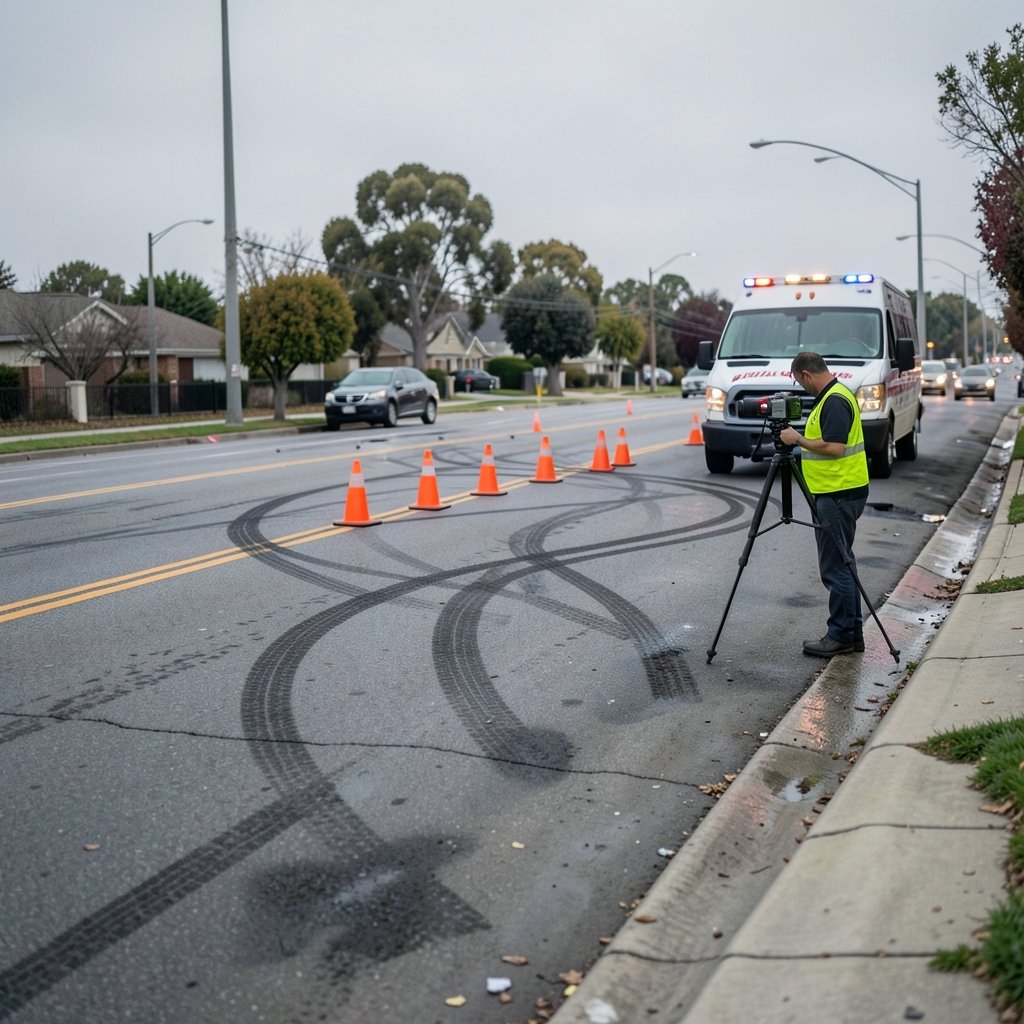
Speed estimates come from different sources, including witnesses, crash reconstruction, and vehicle data. These can diverge significantly. A 70 mph impact on a surface street would be unusually severe, which is why investigators and the public want the figure verified against recorded data rather than relying on early reports.
Who owns the dashcam and telemetry data from a Tesla?
The data is generated by the vehicle, but access is typically controlled by the owner and the manufacturer. Owners can request their own data, and investigators may obtain it through legal process. The practical reality is that the company often acts as the gatekeeper, which is the source of much of the transparency debate.
How long is Tesla crash data retained?
Retention policies are not always publicly detailed and can vary by data type. This is exactly why preservation matters after a crash. Waiting weeks or months can mean footage or telemetry is overwritten. Owners and investigators should act immediately to secure any relevant data.
What should I do if I am in a crash involving driver assistance?
Preserve all data immediately, request your vehicle data in writing, obtain the official police report, document the scene yourself, and consult a lawyer if injuries or disputes are involved. Do not reset or delete anything, and do not assume the manufacturer will automatically provide everything.
Is NHTSA investigating FSD crashes?
NHTSA has collected incident data on advanced driver-assistance and automated systems under a standing general order and has opened defect investigations into FSD-related behavior. Whether any specific Vallejo incident is part of an active investigation is a detail that would need to be confirmed through official agency channels.



