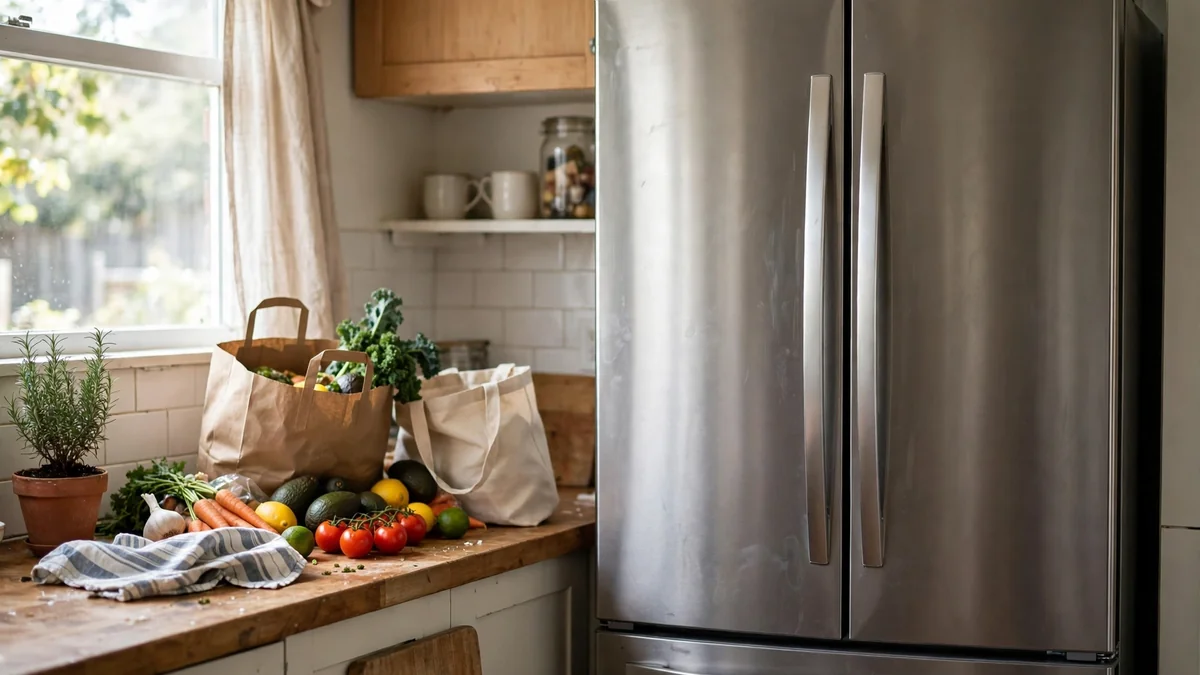
A refrigerator is an insulated cabinet that keeps food cold enough to slow the bacteria, yeasts and moulds that cause spoilage, typically holding its main compartment between 1°C and 4°C (34°F and 40°F). It is the appliance almost every modern kitchen is built around: a single box that protects a week’s worth of groceries, keeps leftovers safe to eat another day and makes it possible to buy fresh food in bulk without it going off within hours. Without it, daily life would revolve around shopping every morning and cooking everything the same day.
The modern refrigerator works by moving heat rather than creating cold. A refrigerant circulates through a sealed loop, absorbing heat from inside the cabinet and releasing it into the room. A compressor drives that loop and a thermostat switches it on and off, keeping milk safe for more than a week and cooked meals safe for several days.
Choosing and using a refrigerator well comes down to a handful of practical decisions: the right size for the household, the right layout for how the family cooks, a temperature setting that is genuinely cold enough, and habits that keep air circulating and food stored in the right zones. This guide explains what a refrigerator is, how it works, the main types on the market, the benefits and the risks, and how to store food safely and keep the appliance running efficiently for years.
Key takeaways
- A refrigerator keeps food between roughly 1°C and 4°C, cold enough to slow bacterial growth but not to freeze food.
- It works through the vapour-compression cycle: a refrigerant absorbs heat inside the cabinet and releases it outside.
- French-door, side-by-side, top-freezer and bottom-freezer models suit different kitchens, budgets and shopping habits.
- Cold air must circulate, so an overfilled fridge cools unevenly and food in the door runs warmer than food on the shelves.
- Regular cleaning, correct temperature settings and clear door seals are the three habits that matter most for safety and efficiency.
Refrigerator at a glance
| Detail | What to know |
|---|---|
| What it is | An insulated, electrically powered cabinet that keeps food cold to slow spoilage |
| Ideal fridge temperature | 1°C to 4°C (34°F to 40°F); 3°C is a good everyday setting |
| Freezer compartment | −18°C (0°F) or colder for safe long-term frozen storage |
| How it cools | Vapour-compression cycle with refrigerant, compressor, condenser and evaporator |
| Main types | Top-freezer, bottom-freezer, side-by-side, French-door, compact and counter-depth |
| Typical capacity | About 10 to 28 cubic feet; 18 to 22 cubic feet suits most families |
| Energy use | Roughly 100 to 800 kWh per year depending on size, age and model |
| Average lifespan | About 10 to 15 years with basic care |
What a refrigerator is
A refrigerator is a thermally insulated box with a built-in cooling system, designed to hold food and drink at a temperature low enough to slow the growth of the microorganisms that make food unsafe and unpleasant. Before electric refrigeration became common in the early twentieth century, households relied on iceboxes, cellars and daily markets; the electric refrigerator turned food storage from a daily chore into a weekly one.
The key idea is that cold does not kill most bacteria — it slows them down. At room temperature, bacteria on perishable food can double every twenty minutes; at 4°C, growth slows to a crawl. A fridge running at 7°C or 8°C feels cold but is already outside the safe zone, so a cheap fridge thermometer on a middle shelf is the simplest way to know the truth instead of guessing from the dial.
How a refrigerator works
The cooling cycle is a loop with four stages. The compressor squeezes the refrigerant gas, raising its pressure and temperature. The hot gas flows through condenser coils at the back, releases heat into the room and condenses into a liquid. The liquid passes through an expansion valve, dropping its pressure and becoming very cold, then flows through evaporator coils inside the cabinet, absorbing heat before evaporating back into a gas. The cycle repeats.
A thermostat controls the process, switching the compressor on when the temperature rises and off again once it falls back. A small fan circulates the cold air evenly, and frost-free models run a short heater cycle on the evaporator coils every few hours to melt ice build-up, which is why they never need manual defrosting.
Types of refrigerator
Top-freezer models are the oldest layout: a single-width cabinet with the freezer on top and the fridge below. They are usually the cheapest and the most energy-efficient per cubic foot. The trade-off is ergonomic — the fresh food used daily sits at knee height, so users bend down constantly, and the narrow freezer struggles with wide items like a frozen pizza.
Bottom-freezer models put everyday fresh food at eye level and the freezer in a pull-out drawer below. They cost more but are more comfortable daily. French-door models take this further: two narrow doors open onto a wide fresh-food compartment with freezer drawers below, popular in larger kitchens because the wide shelves fit platters and the narrow doors need less swing space. Side-by-side models split the cabinet vertically, giving easy access to both but narrow shelves.
Compact models, often under 10 cubic feet, suit dorm rooms and offices, though they cool less evenly and usually lack a proper freezer. Counter-depth models sit flush with cabinets for a built-in look but give up capacity. Smart refrigerators add Wi-Fi and cameras, but the extra electronics add cost and repair complexity. The right choice fits the household’s space, shopping habits and budget, and a guide to the kettle shows how the same thinking applies to smaller kitchen appliances.
Benefits and risks
The benefits are so woven into daily life that they are easy to overlook. A refrigerator cuts food waste by keeping perishables safe for days, saves money, supports healthier eating, and makes batch cooking possible. Above all it protects health: proper refrigeration is one of the most effective food-safety tools in any home, preventing the bacterial growth behind most food poisoning from home-cooked food.
The risks come mainly from misuse. A fridge set too warm, or a door seal that no longer closes, lets bacteria grow while food still looks fine. Raw meat stored above ready-to-eat food can drip onto it, so raw meat belongs on the lowest shelf in a container. In a power cut, a fridge keeps food safe for about four hours if the door stays closed; after that, when in doubt, throw it out.
Real-world uses
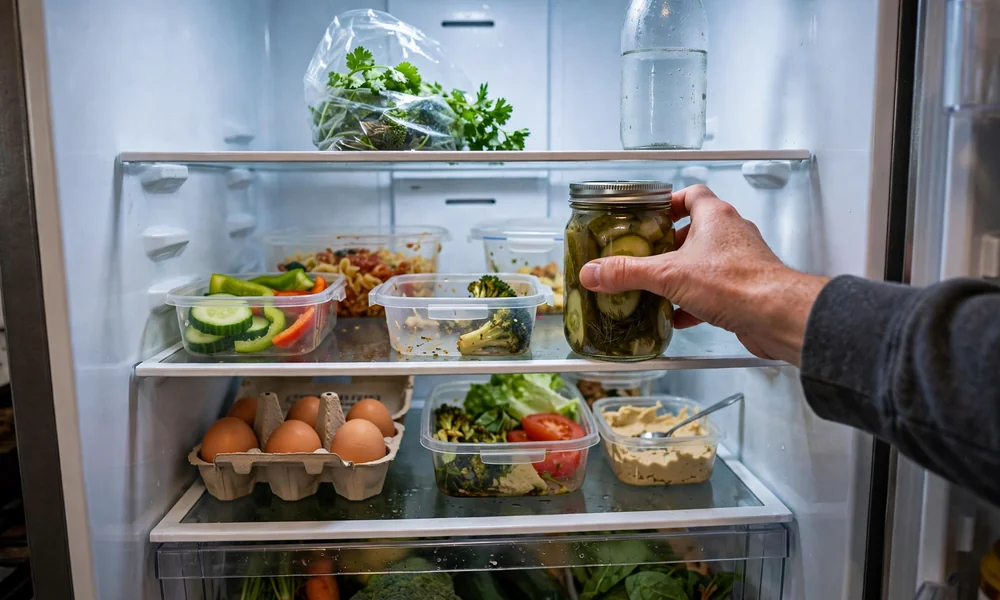
In a family kitchen, the refrigerator organises the whole rhythm of eating. Top shelves hold leftovers, middle shelves hold dairy, the bottom shelf holds raw meat, crispers hold fruit and vegetables, and the door holds condiments and drinks. A weekly clean-out — checking dates and moving older items forward — prevents the forgotten container at the back that eventually grows mould.
Beyond the home, refrigerators are essential infrastructure. Restaurants hold ingredients at safe temperatures, pharmacies store vaccines that lose potency if they warm up, and laboratories store samples and reagents. The technology is the same in every case — a cold, insulated box with a compressor — scaled to the job, and the coffee maker is a good example of another appliance that earns its counter space by serving one daily routine well.
Refrigerator vs freezer: how they compare
A refrigerator and a freezer solve different problems, even though they share the same cooling technology. A refrigerator holds food just above freezing so it stays fresh and ready to use without thawing. A freezer holds food well below freezing so it keeps for months, but frozen food must be thawed and its texture changes. Most households need both: the fridge for the week ahead, the freezer for the months ahead.
Many modern refrigerators combine the two, with a freezer compartment or drawer built in. That works well for most families, but the freezer section is smaller and less efficient than a standalone freezer. Households that buy in bulk often add a separate chest or upright freezer. Temperature control works the same way in both, and a smart thermostat shows how precise temperature control has become a feature of modern homes in general.
Checklist: using a refrigerator well
- Set the fridge to 1°C to 4°C and check it with a thermometer, not just the dial.
- Store raw meat on the lowest shelf in a sealed container, below ready-to-eat food.
- Keep the door closed as much as possible and decide what you need before opening it.
- Leave space between items so cold air can circulate around the shelves.
- Clean spills promptly and wipe the shelves and door seals every month.
- Date leftovers and eat them within three to four days, or freeze them.
Frequently asked questions
What temperature should a refrigerator be set to?
Between 1°C and 4°C (34°F and 40°F). A setting of about 3°C works well in most kitchens. The freezer compartment should be at −18°C (0°F) or colder. Use a fridge thermometer to confirm, because the numbered dial on many models is only a rough guide.
How long does food last in a refrigerator?
It depends on the food. Milk usually keeps for about a week after opening, cooked leftovers for three to four days, raw chicken for one to two days and raw beef for three to five days. Eggs keep for three to five weeks and hard cheese for several weeks. Dates on packaging are a guide, not a guarantee.
Why is my refrigerator not cooling properly?
The most common causes are a dial set too high, blocked air vents from overfilling, dirty condenser coils, a damaged door seal, or the unit being too close to a heat source like an oven. Check the setting and the seal first, clean the coils, and leave a gap behind the unit for airflow. If the compressor runs constantly but the cabinet stays warm, call a repair technician.
Does an overfilled refrigerator use more electricity?
Yes. Cold air cannot circulate around packed shelves, so the compressor runs longer and cooling becomes uneven. A very empty fridge also wastes energy, because there is little cold mass to hold the temperature when the door opens. About two-thirds full, with space between items, is the efficient middle ground.
How often should a refrigerator be cleaned?
Wipe up spills as they happen and do a thorough clean every one to three months: wash shelves and drawers in warm soapy water, wipe the interior, and clean the rubber door seal. Vacuum or brush the condenser coils once or twice a year to keep the unit running efficiently.
How long does a refrigerator last?
Most last about 10 to 15 years. The compressor, thermostat and door seals are the parts most likely to fail. If a fridge is over ten years old, runs constantly, or needs repeated repairs, a modern energy-efficient replacement can pay for itself in lower electricity bills within a few years.
The bottom line
A refrigerator is a simple idea executed brilliantly: an insulated box, a compressor and a loop of refrigerant that keep food cold enough to stay safe for days. Its value is the daily routine it makes possible — shopping once a week, cooking in batches and keeping leftovers safe. The models differ in layout and price, but the fundamentals are the same: keep it cold, keep air moving, and keep it clean.
For most households, the right refrigerator fits the kitchen, holds a week’s shopping without crowding, and runs quietly and efficiently. Set the temperature to about 3°C, store raw meat low, date the leftovers, and clean the seals and coils on a schedule. Do those few things and the most taken-for-granted appliance in the house will do its job for well over a decade.