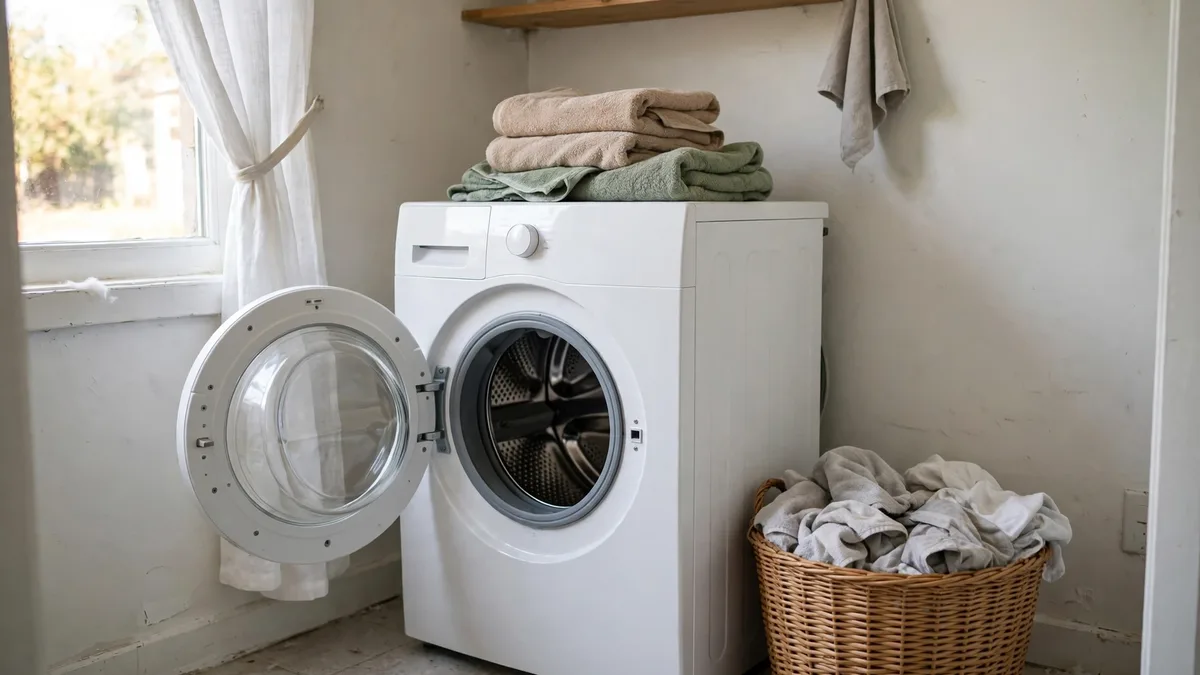
A washing machine is a household appliance that cleans clothes, towels and bedding by moving them through water mixed with detergent, then spinning out most of the water so the load comes out damp rather than soaking wet. It replaces the washboard, tub and wringer, doing the heavy work — agitating, rinsing and spinning — while the owner loads it and chooses a cycle.
Most homes now treat a washing machine as a basic appliance rather than a luxury. A typical household runs three to five loads a week, and a full-size machine holds roughly 4.5 to 5.5 cubic feet per load. It connects to cold and hot water, a drain and a standard outlet, and runs for 25 minutes on a quick wash or more than two hours on a heavy-duty cycle.
Choosing the right machine matters: the wrong size wastes water and energy, and the wrong cycle can shrink a sweater or fade dark jeans. This guide explains what a washing machine is, how it works, the main types, how capacity and cycles differ, and how to keep it running for its expected ten to thirteen years.
Key takeaways
- A washing machine cleans laundry by agitating clothes in soapy water, rinsing them and spinning out excess water.
- Front-load machines use less water and are gentler on clothes; top-load machines are usually cheaper and faster to load.
- Capacity is measured in cubic feet — 4.5 to 5.5 cubic feet suits most families, while compact models hold 2.4 cubic feet or less.
- Match the cycle to the fabric: cold and delicate for light fabrics, warm and normal for everyday loads, hot and heavy-duty for towels and bedding.
- Leave the door ajar after a wash, clean the filter monthly and wipe the seal regularly to prevent mould and odours.
Washing machine at a glance
| Detail | What to know |
|---|---|
| What it does | Washes, rinses and spins laundry using water, detergent and motion |
| Main types | Front-load, top-load with agitator, top-load without agitator, compact, washer-dryer combo |
| Typical capacity | 4.5 to 5.5 cubic feet for a full-size machine |
| Average cycle time | 25 minutes for a quick wash, 45 to 90 minutes for a normal cycle |
| Water use | About 13 to 20 gallons per load for a modern efficient model |
| Typical lifespan | 10 to 13 years with regular cleaning and care |
| Key maintenance | Clean the filter, wipe the door seal, run a cleaning cycle monthly |
What a washing machine is
A washing machine is an electric appliance built around a perforated drum that holds laundry and turns inside a sealed outer tub. Water enters through inlet valves, detergent is dispensed from a drawer, and a motor drives the drum through movements that loosen dirt. A pump drains the dirty water, and a fast spin forces the remaining water out through the drum holes, leaving laundry clean and damp.
The idea is older than most people expect. Hand-cranked washers appeared in the nineteenth century, and the first electric machines reached homes in the early 1900s. Automatic machines, which fill, wash, rinse, spin and drain without the owner moving laundry between tubs, became common after the Second World War. Today it is one of the most used appliances in the home, and like other household devices it has steadily gained sensors, quieter motors and more efficient designs — the same steady improvement seen in our guide to what a microwave does and how to pick one. Inside, the parts are simple: drum, outer tub, inlet valves, a pressure switch, a drain pump, a control board and a motor.
How a washing machine works

Every wash follows four stages: fill, wash, rinse and spin. First the machine locks the door and fills with the right amount of water at the temperature the cycle calls for. Detergent is flushed into the drum, and the drum turns slowly, tumbling the clothes through the soapy water.
The wash stage is where most of the cleaning happens. The drum reverses direction repeatedly, lifting clothes and dropping them back into the water, while the detergent breaks down oils and loosens dirt. Warm or hot water helps dissolve detergent and shift grease; cold water is kinder to colours and uses far less energy. Then the rinse drains the dirty water and refills with clean water to carry away detergent and dirt. Finally the spin turns the drum at 800 to 1,600 revolutions per minute, flinging water out through the drum holes. A faster spin leaves clothes drier but creases delicate fabrics more, so spin speed is matched to the cycle.
Types of washing machines
Front-load machines are the most common type in Europe and increasingly popular elsewhere. The drum sits horizontally, clothes tumble through a small pool of water, and the machine uses less water and detergent than a top-loader. Front-loaders are gentler on fabrics, spin faster so clothes come out drier, and can be stacked with a dryer. Their drawbacks are a higher price, longer cycles and a door seal that needs regular wiping.
Top-load machines
Top-load machines load from above, which is easier on the back and lets the owner add a forgotten sock mid-cycle. Models with a central agitator clean quickly and cost less, but they are rougher on clothes and use more water. Impeller models replace the agitator with a low disc; they are gentler and more efficient, though they can tangle long items. Compact machines hold about 2.4 cubic feet or less and suit flats, while washer-dryer combinations wash and dry in the same drum, saving space but drying more slowly.
Cycles, capacity and care
Cycles are preset programmes, each changing the water temperature, wash time, agitation and spin speed. Normal or cotton handles everyday loads at a warm temperature. Delicate uses cold water and slow tumbling for silk, lace and light synthetics. Heavy-duty runs hot and long for towels, bedding and heavily soiled workwear, while quick wash finishes a lightly soiled load in 25 to 30 minutes.
Capacity is measured in cubic feet in the United States and in kilograms of dry laundry elsewhere. A 4.5 cubic foot drum holds about 20 pounds of laundry, enough for a queen-size duvet or a large family load. Overloading is a common mistake: clothes packed too tightly cannot move freely, so they come out less clean and the machine vibrates more during the spin. Fill the drum about three-quarters full, leaving a hand’s width of space at the top. For care, leave the door and detergent drawer slightly open after each wash so the drum dries, wipe the rubber door seal weekly, clean the drain pump filter once a month, and check the inlet hoses every year for cracks. Use the right amount of detergent — too much leaves residue, too little leaves dirt behind. Keeping the air around the machine fresh matters too, which is why an air purifier that cleans indoor air is a sensible addition to a laundry room.
Benefits and risks of a washing machine
The main benefit is time. Hand-washing a family load takes an hour or more of physical work; a machine does it while the owner does something else, and it cleans more consistently because the temperature, detergent dose and agitation are controlled. Modern machines also use less water per kilogram than washing by hand, and cold-wash cycles keep energy use low. A machine washing at 60 degrees Celsius can remove dust mites and bacteria that a cold hand wash cannot.
The risks are mostly about misuse. Hot washes shrink wool and fade colours, and the wrong cycle can damage delicate fabrics. Overloading strains the motor and bearings, while an unbalanced load can make the machine vibrate heavily during the spin. A machine left closed and damp grows mould in the seal, and detergent residue irritates sensitive skin if the rinse is too short. Water damage is the most serious risk: a burst inlet hose can release gallons of water in minutes, so hoses should be replaced every five years. Washing also releases microfibres from synthetic clothes into wastewater, so cold cycles and full loads are worth the effort.
Real-world uses and comparisons
In homes, the washing machine is the centre of the laundry routine: sorting by colour and fabric, choosing a cycle, and moving the load to a dryer or line. In shared housing, laundromats and student halls, coin-operated machines serve people without a machine of their own, and operators track machine use, payments and maintenance with software, as covered in our roundup of the best laundromat management software.
The most common comparison is front-load versus top-load. Front-loaders win on water and energy efficiency, gentleness and spin speed, while top-loaders win on price, loading convenience and shorter cycles. A separate washer and dryer dries faster and handles bigger loads than a washer-dryer combination, while the combination saves space and suits small flats. Smart features such as Wi-Fi notifications and load sensors add convenience, but they do not change the basic job, and a machine without them washes just as well.
Checklist: using a washing machine well
- Sort laundry by colour and fabric before loading, and check pockets for coins, tissues and keys.
- Fill the drum about three-quarters full so clothes can tumble freely.
- Match the cycle and temperature to the fabric — cold and delicate for light fabrics, hot and heavy-duty for towels.
- Measure detergent for the load size and water hardness; more detergent is not more cleaning.
- Leave the door and detergent drawer ajar after each wash so the drum dries out.
- Clean the filter monthly, wipe the door seal weekly and replace inlet hoses every five years.
Frequently asked questions
How much laundry can a washing machine hold?
A full-size machine holds 4.5 to 5.5 cubic feet, roughly 20 pounds of dry laundry. Compact models hold 2.4 cubic feet or less.
Should I wash clothes in cold or hot water?
Cold water suits most everyday loads: it protects colours, saves energy and cleans well with modern detergents. Use hot water for towels, bedding and heavily soiled items.
Why does my washing machine smell?
A musty smell usually comes from mould or detergent residue in the door seal or drum. Run an empty hot cleaning cycle, wipe the seal, and leave the door ajar after each wash.
How long does a washing machine last?
Most machines last 10 to 13 years. A machine that leaks or stops spinning is often worth repairing if it is under eight years old, and worth replacing if it is older.
Can I put trainers in a washing machine?
Many fabric trainers can be washed on a cold, gentle cycle inside a laundry bag, with the laces removed. Leather shoes and suede should not go in the machine, and washed trainers should be air-dried.
Is a front-load or top-load washing machine better?
Front-load machines use less water and energy and are gentler on clothes, but cost more and need seal care. Top-load machines are cheaper and easier to load, but use more water.
The bottom line
A washing machine is a simple idea executed well: water, detergent and controlled motion, repeated through a wash, rinse and spin. The details that matter fit daily life — a capacity that matches the household, a cycle that suits the fabric, and a habit of leaving the door open and cleaning the filter. Get those right and the machine quietly handles one of the most repetitive chores in the home.
When buying, choose capacity first, then type, then features. A family needs a full-size machine with a good spin speed; a single person in a flat is better off with a compact machine. The cheapest machine that is too small will cost more in extra loads than a sensibly sized one. Buy for the laundry you actually do, keep the machine clean, and it will repay the choice for a decade or more.