A stove is the cooktop at the centre of most kitchens: a flat surface with burners or heating zones that heat pots and pans directly from below. The word stove usually means the cooktop itself, whether it sits on top of an oven as part of a range or stands alone as a built-in hob. Its job is simple to state and harder to master: deliver the right amount of heat to the right pan, at the right moment, and then stop.
That control is what separates a good cook from a frustrated one. A burner turned too high scorches a sauce in seconds, while one set too low leaves a steak grey instead of browned.
This guide explains what a stove is, how each type works, how to control heat, and how to use one safely.
Key takeaways
- A stove heats pots and pans directly from below, giving fast, adjustable heat for frying, boiling, simmering and searing.
- Gas, electric coil, ceramic and induction stoves all cook the same food, but they differ in speed, control and running costs.
- Heat control is a skill: preheat the pan, match the burner size to the pan, and change the setting before the food burns, not after.
- Induction only works with magnetic cookware, such as cast iron and most stainless steel, and it will not heat aluminium or copper alone.
- Unattended cooking is the leading cause of kitchen fires, so the stove should never be left on with no one in the room.
At a glance: stoves
| Detail | What is known |
|---|---|
| What it is | A cooktop with burners or heating zones that heat pots and pans from below |
| Main types | Gas, electric coil, ceramic glass, induction |
| Fastest to boil water | Induction, followed by gas, then electric coil and ceramic |
| Best heat control | Gas and induction, with near-instant changes |
| Typical burners | Four, with sizes from small simmer burners to large high-power burners |
| Key controls | Knobs or touch panel, burner size, pan size, lid on or off |
| Best for | Frying, boiling, simmering, searing, stir-frying and sauces |
| Main risk | Kitchen fires from unattended cooking, and burns from hot pans and steam |
What a stove is
A stove is a cooking appliance made of one or more burners set into a flat surface, each with its own control. The burners sit under pots and pans, and the heat passes through the base of the pan into the food.
The stove is often confused with the oven, and the confusion is understandable, because the two are usually sold together as a range. The difference is simple: the stove is the flat top with the burners, and the oven is the enclosed box underneath. The stove gives direct, fast, adjustable heat under a pan; the oven gives slow, surrounding heat inside a box.
How a stove works
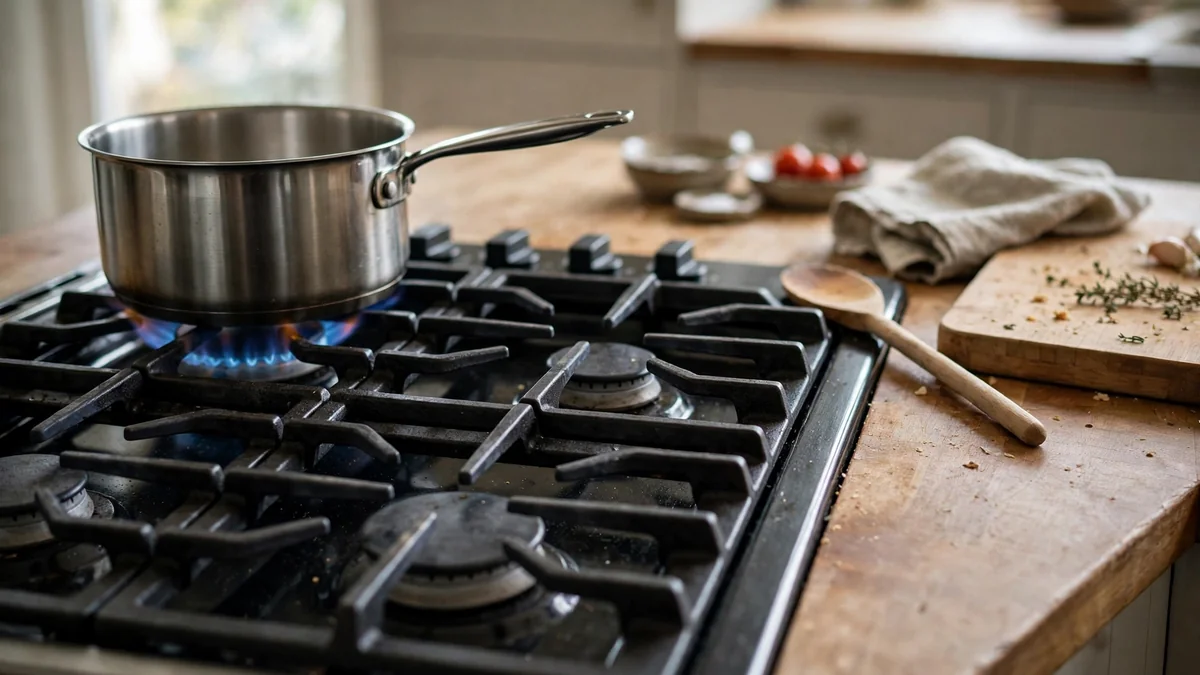
Each type of stove makes heat in a different way. A gas stove burns natural gas or propane at the burner, and the flame heats the pan directly. Turn the knob and the flame grows or shrinks at once, which is why gas is prized for control. An induction stove works differently again: a magnetic field makes the pan itself generate heat, so the cooktop stays relatively cool and the pan heats very fast.

Heat control on a stove is about more than the knob. The burner should match the size of the pan, so the flame or element does not lick up the sides and waste heat. A heavy pan spreads heat more evenly than a thin one, and a lid traps heat and brings water to the boil faster. Preheating the pan matters too: food dropped into a cold pan sticks and steams, while food dropped into a properly heated pan sears and browns. Our guide to how a blender works and what to look for when choosing one explains another kitchen appliance where the same principle applies: the tool matters less than understanding how it delivers its power.
Types of stoves
Gas stoves are the traditional choice of many keen cooks. The flame is visible, the heat changes instantly, and the stove keeps working during a power cut if the burners can be lit manually.
Electric coil stoves are simple, cheap and durable. The coils heat up slowly and cool down slowly, and they can be uneven, with hot spots where the coil touches the pan. Ceramic glass stoves replace the coils with elements under a smooth glass top.
Induction stoves are the newest mainstream type. They use a magnetic field to heat the pan directly, so water boils in about half the time of gas, the surface stays cool enough to touch in most places, and the heat stops the moment the pan is lifted off. The catch is cookware: the pan must be magnetic, so cast iron and most stainless steel work, while aluminium, copper and glass do not unless they have a magnetic base. Induction stoves also cost more to buy, though they are the cheapest to run.
Burners, heat control and cooking technique
Good heat control starts before the food goes in. Choose the burner that matches the pan, set the heat, and let the pan warm up for a minute or two.
The most common mistake is cooking everything on high heat. High heat is right for boiling water, searing steak and stir-frying, but it ruins sauces, burns garlic in seconds and warps thin pans. Most everyday cooking happens on medium heat, with low heat reserved for simmering, melting and keeping food warm. If food is browning too fast, turn the heat down and move the pan; if it is not browning at all, the pan was probably not hot enough to begin with, or it is overcrowded, which drops the temperature and steams the food instead of frying it.
Benefits and risks of cooking on a stove
The stove’s biggest benefit is speed and control. It brings water to the boil in minutes, sears a steak in seconds, and lets the cook adjust the heat instantly in response to what is happening in the pan. For everyday meals, from pasta to stir-fries to sauces, the stove does more of the work than any other appliance in the kitchen.
The risks are serious and mostly preventable. Unattended cooking is the leading cause of kitchen fires, and the danger grows when oil is involved: overheated oil can ignite without warning, and water thrown on an oil fire makes it worse. The right response is to slide a lid over the pan and turn off the heat, never to carry a burning pan to the sink. If you are comparing kitchen appliances, our explainer on how a coffee maker brews a better cup shows the same kind of trade-off: every appliance gains something and gives something up.
Real-world uses of a stove
Boiling is the stove’s most frequent job: water for pasta, rice, potatoes and eggs, and stock for soups and stews. Simmering follows boiling: a low, steady bubble that cooks food gently without breaking it apart, which suits sauces, curries, braises and porridge.
Frying and searing are where the stove earns its place. A hot pan with a little oil browns meat, crisps skin and caramelises vegetables, building flavour that no other method matches. Stir-frying takes this further, using very high heat and constant movement to cook small pieces of food in minutes.
Stove vs oven: how they compare
A stove and an oven differ in how they deliver heat, and that difference decides which one to use. The stove applies direct heat to the bottom of a pan, so it is fast, responsive and ideal for food that needs stirring or adjusting. The oven surrounds food with hot air inside a closed box, so it is slow, even and ideal for food that needs time and stillness. One is a sprint, the other is a long, steady run.
The comparison matters when buying or replacing equipment. A household that stir-fries, sears and simmers daily should spend more on the stove and less on the oven. A household that bakes bread and roasts joints every week should do the opposite. Neither is better in general; the right choice depends on how the household actually cooks.
Checklist: using your stove well and safely
Use these checks each time you cook, and when you are choosing a new stove.
- Match the burner size to the pan, and never let a gas flame extend past the base of the pan.
- Preheat the pan before adding food, and keep the heat on medium for most everyday cooking.
- Turn pan handles inward, away from the edge, and use oven gloves for hot handles and lids.
- Never leave the stove unattended while cooking, especially when oil is heating.
- Run the extractor fan while cooking on gas, and open a window when you can.
- Check that your pans are magnetic before buying an induction stove.
Frequently asked questions
What is the difference between a stove and a cooktop?
Very little. A cooktop is the flat surface with the burners, usually built into a counter, while a stove often means the cooktop plus the oven below it as one unit, called a range.
Which type of stove is best?
Induction is the fastest, most efficient and easiest to control, but it needs magnetic pans and costs more. Gas gives the best feel and instant flame control, and it works in a power cut. Electric coil and ceramic stoves are cheaper and simpler, but slower to respond. The best choice depends on your budget, your pans and how you cook.
Why does my food stick to the pan?
Food usually sticks because the pan was not hot enough when the food went in, or because it was moved too soon. Let the pan heat up, add the oil, wait until it shimmers, then add the food and leave it alone until it releases naturally.
How do I know if my pans work on induction?
Hold a fridge magnet to the base of the pan. If it sticks firmly, the pan will work on induction. Cast iron and most stainless steel pans pass the test, while aluminium, copper and glass pans fail unless they have a magnetic layer built into the base.
Is it safe to leave a stove on low while I leave the room?
No. Unattended cooking is the leading cause of kitchen fires, and even a low flame can boil a pot dry or ignite oil. If you need to leave the kitchen, turn the burners off first, and only come back when you can watch the stove again.
How do I clean a ceramic or induction cooktop?
Wait until it is cool, then wipe it with a damp cloth and a little washing-up liquid.
Kitchen appliances work best as a team rather than in isolation. Our guide to espresso machines, pressure and milk explains another appliance that rewards a little technical understanding with much better results.
The bottom line
A stove is a set of burners that heat pans directly from below, and its value lies in speed and control. Gas and induction change heat almost instantly, electric types are slower but cheaper, and the cook’s skill, matching the burner to the pan, preheating properly, and adjusting before food burns, matters more than the type itself.
For most households the practical choice is induction if the budget and the pans allow it, or gas if instant flame control and cooking through a power cut matter more. Whichever type you own, respect the fire risk, never leave it unattended, keep the extractor running, and the stove will do the fast, everyday work of the kitchen safely for years.