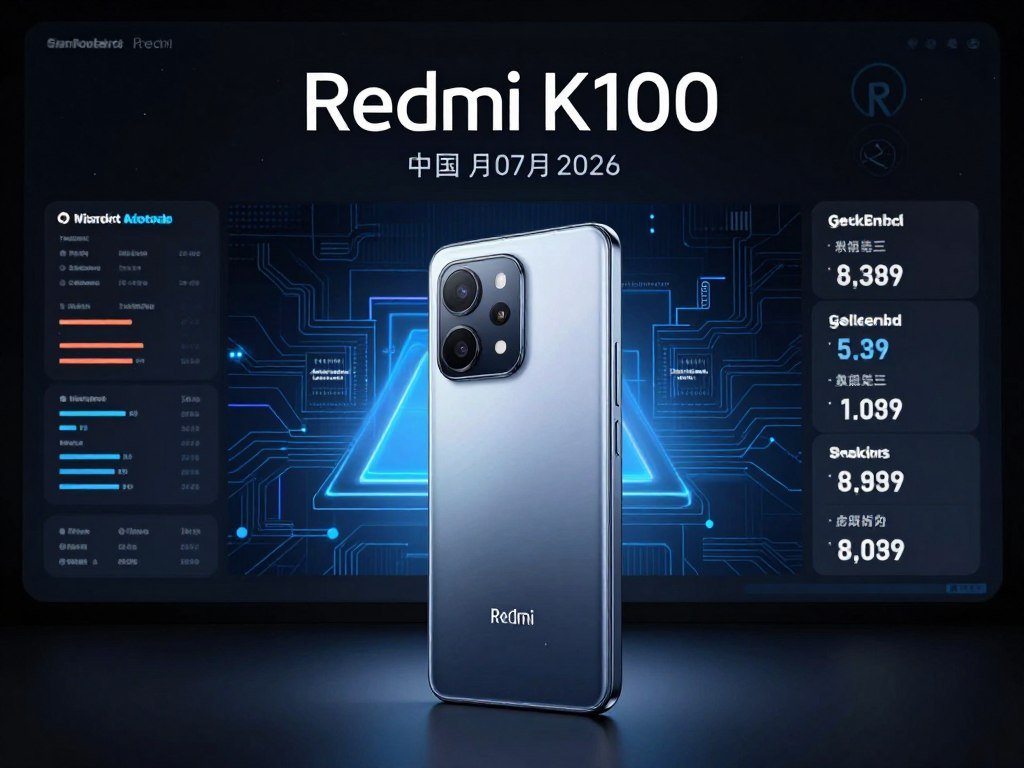
The Redmi K100’s Geekbench appearance puts a performance-focused phone in the spotlight just ahead of its scheduled China launch. This pre-launch news update explains what the early benchmark leak can tell you, and where its limits begin. The phone is scheduled to launch in China on October 28, 2026.
A Geekbench score is a result from a standardized performance test that is most useful when compared with scores from the same major benchmark version. It can offer an early signal about processing power, but it cannot answer every question about daily use. You will also want to weigh confirmed features, software, and sales details before making a choice.
Key Takeaways
- The scheduled China launch date is October 28, 2026.
- The benchmark is an early performance signal, not a full buying assessment.
- Geekbench results are most useful beside scores from the same major version.
- Real-world speed and long gaming sessions need hands-on testing.
- China sales are scheduled to begin October 31, 2026.
Launch timing matters if you are tracking a new phone before it reaches stores. The word “Oct 27” in the news topic does not change the scheduled China launch date of October 28. The schedule also separates the launch from the later sales start.
Treat the benchmark as an early clue, not a substitute for retail-unit testing.
What Does the M786BC Geekbench Listing Identify?
The Geekbench entry identifies the device by the Xiaomi model number M786BC, not by the retail name Redmi K100. It names a Snapdragon 8 Elite chipset and reports a test-unit setup with 16GB of RAM and Android 17. Those fields offer a useful match, but they do not list every retail version.
The listing reports these three key identification fields:
- Model identifier: M786BC
- Chipset: Snapdragon 8 Elite
- Reported RAM and software: 16GB and Android 17
A benchmark database entry is tied to the model number shown during testing. It may not use the retail name buyers see on a box or store page. Here, the model code and reported hardware point to the phone, while the naming difference calls for care.
Read the model code as a strong identification clue, while keeping the listed configuration tied to the test unit.
A model code can help connect a benchmark result to a product, but a matching code alone does not establish every sales detail. The retail name may not appear in the test record. Product names, regional versions, and test units can also differ in how they are labeled.
The 16GB result describes the configuration used for that Geekbench run. It does not establish that all China versions have the same memory. China sales include lower-memory choices, and their storage pairings also vary.
The Redmi K100 Geekbench report covers the benchmark entry and its reported hardware details. That context helps explain why model code, retail name, and test setup should not be treated as interchangeable labels.
Geekbench records the software label and memory amount alongside the model identifier. Those fields describe the device as tested, not a promise about every phone in the lineup. Read the model code as a strong identification clue, while keeping the listed configuration tied to the test unit.
What Does the Redmi K100 Geekbench Snapdragon 8 Elite Oct 27 Launch 2026 Listing Show?
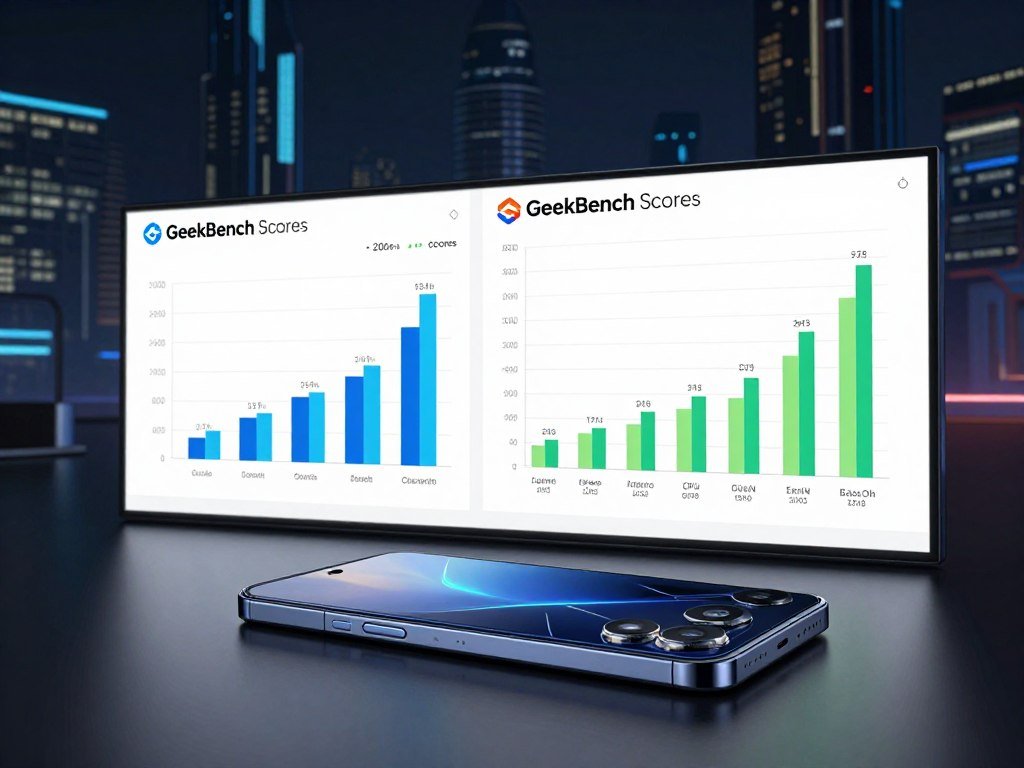
The Geekbench 7 entry reports 2,705 points in single-core testing and 9,885 in multi-core testing. A Geekbench score is a result from a standardized performance test, best read beside scores from the same major version. The figures offer an early CPU signal, rather than a complete picture of speed.
Use Geekbench 7 results for comparisons with Geekbench 7, not Geekbench 6. The tests use different major versions, so their scores should not be compared directly. The listing also reports a CPU layout and graphics processor, which add technical context but do not predict every task.
What the single-core result measures
The single-core score measures a workload handled by one CPU core. It can help compare how quickly a phone handles tasks that rely on one core. That includes some short bursts of work, but it does not represent every app or use pattern.
A score of 2,705 gives a point of comparison with other Geekbench 7 results. It does not translate into a fixed number of seconds saved in an app. Software, heat, and the task itself can change how a phone responds outside the test.
What the multi-core result can and cannot tell you
The multi-core test spreads work across multiple CPU cores. Its 9,885-point result reflects a workload that can use more than one core at once. The listing reports two cores at 4.32GHz and six at 3.53GHz.
| Test or listing detail | Reported value | What it represents |
|---|---|---|
| Single-core test | 2,705 points | One-core workload |
| Multi-core test | 9,885 points | Workload across multiple cores |
| CPU layout | Two at 4.32GHz; six at 3.53GHz | Reported configuration |
The entry also names an Adreno 830 GPU. That detail identifies the listed graphics hardware, but it does not establish game frame rates. A graphics chip’s name alone cannot show how a game runs with a specific setting or over a long session.
A short CPU benchmark does not prove sustained gaming performance. Longer play can place different demands on cooling and power use. A phone may also behave differently across games, graphics settings, and test conditions.
The Legion Go S and Steam Deck comparison shows why game results can shift with power settings and titles. That same caution applies when you read a phone benchmark: one score cannot stand in for every workload.
Use results from the same Geekbench major version for comparisons, then wait for sustained tests before judging long-session performance.
Which Software Version Will the Redmi K100 Run?
The Redmi K100 pairs HyperOS 4 with Android 17. Android is the operating-system base, while HyperOS 4 is Xiaomi’s interface and set of system tools. The listing’s Android label names the base system, not the interface brand.
Android 17 and HyperOS 4 describe different parts of the phone’s software. The Geekbench listing reports Android 17, while the phone’s interface is HyperOS 4. The distinction matters because a benchmark record may show the operating system without naming the full interface.

HyperOS 4 is reported to include simplified background commands and dynamic memory allocation. These features describe how the system handles tasks and memory behind the apps you use. Their real effect depends on the phone’s software and your routine.
The interface also includes Super Xiao Ai 2.0. That name refers to an assistant feature within the reported software package. A software label, on its own, does not explain how every feature works in each region.
Xiaomi’s HyperOS 4 device tracker lists the Redmi K100 as shipping with HyperOS 4 in China. It also notes that Xiaomi had not announced global stable rollout dates. That makes regional software details important for buyers outside China.
Phones sold in different regions can have different software builds or update schedules. An operating-system label does not set a support period by itself. Check the installed software and update terms for the regional model you are considering.
The reported HyperOS 4 features include changes to background commands, memory handling, and the assistant. These are software functions, not a guarantee that every feature will be available in every market. Regional releases can affect what you see after setup.
Check the installed Android version and update policy on the exact regional model before relying on a long-term software-support assumption.
What Does the 6.83-Inch 165Hz Display Offer?
The K100’s 6.83-inch OLED panel combines a 165Hz refresh rate with Dolby Vision support. It also has a stated peak brightness of up to 3,200 nits. The high refresh ceiling can make supported motion look smoother, but it does not raise every video or game to that rate.
The 3,200-nit figure is a peak, not a level promised in every setting. Refresh rate describes how often the screen updates each second. A 165Hz panel can show up to 165 updates per second when the content and device support that rate.
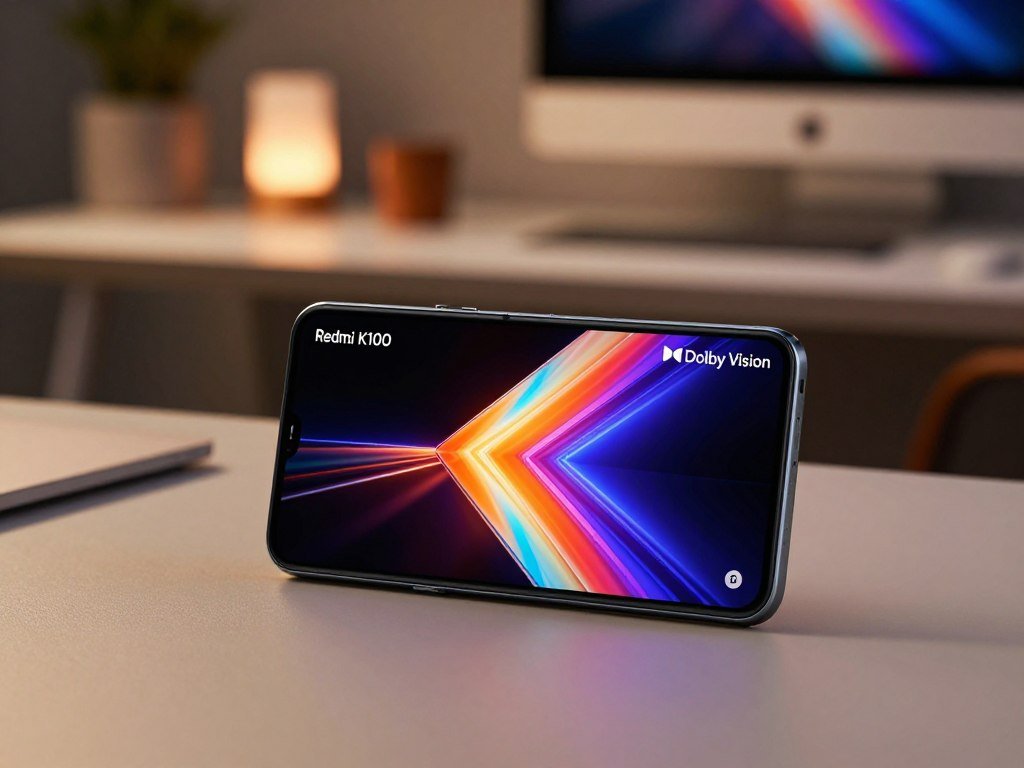
OLED panels light their pixels individually, which supports deep dark tones and vivid colors. Dolby Vision is a format for compatible video content. The display needs supported content to use that feature, so not every clip will look the same.
Refresh rate and frame rate are related, but they are not identical. The display’s refresh rate is the panel’s update capacity. A game must also produce frames at a matching rate for you to see the full benefit.
How to read the brightness rating
Peak brightness describes the highest level the panel can reach under certain conditions. It can help when viewing bright content or using a phone outdoors. It does not mean the screen will hold that level throughout normal use.
Brightness can shift with the scene, power settings, and surrounding light. A peak figure is useful as a ceiling, not as a promise for every app or room. The distinction is especially helpful when comparing display numbers across phones.
The Android phone buying guide explains why refresh rates and other screen details should be judged alongside the content you use. A high panel rate matters most when your apps or games can make use of it.
For video, Dolby Vision support and the OLED panel are relevant features, while refresh rate matters more for moving content. Your own mix of streaming, browsing, and gaming will shape which screen detail matters most. A single display number cannot sum up that experience.
Consider the peak-brightness figure a maximum capability, not a promise that the panel holds 3,200 nits throughout everyday use.
How Does the D2 Chip Support Gaming?
The D2 chip gives Redmi a dedicated component for gaming and graphics tasks beyond the main Snapdragon processor. The gaming-focused phone’s graphics chip is reported to reduce average power use by 1.1W in Honor of Kings at ultra-high graphics and 144fps. That is a specific test example, not a claim for every game.
Redmi reports native 165fps support in more than 40 games, plus frame interpolation in more than 100. Native support and frame interpolation are different features. Game availability and settings affect which mode you can use.
The Honor of Kings example describes average power use under stated graphics and frame-rate settings. It does not promise the same reduction in other titles. A game’s workload and selected settings can change how much power the phone uses.
Redmi’s stated power-saving example
The 1.1W figure is tied to Honor of Kings running at ultra-high graphics and 144fps. It is not a battery-life estimate or a measured result for all play. It gives one narrow example of the D2 chip’s stated role.
That distinction matters for players comparing phones. A result from one game and setting does not predict how long another title will run. The D2 chip adds a graphics feature, while the whole phone’s behavior depends on the game and setup.
Native high-frame-rate support and frame interpolation
Native 165fps support means a supported game can render frames at that rate when its settings allow. Frame interpolation creates extra frames between rendered ones to make motion appear smoother. Those generated frames do not replace frames produced by the game itself.
| Feature | Reported game count |
|---|---|
| Native 165fps support | More than 40 games |
| Frame interpolation | More than 100 games |
The two counts describe different kinds of support. A title listed for interpolation may not offer native 165fps support. The frame generation comparison explains the basic difference between rendered and generated frames.
A screen’s refresh rate also does not force a game to run at that rate. The game must support the mode, and its graphics settings can affect performance. A game that offers a lower frame-rate cap will not use the full display rate.
Geekbench scores measure CPU tasks, not long gaming sessions or frame stability. Look for gaming tests that use retail phones and the specific games you play. That gives a clearer view of heat, frame rates, and performance over time.
Check support for the specific game and graphics setting you play before treating 165fps as an available mode.
How Large Is the Battery, and How Fast Does It Charge?
The K100 combines a 10,000mAh battery with wired charging rated at 100W. Capacity describes how much energy the battery can store, while charging power describes how quickly the phone can take in power under supported conditions. The two ratings answer different questions.
Neither rating alone gives a promised runtime or a full-charge time. Battery life depends on how you use the phone, and charging time depends on the phone and charging setup. Capacity is a useful specification, but it is not a direct measure of hours.
For daily use, the size may matter most when you spend long stretches away from an outlet. Gaming, mobile data, and screen use can all shape how often you need to charge. Actual battery tests provide a more useful runtime comparison than capacity alone.
Before buying, consider these three practical points once you use the phone:
- Time spent gaming
- Time spent away from a charger
- Whether your charging setup matches the phone’s wired-charging capability
Charging power is not the same as a fixed charging rate from empty to full. A phone may manage power differently at different charge levels. The battery’s temperature and the charger and cable can also affect charging behavior.
The Redmi Note 17 battery report makes a similar distinction between battery capacity and measured use. It also separates a top-up claim from a full-charge time, which is useful context for reading charging specifications.
Do not estimate hours of use from milliamp-hours alone. Your apps, signal, and screen habits shape daily drain, while the charger setup affects charging. Those factors make hands-on tests more useful than a capacity figure by itself.
Treat those ratings as capacity and charging-power specifications, not as a promised number of hours or a guaranteed full-charge time.
What Cameras and Everyday Features Does It Have?
The camera setup combines a stabilized 50MP main sensor, an 8MP ultrawide, and a 20MP front camera. The main camera uses a Light Fusion 800 sensor and optical image stabilization. OIS helps limit blur from small hand movements, but it does not guarantee image quality.
The three listed cameras cover main, wide, and selfie shots. The ultrawide camera offers a broader view than the main camera. The front camera is for selfies and video calls, though results still depend on light and software.
Rear cameras and selfie camera
- 50MP Light Fusion 800 main camera with optical image stabilization
- 8MP ultrawide camera
- 20MP front camera
Optical image stabilization moves camera parts to offset some hand shake. It can help reduce blur in certain shots, especially when the phone moves slightly. It cannot freeze a moving subject or replace good light.
Megapixel counts describe image resolution, not the full quality of a photo. Lens design, image processing, and lighting also shape the result. Camera reviews can show how the main and ultrawide cameras perform in real scenes.
Connectivity, durability, and unlocking
The phone has an IP69K rating, Wi-Fi 7, NFC, and dual 5G connectivity. IP ratings describe protection under defined test conditions, not permission to ignore care. Wi-Fi 7 and 5G use also depend on compatible networks and service.
An ultrasonic fingerprint scanner sits under the display. It reads a fingerprint through the screen rather than using a side-mounted sensor. The phone is also reported to have Bose dual speakers and a metal frame.
Three color options are offered, including green. The other color names are not specified here, so the green choice is the only named option. Color and frame details may matter if the phone’s look is part of your decision.
NFC can support close-range tasks such as contactless use when the service and region allow it. Dual 5G connectivity is a listed feature, but network bands determine where a phone can connect. Confirming band support is especially relevant when considering a China model for use elsewhere.
Compare the camera layout with your own use, especially whether you rely more on the main camera, ultrawide framing, or selfies.
How Much Does the Redmi K100 Cost in China?
The listed China configurations range from a 12GB + 256GB option to a 16GB + 512GB option. Suggested prices run from ¥3,499 to ¥4,499, while limited-time prices run from ¥2,999 to ¥3,899. The promotional amounts are lower than the suggested prices.
China sales are scheduled for October 31, 2026, at 10:00 a.m. All prices below are in yuan. Each listed configuration uses UFS 4.1 storage, with either 256GB or 512GB capacity.
China configurations and prices
| Memory and storage | Suggested price | Limited-time price | Storage type |
|---|---|---|---|
| 12GB + 256GB | ¥3,499 | ¥2,999 | UFS 4.1 |
| 12GB + 512GB | ¥4,099 | ¥3,499 | UFS 4.1 |
| 16GB + 512GB | ¥4,499 | ¥3,899 | UFS 4.1 |
The suggested price and limited-time price are separate amounts for each tier. The promotion is not the same as the regular suggested price. Do not read the lower figure as the permanent price for every configuration.
When sales begin and what to check
The China sales start is set for 10:00 a.m. on October 31, 2026. These prices describe China configurations and do not establish U.S. availability. A China sales date also does not confirm a release schedule for other regions.
The phone configuration price guide explains why comparing the exact storage tier matters when looking at offers. The K100’s listed price changes with both memory and storage, so check the full configuration name.
Before comparing offers, confirm the selected memory and storage tier and whether the price shown is the limited-time or suggested amount.
Storage capacity can affect how many large apps, photos, and videos you keep on the phone. Both listed storage sizes use UFS 4.1, but the memory amount differs across tiers. The right combination depends on how you store files and use apps.
Do not convert the yuan figures into an assumed U.S. price or treat them as proof of U.S. sales. Import costs, regional models, and local offers can differ. The China schedule and prices apply to the configurations listed above.
Before comparing offers, confirm the selected memory and storage tier and whether the price shown is the limited-time or suggested amount.
Conclusion
The Redmi K100’s appeal rests on combining high-end processing with a gaming-oriented screen and unusually large battery capacity. Its Geekbench result is a useful early performance signal, but a short test cannot show how the phone handles long gaming sessions.
Sustained gaming, actual battery life, and camera results need hands-on evaluation. Those are the details that matter after the launch-day specifications stop being new.
Before making a purchase decision, check whether the intended configuration and sales region meet your needs. Before committing, verify the exact configuration and whether it is sold in the region where you plan to use it.
FAQ
Does the Redmi K100’s Geekbench result prove how well it will game?
No, the Geekbench result does not prove sustained gaming performance. Geekbench scores measure CPU workloads, not long sessions, game frame rates, or heat. A phone can score well in a short test and behave differently after extended play. Retail-unit gaming tests using the games and settings you care about give a clearer view of performance over time.
Does the 16GB Geekbench listing mean every Redmi K100 has 16GB of RAM?
No, the Geekbench listing reports a 16GB test configuration, not every retail version. China configurations include 12GB + 256GB, 12GB + 512GB, and 16GB + 512GB. The test record describes the unit used for that run. Check the memory and storage tier shown for the specific version you plan to buy.
Can every game run at 165fps on the Redmi K100?
No, native 165fps support applies to more than 40 games, while frame interpolation is supported in more than 100. Those are different features, and neither count means every title can use native 165fps. Game support and graphics settings affect available modes. The screen’s refresh rate alone cannot make a game render at that speed.
Does 100W charging mean the 10,000mAh battery charges in a set time?
No, 100W charging does not set a guaranteed full-charge time for the 10,000mAh battery. Charging power describes a rate the phone can support under suitable conditions, while capacity describes stored energy. Charging behavior can change as the battery fills. The charger, cable, and phone conditions also affect the result.
What cameras does the Redmi K100 have?
The Redmi K100 has a 50MP Light Fusion 800 main camera with optical image stabilization, an 8MP ultrawide camera, and a 20MP front camera. Optical stabilization helps reduce blur from small hand movements, but it cannot guarantee sharp photos in every scene. Lighting, subject movement, and image processing also shape camera results.
When do Redmi K100 sales begin in China?
Redmi K100 sales in China are scheduled to begin October 31, 2026, at 10:00 a.m. The China configurations have three memory and storage combinations, with separate suggested and limited-time prices. That sales schedule applies to China and does not establish availability in the United States or another region.