

Can a piece of software really tell whether a human or a machine wrote a paragraph? That question has become one of the most contested in education and publishing. Millions of people now rely on AI detectors to check essays, articles, job applications, and even code. Yet the tools themselves are under fire, with studies showing false accusations and easy workarounds. This article looks at which detectors hold up best, where they fail, and how to use them without causing harm.
Why “Actually Work” Is a Harder Standard Than It Sounds
A detector that flags AI text has to do two things at once. It needs to catch machine-generated writing, and it needs to leave human writing alone. Most tools are decent at the first job and shaky at the second.
The reason comes down to method. Detectors look for statistical fingerprints, such as low variation in sentence length, predictable word choices, and uniform punctuation. Those signals overlap heavily with how careful humans write, and with how non-native English speakers write. The result is a gray zone that no commercial product has fully solved.
For a deeper explanation of the underlying mechanics, see this breakdown of how do ai detectors work. The short version: they measure patterns, not authorship, and patterns can mislead.
The Accuracy Problem Nobody Wants to Advertise
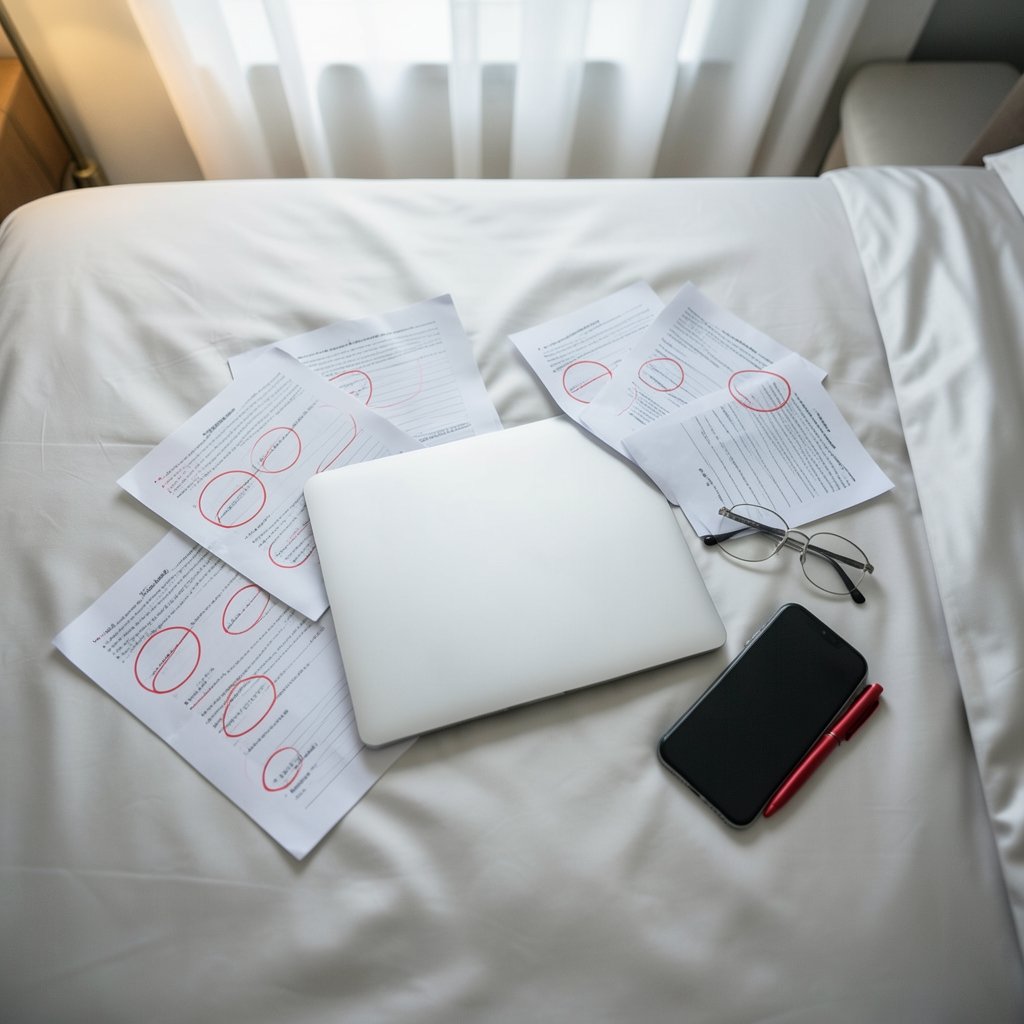
Independent testing has repeatedly found high error rates. A widely cited 2023 study from the University of Maryland found that several popular detectors misclassified human-written text at substantial rates, and that the errors fell hardest on non-native English writers. Simple paraphrasing tools defeated detection in most cases.
OpenAI itself retired its own AI text classifier in 2023 after concluding it was too inaccurate for serious use. That decision from the company that built one of the leading models is telling. If the model maker cannot reliably detect its own output, third-party vendors face an even steeper climb.
Turnitin, the most widely deployed tool in schools, launched its AI writing indicator in 2023 and has consistently urged institutions to treat results as a signal rather than proof. Many universities now require human review before any misconduct finding.
The practical takeaway: no detector should ever be the sole basis for an accusation. Treat every score as one data point among several.
What Separates the Better Tools From the Rest
Not all detectors are equal, and the differences are visible in how they behave under stress. The stronger options tend to share a few traits.
| Feature | Why It Matters | Weaker Tools Often Skip It |
|---|---|---|
| Sentence-level highlighting | Shows which passages triggered the flag so a human can review them | Give only a single overall score |
| Confidence ranges | Communicates uncertainty instead of a fake precise percentage | Present results as certain |
| False-positive disclosures | Lets institutions set policy around known error rates | Hide accuracy data |
| Multilingual testing | Reduces bias against non-native writers | Train mostly on native English |
| Regular model updates | Keeps pace as generators improve | Go stale within months |
Tools that highlight specific sentences are far more useful in practice than tools that return one number. A teacher or editor can read the flagged passage and judge it directly. A single percentage invites overconfidence and, in real cases, has led to unfair penalties.
It also helps to understand that detection is a moving target. Every time a generator updates, the statistical fingerprint shifts. A detector that scored well last year may lag this year. Buyers should ask vendors how often their models are retrained, and be skeptical of any tool that claims near-perfect accuracy.
Where Detection Fits in a Wider Content Workflow
Detectors rarely operate alone. Most organizations pair them with other checks, and understanding the surrounding tools helps set realistic expectations.
If the concern is whether a document was written by a person, a detector is one input. If the concern is whether an image is authentic, provenance standards matter more than detection. The same logic applies to security checks on submitted files. Teams that already handle what is malware and how does it work know that layered verification beats any single scanner. AI detection follows the same principle.
For visual content, the challenge is different again. Detecting a synthetic image usually relies on embedded provenance data rather than statistical guesswork, which is why an overview of how does ai image generation work is useful context. Text and image detection are separate problems with separate tools.
Practical Tips That Actually Reduce Mistakes
Experience from classrooms and editorial desks points to a handful of habits that cut down on false accusations.
- Never act on a single score. Require at least two independent signals, such as a detector flag plus a dramatic style shift in a student’s draft history.
- Compare against prior work. A sudden change in vocabulary or sentence structure is more informative than any percentage.
- Talk to the writer first. A short conversation about how the piece was produced resolves most disputes.
- Keep the flagged text. Save the exact passage and the detector’s reasoning so a review can be audited later.
- Test the tool on known human writing. Run a sample of your own confirmed work through it. If it flags you, you have your answer about reliability.
The most common mistake is treating a detector like a lie detector test. It is not. It is a pattern-matching tool with a meaningful error rate, and it should be used with the same caution as any other imperfect instrument. (AI detector)
The Human Cost of Overreliance
False positives are not abstract. Students have been failed, and in some reported cases expelled, on the strength of detector output alone. Non-native English writers are disproportionately affected because their prose often uses simpler, more predictable vocabulary, which is exactly what detectors flag.
This matters for anyone building policy. A detector that is right 85 percent of the time is still wrong about one in seven cases. In a school of a thousand students, that is a lot of wrongful accusations. The responsible approach is to use detection as a prompt for human review, never as a verdict.
The same caution applies in hiring and publishing. Rejecting a candidate because a screening tool flagged their cover letter is a legal and ethical risk, not just a technical one.
What the Future of Detection Looks Like
Two developments are reshaping the field. The first is watermarking, where generators embed subtle statistical signals in their output. Research groups have made progress here, but watermarking only works if the generator cooperates, and it can be stripped by editing or paraphrasing.
The second is provenance. Instead of guessing after the fact, systems record how content was made and attach that record to the file. This approach is more reliable because it does not depend on statistical inference. Expect to see provenance standards grow in publishing and social platforms over the next few years.
Neither development eliminates the need for human judgment. Both simply shift the question from “does this look AI-written?” to “can we verify how it was made?” (Artificial Intelligence)
How to Choose a Detector Without Getting Burned
Buyers should ask vendors a short list of blunt questions before committing.
- What is your measured false-positive rate, and on which populations?
- Do you highlight specific sentences, or only give a total score?
- How often are your models retrained?
- Will you share accuracy data for non-native English writers?
- What happens when a user disputes a result?
Vendors who cannot answer these questions clearly are selling confidence, not accuracy. The best tools are transparent about their limits, which paradoxically makes them more trustworthy.
It also helps to remember that detection is only one part of a broader content integrity stack. Organizations that already think carefully about ai content detectors as policy tools, rather than magic bullets, tend to make better decisions. The same discipline applies to understanding what is edge ai and how does it work, where local processing changes what is feasible.
Conclusion
The best AI detectors are not the ones that claim perfect accuracy. They are the ones that highlight specific passages, disclose their error rates, update regularly, and encourage human review. No current tool can reliably distinguish human from machine writing in every case, and the evidence on false positives, especially for non-native writers, is too strong to ignore.
Used carefully, detectors can support teachers, editors, and hiring teams. Used as verdict machines, they cause real harm. The winning approach is layered: combine detection with provenance checks, compare against known work, and always keep a human in the loop. That combination, not any single product, is what actually works.
Frequently Asked Questions
Are AI detectors accurate enough to trust on their own?
No. Independent studies have found meaningful false-positive rates, and simple paraphrasing defeats many tools. Detectors work best as one signal among several, paired with human review and comparison to a writer’s prior work.
Why do AI detectors flag non-native English speakers more often?
Detectors look for predictable vocabulary and uniform sentence structure. Non-native writers often produce simpler, more regular prose, which overlaps with the patterns detectors associate with machine text. This bias has been documented in peer-reviewed research.
Can paraphrasing tools beat AI detection?
Often, yes. Rewriting text, changing sentence order, or running it through a paraphraser frequently lowers detection scores below the threshold. This is one reason detectors should never be treated as proof of authorship.
Do detectors work on AI-generated images?
Not in the same way. Image detection usually relies on provenance standards that record how a file was created, rather than statistical analysis of pixels. Text and image detection are different problems with different tools.
What should a school or employer do when a detector flags someone?
Treat the flag as a reason to look closer, not a conclusion. Compare the flagged passage with prior work, ask the person how they produced the text, and document the review. A single score should never be the basis for a penalty.
Will AI detection get more reliable in the future?
It may improve somewhat, but the deeper shift is toward watermarking and provenance systems that verify how content was made rather than guessing after the fact. Human judgment will remain essential either way.
The strongest programs turn these questions into a written policy before the first flag ever appears: what counts as corroborating evidence, who reviews disputes, and how long records are kept. Writing that down in advance removes the temptation to improvise under pressure, when emotions run high and a single alarming score feels decisive. It also protects institutions legally, since a documented, consistent process is far easier to defend than an ad hoc judgment. Finally, revisit the policy annually. Detector accuracy drifts, generators change, and yesterday’s reasonable threshold may be today’s unfair one. A short yearly review, informed by your own false-positive log, keeps the whole system honest. Detection is a tool for asking better questions, not for ending conversations. Institutions that internalize that stance will make fewer mistakes, earn more trust from writers, and adapt faster as the technology continues to move. That is the real measure of whether a detector “works”: not whether it never errs, but whether the people using it handle its errors fairly. Choose tools and policies that make human review easy, and the rest follows.
Institutions should also keep a simple false-positive log, recording every disputed flag and its outcome. Over a term, these records reveal which tools and thresholds fail your specific population, and they give reviewers concrete evidence when a vendor’s accuracy claims do not hold up. Share anonymized findings with neighboring schools or teams where possible; detection quality improves faster when users compare notes than when each organization struggles alone.



