
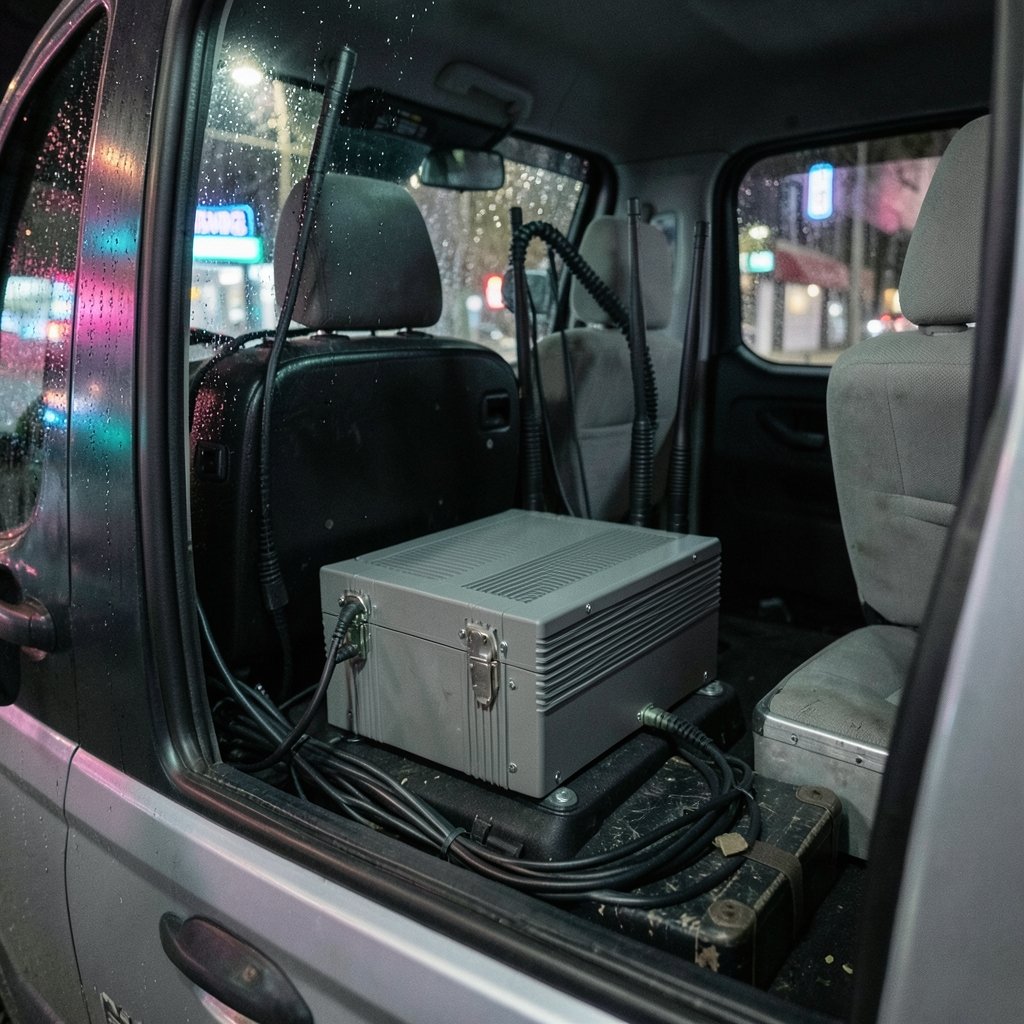
Somewhere between 40 and 60 percent of enterprise data is now generated outside a traditional data center. That single shift explains why so many teams are wrestling with cloud edge orchestration challenges right now. The workloads moved. The tooling mostly didn’t.
Orchestrating at the edge sounds like a natural extension of cloud-native practice. Spin up Kubernetes, add a scheduler, push manifests to remote nodes. In practice, the assumptions that make cloud orchestration reliable quietly fall apart the moment you leave the core region. Connectivity becomes intermittent. Hardware becomes heterogeneous. Nodes sit in places nobody physically secures. And the control plane, which was designed for always-on links to healthy servers, starts making decisions with stale information.
This article walks through the specific challenges, why they’re structural rather than temporary, and what actually works when you’re deploying in the field.
What “edge” actually means, and why the definition matters
Before diagnosing problems, it’s worth naming the ambiguity. Telecom engineers mean one thing by edge (multi-access edge computing tied to radio access networks). Hyperscalers mean another (regional zones closer to users than the main region). Open-source projects mean a third (small clusters on factory floors, retail stores, cell towers, or vehicles).
These definitions imply different constraints. A telecom edge site may have reliable power and fiber backhaul but tight latency budgets. A retail store edge node may have a flaky consumer broadband link and a manager who reboots the rack when the point-of-sale system freezes. Treating them as the same deployment target is the first mistake many teams make.
For background on how distributed compute models differ, the distinction between processing at the source versus the core is covered well in this explainer on what edge AI is and its companion piece on how edge AI works in practice. The orchestration layer sits above those workloads and inherits every constraint they face. (Edge computing)
Challenge one: intermittent connectivity breaks the control plane
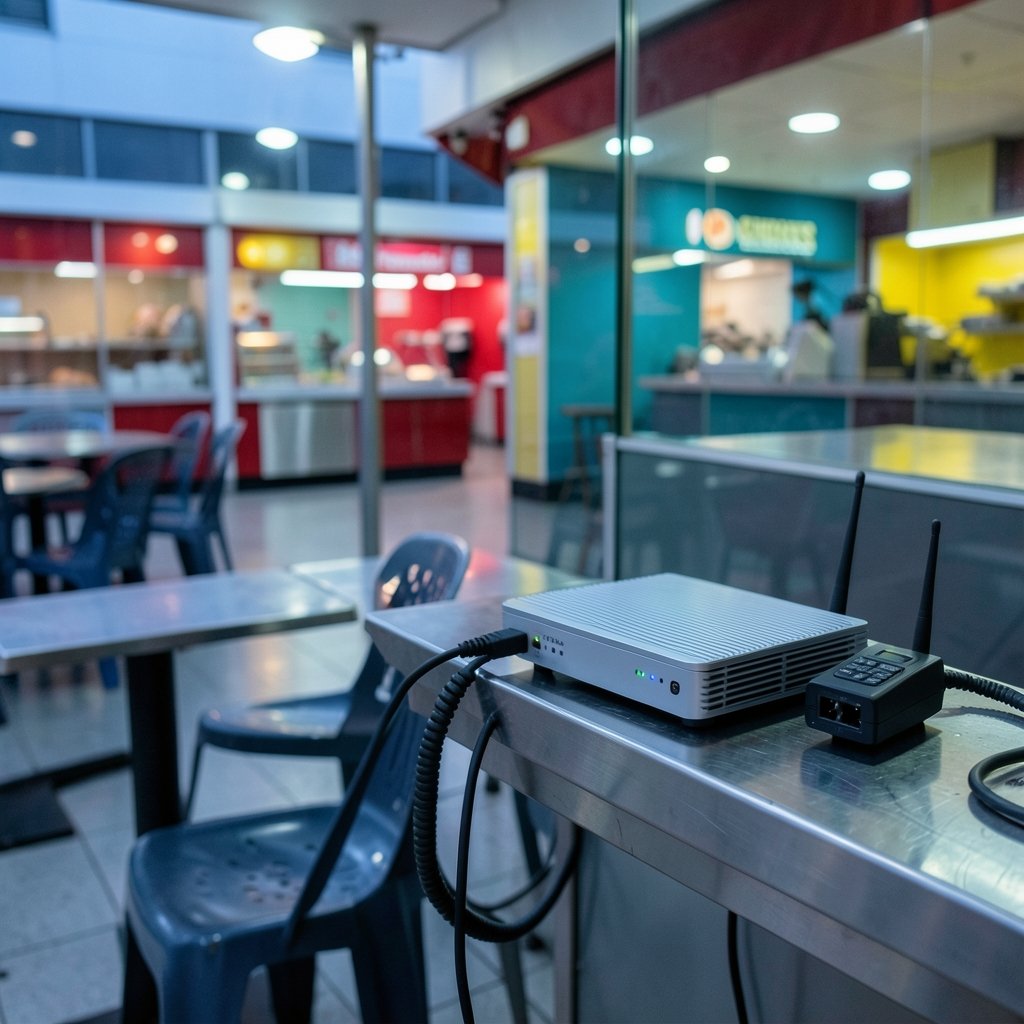
Most orchestrators assume the control plane can reach every node, always. Kubernetes, for instance, relies on kubelets maintaining a heartbeat to the API server. When that link drops, the node is marked unhealthy, and depending on configuration, workloads may be rescheduled elsewhere, evicted, or left in limbo.
At the far edge, links drop routinely. A cellular modem loses signal. A satellite window closes. A store’s ISP has an outage on a Saturday. The result is a control plane making decisions based on absence of information rather than presence of a problem.
What actually works: autonomous operation modes where the edge node continues running its last-known-good state and reconciles when connectivity returns. This requires a local cache of desired state and a conflict-resolution policy for when the node and the cloud disagree. Teams that skip the conflict policy discover, usually during an incident, that they have two sources of truth and no arbiter.
Common mistake: testing failover by unplugging a lab node for thirty seconds. Real outages last hours. Test for a full day, including the reconnect storm when a hundred nodes all rejoin at once.
Challenge two: heterogeneity defeats portable manifests
A core data center has predictable hardware. An edge fleet does not. You’ll find ARM boards, x86 mini-PCs, GPUs of three generations, and occasionally something running an OS nobody remembers approving. Kernel versions drift. Device drivers are vendor-specific. Some sites have hardware accelerators; others don’t.
This matters because orchestration abstractions leak. A manifest that assumes a GPU node selector will silently fail to schedule at a site without one. A container built for x86 won’t run on the ARM gateway someone installed to save money.
| Constraint | Core cloud | Far edge |
|---|---|---|
| Hardware | Standardized, virtualized | Mixed, often physical |
| Network | Reliable, high bandwidth | Intermittent, constrained |
| Physical security | Controlled data center | Public or semi-public sites |
| Operator access | Remote, scripted | Often on-site, ad hoc |
| Upgrade windows | Scheduled | Business-hours dependent |
The practical fix is a hardware abstraction layer plus strict image multi-architecture builds. It’s unglamorous work, but it’s the difference between a fleet that upgrades cleanly and one where every rollout is a bespoke negotiation with whatever is installed at site 47.
Challenge three: multi-cluster management at scale
One edge cluster is easy. Five hundred is a different discipline. Each site may run its own small control plane, and now you’re managing fleet-level policy, identity, and observability across hundreds of independent failure domains.
Federation helps, but it introduces its own problems. Identity must span clusters without a single point of failure. Secrets must be distributed without being copied insecurely. Logs must be aggregated from sites that may be offline for hours.
This is where orchestration starts to resemble a distributed systems problem more than a deployment problem. If you’re weighing where state should live, the trade-offs in cloud storage versus local storage map directly onto edge design decisions: what must be local for latency and resilience, and what can safely be centralized.
A pattern that works: a hub-and-spoke model where a regional hub cluster holds policy and the spokes hold workloads. Spokes can run disconnected; hubs reconcile on reconnect. Avoid full mesh federation at the far edge, it multiplies failure modes without adding much value.
Challenge four: security across widened trust boundaries
An edge node in a retail back room is not a locked cage. Someone can walk off with it. Someone can plug a keyboard into it. Physical access changes the threat model substantially, and orchestration control planes that assume trusted nodes are exposed.
The practical requirements are unglamorous but non-negotiable:
- Encrypt data at rest on every edge node, with keys held centrally.
- Use short-lived credentials rather than long-lived tokens baked into images.
- Enforce signed images and verify at the node, rather than only at the registry.
- Treat every edge site as a hostile network by default.
- Log locally and ship when connected, so an offline node still has an audit trail.
For a broader view of how trust boundaries are being redrawn in distributed architectures, the discussion of Apple private cloud compute and Google cloud in 2026 shows how major vendors are handling attestation and isolation when compute leaves the controlled perimeter. (NIST Cloud Computing Program)
Challenge five: observability when the network is the problem
You cannot debug what you cannot see, and at the edge you frequently cannot see. Metrics pipelines that assume continuous push fail silently during outages. Traces break across unreliable hops. Alerting based on real-time thresholds generates noise when a site is simply offline.
What actually works: local buffering with bounded retention, plus a clear distinction between “node is down” and “node is unreachable.” Those are different alerts requiring different responses, and conflating them wastes on-call time. A node that’s unreachable but still serving traffic is often fine. A node that’s reachable but failing health checks is not.
Teams also underestimate log volume at the edge. A hundred sites each shipping verbose logs will saturate backhaul links. Sample aggressively at the source and ship summaries by default.
Challenge six: standards fragmentation and lock-in
The orchestration landscape for edge computing remains unsettled. Multiple specifications, multiple vendor extensions, multiple interpretations of what “edge-native” means. The result is that portability between platforms is more aspiration than guarantee.
This isn’t unusual for a maturing field, and the broader platform competition is well documented in comparisons like AWS vs Azure vs Google Cloud in 2026. But it does mean architecture decisions carry real switching costs. Choosing a vendor’s edge orchestration stack often means adopting its identity model, its networking primitives, and its observability conventions as a bundle.
The pragmatic stance: keep workloads containerized and configuration externalized, so the orchestration layer is replaceable even if it isn’t currently being replaced. That discipline costs little upfront and saves enormously later.
Challenge seven: the human layer
The hardest orchestration problem at the edge is often the person standing next to the rack. Site staff aren’t platform engineers. They will power-cycle things. They will unplug a device to charge a phone. They will follow a runbook from three years ago.
Design for this. Label ports. Use color-coded cabling. Provide a single physical action for recovery that doesn’t require a terminal. And assume that any instruction longer than three steps will be performed incorrectly under pressure.
What the challenges have in common
Strip away the specifics and a pattern emerges. Cloud orchestration assumes abundant connectivity, homogeneous hardware, trusted physical environments, and centralized observability. Edge orchestration must function when every one of those assumptions is false, simultaneously, at hundreds of sites.
That’s why the challenges aren’t bugs waiting for a patch. They’re consequences of distribution. The teams that do well treat the edge as a fundamentally different environment rather than a smaller data center.
Two practical habits separate mature edge programs from struggling ones. First, they design for disconnection as the default state, not the exception. Second, they invest early in fleet-level tooling, because the cost of managing site number two hundred manually is not linear.
If you’re building out this stack, it’s worth understanding how automation layers coordinate across distributed systems. A good primer on what AI orchestration means covers the scheduling and coordination concepts that increasingly overlap with infrastructure orchestration at the edge.
A note on tooling and experimentation
Platform teams evaluating edge orchestration often prototype with lightweight, low-stakes workloads before committing. Browser-based logic games are a surprisingly common sandbox for testing deployment pipelines, since they’re trivial to containerize and easy to verify visually. If you need something to push through a test fleet, a simple challenge like the Tap Road game or the Mr Flip game works fine as a canary workload. The point isn’t the game, it’s proving your rollout, rollback, and health-check paths work across a hundred nodes before you trust them with production traffic.
Conclusion
Cloud edge orchestration challenges come down to a mismatch between assumptions and reality. Control planes built for reliable links meet intermittent ones. Manifests built for uniform hardware meet a zoo of devices. Security models built for locked cages meet closets without locks. Observability built for continuous telemetry meets silent outages.
None of this is unsolvable. The teams that succeed design for autonomous operation, treat heterogeneity as a first-class constraint, encrypt and attest by default, buffer telemetry locally, and keep their workloads portable enough to survive a platform change. They also respect the human layer, because at the edge, the person with physical access is part of your architecture whether you planned for it or not.
Start small. Test disconnection for a full day, not thirty seconds. Build the fleet tooling before you need it. And assume the network will fail, because at the edge, eventually, it will.
FAQ
What is cloud edge orchestration?
Cloud edge orchestration is the practice of scheduling, deploying, and managing workloads across a mix of centralized cloud regions, regional edge sites, and far-edge locations such as stores, factories, or cell towers. It coordinates where workloads run, how they’re updated, and how state stays consistent across unreliable network links.
Why is intermittent connectivity such a big problem?
Most orchestration control planes assume continuous contact with every node. When a link drops, the platform may mark the node unhealthy and reschedule workloads unnecessarily, or lose visibility entirely. Edge sites face routine outages, so orchestration must support autonomous local operation and reconciliation on reconnect rather than treating disconnection as failure.
Is Kubernetes suitable for edge orchestration?
It can be, with modifications. Lightweight distributions and autonomous modes address the connectivity issue, and multi-architecture images handle heterogeneity. The gap is usually fleet management and observability at scale, which require additional tooling beyond a standard cluster setup.
How many edge sites can one team realistically manage?
It depends heavily on automation maturity. A team with strong fleet tooling can manage hundreds of sites with a small platform group. A team doing manual per-site work hits a wall somewhere between ten and thirty sites, where linear effort becomes unsustainable.
What’s the biggest security risk at the edge?
Physical access. Edge nodes often sit in locations where anyone can unplug, remove, or connect to them. That widens the trust boundary considerably, which is why encrypted storage, short-lived credentials, signed images, and treating every site network as hostile are baseline requirements rather than optional hardening.
How should teams start testing edge resilience?
Simulate real conditions rather than brief blips. Take a node offline for a full day, then reconnect it alongside many others to observe the reconnect storm. Verify that workloads keep running, local logs persist, and conflict resolution behaves as designed. Short lab tests almost always understate the real failure modes.



