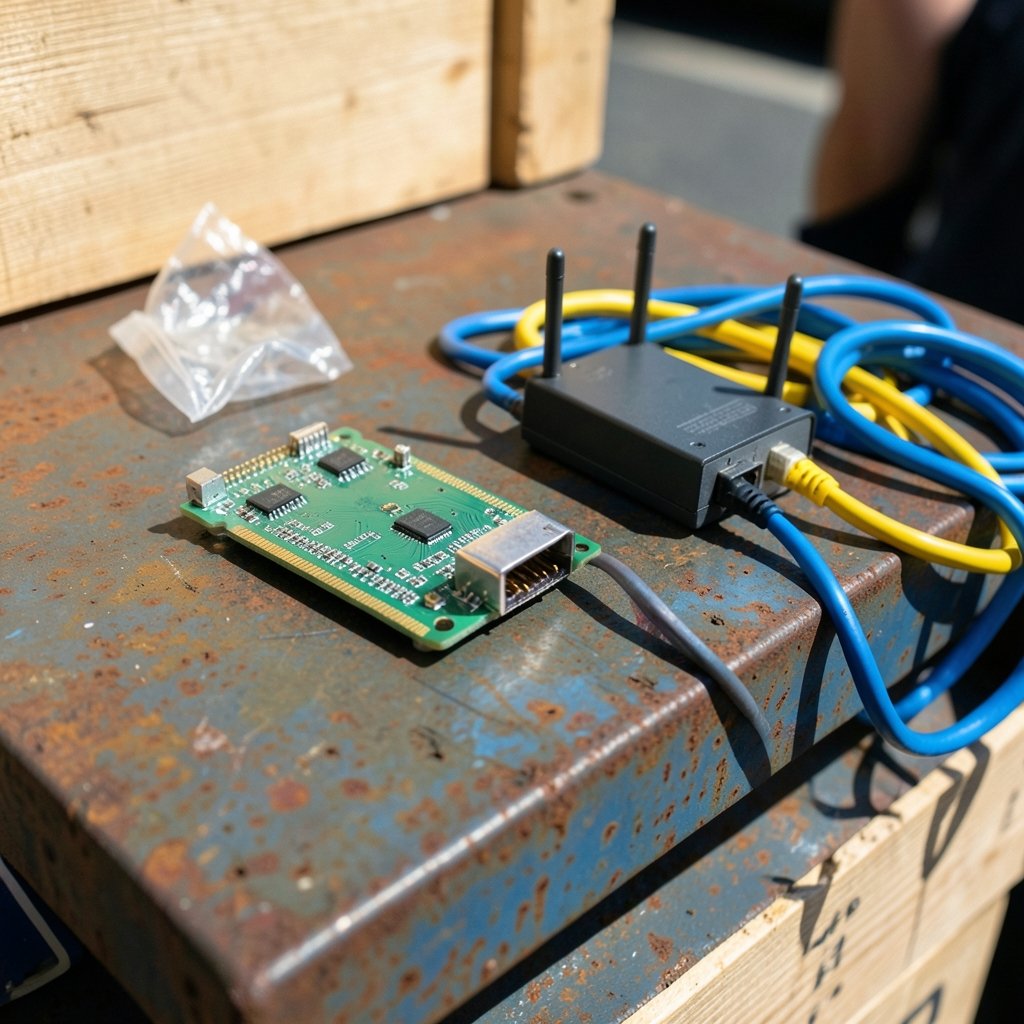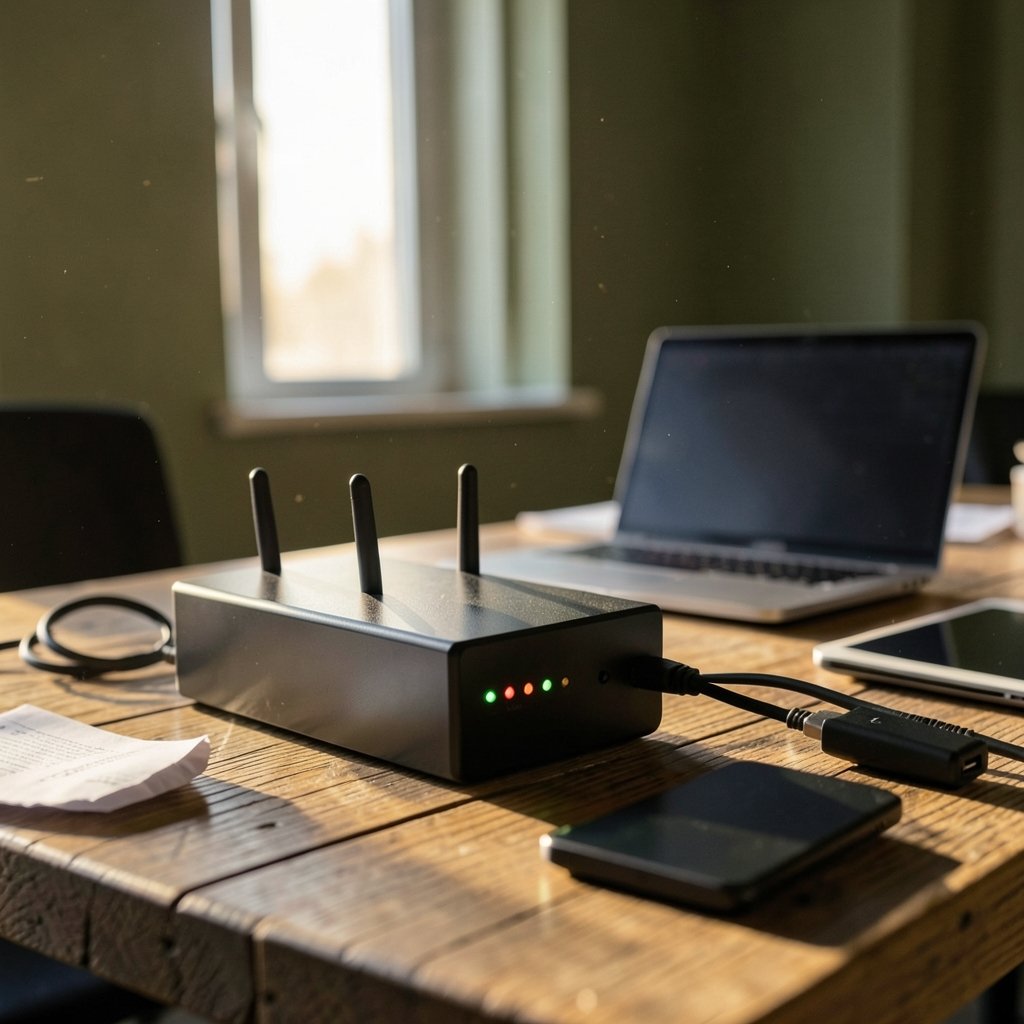
Quick Answer: What are real world examples of edge computing?
Real-world examples of edge computing include content delivery networks that serve web pages from nearby servers, 5G networks that run applications inside the phone company’s own data centers, and factory gateways that spot equipment problems before a breakdown. The same pattern shows up in self-driving cars, smart stores, hospitals, and even on Mars.
The common thread is location. Instead of shipping every bit of data to a distant cloud region, these systems process information close to where it is created. That cuts latency, saves bandwidth, and keeps working when the connection drops.
Before judging any edge claim, compare latency needs, bandwidth costs, device power limits, physical security, reliability during outages, and how the data is governed.
The Pattern Behind Every Edge Story
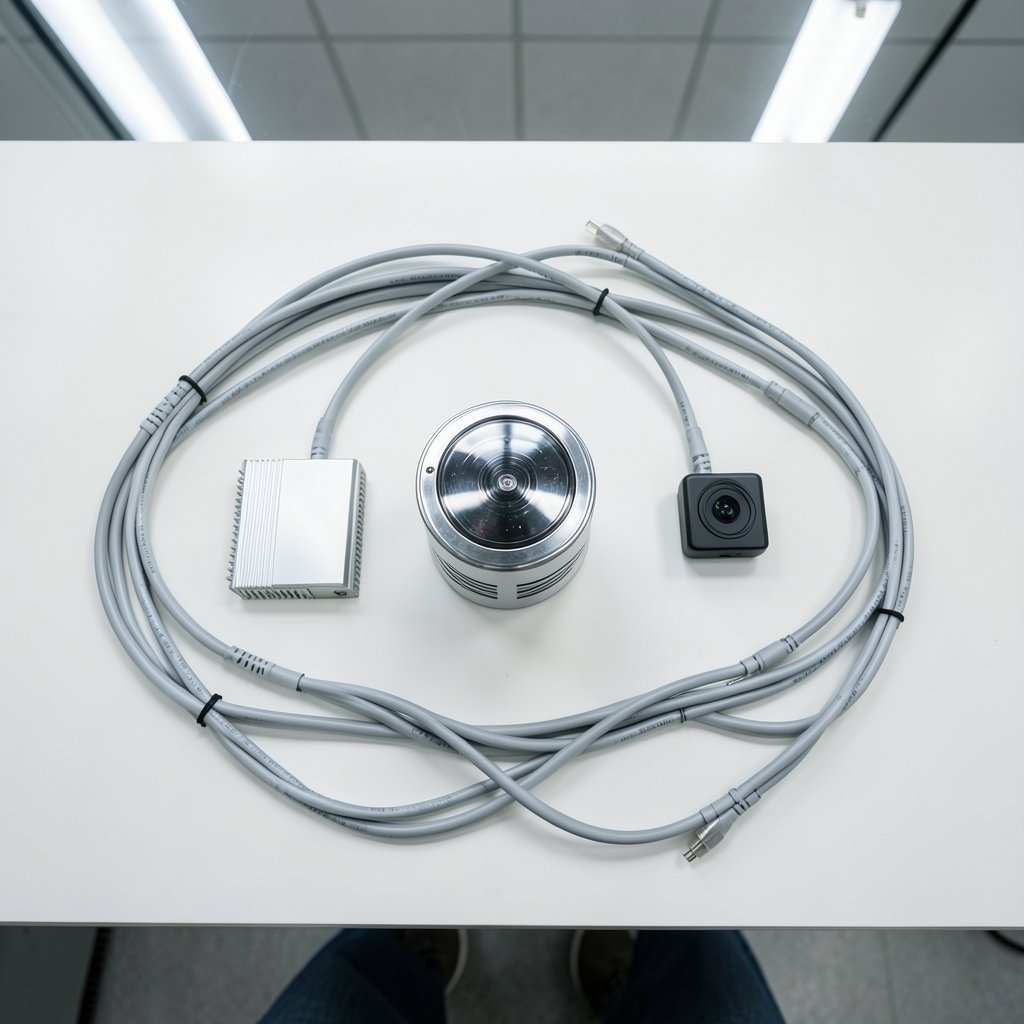
Here is a fact worth sitting with: a single autonomous test vehicle can generate terabytes of sensor data in a day. Sending all of that to a distant data center for processing would be like mailing your groceries to another city to have dinner cooked. Edge computing exists because sometimes the shortest path between a sensor and an answer is not through the cloud at all.
The idea is simple. Move the computation to the data, not the data to the computation. That principle explains every example below, from a warehouse camera to a Mars rover. If you want the technical foundation first, this explainer on what is edge ai and how does it work covers the hardware and model side in plain terms.
Content Delivery Networks: The Biggest Edge You Never Notice
Every time a webpage loads fast, there is a decent chance a content delivery network (CDN) did the work. CDNs like Akamai and Cloudflare run hundreds of thousands of servers in thousands of locations worldwide, caching images, video, and scripts close to users.
This is edge computing in its most mature form. The “edge” here is the network edge, a server rack in a city near you rather than a warehouse in another country. When a CDN caches a video segment, it is making a decision about where computation and storage should live. That decision is the whole game.
The practical lesson for anyone building systems: static and semi-static content belongs at the edge by default. Teams that skip this step often pay twice, once in bandwidth bills and again in slow page loads that hurt search rankings.
Telecom Networks and 5G: Compute Inside the Carrier
Telecom operators took the edge idea and built it into their own infrastructure. Multi-access edge computing, standardized by ETSI starting in the mid-2010s, puts compute resources inside or next to cell towers and carrier data centers.
AWS Wavelength, announced in late 2019, embeds AWS compute directly in telecom networks. Verizon launched 5G Edge with AWS Wavelength in Boston and the San Francisco Bay Area in 2020. The pitch is latency measured in single-digit milliseconds for applications like augmented reality, live video analysis, and connected vehicles.
Carriers are also tangled up in spectrum and infrastructure fights that shape where edge capacity can physically live. The debate over carriers ctia real consequences spacex aws 3 1695 1700 mhz 2026 is a useful reminder that edge computing is as much a real estate and regulation story as a software one.
Factories and Industrial IoT: Where Edge Pays for Itself
Walk onto a modern factory floor and you will find edge gateways doing quiet, unglamorous work. They read vibration, temperature, and pressure sensors, run local analytics, and flag anomalies before a machine fails.
AWS IoT Greengrass, launched in 2017, lets Lambda functions run on local devices. Siemens and other industrial vendors ship edge gateways for predictive maintenance and control loops that cannot tolerate a round trip to the cloud. The reason is blunt: a control loop that waits 100 milliseconds for a cloud response is a safety problem, not a performance tweak.
A common mistake in industrial rollouts is treating the edge box as a tiny cloud. It is not. Edge gateways face dust, heat, flaky power, and years without a technician. Teams that plan for remote updates, local fallback logic, and offline operation from day one succeed. Teams that bolt those on later usually rebuild.
Autonomous Vehicles: Milliseconds Decide Outcomes
A self-driving car cannot ask a data center 500 miles away whether the object ahead is a pedestrian. Sensor fusion, object detection, and path planning all run onboard. Tesla’s FSD computer, introduced in 2019, is a documented example of purpose-built edge hardware.
The constraint is physics. Light travels roughly 300 kilometers per millisecond in fiber, and every network hop adds delay and failure points. When a decision must land in tens of milliseconds, the compute has to travel with the vehicle.
This is also where the distinction between device edge and network edge matters. A car is the extreme device edge: power-limited, heat-limited, and disconnected for stretches of time. Compare that with a CDN node plugged into reliable power and fiber, and you can see why one architecture never fits all.
Retail and Smart Stores: Cameras That Think Locally
Amazon Go stores, opened to the public in 2018, run computer vision inference on premises. Cameras track what shoppers pick up, and the system charges them on the way out. Shipping continuous video feeds to the cloud for every store would be expensive and fragile.
Retail edge deployments usually follow a hybrid pattern. Inference happens locally, and only summaries, exceptions, and model updates travel to the cloud. That design keeps bandwidth predictable and keeps working when the store’s internet link wobbles.
If you are evaluating edge hardware for a retail or logistics setting, the checklist is practical: power draw, physical security, remote management, and how the device behaves when the network dies. The last one gets skipped constantly, and it is the one that shows up in incident reports.
Healthcare at the Bedside
Edge computing in healthcare is not hypothetical. The FDA cleared IDx-DR in April 2018 as an autonomous system for screening diabetic retinopathy, analyzing retinal images and returning a result without a specialist reading each one.
Hospitals also run edge devices for patient monitoring, where alerts must fire instantly and patient data should not leave the building unnecessarily. Latency and privacy pull in the same direction here, which is rare and convenient.
The real-world friction is rarely the model. It is validation, regulatory clearance, integration with legacy systems, and the operational discipline to keep devices patched. Anyone pitching an edge medical device should expect questions about all four.
Space, Defense, and the Truly Remote Edge
NASA’s Perseverance rover, which landed in February 2021, runs autonomous navigation onboard. It has to. The round-trip radio delay to Mars ranges from minutes to more than twenty, so the rover picks its own paths and only reports back later.
Defense programs push the same logic. Tactical edge computing assumes intermittent connectivity, adversaries jamming signals, and hardware that must survive rough handling. DARPA has funded research in this space for years.
These extreme cases are useful because they strip away the marketing. When you cannot call home, the edge is not an optimization. It is the entire system.
Edge AI and Neuromorphic Hardware: The Next Wave
The examples above mostly run conventional processors. A newer wave pushes intelligence into chips designed for it. Neuromorphic processors mimic the brain’s event-driven signaling, promising dramatic power savings for always-on sensing. If that sounds abstract, this piece on what is neuromorphic computing walks through the hardware without the hype.
The practical version of this trend is already shipping: tiny models running on microcontrollers, doing keyword spotting, vibration classification, or vision tasks at a few milliwatts. For a broader view of how these systems get deployed, see what is edge ai.
Comparing Edge Deployments Side by Side
Different edges solve different problems. This table shows how the constraints shift.
| Example | Where compute sits | Main driver | Typical latency need |
|---|---|---|---|
| CDN caching | City-level PoP | Speed and bandwidth cost | Tens of milliseconds |
| 5G / MEC | Carrier data center | Mobile app responsiveness | Single-digit milliseconds |
| Factory floor computer | On the machine line | Safety and uptime | Milliseconds |
| Autonomous vehicle | Inside the vehicle | Physics and connectivity | Tens of milliseconds |
| Smart store | On premises | Bandwidth and privacy | Sub-second |
| Mars rover | Onboard | Unavoidable delay | Minutes of tolerance |
Read the table as a set of trade-offs, not a ranking. The right edge is the one that satisfies the constraint you cannot bend.
Practical Tips and Common Mistakes
First-hand experience across these deployments surfaces a few recurring lessons. None of them are glamorous, and all of them matter.
- Design for offline first. Assume the uplink will fail. Local buffering, local decision-making, and graceful degradation separate working systems from demos.
- Measure the actual round trip. Vendor latency claims are usually best-case. Test with your payloads, your geography, and your worst hour.
- Plan remote updates from day one. Edge devices multiply. A fleet you cannot patch is a liability.
- Watch the power and heat budget. Edge enclosures are not climate-controlled data centers.
- Decide data governance early. What stays local, what leaves, and who can see it should be a policy, not an afterthought.
The most common mistake is treating edge computing as a cheaper cloud. It is a different operating model with different failure modes. Teams that respect that difference ship successfully. Teams that do not end up with expensive boxes and stale firmware.
Where the Edge Fits in a Wider Tech Picture
Edge computing rarely stands alone. It pairs with cloud training, regional aggregation, and increasingly with AI agents that act on local data. The article on what is an ai agent examples and applications shows how autonomous software decisions increasingly happen near the data source rather than in a central system.
The same convergence is reshaping other industries. Commercial property teams now evaluate connectivity and power capacity as leasing criteria because tenants want on-site compute. A look at commercial real estate listings for sale: property types makes clear how data-center and edge-site requirements are changing what gets built and where.
Even the research frontier is moving. Work on latest breakthroughs in quantum computing is mostly centralized today, but the long-term question of where computation lives will keep shaping infrastructure decisions for years.
Conclusion
Edge computing is not a buzzword in search of a use case. It already runs in the CDN that loads this page, the phone network carrying the signal, the factory computer watching a motor, and the rover choosing its own path across Mars. The pattern repeats because the physics repeats: distance costs time, bandwidth costs money, and connections fail.
The useful takeaway is a question, not a product. Where does the decision need to happen, and what is the cost of sending it somewhere else? Answer that honestly and the architecture mostly chooses itself. Answer it lazily and you will spend years patching around a round trip you never needed to make.
FAQ
How is edge computing different from cloud computing?
Cloud computing centralizes processing in large data centers, while edge computing pushes processing close to where data is created. They usually work together: models train in the cloud and run at the edge, and edge devices send summaries back for analysis.
Which industries use edge computing the most?
Telecommunications, manufacturing, retail, healthcare, automotive, and media delivery are the heaviest users. Content delivery networks and industrial gateways are the most mature deployments, while autonomous vehicles and smart stores are the most visible to consumers.
Does edge computing replace the cloud?
No. It redistributes work. Cloud regions remain the place for training models, storing long-term data, and coordinating fleets of devices. Edge handles the latency-sensitive, bandwidth-heavy, or privacy-critical portion of the job.
What is the difference between device edge and network edge?
Device edge means compute inside the thing itself, like a car or a camera. Network edge means compute in a nearby facility, such as a carrier data center or CDN node. Device edge faces tighter power and heat limits; network edge offers more capacity but still depends on connectivity.
Why do factories care so much about edge computing?
Because control loops and safety systems cannot wait for a round trip to a distant data center. Local processing also keeps production running when the internet link drops, which happens more often than vendors like to admit.
What should a team check before starting an edge project?
Confirm the real latency requirement, the bandwidth cost of sending raw data, the power and heat budget, physical security at the site, remote update capability, and the data governance rules. If any of those are unclear, the project is not ready to build.