Can you actually buy a blender, toaster, or coffee maker that was made in the United States? That question sounds simple, but the honest answer is layered. Walk through any appliance aisle and you will see plenty of flags on packaging, plenty of “proudly built” slogans, and very little clarity about what any of it means. Some of those claims are strong. Some are legally thin. A few are outright deceptive, which is why regulators have stepped in.
This guide cuts through the noise. It explains the rules behind domestic claims, why small appliances are harder to source locally than large ones, what to check before you buy, and where the genuine American manufacturing pockets still exist. No hype, no brand cheerleading, just the mechanics of how the label works and how to read it like someone who knows better.
What “Made in America” Actually Means on an Appliance Box
The phrase is not a marketing mood. It is a regulated claim. The Federal Trade Commission requires that a product labeled “Made in USA” be “all or virtually all” made in the United States. That standard covers significant parts and processing, rather than final assembly alone. The FTC’s Made in USA Labeling Rule, which took effect in August 2021, turned that guidance into an enforceable regulation with civil penalties attached.
Here is where most shoppers get tripped up. Three phrases that look interchangeable are legally distinct:
| Claim | What it legally implies | How common on small appliances |
|---|---|---|
| Made in USA | All or virtually all parts and processing are domestic | Rare, usually niche or premium brands |
| Assembled in USA | Principal assembly happened here; parts may be imported | More common, especially for heritage brands |
| Made with U.S. and imported parts | Mixed origin, disclosed honestly | Very common |
A blender with a Chinese motor, a German heating element, and a housing snapped together in Ohio is not “Made in USA.” It might legitimately be “Assembled in USA.” Both statements can be truthful. Only one tells you where the value actually got created. Conflating them is the single most common error in this entire category, and it happens on both sides of the transaction, from shoppers who assume a flag means everything and from sellers who lean on ambiguity.
Imported goods face a parallel set of rules. U.S. Customs and Border Protection requires country-of-origin marking on imported articles, so the box should tell you where an import came from even when the marketing copy is fuzzy.
Why Small Appliances Are Harder to Make Domestically Than Refrigerators
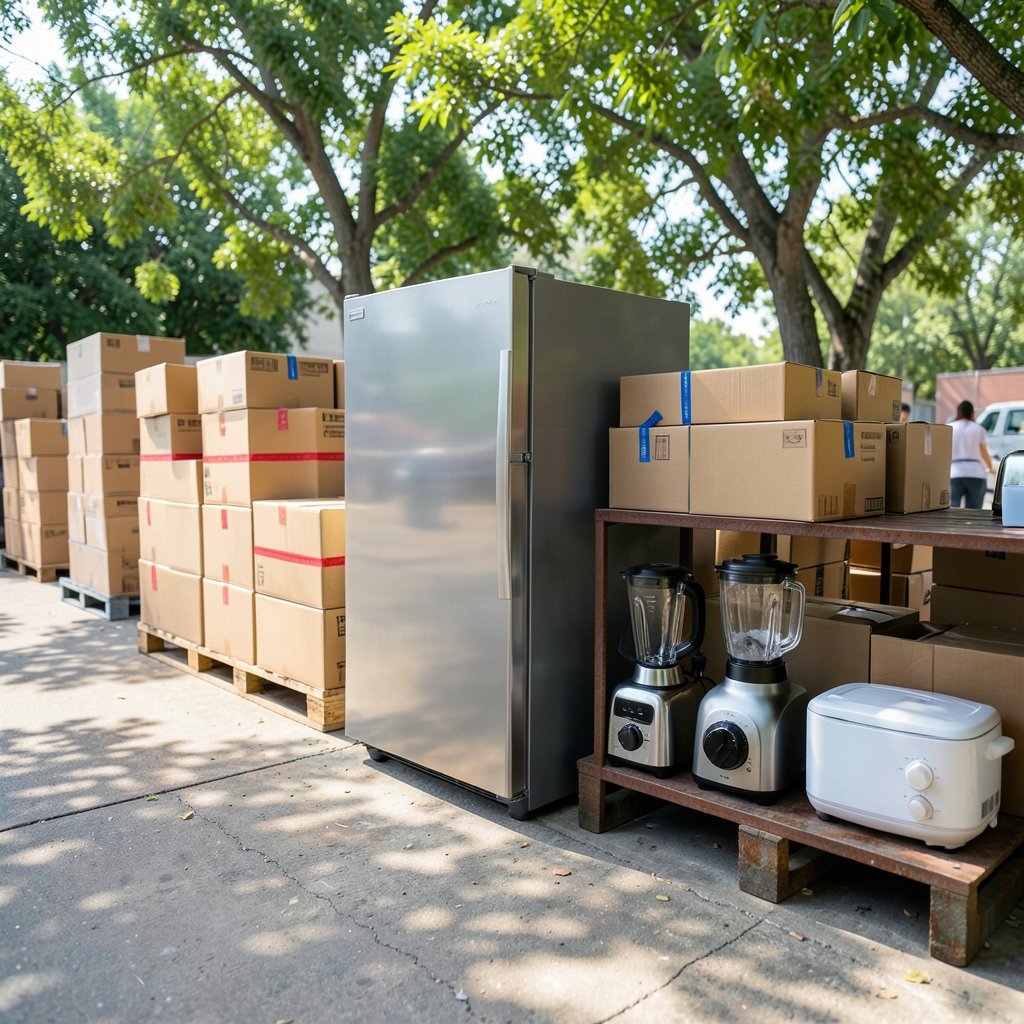
There is a reason your washing machine has a better shot at being American-made than your air fryer. Large appliances are heavy, bulky, and expensive to ship, so manufacturers have strong incentives to build them near the customers who buy them. That is why the U.S. large-appliance manufacturing base clustered in states like Tennessee, Kentucky, Ohio, South Carolina, and Iowa, close to rail, labor, and suppliers.
Small appliances play by different economics. A toaster or immersion blender is light, cheap to ship, and built from dozens of low-cost components: motors, thermostats, cords, stamped metal, molded plastic. Sourcing all of that domestically at a competitive price is genuinely difficult. The result is that most small kitchen appliances sold in the U.S. are imported, and the ones that are not tend to be niche, premium, or heritage brands selling at a markup that reflects the cost of domestic production.
Trade policy has scrambled the picture further. The 2018 safeguard tariffs on imported washing machines raised prices and pushed sourcing decisions around. Section 232 steel and aluminum tariffs, proclaimed the same year, raised input costs for domestic manufacturers. Tariff details shift constantly, so treat any specific rate you read online as a snapshot, not a permanent fact.
How to Verify a Domestic Claim Before You Spend Money
Marketing copy is written to be read quickly. Verification takes about five minutes if you know where to look. Here is the practical sequence that actually works.
- Read the origin line on the packaging, not the front panel. The legally required marking is usually small and on the back or bottom. Front-of-box language is advertising.
- Look for the exact phrase. “Made in USA” is a strong claim. “Built in America,” “American quality,” and “designed in the USA” are not regulated equivalents and often mean very little.
- Check the company’s own disclosure page. Reputable domestic manufacturers usually explain their sourcing in detail, including which components are imported. Vagueness is a signal.
- Search the FTC’s case library for enforcement actions. Companies that have made deceptive origin claims show up there.
- Call customer service and ask a specific question. “Which components are imported?” gets a more useful answer than “Is this made in America?”
The biggest mistake shoppers make is trusting a flag icon. Flags are not regulated. Words are. A second common mistake is assuming that a high price guarantees domestic production. It does not. Plenty of expensive imported appliances exist, and plenty of affordable ones are assembled here.
Where Genuine American Small-Appliance Manufacturing Still Lives
The honest map of this category is smaller than the marketing suggests, but it is not empty. Several pockets of real domestic production persist.
Heritage cookware and bakeware is the strongest category. Cast iron skillets, enameled Dutch ovens, and heavy-gauge baking pans are still made here by established brands, partly because the manufacturing process is capital-intensive and hard to relocate once the foundry exists.
Specialty coffee equipment has a meaningful domestic presence, particularly among small-batch roasters and precision grinder makers. These are low-volume, high-margin products where the “made here” story supports the price.
Commercial-grade and prosumer appliances often stay domestic because buyers care about serviceability and parts availability, rather than sticker price alone.
Custom and small-shop production fills the rest, from hand-turned wooden utensils to small-batch knife makers. This is where the label is most reliable, because the maker is usually the seller and has nowhere to hide.
What you will rarely find genuinely made here: high-volume plastic-bodied appliances at mass-market prices. If a $29 air fryer claims American manufacturing, apply skepticism. The math rarely works.
The Real Cost Trade-Off, and When It Is Worth Paying
Domestically made small appliances typically cost more. That is not a moral failing on the part of importers; it is arithmetic. U.S. labor costs more, domestic supply chains for small components are thinner, and volumes are lower. So the question becomes whether the premium buys you something you actually value.
It often does, in concrete ways. Repairability is the big one. Domestic makers tend to stock parts and offer service because their supply chain is close enough to support it. A blender you can fix in year six beats a cheaper one you replace in year two, both financially and in waste terms. Warranty support is usually faster and less bureaucratic. Accountability matters too: a company with domestic operations and a public sourcing page has more to lose from a bad claim.
Where the premium is harder to justify is on appliances you use rarely or replace anyway. A quesadilla maker that runs twice a month does not need a heritage supply chain. Be honest about usage before paying for provenance.
If you are weighing a kitchen upgrade more broadly, the same logic of spending where it counts applies to the space itself. The thinking behind small kitchen remodeling ideas budget smart upgrades that is not so different: put money into the items you touch daily, economize on the rest. The same principle governs whether a domestic appliance premium is worth it.
Common Mistakes That Lead to Bad Purchases
A few patterns show up again and again among buyers trying to shop domestically.
Mistaking assembly for manufacturing. Covered above, but worth repeating because it is the dominant error. Ask where the parts come from, rather than only where the box was closed.
Assuming a brand’s status is permanent. Sourcing changes. A company that made everything domestically in 2015 may import today, and vice versa. Verify current labeling rather than trusting a decade-old reputation.
Ignoring the seller’s own disclosures. Many brands publish detailed sourcing information and shoppers never look. Five minutes on a company’s about page beats an hour of forum speculation.
Overpaying for a label on a low-use item. Provenance is worth a premium on daily drivers. It is a poor use of money on the appliance that lives in the back of a cabinet.
Trusting third-party “made in USA” shopping lists. These lists go stale fast and rarely distinguish between the three claim types. Treat them as a starting point for research, never as a final answer.
The same verification discipline pays off in other purchasing decisions where vendors make confident claims. If you have ever wondered whether outsourcing data analytics consulting worth it small businesses rely on, the answer hinges on the same skill: reading past the pitch to what is actually being delivered. Buyers who verify one category tend to verify others.
What to Ask Before You Buy
Bring a short, specific question list to any appliance purchase where domestic origin matters to you. The answers separate real claims from decoration.
Ask which specific components are imported. Ask whether the company stocks replacement parts and for how long. Ask where the product is serviced if it fails. Ask whether the “made in USA” language appears in the legally required marking or only in advertising. A brand with a genuine domestic story answers these without flinching. A brand with a thin story deflects toward heritage language and emotional appeals.
For readers building out a home workspace or small operation alongside their kitchen, the same scrutiny applies to service providers. Knowing whether outsourcing data engineering worth it small business owners find it is a matter of checking deliverables rather than promises, which is the identical habit that makes appliance shopping work.
Conclusion
Small kitchen appliances made in America do exist, but the category is narrower and more nuanced than the packaging suggests. The label is regulated, the distinctions between “made,” “assembled,” and “made with imported parts” are legally real, and the economics of small appliances push most production overseas. That is not a scandal. It is arithmetic.
The practical takeaway is simple. Read the required origin marking, not the front of the box. Ask which parts are imported. Check whether the company stocks parts and honors service. Pay the domestic premium where you will use the appliance daily and skip it where you will not. Do that, and you will end up with a kitchen full of tools that earn their counter space, regardless of which flag, if any, appears on the box.
Frequently Asked Questions
Are there really any small kitchen appliances made entirely in the USA?
Yes, but they are a small slice of the market. Heritage cookware, cast iron, some specialty coffee equipment, and small-shop production account for most genuinely domestic small appliances. High-volume plastic appliances at low prices are almost always imported, because the component supply chain for that price point does not exist domestically at scale.
What is the difference between “Made in USA” and “Assembled in USA”?
“Made in USA” means all or virtually all significant parts and processing are domestic. “Assembled in USA” means the principal assembly happened here, even if many components were imported. Both can be truthful, but only the first tells you the value was created domestically. The FTC regulates the first claim strictly and treats the second as a weaker, narrower statement.
Why are American-made small appliances so much more expensive?
Three reasons stack up. U.S. labor costs more than overseas labor. Domestic supply chains for small components like motors and thermostats are thin, so parts get imported anyway. And production volumes are lower, which means less economy of scale. The premium is real, and it buys repairability and accountability more reliably than it buys raw performance.
How can I check whether a brand’s claim is legitimate?
Start with the required origin marking on the packaging, usually on the back or bottom. Then look for the company’s own sourcing disclosure page, which reputable domestic makers publish. Finally, search the FTC’s case library for enforcement actions against the brand. If a company is vague about where components come from, treat that vagueness as information.
Do tariffs affect whether an appliance is made in America?
They can, indirectly. The 2018 safeguard tariffs on imported washing machines and the Section 232 steel and aluminum tariffs raised costs across appliance manufacturing and shifted sourcing decisions. Tariff rates and scope change frequently, so any specific figure you read should be checked against current official documentation rather than treated as fixed.
Is it worth paying extra for a domestically made appliance?
It depends on how often you use it. For daily drivers like a coffee grinder or a chef’s knife, the premium often pays back through repairability, parts availability, and faster warranty service. For occasional-use gadgets, the math rarely works. Match the spending to the usage, not to the label. The same test applies when you evaluate whether outsourcing wordpress development worth it small business owners debate, or whether a premium streaming lights worth it small gaming channel purchase makes sense: frequency of use decides the answer.