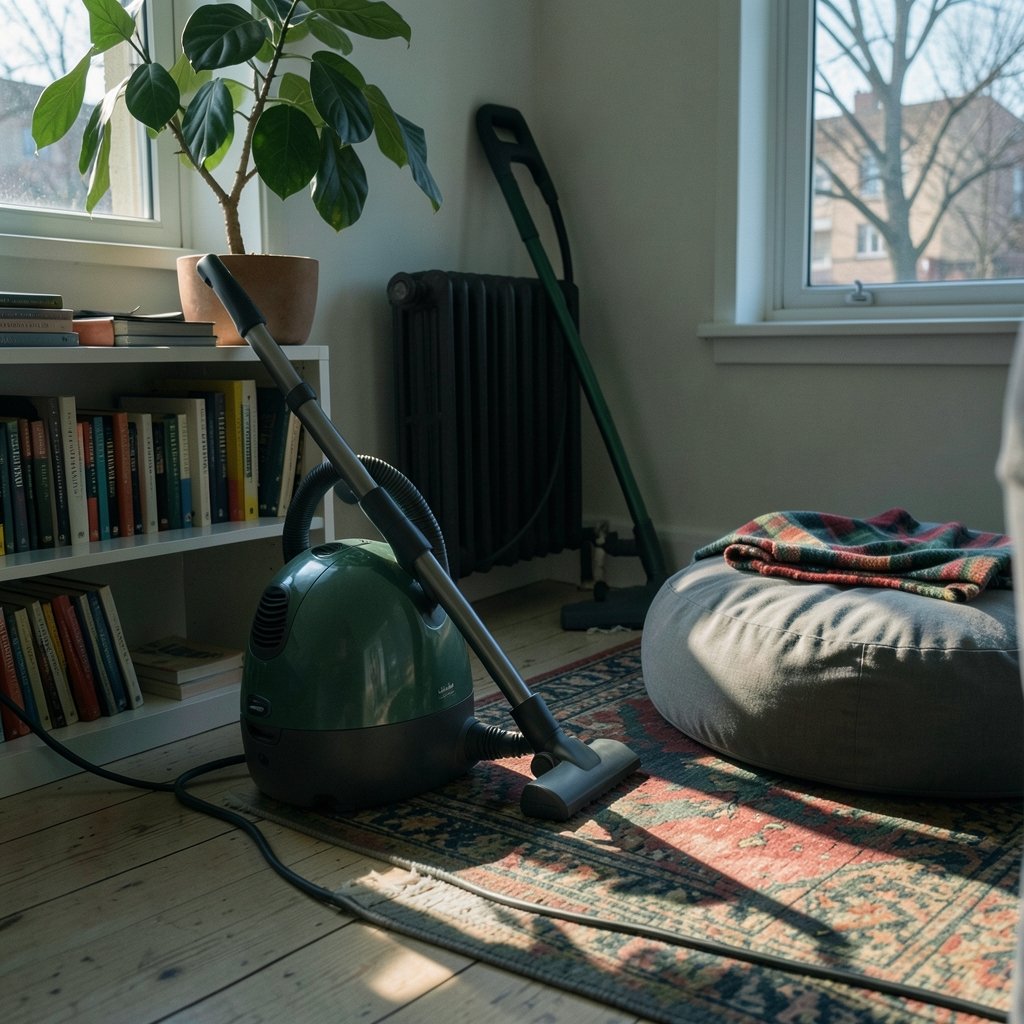
What if the best vacuum for your home is the one that never runs out of power, never asks for a firmware update, and weighs less than a gallon of milk? That is the pitch behind a lightweight corded vacuum, and it is a surprisingly strong one. While cordless sticks grab the headlines, a small but stubborn group of buyers keeps reaching for a vacuum with a cord, a plug, and a motor that pulls full power from the first minute to the last. The trick is knowing which models actually feel light in the hand, which ones only look light on the box, and where a cord becomes a nuisance instead of an advantage.
Why a cord still makes sense in a battery-obsessed market
Battery technology has improved a lot, but physics has not budged. A corded motor draws directly from mains power, so it does not derate as a battery drains. Independent test labs have consistently found that corded canisters and uprights deliver higher and more sustained airflow than battery models, because there is no battery drain and no motor throttling to protect a cell pack. That matters most on carpet, where airflow through dense pile separates a real clean from a cosmetic pass.
There is also the boring stuff: no charging dock, no battery replacement every few years, no waiting for a top-up halfway through the stairs. For renters, small apartments, and anyone who cleans in short bursts rather than marathon sessions, a light corded machine is often the simpler tool. If carpet is your main surface, the case gets stronger still, since sustained suction is what lifts embedded grit rather than just skimming the surface.
The catch is that “lightweight” is a marketing word, not a standard. No regulator defines it. Retailers and test labs apply their own thresholds, and a model sold as “light” in one market may be listed as mid-weight in another. So the number on the spec sheet deserves a second look before you trust the badge.
What “lightweight” actually means in numbers
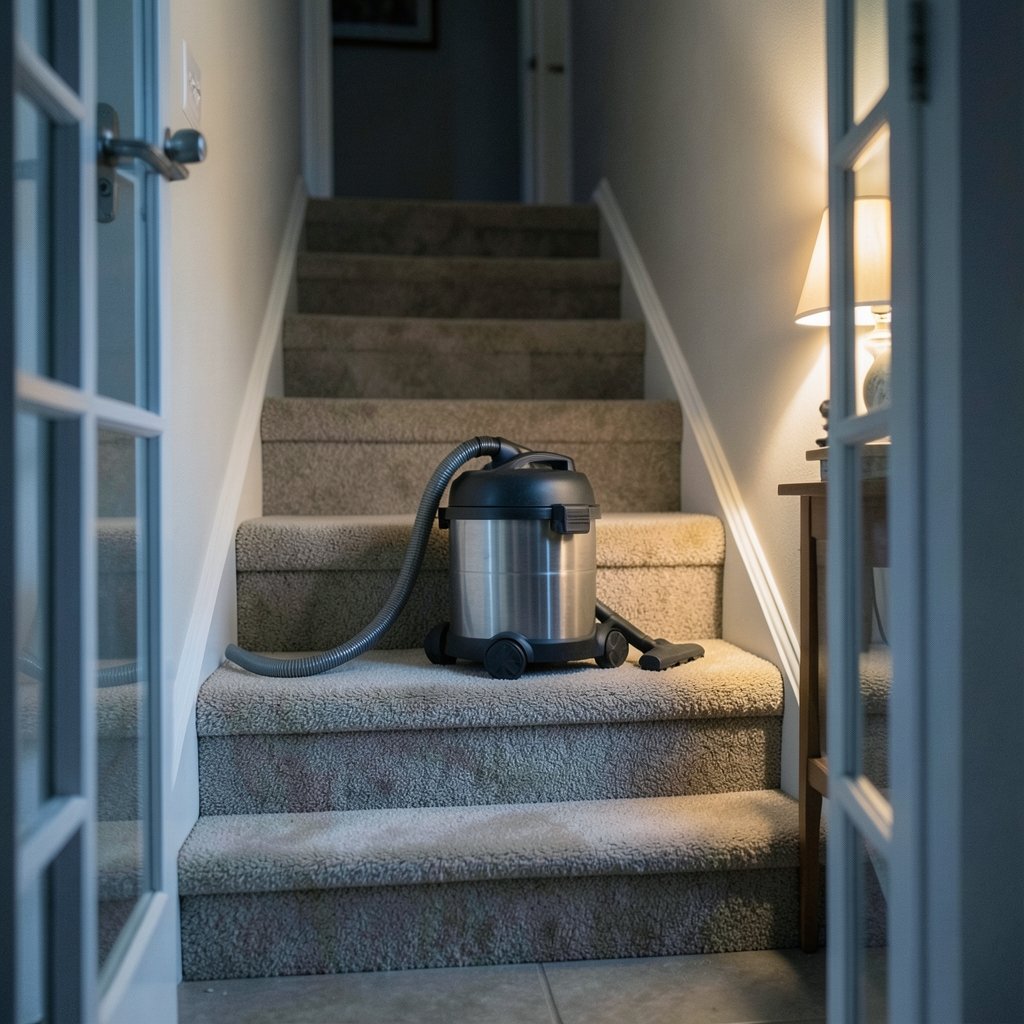
Most canister vacuums weigh roughly 5 to 9 kg, and uprights land around 6 to 9 kg. Models marketed as lightweight corded vacuums usually sit under about 5 kg, and the genuinely feathery ones dip toward 3 kg. That difference sounds small until you carry the machine up a flight of stairs or push it across a large room for twenty minutes.
| Type | Typical weight | Best for | Trade-off |
|---|---|---|---|
| Light corded canister | 3–5 kg | Stairs, cars, hard floors, tight rooms | Smaller dust bin, shorter cord |
| Standard corded canister | 5–9 kg | Whole-home cleaning, mixed flooring | Heavier to carry, bulkier storage |
| Light corded upright | 4–6 kg | Carpet-heavy homes, quick passes | Top-heavy feel, harder on stairs |
| Cordless stick | 2–4 kg | Quick touch-ups, open plan | Runtime limits, fading suction |
Weights are approximate and vary by model and configuration, so treat the table as a starting point rather than a rule. The real question is not the total kilos but where the weight sits. A canister that follows on wheels feels far lighter than its spec sheet suggests, because your hand only carries the hose and wand. An upright puts the motor above the floor head, so every push and pull involves the full mass of the machine. That is why a 6 kg canister can feel easier than a 5 kg upright over a long session.
Handle ergonomics matter more than the scale
Test organizations on both sides of the Atlantic repeatedly flag weight and handle comfort as top owner complaints. A vacuum that is light but has a hard, narrow grip will still wear out your hand. Look for a padded handle, a wand that adjusts to your height, and a hose that does not fight you when you turn a corner. These details rarely appear in the headline specs, but they decide whether the vacuum gets used or sits in a closet.
Cord length, reach, and the outlet math
Corded vacuums typically ship with cords between 5 and 10 meters. That range is a manufacturer spec, not an independent standard, but it has real consequences. A short cord means unplugging and replugging several times per floor. A long cord means one outlet can cover a hallway, a living room, and part of a kitchen.
Before buying, walk your home and count the outlets. Then measure the longest diagonal run from each one. If your apartment is long and narrow, a 9 or 10 meter cord is worth paying for. If you live in a compact flat, a shorter cord keeps the machine lighter and the storage tidier. Also check where the cord exits the body. A cord that emerges near the top can flip a light canister when you tug it; a low exit point keeps the machine planted.
One practical tip that saves a lot of frustration: loop the cord loosely over your shoulder or use a cord clip rather than dragging it around furniture legs. It sounds fussy, but it prevents the snag-and-yank cycle that makes people resent corded machines.
Suction, airflow, and the power cap that vanished
For a few years, vacuum shoppers in Europe saw energy labels with wattage caps and cleaning scores. That framework is gone. The EU energy label regulation for vacuum cleaners was annulled by the General Court in the Dyson v Commission case in November 2015, and the label rules were subsequently withdrawn. The 1,600 W input cap that took effect in September 2017 no longer stands as a labeling requirement, which means wattage numbers on boxes today tell you less than they used to.
In the United States, vacuum cleaners are not currently subject to federal appliance efficiency standards. Proposed rulemaking that would have touched related products was never finalized. The practical upshot for buyers is simple: ignore the wattage bragging and look at measured airflow and pickup instead. A well-designed 700 W machine can outperform a sloppy 1,400 W one, because motor efficiency, hose diameter, and floor-head design do most of the work.
That is also why a lightweight corded vacuum can hold its own. Low weight usually comes from a smaller motor and a tighter body, not from cutting suction. The best small canisters compensate with smart airflow paths and well-sealed joints. The worst ones leak air at every connection, and you feel it instantly when the suction at the nozzle goes soft.
Filtration: HEPA versus “HEPA-type”
Filtration is where marketing runs furthest ahead of reality. HEPA filters are rated by particle capture under recognized standards, such as EN 1822 for filter classes like H13 and H14, and the IEST recommended practice for HEPA and ULPA filters. Those standards define test methods and capture thresholds. “HEPA-type” is not a standardized term at all. It can mean almost anything.
For allergy sufferers, the difference matters. A bagged model often retains filtration better as the bag fills, because the bag itself acts as a pre-filter and the dirt stays contained during emptying. Bagless cyclonic designs, popularized from the 1990s onward, avoid bag costs but demand regular filter cleaning, and performance can drop if that maintenance slips. Neither design is universally better; the pattern depends on the model and how diligently the owner maintains it.
If you are choosing between the two, think about your tolerance for maintenance. A bagless machine that never gets its filter washed is a worse allergen trap than a bagged one with a fresh bag. For a deeper look at how bagless designs handle fine dust and debris, see this guide to robot vacuum cleaning solution alternatives that actually work in practice, which covers the maintenance habits that keep small machines running well.
Matching the machine to your floors
Floor type should drive the decision more than anything else. On hard floors, a light canister with a soft brush or a simple suction head glides easily and reaches under furniture. On carpet, you want a motorized brush roll and enough airflow to pull pile upright. If carpet dominates your home, it is worth reading a dedicated breakdown of the best vacuum for carpet before committing, because brush design and height adjustment matter more than raw weight.
For homes that mix hard floors and rugs, a combo approach often works best. Some buyers pair a light corded canister for deep cleans with a small robot for daily upkeep. If that sounds appealing, this comparison of the best robot vacuum mop combos actually cleans floor surfaces explains where robots genuinely help and where they still need a human backup. And if you are weighing a single machine that does both jobs, this look at the best vacuum mop combo options will save you from buying twice.
Long hair is its own category. A light vacuum with a tangle-prone brush roll becomes a maintenance chore fast. Before buying, check whether the brush roll is removable and whether the manufacturer sells replacements. This guide to making a robot vacuum long human hair actually works covers the tangle problem in detail, and the same principles apply to corded brush rolls.
Common mistakes buyers make
The first mistake is trusting the box weight. Retail listings sometimes quote the weight without the hose, wand, or floor head, which can shave a kilo off the real figure. Check the “in use” weight or the shipping weight as a sanity check.
The second is buying for the whole home when the vacuum will mostly clean one room. A 3 kg canister with a small bin is perfect for a studio and miserable for a four-bedroom house, because you will empty it constantly.
The third is ignoring storage. A light vacuum that does not fit in a closet or on a hook ends up in the hallway, where it gets knocked over. Measure your storage spot before you fall for a sleek design.
The fourth is skipping the filter routine. Washable filters need rinsing and full drying, typically every few weeks depending on use. A damp filter installed too early can smell musty and cut airflow. Set a reminder and let it air-dry completely.
The fifth is expecting a corded machine to behave like a robot. It will not map your rooms or dock itself. If navigation tech is what you actually want, this comparison of robot vacuum lidar vs camera navigation key differences pick the right system will be more useful than any corded spec sheet.
Maintenance habits that keep a light vacuum strong
Small machines have small bins and short airflow paths, so upkeep matters more, not less. Empty the bin when it reaches two-thirds full rather than waiting for the fill line; airflow drops before the bin looks full. Clear hair from the brush roll after every few uses. Check the hose for clogs by dropping a small object through it. Wipe the seals on the bin and floor head, since dust on rubber seals causes leaks.
If the machine starts to feel heavy or hard to push, the problem is often a clogged filter or a wrapped brush roll, not the vacuum’s weight. Fix those first. And if the machine suddenly stops or drags, the cause may be simpler than you think; this guide to what to do when a robot vacuum wheel stuck error it happens fix it fast appears shows how wheel and brush obstructions behave, and the troubleshooting logic transfers to corded floor heads.
Owners of dark carpets should also know that some sensors misbehave on black surfaces. The same optical quirk shows up in robots, and this explanation of why a robot vacuum cliff sensors fail black carpet works around the problem is a useful primer on how light-based sensors behave.
Noise, energy, and the running-cost picture
Household vacuum noise is not separately regulated in most places, and manufacturers typically quote 70 to 80 dB(A). A light corded model with a smaller motor is often a little quieter than a big upright, though floor-head design and airflow speed affect sound as much as the motor does.
Energy use is modest. A 1,000 to 1,600 W corded vacuum run for about 30 minutes a week uses roughly 25 to 40 kWh a year. That is a rounding error next to heating and cooling. The bigger long-term cost is consumables: bags, filters, and belts. Bagged models carry an ongoing bag expense; bagless models trade that for filter cleaning time. Neither is dramatically cheaper, so pick based on which chore you dislike less.
Conclusion
A lightweight corded vacuum is not a nostalgia purchase. It is a practical answer for anyone who wants steady suction, no battery anxiety, and a machine that stores easily and carries without strain. The formula for choosing well is unglamorous: check the in-use weight rather than the box claim, measure your longest cord run, match the floor head to your flooring, and commit to basic filter and brush maintenance. Do those four things and a 4 kg canister will outperform a heavier upright in daily life, cord and all. Skip them, and even the lightest model will feel like a burden.
Frequently Asked Questions
Does a lightweight corded vacuum clean as well as a full-size one?
Often yes, for everyday cleaning. Corded motors draw directly from mains power, so suction stays steady instead of fading with a battery. A well-designed light canister can match a heavier upright on hard floors and light carpet. Very deep pile and large debris loads still favor a full-size machine with a wider floor head and bigger bin.
How much should a lightweight corded vacuum weigh?
There is no official definition, but most models sold as lightweight come in under about 5 kg, and the lightest canisters sit near 3 kg. Pay attention to the in-use weight, which includes the hose, wand, and floor head. A canister that rolls on wheels often feels lighter than its number suggests.
Are corded vacuums louder than cordless ones?
Not necessarily. Manufacturers typically quote 70 to 80 dB(A) for corded machines, and small canisters are often on the lower end of that range. Cordless sticks can be surprisingly loud because they spin a brush roll at high speed in a compact body. Sound depends more on floor-head design and airflow speed than on whether there is a cord.
Do lightweight corded vacuums work well on pet hair?
They can, provided the floor head has a motorized brush roll and you clear it regularly. Pet hair wraps around brush rolls quickly, especially on light machines with narrow rollers. Choose a model with a removable brush roll and check that replacement rollers are easy to buy.
How long do cords usually last, and can they be replaced?
Cords on quality machines typically last many years with normal use. Repeated yanking at the plug is what kills them. Many models allow cord replacement through a service center, but it is not always a user-level repair. Looping the cord loosely and pulling the plug by the body rather than the cable extends its life considerably.
Is a bagged or bagless lightweight vacuum better for allergies?
Bagged models often keep filtration steadier as the bin fills, because the bag contains the dust during emptying. Bagless models can perform just as well if the filter is washed on schedule and fully dried. The deciding factor is usually whether you will actually keep up with the maintenance routine.