

What makes a lightweight cordless vacuum worth carrying from room to room, and when does saving a kilogram cost you more than it saves? The honest answer is that “lightweight” is a marketing word, not a technical standard. Nobody certifies it. There’s no agreed weight threshold, no independent test that decides which machines earn the label. So the shopper is left comparing numbers that brands report differently, on configurations that rarely match.
That doesn’t mean lightweight cordless vacuums are a bad buy. It means you need to know which numbers matter and which are decoration. This guide walks through the trade-offs, the specifications that hold up under scrutiny, and the practical habits that separate a vacuum people actually use from one that sits in a closet with a dead battery.
What “Lightweight” Really Means in the Cordless Vacuum Market
Most cordless stick and handheld vacuums land somewhere between roughly 1.5 and 3 kilograms for the main unit, with the floor head adding more. That range isn’t official. It’s just where the market has settled, and brands quote weight in whatever way flatters the product: bare motor body, body plus wand, or the full assembled machine.
A few practical rules help cut through it:
- Check what’s being weighed. A vacuum listed at 1.6 kg may mean the handheld core only. Add the wand, floor head, and battery and you’re often closer to 2.5 kg.
- Weight in hand matters more than weight on a spec sheet. A well-balanced 2.5 kg machine can feel lighter than a nose-heavy 2.0 kg one, because torque at the wrist is what tires you out.
- The floor head is the hidden cost. Motorized brush rolls add mass right where you push. If you clean thick carpet, the head weight is the number you’ll feel.
There’s a real design trade-off underneath all this. Lighter units typically carry smaller batteries and smaller dust bins. That’s not a defect; it’s physics and packaging. Less mass means less cell capacity and less room for debris. The question is whether the reduction fits how you clean.
The Specs That Actually Predict Performance
Suction is usually advertised in air watts, a unit that combines airflow and pressure. The trouble is that test methods differ between brands, so air watt figures aren’t directly comparable across manufacturers. A 150 AW claim from one company and a 150 AW claim from another may describe different measurement conditions entirely.
Runtime has the same problem. Quoted minutes are almost always best-case: lowest power mode, new battery, hard floor, no attachments. Real-world runtime drops sharply when you switch to a high-power mode or tackle embedded dirt in carpet.
Battery chemistry is more dependable as a guide. Most cordless vacuums run on lithium-ion cells, which age predictably. Capacity fades with charge cycles and heat, so a machine that runs 40 minutes new might manage 25 after three years of daily use. That’s normal behavior, not a fault.
Filtration deserves closer reading than it usually gets. Many vacuums advertise HEPA filtration, but HEPA itself is defined by standards that specify particle capture efficiency at defined sizes. Labels like “HEPA-type” or “HEPA-style” are not the same as certified HEPA, and a sealed system matters as much as the filter media. Fine particulate matter is linked to respiratory and cardiovascular effects, so if you or anyone in the household has allergies or asthma, a sealed, genuinely filtered machine is worth more than a lighter one that leaks dust back into the room.
Noise figures in dB(A) are indicative only, since measurement distance and method are rarely disclosed. Treat them as a rough ranking, not a precise measurement.
Where Lightweight Cordless Vacuums Genuinely Win
Quick cleanup is the whole point. A vacuum that lives on a wall mount and takes eight seconds to grab gets used daily. A heavier machine that requires setup gets used weekly. Over a year, that difference in frequency matters far more than any spec.
Lightweight cordless models shine in specific situations:
- Stairs. Carrying a 2 kg machine up and down beats dragging a canister or hauling a full-size upright.
- Cars. Handheld mode with a crevice tool reaches footwells and seat gaps that a corded vacuum can’t easily follow.
- Small apartments. Limited storage favors a machine that hangs on a wall or stands in a corner.
- Kitchen crumbs and entryway grit. Short, frequent passes on hard floor are exactly what these vacuums are built for.
- Ceiling corners and above-cabinet dusting. Low weight overhead is a genuine ergonomic advantage.
For households with mostly hard flooring and modest debris loads, a lightweight cordless vacuum can be the primary cleaning tool rather than a supplement. That’s a legitimate use case, not a compromise.
Where They Fall Short, and How to Work Around It
The limitations are predictable once you know them. Small dust bins fill fast, especially with pet hair. High-power modes drain batteries quickly. Deep carpet cleaning is usually weaker than a corded upright. And battery replacement varies by design, with some models using sealed or proprietary packs that shorten the machine’s useful life and add to electronic waste.
Practical fixes that experienced users rely on:
- Empty the bin after every session. A half-full bin on a small machine chokes airflow, which reads as “weak suction” when the real problem is a full bin and a clogged pre-filter.
- Wash filters on a schedule, and dry them fully. A damp filter breeds odor and restricts airflow. Most people wash too rarely; a few wash too often and reassemble wet.
- Keep a second battery if the model allows it. Swapping cells mid-clean is faster than waiting for a recharge, and it extends the machine’s working life.
- Use the right mode for the surface. Turbo mode on bare hard floor wastes battery. Eco mode on embedded carpet does nothing.
One more common mistake: buying the lightest machine available and then adding a heavy motorized head for carpet. That combination defeats the purpose. If carpet is a big part of the job, it’s worth comparing dedicated carpet machines before committing to a featherweight stick. A guide to the best vacuum for carpet can help set expectations for what cordless models realistically deliver on pile.
Matching the Machine to the Floor
The floor type does more to determine satisfaction than any other factor. Here’s how the main scenarios break down.
| Household situation | Lightweight cordless fit | What to prioritize |
|---|---|---|
| Mostly hard floor, small apartment | Excellent as primary vacuum | Low hand weight, wall mount, decent bin |
| Mixed floor with area rugs | Good as daily driver | Motorized brush roll, mid-size battery |
| Wall-to-wall carpet, pets | Supplemental at best | Sealed filtration, strong airflow, large bin |
| Stairs and cars | Excellent | Handheld mode, crevice and upholstery tools |
| Allergies or asthma | Good if sealed and certified | Certified HEPA, sealed system, washable pre-filter |
If you’re weighing a stick against a hybrid that also mops, the calculus changes again, because water tanks add weight and complexity. A breakdown of the best robot vacuum mop combos that actually clean floors is useful context if you’re deciding whether a cordless stick or an automated unit deserves the floor space. For hands-on mopping with a stick form factor, the question of which best vacuum mop combo suits your floors comes down to tank size versus weight, and lighter almost always means smaller tanks.
Navigation technology is another decision point that affects weight and cost. Lidar modules add mass and price; camera-based systems are lighter and cheaper but can struggle in low light. A comparison of robot vacuum lidar vs camera navigation explains the trade-offs if you’re considering an automated helper alongside a cordless stick.
Maintenance Habits That Keep a Light Vacuum Strong
A lightweight vacuum has less margin for neglect. Smaller bins and tighter airflow paths mean clogs hurt performance faster than they would on a bulky upright. The habits below are the ones that separate machines that last five years from machines that disappoint in eighteen months.
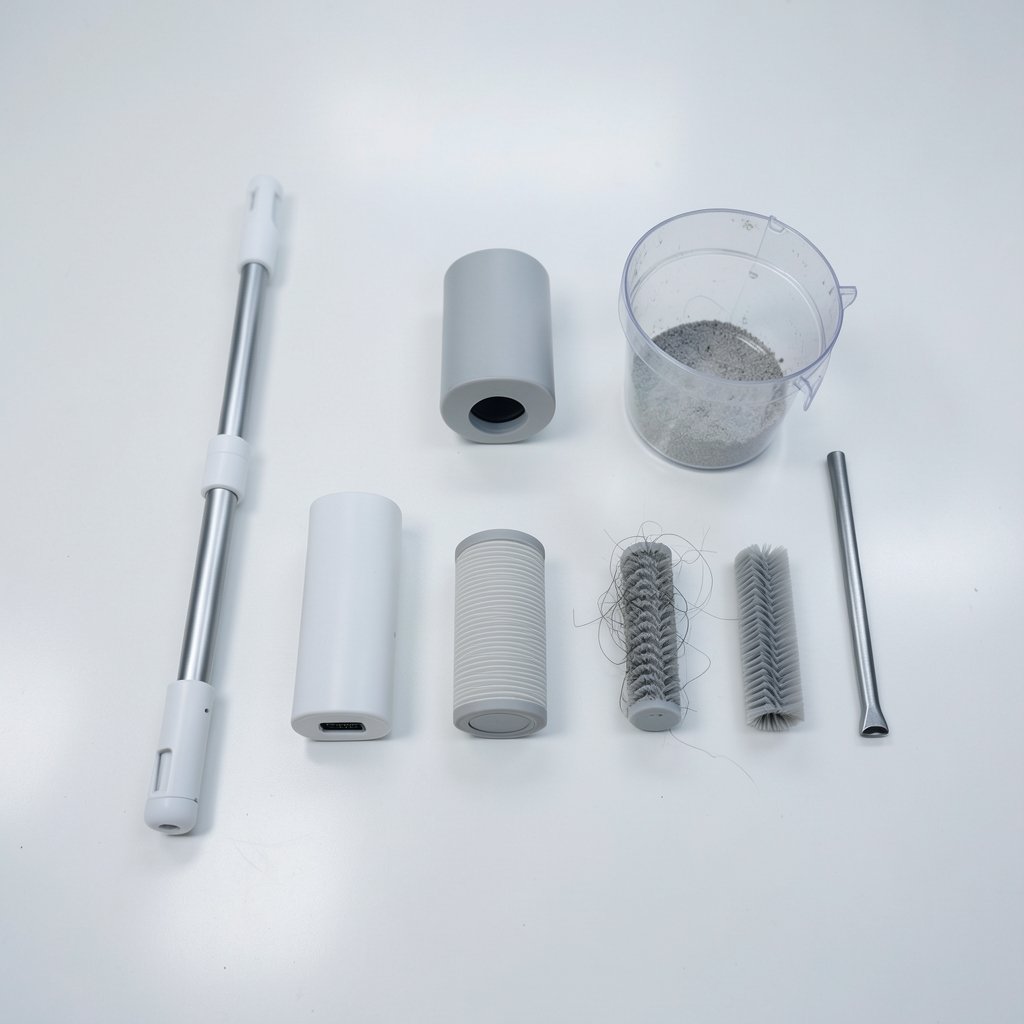
Clear the brush roll weekly. Hair wraps around the roll and drags on the motor. On models with removable rolls, pulling the roll out and cutting the hair free takes two minutes. If long hair is a fixture in your home, it’s worth reading up on which designs handle long human hair without tangling before you buy, since brush roll design varies enormously.
Check the wheels and swivel joints. Grit and hair accumulate in wheel housings and cause dragging or steering that feels stuck. A wheel stuck error on an automated unit has a cordless equivalent: a floor head that suddenly pulls to one side. Cleaning the axle usually fixes it.
Watch for sensor and surface quirks. On automated vacuums, dark carpet can fool cliff sensors into thinking there’s a drop-off. The same lesson applies to cordless sticks in a simpler way: very dark, high-pile carpet can confuse dirt sensors and cause erratic power changes. Understanding why cliff sensors fail on black carpet helps you interpret odd behavior instead of assuming the machine is broken.
Don’t improvise cleaning solutions. People sometimes add dish soap or essential oils to mop tanks or spray bottles, which can clog lines and void warranties. If you’re tempted to mix your own, check which cleaning solution alternatives actually work before experimenting.
Store the battery at mid-charge. Leaving a lithium-ion pack fully drained for months shortens its life. If the vacuum is seasonal, charge it to roughly half before storing.
How to Judge Weight Claims Before You Buy
A short checklist makes showroom and online comparisons much more honest:
- Find the weight figure and confirm what it includes. Look for “machine weight” versus “weight with floor head.”
- Check the dust bin volume in liters. Under 0.4 L means frequent emptying on any sizable job.
- Note the runtime and the mode it’s measured in. Assume real-world runtime is 40 to 60 percent of the quoted best case on high power.
- Confirm whether the battery is user-replaceable. This single factor often determines whether the vacuum lasts three years or seven.
- Look for certified filtration language rather than “HEPA-type.”
- Read independent test results where available, and remember that testing bodies use different methods, so cross-source comparisons need caution.
Conclusion
A lightweight cordless vacuum earns its place when it matches the job: quick passes on hard floor, stairs, cars, and the daily crumb patrol. It disappoints when it’s asked to replace a full-size machine on deep carpet or in a busy household with shedding pets. The weight on the box tells you less than the bin size, the battery design, the filtration language, and the balance of the machine in your hand.
Buy for the cleaning you actually do, not the cleaning you imagine. Check what the weight figure includes, confirm the battery is replaceable, and treat every runtime and suction claim as a best case until proven otherwise. Do that, and a lightweight cordless vacuum becomes one of the most-used tools in the house rather than another gadget with a charging dock and a guilty conscience.
Frequently Asked Questions
How light does a cordless vacuum need to be to count as lightweight?
There’s no official threshold. Most models marketed as lightweight fall between roughly 1.5 and 3 kilograms for the main unit, but brands measure differently, sometimes excluding the wand and floor head. Balance in the hand often matters more than the raw number, since a well-balanced heavier machine can feel easier to use than a nose-heavy lighter one.
Is a lighter cordless vacuum always weaker?
Not always, but there’s a real trade-off. Lighter machines usually carry smaller batteries and smaller dust bins, which reduces runtime and capacity. Motor and airflow design can partly compensate, so a well-engineered light vacuum can outperform a poorly designed heavier one. The gap shows up most on deep carpet and long cleaning sessions.
How long do cordless vacuum batteries actually last?
Lithium-ion packs typically hold useful capacity for a few years of regular use, then fade gradually. Quoted runtime figures are best-case: lowest power, new battery, hard floor. Expect real-world runtime on high power to be substantially shorter, and expect capacity to decline with charge cycles and heat exposure.
Can a lightweight cordless vacuum replace a full-size upright?
For homes with mostly hard flooring and light debris, often yes. For wall-to-wall carpet, heavy pet hair, or large floor plans, it works better as a supplement. Matching the tool to the floor type prevents the most common purchase regret.
What does HEPA mean on a vacuum, and does it matter?
HEPA filtration is defined by standards that specify particle capture efficiency at set sizes. Labels like “HEPA-type” or “HEPA-style” are not equivalent to certified HEPA. Filtration matters most for allergy and asthma sufferers, and a sealed system is as important as the filter itself, since leaks let fine dust back into the room.
Should I buy a cordless vacuum with a replaceable battery?
Yes, if you want the machine to last. Replaceable batteries extend useful life, reduce electronic waste, and let you keep a spare charged for longer jobs. Sealed or proprietary packs can turn a working vacuum into a disposable one when the cells degrade.



