What if the single biggest upgrade to your morning coffee costs less than a bag of beans and involves no electricity at all? That is the quiet promise of a manual pour over brewer. No pumps, no pods, no screens. Just a cone or a flat bed, a paper filter, a kettle, and about three minutes of your attention. The catch is that “manual pour over” covers wildly different tools, from a $15 plastic cone to a double-walled stainless dripper with a built-in dosing guide. This roundup sorts the serious contenders by who they actually suit.
The Shortlist at a Glance
| Brewer | Shape | Filter | Best for | Stated price |
|---|---|---|---|---|
| Hario V60 02 | Cone | V60 02 conical paper | Control freaks and learners alike | Not stated in sources |
| Kalita Wave 185 (Mino Yaki) | Flat bottom | Wave 185 paper | Beginners who want forgiveness | Not stated in sources |
| Chemex Classic 6-Cup | Hourglass carafe | Proprietary thick paper | Clarity and small groups | Not stated in sources |
| Fellow Stagg [X] | Flat bottom | Proprietary Stagg X paper | Design-led solo brewing | $35–$40 |
| Melitta | Cone | Standard cone paper | Budget simplicity | Not stated in sources |
| Bodum | Cone/press family | Varies by model | Casual, low-fuss brewing | Not stated in sources |
| KitchenAid Pour-Over (KCM0802) | Automatic pour over | Basket filter | Hands-off consistency | Not stated in sources |
One note before the deep dives: the manual brewers below are the ones that keep showing up across independent testing. If you want the broader buying framework first, the pour over coffee maker buying guide covers capacity, filter costs, and technique basics in more depth than this shortlist can.
Hario V60: The Benchmark Everyone Else Is Measured Against
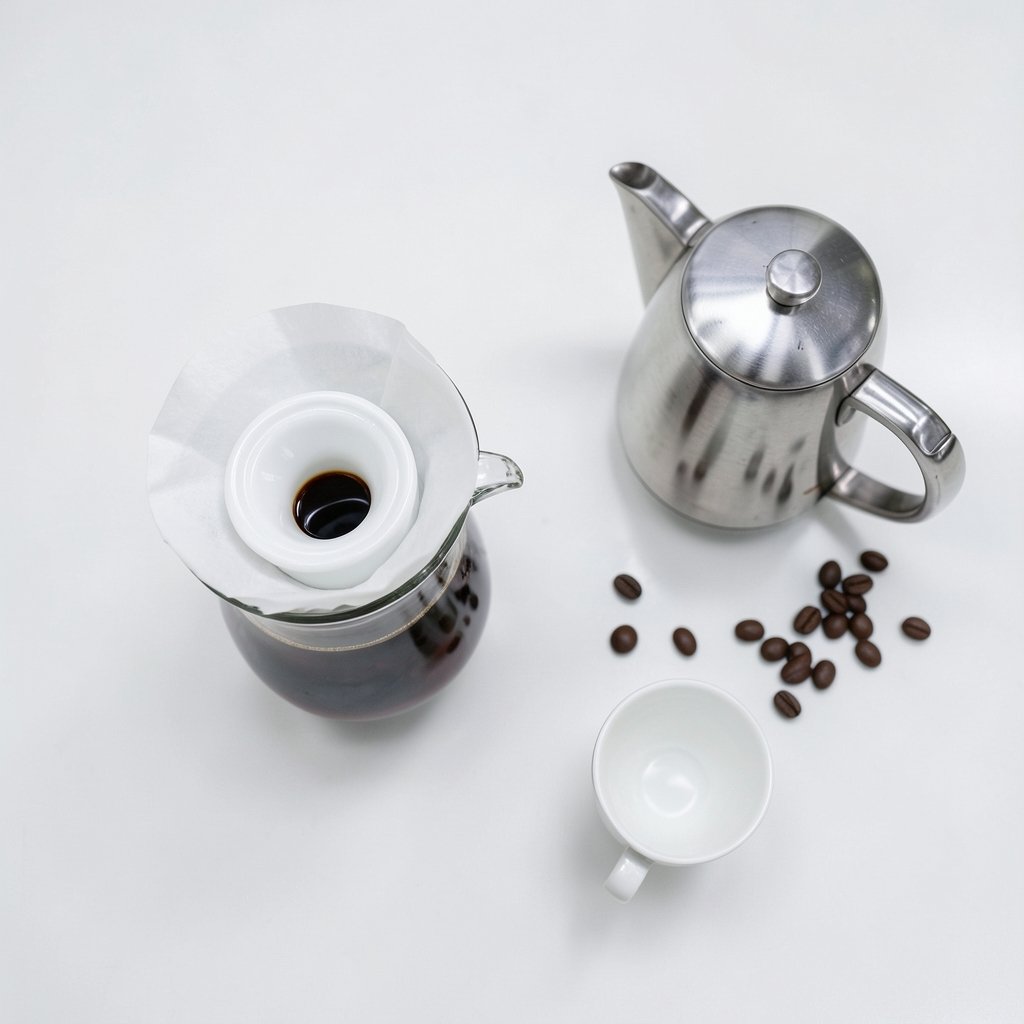
The Hario V60 is the default recommendation for a reason. Introduced in 2004 by Hario Glass in Japan, it has become the de facto standard for manual brewing, and reviewers who test a dozen drippers side by side keep coming back to it. One long-term testing household described the V60 as their favorite and the one they are quickest to recommend to friends.
Who it suits: Anyone who wants to taste the difference between beans. The conical shape, single large drain hole, and spiral ridges give you direct control over contact time.
What it does well: Speed and clarity. A V60 brew runs roughly two to three minutes for one or two cups, producing a bright, clean cup with more body than a thick-filter brewer.
The real limitation: It rewards attention and punishes distraction. Pour sloppily and the water races through the center, leaving you with a sour, thin cup. The plastic 02 version is the forgiving, affordable entry point; ceramic holds heat better but needs preheating.
Filter note: Buy the correct 02 size. Conical V60 paper is widely available, which keeps the recurring cost low.
Kalita Wave 185: The Beginner-Friendly Flat Bed, Now Fixed
The Kalita Wave built its reputation on forgiveness. A flat bottom and three small drain holes are supposed to smooth over uneven pouring, and for years that was the pitch. Here is the honest part: experienced testers found the classic steel Wave trickier than the V60, because the filter could sit flush against the bottom, clog, and stall the brew. The larger 185 size suffered most.
The newer Mino Yaki version addresses exactly that. The Y-shaped ribs are gone, replaced by a protruding circular platform, and the drain holes grew from 2mm to 4mm. According to testing published by the Coffee Chronicler, the stalling that plagued older models is essentially solved.
Who it suits: Beginners, and anyone brewing two cups who wants a steadier, more immersive extraction than a cone delivers.
What it does well: Even extraction from a flat bed, and a brew that tolerates a slightly wandering pour.
The limitation: Proprietary Wave 185 paper. It is not interchangeable with cone filters, so you are locked into one filter shape.
Chemex Classic 6-Cup: Maximum Clarity, Minimum Sediment
The Chemex is the odd one out: a brewer and a serving carafe in one hourglass of glass. Its bonded paper filters are dramatically thicker than cone paper, with a pore size in the 20–25 micron range and a dense cellulose matrix. In blind sensory panels cited in comparative testing, the six-cup Chemex posted the highest clarity score at 8.7 out of 10.
Who it suits: Small groups and anyone who dislikes even a trace of sediment. The Classic 6-Cup holds 30 fluid ounces, which makes it the group option in this lineup.
What it does well: A tea-like, sparkling cup. The thick filter strips out oils and fines that other brewers let through.
The limitation: Two of them, actually. Those proprietary filters cost more per brew than standard paper, and the glass body needs careful handling. Cleaning means scrubbing the interior with a brush; the wooden collar and leather tie are the only removable parts. Watch the cup math, too. Chemex defines a cup as five fluid ounces, so “6-cup” is not six mugs of coffee.
Fellow Stagg [X]: The Most Refined Solo Brewer
Fellow builds coffee gear with industrial-design sensibility, and the Stagg [X] is no exception. It is a flat-bottom, single-hole dripper with double-wall vacuum insulation, which holds brew temperature without a preheat step. An interior ratio aid marks water levels for one or two cups, taking some guesswork out of dosing. Steep internal walls and a single drain hole create a gradual, immersive brew, and the flat bed encourages even extraction.
Who it suits: Solo drinkers who want one excellent 10-ounce cup and appreciate good design.
What it does well: Temperature stability and repeatability. The vacuum wall is a genuine functional advantage, not decoration.
The limitation: Proprietary Stagg X paper filters, and a small capacity. At $35–$40 for the dripper, it is also the priciest manual option here.
Melitta: The Original Cone, Still the Cheapest Way In
Melitta invented the paper-filter cone, and the modern version remains the least intimidating brewer on this list. It uses standard cone paper you can buy anywhere, it costs very little, and there is nothing to break.
Who it suits: First-timers, campers, office desks, and anyone who wants a backup brewer that lives in a drawer.
What it does well: Simplicity and filter availability. No proprietary consumables, no learning curve worth mentioning.
The limitation: Less control than a V60 and less clarity than a Chemex. The single small drain hole limits how much you can steer extraction, so the cup is good rather than revelatory.
Bodum: Casual Brewing Without the Ceremony
Bodum sits in the same budget-friendly, low-fuss territory, and the brand’s pour-over options pair well with its broader manual lineup. Reviewers comparing Melitta, Bodum, and KitchenAid pour-over setups tend to treat Bodum as the approachable everyday choice rather than a precision instrument.
Who it suits: Households that want decent manual coffee without weighing beans or timing pours.
What it does well: Affordability and easy cleanup.
The limitation: Fewer design refinements for extraction control. If you later want to chase flavor notes, you will likely graduate to a V60 or Wave.
KitchenAid Pour-Over KCM0802: The Manual Method, Automated
Strictly speaking, the KitchenAid KCM0802 is not manual. It earns a place here because it replicates manual technique mechanically. KitchenAid’s own manual describes the machine heating all its water first, then alternating between showering the grounds and letting them steep in stages rather than flooding the basket continuously. That is the bloom-and-pulse rhythm you would otherwise produce by hand with a gooseneck kettle.
The specs: water heated to 198–204°F, a 2-to-8-cup range, a 24-hour programmable timer, and a roast selector for medium or dark beans. It earned SCAA certification in 2015, though it is not on the SCA’s current list.
Who it suits: People who already own a gooseneck kettle and pour steadily should skip it; the machine solves a problem they do not have. It suits anyone who wants pour-over flavor on a schedule.
The limitation: It is a machine, with machine failure modes. If your current brewer is misbehaving, the fix for a filter basket overflow is usually simple, and worth checking before you replace anything.
How to Choose Without Overthinking It
Work backward from your actual mornings, not from spec sheets.
- Count your drinkers. Solo: Stagg [X], OXO, Melitta, or V60 02. Two people: Kalita Wave 185 or V60 02, depending on technique preference. Small group: Chemex Classic 6-Cup at 30 fluid ounces. Travel: a YETI Rambler Pour-Over with a compatible mug.
- Check fluid ounces, not the word “cup.” Chemex counts a cup as five ounces; a 10-ounce Fellow [X] is a single serving, not a family brewer.
- Budget for filters. The brewer is the first purchase, not the last. Proprietary filters are the main recurring cost, and compatibility is not universal.
- Match the brewer to your temperament. If you enjoy tinkering, a V60 rewards you. If you want consistency without fuss, a flat bed or the KitchenAid is kinder.
Technique matters as much as hardware. Use a coffee-to-water ratio of 1:15 to 1:17 as a starting point, then adjust to taste. Lighter roasts want water at the higher end of the temperature range; darker roasts the lower end. A variable-temperature electric kettle makes this easy, but a standard kettle pulled 30–45 seconds off boil lands in the right zone. And pour slowly and deliberately to avoid channeling; that single habit separates a good cup from a great one.
Two troubleshooting shortcuts: sour, thin, or watery coffee means under-extraction, so grind finer, raise the temperature, or extend contact time. Bitter, harsh, or astringent coffee means over-extraction, so grind coarser, cool the water slightly, and pour more slowly to keep the bed even. If you are weighing a switch from a machine, it helps to know how a brewer handles your water; hard water is survivable in most brews, but scale quietly changes extraction over time. (Best keurig coffee maker)
Conclusion
The best manual pour over coffee maker for 2027 depends less on hype than on how you actually drink coffee. The Hario V60 remains the benchmark for anyone who wants control and clarity. The Kalita Wave 185 in its Mino Yaki form is now the smarter beginner pick, with the stalling flaw addressed. The Chemex wins on clarity and group capacity, the Fellow Stagg [X] wins on temperature stability and design, and Melitta and Bodum win on price and simplicity. The KitchenAid KCM0802 is the answer only if you want the pour-over rhythm without the pouring. Pick the one that matches your temperament, buy the right filters in bulk, and spend your energy on grind size and a slow, steady pour. That is where the flavor actually lives.
Frequently Asked Questions
What is the best manual pour over coffee maker for beginners?
The Hario V60 plastic dripper is the usual first recommendation: affordable at roughly $15–$25, forgiving to learn, and excellent once technique clicks. The Kalita Wave 185 is the alternative for anyone who wants a flatter learning curve, since its flat bottom and three drain holes tolerate inconsistent pouring better than a cone.
What is the difference between a V60 and a Chemex?
The V60 is a conical dripper with a single large hole and spiral ridges, using thin paper filters. It brews one or two cups in two to three minutes and produces a bright, clean cup with more body. The Chemex is an hourglass carafe with an integrated filter and thick proprietary paper. It brews more volume with noticeably higher clarity and less sediment.
Do I need a gooseneck kettle for pour over coffee?
It helps, but it is not mandatory. A gooseneck gives you a slow, controlled stream, which reduces channeling. A standard kettle works if you pour carefully, and pulling it 30–45 seconds off boil puts you in the right temperature range for most roasts.
How much do pour over filters cost over time?
Sources do not publish firm annual figures, but the pattern is clear: the brewer is the first purchase and filters are the recurring one. Proprietary filters are the main drawback of brewers like the Chemex and Stagg [X], while V60 and standard cone paper are widely available and cheap. Check filter availability before you commit.
Why does my pour over taste sour or bitter?
Sour, thin, or watery coffee points to under-extraction: grind finer, raise the brew temperature, or extend contact time. Bitter, harsh, or astringent coffee points to over-extraction: grind coarser, use slightly cooler water, and pour more slowly to avoid channeling.
Is an automatic pour over machine worth it if I already pour by hand?
Probably not. An automatic machine like the KitchenAid KCM0802 reproduces the bloom-and-pulse rhythm you already produce with a gooseneck kettle. If you pour steadily, the machine solves a problem you do not have. It makes sense for people who want that flavor profile on a programmable schedule.