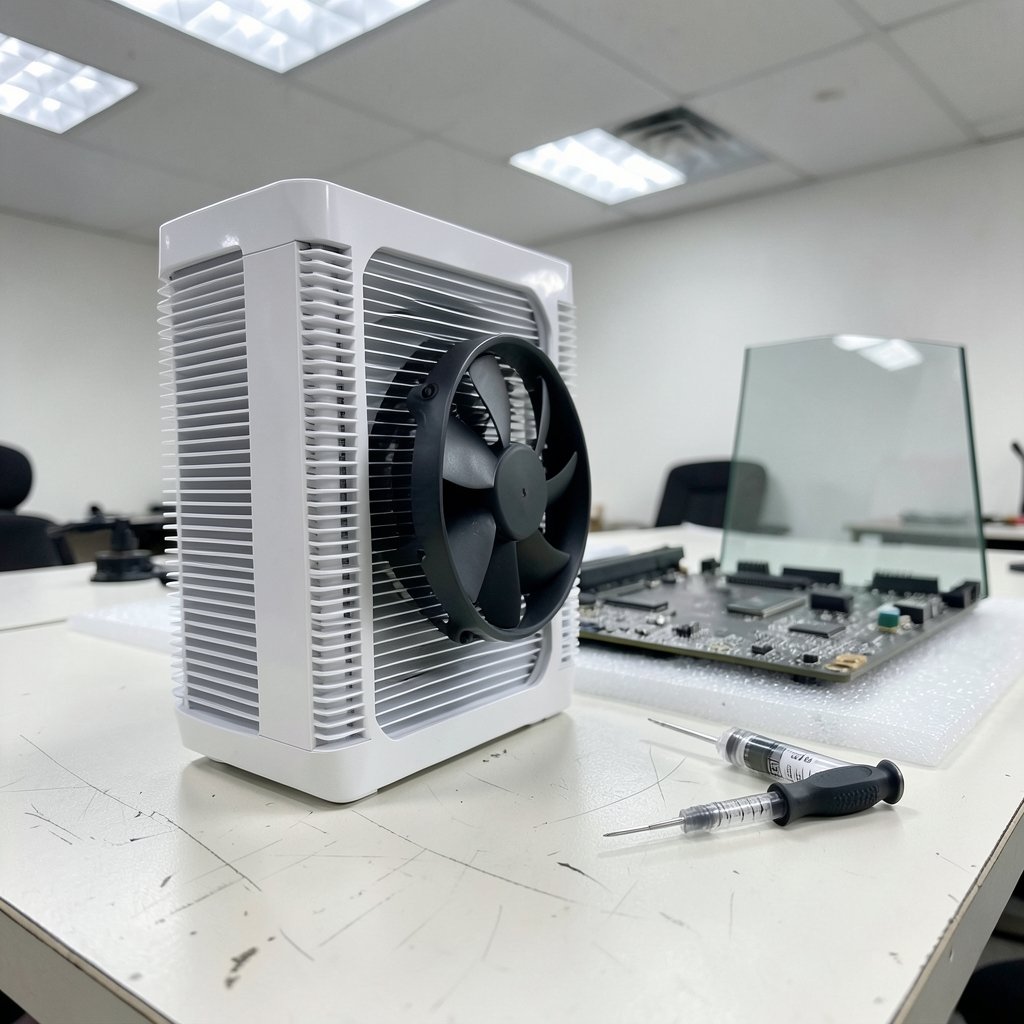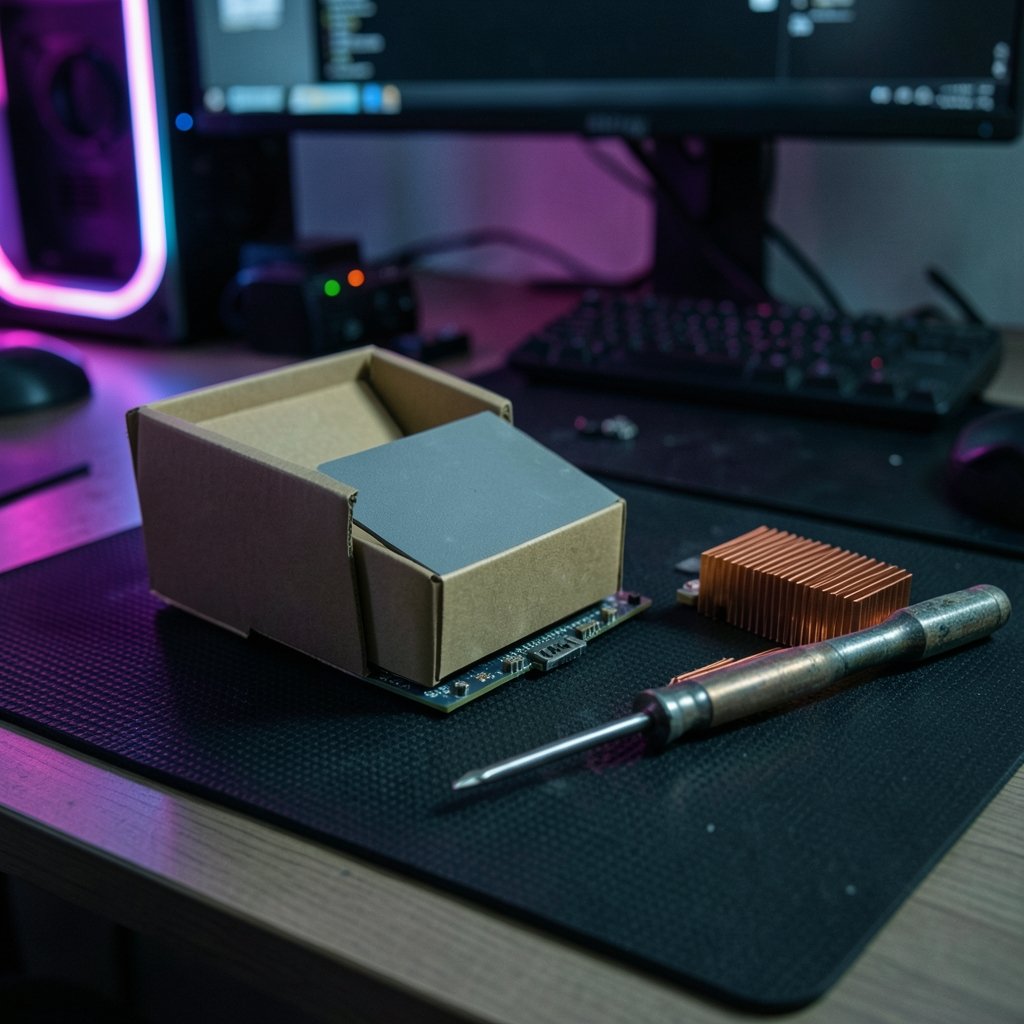
What if the humble thermal pad, long treated as the cheap, boring cousin of thermal paste, suddenly became the most interesting part of a cooling system? That is exactly what has happened. In 2026, carbon nanotube pads arrived on store shelves for DIY builders, a company claimed pads with built-in vapor chambers could beat normal pads by 50 to 80 times, and material makers started pitching low-oil pads for mission-critical electronics. If you last thought about thermal interface materials a few years ago, the news has moved on without you.
This article walks through the announcements a curious reader would actually want to understand: who is making what, what the numbers mean, where the hype outruns the data, and what it all changes for anyone building or repairing a PC.
What are thermal pads, and why is the news suddenly full of them?
A thermal pad is a soft, pre-cut sheet of heat-conducting material that sits between a hot component and a cooler, heatsink, or metal chassis. It fills the microscopic air gaps that would otherwise trap heat. Unlike thermal paste, a pad has a fixed thickness, does not squeeze out, and can be placed by hand with no spreading, no mess, and no cure time.
That convenience is why pads show up everywhere: memory chips, voltage regulators, laptop internals, phone boards, power modules, and automotive electronics. The catch has always been performance. Pads generally conduct heat less well than paste, so they were used where gaps were large or where assembly speed mattered more than the last degree.
The news cycle changed because two things happened at once. First, chips got hotter. Modern AI accelerators can exceed 1,200 W per chip, with local heat flux densities approaching 300 to 500 W/cm², which pushes conventional interface materials past their limits. Second, materials companies found ways to make pads that behave less like rubber and more like engineered conductors. That collision of demand and invention is the story behind almost every headline in this space.
Carbon nanotube pads reach DIY builders
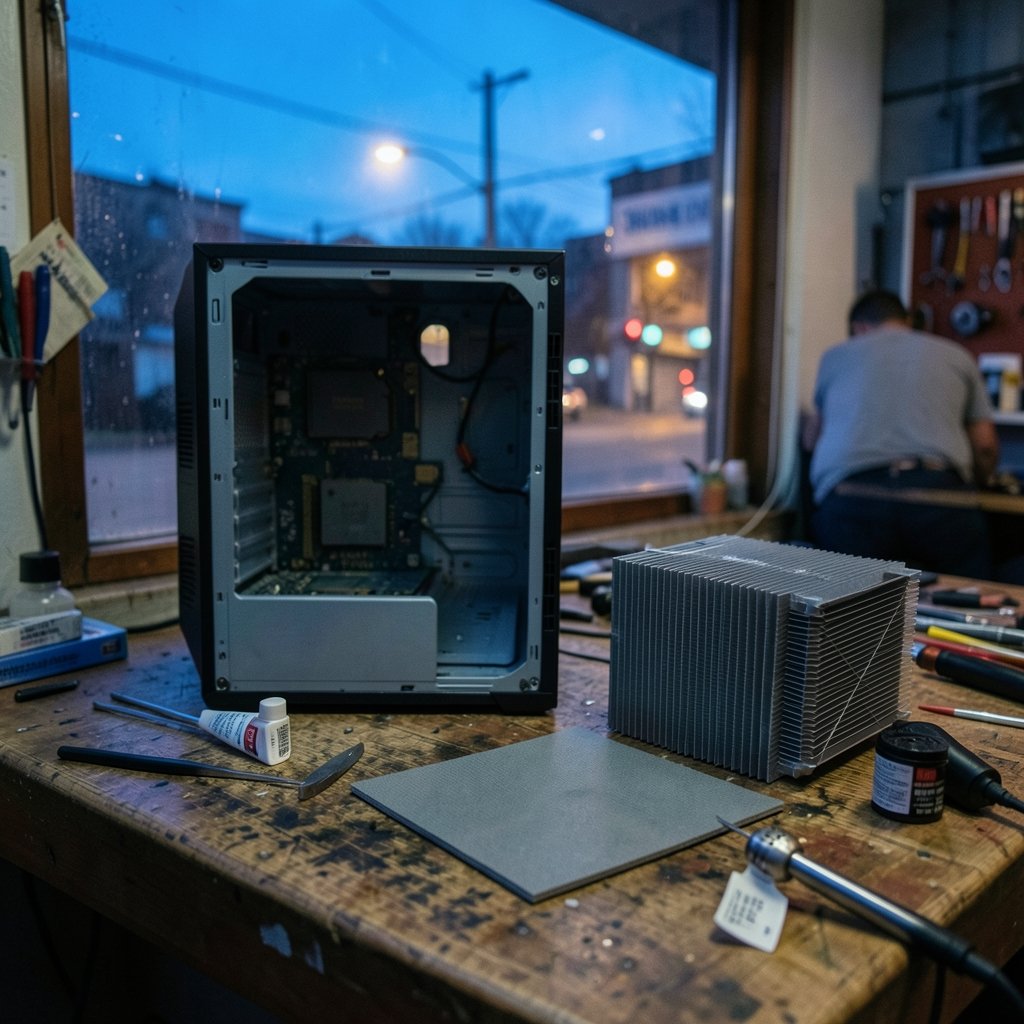
The most practical piece of news for home builders is the partnership between Carbice, a U.S. developer of carbon nanotube thermal interface materials, and Noctua, the Austrian cooling specialist. Under a long-term agreement announced at the end of May 2026, Noctua became the exclusive distributor of Carbice IP90 thermal pads as a no-maintenance alternative to thermal paste for DIY PC builders. The two companies also plan to co-develop future products aimed at PC gamers.
Why does that matter? Because it marks the first time this class of carbon nanotube pad technology is directly available to consumers worldwide. The pitch is durability. Paste manufacturers typically tell you to reapply every few years because paste dries, pumps out, or degrades. The IP90 pads are engineered to hold consistent thermal performance across their service life, so you install once and stop thinking about it.
There is a real-world lesson buried here. Most people who build a PC spend hours choosing a cooler and five minutes choosing the interface material, then wonder why temperatures drift after two summers. A pad that does not degrade changes that math. It is also far friendlier to beginners, because there is no “did I use too much” anxiety. For a broader look at which upgrades people actually keep using, see this breakdown of the best technology gift men actually gets used past week one — the same principle applies: reliability beats novelty.
The vapor-chamber pad claim: 50 to 80 times better?
The flashiest headline of the year came from Xerendipity, which showed a hybrid product at MWC 2026. Dubbed the Vapor-Pad, it combines a vapor chamber with a thermal pad in a single layer. The company claims thermal conductivity of 1,200 W/m-K and says the design delivers 50 to 80 times better thermal conductivity than normal thermal pads, positioning it as a replacement for traditional thermal interface materials in CPUs and phones.
Read that claim carefully. A standard thermal pad is typically rated in single or low double digits of W/m-K. A jump to 1,200 is not an incremental improvement; it is a different category of material physics, because the vapor chamber does most of the spreading work while the pad handles contact. That is legitimate engineering, but it also means the number is not directly comparable to a pad’s rating. Comparing a hybrid vapor chamber to a plain silicone pad is a bit like comparing a heat pipe to a sticker.
The practical takeaway for buyers: treat vendor conductivity figures as a starting point, not a verdict. What matters is total thermal resistance in your actual stack-up, with your actual mounting pressure and gap thickness. A pad rated at 12 W/m-K that conforms perfectly to a rough surface can outperform a stiffer pad with a bigger headline number. This is the same trap that shows up in sensor shopping, where marketing specs hide real differences — the motion sensor vs presence sensor choose right technology comparison makes the point well.
Low-oil pads target the problem nobody talks about
While enthusiasts argue about conductivity, engineers worry about something less glamorous: silicone oil migration. Many pads are silicone-based, and over time the oil inside them can bleed out, leaving a greasy film that contaminates nearby components, attracts dust, and can affect optical or electrical surfaces.
Parker Hannifin’s Chomerics division addressed this directly with THERM-A-GAP PAD 120LOE, announced in November 2026. The “LOE” stands for Low Oil Enhanced. The pad combines a specified thermal conductivity of 12 W/m-K with reduced silicone oil migration and low compression force, and it is designed for uneven component interfaces. Standard thicknesses run from 1 to 5 mm, available as sheets or custom die-cut parts. It is electrically insulating, rated at 45 Shore 00 hardness, and built to keep its contact force even after relaxation.
Parker also launched THERM-A-GAP PAD 30RB, a 3.0 W/m-K gap filler with strong rebound and reusability. You can compress and reapply it multiple times with minimal thickness loss, which suits chipset testing, automotive electronics, and telecom equipment where assemblies get opened more than once. That reusability angle is underrated. Anyone who has peeled a crushed pad off a laptop heatsink knows the pain of a material that only works once.
A quick comparison helps sort the current options:
| Product | Type | Rated conductivity | Standout trait |
|---|---|---|---|
| Carbice IP90 | Carbon nanotube pad | Not stated in announcement | No-maintenance paste alternative |
| Xerendipity Vapor-Pad | Vapor chamber plus pad hybrid | 1,200 W/m-K claimed | Very high spreading performance |
| THERM-A-GAP PAD 120LOE | Silicone gap filler | 12 W/m-K | Low oil migration, low compression force |
| THERM-A-GAP PAD 30RB | Silicone gap filler | 3.0 W/m-K | Reusable, high rebound |
| LiPOLY N800D | Non-silicone pad | Not stated in announcement | Silicone-free construction |
LiPOLY, a Taiwanese materials maker, used electronica 2026 in Munich to showcase N800D non-silicone high-conductivity pads alongside phase-change materials and a thermal conductive RF absorber putty, aimed at engineers weighing thermal performance against contamination and interference risks together. Non-silicone options matter precisely because of the oil issue above.
Why AI chips are driving the material science
The deeper force behind all this product news is data center cooling. By 2030, data centers are projected to consume more energy than some large countries, with roughly a third of that going to cooling. The industry is shifting to liquid cooling, but the material that carries heat from a chip into a cold plate remains a bottleneck.
Two university spin-offs, Carbice and NovoLINC, are betting on nanostructured interface materials that cool high-density AI chips while being easier to apply and longer lasting. Research published in late 2025 described a solid-state thermal pad made through in-situ graphite cracking that achieves extremely low thermal resistance for high-power AI chips. The paper notes that conventional materials such as silicone greases, phase-change composites, and elastomeric gels show total thermal resistance above 4 mm²K/W even when optimized, while next-generation chips need something near 1 mm²K/W to keep interfacial temperature rise under 5°C.
That gap is the whole ballgame. It explains why a Korean startup like Novathermo is expanding its portfolio from high-conductivity PCB materials into silicone thermal pads, targeting 36 billion won in sales by 2030, and why so much venture money is flowing into what used to be considered a commodity.
For anyone tracking the wider wave, these shifts connect to bigger patterns covered in technology trends that will matter 2030 changes first and in the ongoing Google ai news today 2026 coverage, since AI hardware demand is what pulls thermal innovation forward.
Common mistakes when choosing a thermal pad
Plenty of people buy a good pad and still get bad results. These are the errors that show up again and again.
- Ignoring thickness. A pad that is too thin leaves gaps; too thick adds resistance. Measure the original gap or check the manufacturer’s spec.
- Reusing a compressed pad. Once crushed, a pad loses its spring. Reusable materials like the 30RB exist for a reason.
- Over-tightening. Excess mounting pressure can squeeze oil out or deform the pad unevenly.
- Mixing units. W/m-K is conductivity, not performance. Total thermal resistance is what your chip experiences.
- Skipping surface prep. Dust, old paste residue, and fingerprints all add resistance.
- Assuming pads are always worse than paste. For large gaps and uneven surfaces, a good pad often wins.
If you are building a laptop setup where heat compounds quickly, pair your pad choice with sensible airflow planning, as outlined in this gaming laptop cooling pad checklist 9 things verify before guide. And if you are diagnosing hotspots, remember that tools matter too — this look at how thermal imaging cameras compared actually changes reading explains why two cameras can disagree about the same surface.
What to actually watch next
The honest answer is that the most exciting numbers are the least verified. A 1,200 W/m-K hybrid and a solid-state graphite pad both sound revolutionary, but independent testing in real devices is what separates a product from a press release. The carbon nanotube pad now sitting in retail channels is the one consumers can judge for themselves, and its long-term durability claims are testable in a way that a trade-show demo is not.
Watch three things: whether non-silicone and low-oil formulations spread beyond industrial buyers, whether pad makers publish total thermal resistance instead of just conductivity, and whether the AI-driven demand for near-1 mm²K/W materials trickles down into affordable consumer parts. For ongoing coverage of this fast-moving space, the news section is worth bookmarking.
Conclusion
Thermal pad technology stopped being boring the moment chips started outpacing paste. The 2026 news cycle delivered a genuine consumer milestone with Carbice and Noctua bringing carbon nanotube pads to DIY builders, a bold hybrid vapor-chamber claim from Xerendipity, and quieter but arguably more important engineering from Parker Chomerics and LiPOLY around oil migration and reusability. Behind all of it sits the AI cooling problem, where the difference between 4 mm²K/W and 1 mm²K/W decides whether a chip runs cool or throttles.
The practical advice has not changed much, even if the materials have. Match the pad to the gap, respect mounting pressure, prepare surfaces properly, and treat big conductivity numbers with healthy skepticism until independent tests appear. Do that, and the next round of thermal pad news will be something you can evaluate rather than just read about.
Frequently Asked Questions
Are thermal pads better than thermal paste?
Neither wins outright. Paste generally performs better across very thin, perfectly flat gaps, while pads handle larger gaps, uneven surfaces, and multi-component cooling without mess or cure time. Pads also suit situations where you never want to reapply, which is why no-maintenance carbon nanotube pads are gaining attention.
What is a vapor-chamber thermal pad?
It is a hybrid that combines a vapor chamber, which spreads heat laterally very efficiently, with a soft pad that makes contact with the component. Xerendipity’s Vapor-Pad claims 1,200 W/m-K and 50 to 80 times the conductivity of normal pads, though that figure reflects the chamber’s spreading effect rather than a like-for-like pad comparison.
How often should thermal pads be replaced?
Conventional pads are usually replaced when a device is opened for service or when temperatures climb noticeably. Reusable materials such as THERM-A-GAP PAD 30RB can be compressed and reapplied multiple times, while carbon nanotube pads like Carbice IP90 are marketed as no-maintenance alternatives that hold performance across their service life.
What does low-oil or low-bleed mean on a thermal pad?
It refers to how much silicone oil escapes the pad over time. Standard silicone pads can bleed oil that contaminates nearby parts and attracts dust. Low-oil designs such as THERM-A-GAP PAD 120LOE reduce that migration while keeping conductivity at a specified 12 W/m-K, which matters for long-life and mission-critical electronics.
Does higher W/m-K always mean better cooling?
No. Conductivity is only one variable. Total thermal resistance depends on pad thickness, contact pressure, surface flatness, and how well the material conforms. A well-fitted 12 W/m-K pad can beat a stiffer pad with a larger headline number in a real assembly.
Are non-silicone thermal pads worth considering?
They are worth considering when contamination is a concern. LiPOLY showcased non-silicone high-conductivity pads at electronica 2026 specifically for engineers balancing thermal performance against oil migration and interference risks. For typical desktop builds, silicone pads remain the mainstream choice.