
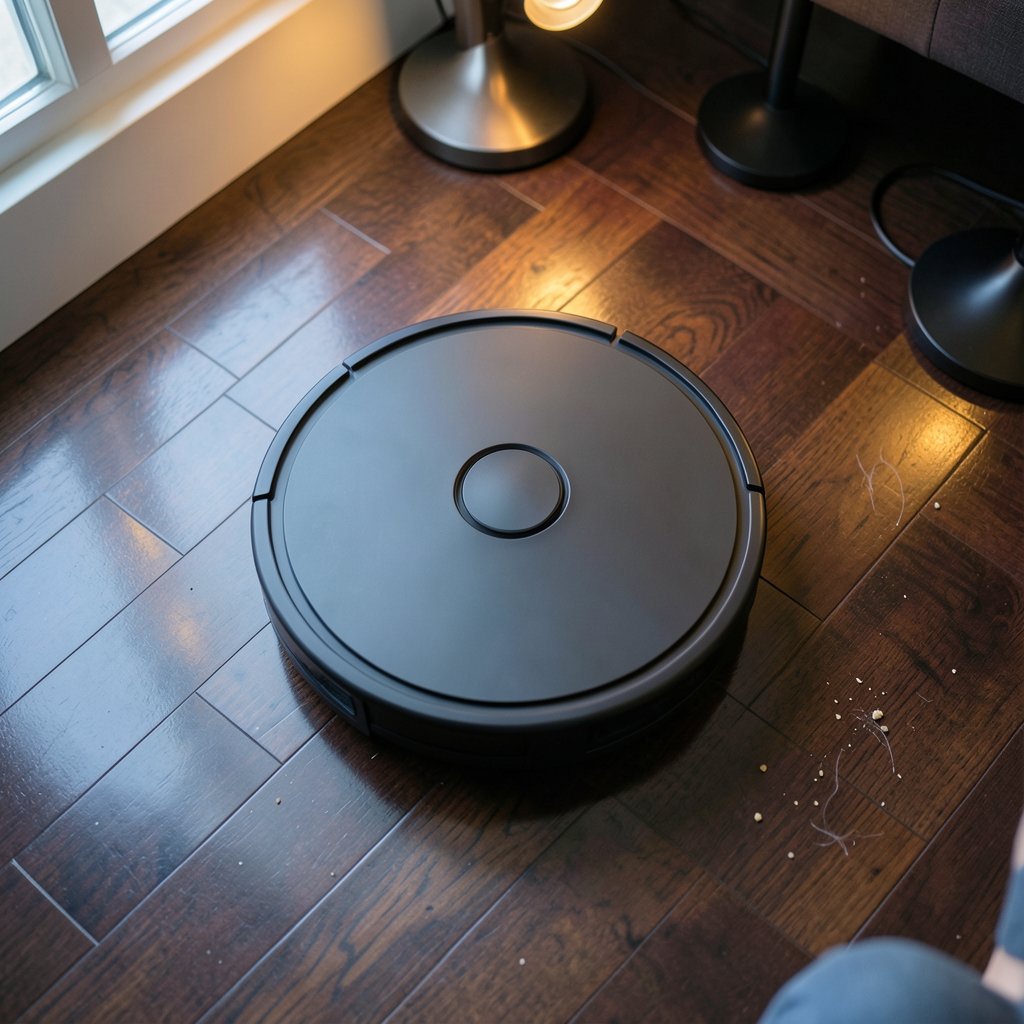
Can a robot vacuum really tell the difference between a black hardwood floor and a bottomless stairwell? That question drives one of the most frustrating ownership experiences in home cleaning. Dark floors are beautiful, dramatic, and increasingly popular in modern interiors. They are also unforgiving. Every crumb, every strand of pet hair, and every fine scratch shows up like a headline. And in some cases, the robot itself gets confused by the very surface it is supposed to clean.
This guide breaks down what actually goes wrong on dark floors, which features matter most, and how to choose and run a robot vacuum that works with a dark floor instead of against it.
Why Dark Floors Are Genuinely Harder for Robot Vacuums
There are two separate problems here, and people often blur them together. The first is optical. The second is sensory.
The optical problem is simple contrast. Light-colored dust, lint, sugar, flour, and pale pet hair stand out sharply against dark wood, dark tile, or dark laminate. On a light floor, the same debris is nearly invisible. This does not mean dark floors get dirtier. It means they advertise it. Owners of dark floors tend to run their robots more often and notice missed spots more acutely, which is why satisfaction can feel lower even when cleaning performance is identical.
The sensory problem is more technical. Most robot vacuums use downward-facing cliff sensors (usually infrared) to detect drop-offs like stairs. These sensors work by emitting a signal and measuring how much bounces back. On very dark or very glossy surfaces, the amount of reflected light can fall outside the expected range. The robot may then interpret a solid floor as a ledge, refuse to cross it, spin in place, or stop with an error.
According to the Wikipedia entry on robotic vacuum cleaners, cliff detection is a standard safety feature across the category, but the underlying sensor behavior varies significantly between models and generations. That variance is exactly why dark-floor complaints cluster around specific brands and firmware versions rather than affecting every robot equally.
Lidar Versus Camera Navigation
Navigation technology matters more than most buyers realize. Lidar-based robots map walls, furniture, and doorways using laser pulses. They are largely indifferent to floor color because they are not reading the floor surface at all. Camera-based (vSLAM) robots navigate by recognizing visual features, and they can struggle in low light, which is a separate but related headache in dark rooms with dark floors.
If a home has dark floors throughout and dim lighting in the evening, a lidar robot is generally the safer bet. It is not a guarantee against cliff-sensor quirks, but it removes one variable from the equation.
Scratches: The Problem Nobody Warns You About
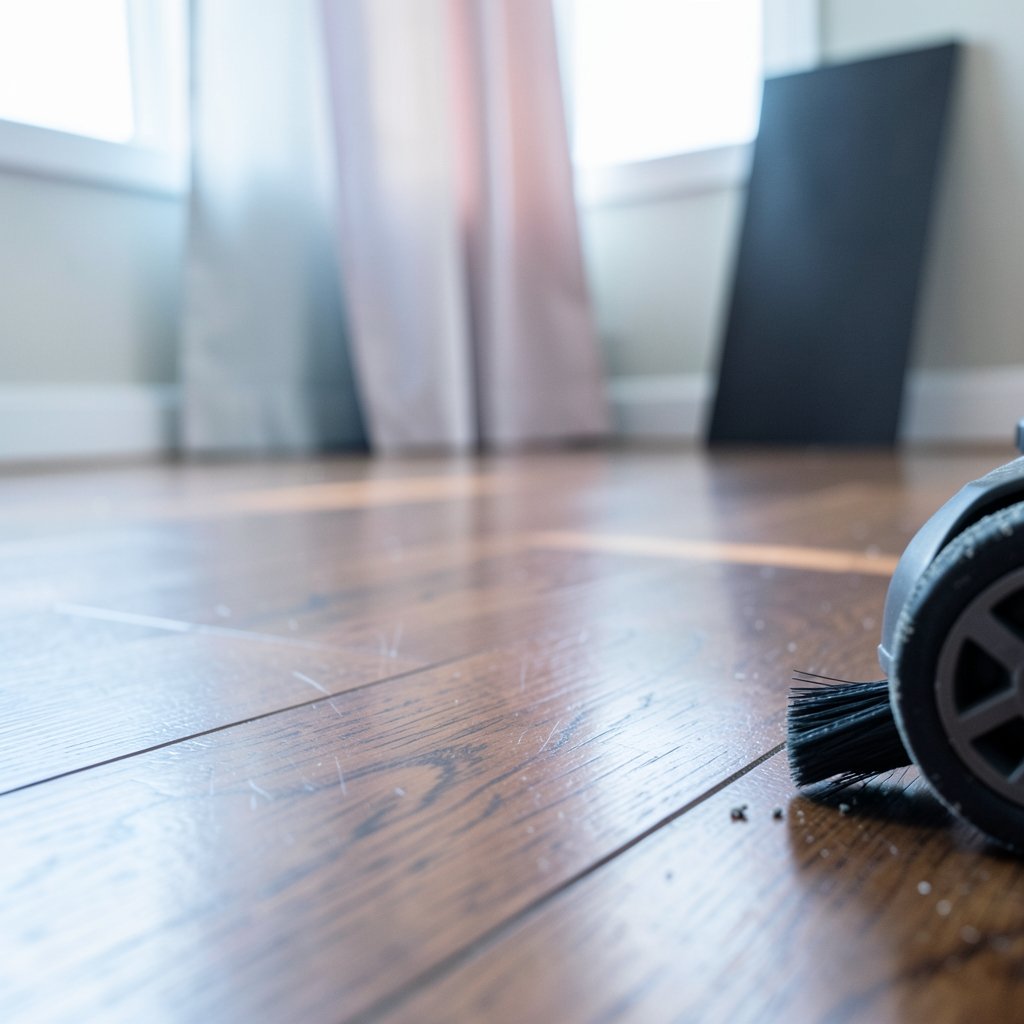
Here is the uncomfortable truth about dark floors: the debris is not the main long-term concern. The finish is.
Glossy dark hardwood and dark laminate reveal fine scratches with almost forensic clarity. A robot vacuum dragging a trapped piece of grit, a stiff side brush flicking a small stone, or a wheel with a worn tread can all leave marks that would be invisible on a lighter or matte surface.
The practical takeaway is that finish matters as much as color. A matte or satin dark floor hides micro-scratches far better than a high-gloss one. If the floor is already glossy and dark, the priorities shift:
- Soft, rubbery side brushes instead of stiff bristle brushes
- Rubber or hybrid brush rolls rather than pure bristle rollers
- Regular brush cleaning, because a clogged brush is a scratching tool
- A pre-vacuum sweep of visible grit before the first run in a high-traffic area
Many owners skip that last step and then blame the robot. In practice, grit tracked in from outside does most of the damage, and the robot simply redistributes it.
Matching the Robot to the Floor: A Practical Comparison
Different floor types on the dark spectrum behave differently. The table below summarizes what tends to matter most.
| Dark floor type | Main risk | Feature priority | Watch out for |
|---|---|---|---|
| Glossy dark hardwood | Visible scratches | Soft brushes, rubber rollers | Stiff bristles, trapped grit |
| Matte dark hardwood | Dust contrast | Strong suction, HEPA filtration | Missed edges and corners |
| Dark laminate | Static-attracted dust | Good airflow, anti-static brushes | Cheap bristle side brushes |
| Dark tile or slate | Grout lines hiding debris | Edge cleaning, mop combo | Water left in grout |
| Dark low-pile carpet | Pet hair visibility | Tangle-free brush roll | Hair wrapping the roller |
For homes that mix dark hard floors with area rugs, a machine that handles both well is worth the extra cost. The best vacuum for carpet options tend to overlap heavily with strong hard-floor performers, since brush roll design and suction are shared requirements.
Sensor Behavior: What to Test Before You Commit
Because dark-floor sensor issues are model- and firmware-specific, no buying guide can promise a specific robot will behave perfectly in a specific home. What a buyer can do is test intelligently.
- Run the robot on the darkest floor in the house first. Not the hallway. The darkest, glossiest patch, ideally near a staircase if one exists.
- Watch the cliff sensors, not the app. If the robot hesitates, backs up, or stops near a ledge that is not there, that is a sensor misread.
- Check for a sensitivity setting. Some apps include a dark-floor or sensor-sensitivity toggle. Confirm it exists for the exact model before purchase, since claims vary and firmware changes.
- Test in low light. Camera-navigation robots can behave differently at night.
- Keep the receipt and the return window open. This is the single most effective safeguard.
A note of caution: anecdotal reports and manufacturer statements often conflict on this topic. Users describe cliff-sensor errors on dark rugs and dark tile, while support pages may not acknowledge the pattern. Treat any brand claim about “dark floor mode” as marketing until it is confirmed on the specific model being purchased.
Dust, Hair, and Filtration on Dark Surfaces
Since visible debris is the core complaint, filtration and brush design deserve more attention than raw suction numbers.
HEPA filtration traps fine particles instead of blowing them back into the room, where they settle on the dark floor within hours. Tangle-free brush rolls matter enormously in homes with pets, because a hair-wrapped roller stops picking up the pale fur that shows up most on dark floors. If pets are part of the household, the best robot vacuums for pet hair roundup covers the models built around exactly this problem.
For homes that want to cut down on visible dust film, a machine that vacuums and mops in one pass can help, though glossy dark hardwood needs a light touch with moisture. The best vacuum mop combo options are worth reviewing if the floor is sealed and water-tolerant.
Common Mistakes People Make
- Buying on suction specs alone. A 5,000 Pa robot with a bristle brush will scratch and fling debris.
- Skipping the pre-run sweep. Grit is the enemy, not the robot.
- Running the robot on a wet or recently mopped glossy floor. Residue plus wheels equals streaks.
- Ignoring brush maintenance. A tangled brush is a smearing brush.
- Assuming all dark floors behave the same. Glossy and matte are different worlds.
Maintenance Habits That Protect a Dark Floor
A robot vacuum on a dark floor rewards a slightly more disciplined routine. None of it is difficult. (Indoor Air Quality)
Empty the bin after every run. A full bin reduces airflow, and reduced airflow means fine dust stays behind, where it is most visible. Clean the brush roll weekly in pet homes and every two weeks otherwise. Wipe the cliff sensors with a dry cloth, since a film of dust on the sensor window can worsen misreads. Replace filters on schedule, not when they look bad, because dark floors make the consequences of a clogged filter obvious fast.
It also helps to set a no-go zone around any area with loose cables, small rugs with fringe, or pet bowls. These are the obstacles that cause the robot to drag, stall, and grind against the floor.
Where Dark Floors Fit in a Broader Cleaning Setup
A robot vacuum is one tool, not a full system. Homes with dark floors usually benefit from a handheld or corded machine for stairs, edges, and the car, plus a dedicated tool for anything wet. The best car vacuum guide is useful for anyone who tracks grit indoors from a vehicle, and the best pool vacuum covers the outdoor side of the same maintenance mindset. (Robotic vacuum cleaner)
For readers curious about how automated systems handle edge cases in general, the I Am Not a Robot Game: Browser Puzzles and Quizzes piece is a fun detour into how machines decide what counts as a real signal versus noise, which is precisely the challenge a cliff sensor faces on a black floor. And for a wider view of how hardware bets play out in the real world, the analysis of Tesla’s robotaxi, semi, and roadster hardware bets shows how sensor design choices ripple through entire product categories.
Conclusion
A robot vacuum for dark floors is not a special product category. It is a normal robot vacuum plus a sharper set of priorities. Floor color does not change how much dirt exists. It changes how quickly that dirt becomes visible, how clearly scratches show, and, in some models, whether the cliff sensors behave correctly at all.
The buyers who end up happy tend to do three things. They prioritize lidar navigation and soft, rubbery brushes over raw suction claims. They test the robot on the darkest, glossiest floor in the house before the return window closes. And they accept that dark floors demand a little more maintenance discipline, because the surface tells the truth about everything.
Get those three right, and the floor stays dramatic for the right reasons.
Frequently Asked Questions
Do robot vacuums work on black floors?
Most do, but performance varies by model. The main risk is not cleaning ability but cliff-sensor behavior, since downward infrared sensors can misread very dark or very glossy surfaces as a drop-off. Lidar-navigated robots are generally less affected because they map obstacles rather than reading the floor.
Why does my robot vacuum stop on my dark floor?
It is likely a cliff-sensor misread. The sensor expects a certain amount of reflected light, and a very dark or reflective floor can fall outside that range. Cleaning the sensor window, checking the app for a sensitivity setting, and testing in different lighting are the first steps. If the behavior persists, it is a model-specific limitation.
Do dark floors show more scratches from robot vacuums?
They show scratches more clearly, especially on glossy finishes. The scratches themselves usually come from trapped grit and stiff bristle brushes rather than the robot’s body. Switching to rubber brush rolls, soft side brushes, and a quick pre-run sweep of visible grit reduces the risk substantially.
Is a matte or glossy dark floor better for a robot vacuum?
Matte is more forgiving. Glossy dark floors reveal fine scratches and streaks with far greater clarity, so they demand softer brushes and more careful maintenance. Matte dark floors still show dust contrast but hide micro-scratches better.
Does lidar or camera navigation handle dark floors better?
Lidar is generally the safer choice for dark floors and dark rooms. It builds a map from laser distance readings and is largely indifferent to floor color. Camera-based navigation depends on visual features and can struggle in low light, which often accompanies dark interiors.
How often should I run a robot vacuum on dark floors?
More often than on light floors, simply because visible debris accumulates in the eye faster. Daily runs in high-traffic areas and pet homes are common, with weekly brush cleaning and regular filter replacement to keep pickup consistent.



