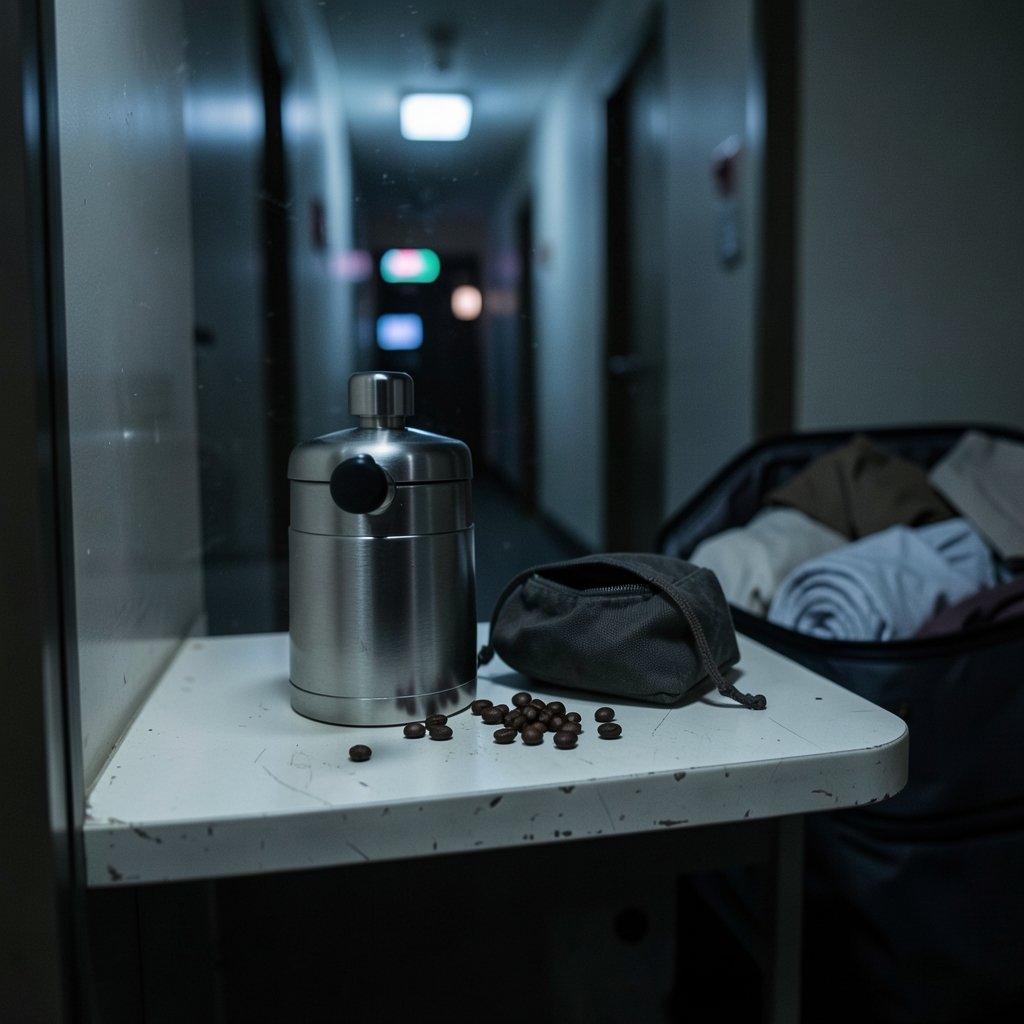
What good is a perfect bag of beans if you are stuck drinking gas-station coffee three mornings in a row? That question is exactly why so many coffee lovers start shopping for a manual coffee grinder for travel. A hand grinder small enough to zip into a carry-on lets you brew freshly ground coffee in a hotel room, a tent, or a rented apartment kitchen, without hunting for a café or trusting a stale pre-ground bag.
But the travel grinder market is crowded, and the marketing is loud. Some grinders are genuinely pocketable and consistent. Others are heavy bricks that grind unevenly and take two minutes of cranking for a single cup. Here is a practical, balanced look at what matters, what to avoid, and how to choose a hand grinder that earns its place in your luggage.
Why a hand grinder beats the alternatives for travel
Burr grinders produce a more consistent particle size than blade grinders, which chop beans unevenly and create a mix of dust and boulders. That consistency matters most for pour-over and espresso, where uneven grounds cause sour and bitter flavors at the same time. For travel, a manual burr grinder gives you that consistency with no motor, no battery, and no power adapter.
Compare the realistic options:
| Option | Weight and bulk | Grind quality | Best for |
|---|---|---|---|
| Manual burr grinder | Roughly 300–600 g depending on material | Good to excellent, varies by model | Camping, hotels, long trips |
| Electric burr grinder | Too heavy for most luggage | Excellent | Home use only |
| Blade grinder | Light but messy | Poor consistency | Not recommended |
| Pre-ground coffee | Zero weight | Declines fast after opening | Short trips, emergencies |
A hand grinder also removes the biggest enemy of travel coffee: stale pre-ground coffee. Whole beans stay fresh far longer than grounds, so grinding right before brewing is the single biggest upgrade you can make away from home.
Weight, size, and packing reality
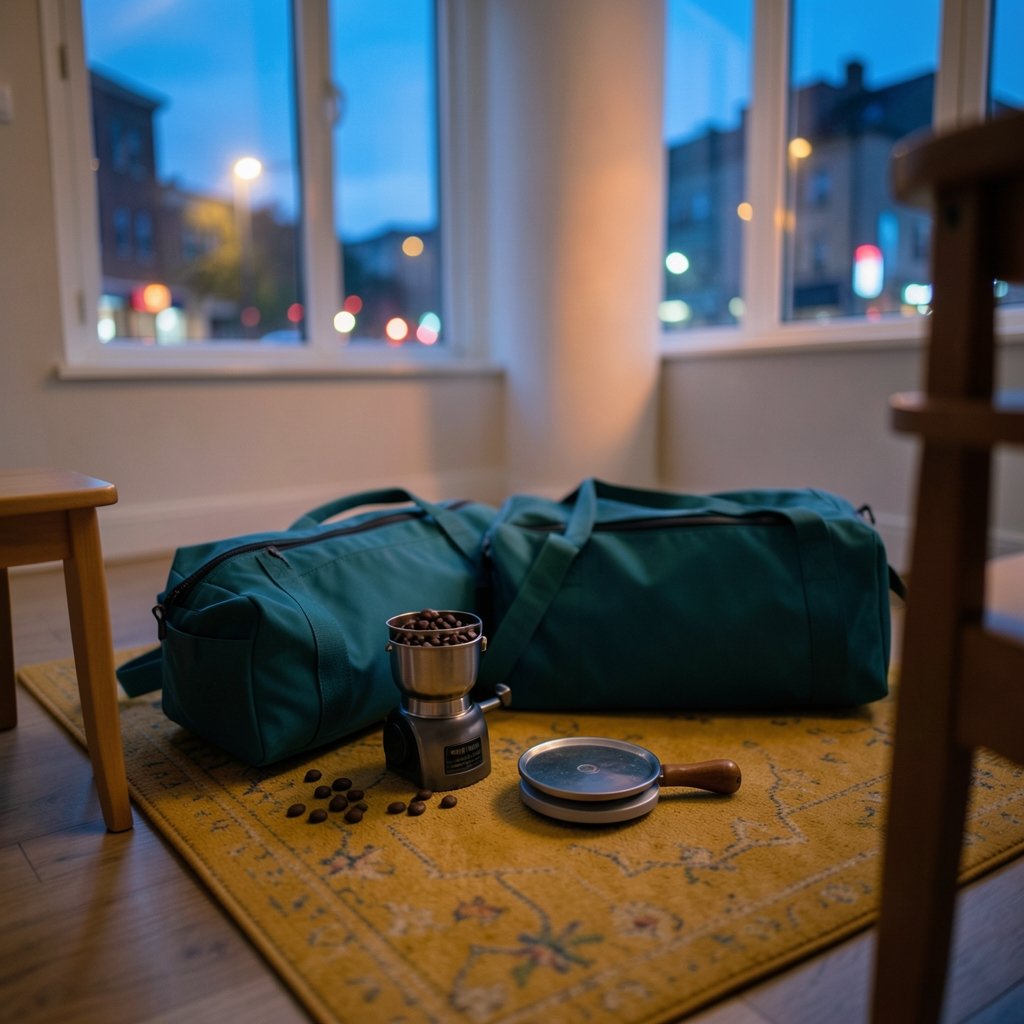
Manufacturer weight figures for travel grinders commonly land in the 300–600 gram range. Aluminum bodies sit at the lighter end; stainless steel models sit at the heavier end but usually feel more solid. Treat these numbers as approximate, because specs vary by model and are often rounded for marketing.
A few practical points from real-world use:
- Check the folded dimensions, rather than the height alone. Many travel grinders detach or fold the handle, and some fit the handle inside the grinder body for packing. That folded size is what determines whether it slides into a shoe pocket in your bag.
- Capacity matters more than you think. A grinder that holds 20–25 g of beans suits one large mug or two small cups. If you travel with a partner, look for a bigger hopper or accept grinding twice.
- Grip and stability are underrated. Narrow, smooth cylindrical bodies can be hard to hold steady while cranking. A slightly wider body with texture or a rubber base ring makes grinding faster and less frustrating on a wobbly hotel desk.
- Static cling is a real annoyance, especially in dry climates and heated hotel rooms. A light tap on the side, or a single spritz of water on the beans before grinding, usually solves it.
Burr type: the decision that shapes everything
Most hand grinders use conical burrs. Steel burrs generally hold an edge longer and cut more consistently than the ceramic burrs found in budget models, which tend to struggle with fine settings. If your goal is a decent pour-over or French press, a well-made steel conical burr set will serve you for years.
If you want to brew espresso on the road, expectations need a reality check. Espresso demands a very fine, very consistent grind, and small hand grinders vary widely in how well they handle that range. Some premium hand grinders are genuinely espresso-capable; many travel-focused models are not. If espresso is the priority, it is worth reading dedicated guidance on the best espresso grinder before you buy, and pairing the grinder with good coffee beans for espresso so you are not fighting bad inputs.
Stepped versus stepless adjustment
Grind adjustment comes in two flavors:
- Stepped (click) adjustment. Each click moves the burr a fixed amount. Easy to count, easy to return to a known setting after you disassemble the grinder for packing. This is the friendlier choice for travel.
- Stepless adjustment. Infinite fine-tuning, better for dialing in espresso, but harder to reset precisely after cleaning or travel breakdown.
For most travelers, stepped adjustment wins on convenience. Note your favorite setting with a marker or a phone note before you take the grinder apart.
What to look for before you buy
A short checklist that separates a good travel grinder from a frustrating one:
- Steel conical burrs rather than ceramic, unless the budget is very tight.
- Folded dimensions and weight that match your actual bag, not the marketing photo.
- A handle that detaches or folds, ideally storing inside the body.
- Stepped adjustment with clear markings, so you can reset after travel.
- A lid that stays on in a backpack. Loose lids mean beans everywhere.
- Easy disassembly without tools, because you will want to brush out old grounds.
- Replacement parts availability, since burrs and handles do wear or get lost.
One common mistake: buying the cheapest grinder on the shelf. Budget ceramic burr grinders often wobble at the axle, which produces an uneven grind that no brewing technique can fix. A mid-range steel burr hand grinder usually costs less over five years than replacing a cheap one twice.
Another mistake: over-grinding for the brew method. Travelers often default to a fine setting because it feels “stronger.” For a best pour over coffee maker setup, a medium grind extracts far more evenly. Match the grind to the brewer, not to a hunch.
Brewing methods that pair well with a hand grinder
The grinder is only half the kit. The brewer you pack determines how much the grind quality actually shows.
- AeroPress or a small pour-over dripper. Light, durable, forgiving, and easy to clean in a hotel sink. This is the most popular travel pairing for a reason.
- French press. No paper filters needed, but heavier and messier to clean on the road.
- Moka pot. Great for a stronger cup, but it wants a fine grind and steady heat.
- Instant or hotel drip machines. A hand grinder still helps here, since fresh grounds beat a stale pod every time.
If you already own a capsule machine at home and want to keep that convenience while traveling, the honest answer is that pods travel better than grinders. But if you want real coffee, the grinder plus a compact brewer is the winning combination. Readers weighing both approaches often compare notes on the best k cup coffee maker and the best keurig coffee maker for home, then pack a hand grinder for the road. (Coffee preparation)
Airline rules and packing tips
A hand grinder has no blade and no motor, so it is generally treated as an ordinary item in carry-on luggage. Rules still vary by country and carrier, and they change. Check the current guidance from your aviation authority before flying, and keep the grinder empty and clean so security screening is quick.
Practical packing habits that experienced travelers swear by:
- Grind before you pack the beans, not after. Store whole beans in a small airtight bag and grind at your destination.
- Empty the grinder before security. Residual grounds look like nothing, but a clean grinder avoids questions.
- Wrap the handle separately if it does not lock in place, so it does not rattle against the burr shaft.
- Carry a small brush. A pastry brush or the brush that ships with many grinders clears retention in seconds.
- Double-bag the beans. A zip bag inside a hard container survives baggage handling better than a paper bag.
Matching the grinder to your coffee habit
Not every traveler needs the same tool. A useful way to think about it:
| Traveler type | Priority | Grinder profile |
|---|---|---|
| Weekend camper | Durability, low weight | Light aluminum body, medium capacity |
| Hotel-room brewer | Compactness, quiet operation | Small steel burr grinder, folded handle |
| Long-term nomad | Consistency, repairability | Mid-size steel burr, replaceable parts |
| Espresso obsessive | Fine grind control | Premium hand grinder rated for espresso |
If you mostly drink filter coffee, a mid-range hand grinder will outperform a fancy brewer paired with stale grounds. If you mostly drink espresso, budget more for the grinder and less for everything else. The grinder is the variable that most affects what ends up in the cup.
It also helps to think about your home setup as a reference point. People who already own a best coffee grinder for espresso at home often discover that their travel grinder is the weak link, not their beans. Buying better beans, such as a well-reviewed best coffee subscription or a local roast, only pays off if the grinder can do it justice.
Common mistakes that ruin travel coffee
Even good gear fails when a few basics get skipped. These are the errors that show up again and again:
- Grinding too coarse to save effort. A coarse grind in a pour-over produces a weak, hollow cup. Crank a little longer.
- Ignoring water quality. Hotel tap water can taste of chlorine. A small filter bottle or bottled water makes a bigger difference than most gear upgrades.
- Forgetting a scale or scoop. Inconsistent doses cause inconsistent cups. A tiny folding scale or a marked scoop solves it.
- Not cleaning the grinder between trips. Old oils turn rancid and taint every subsequent brew.
- Buying for espresso when you drink filter. Overpaying for fine-grind capability you never use is a common trap.
- Assuming all hand grinders are slow. A sharp burr and a stable grip cut grinding time significantly; a dull burr and a wobbly body make it a chore.
Conclusion
A manual coffee grinder for travel is one of the few pieces of gear that genuinely changes the quality of your mornings away from home. The formula is simple: choose steel conical burrs, check the folded dimensions and weight before you buy, favor stepped adjustment you can reset after disassembly, and pair the grinder with a brewer that suits your grind. Skip the cheapest ceramic models, keep the grinder clean, and pack whole beans rather than grounds.
Get those basics right and the payoff is immediate. Fresh coffee in a tent, a hotel room, or a friend’s kitchen stops being a compromise and becomes something you actually look forward to. The grinder does not need to be the most expensive one on the shelf. It needs to be the one you will actually pack, use, and clean. That is the whole test.
Frequently Asked Questions
Are manual coffee grinders allowed in carry-on luggage?
In most countries a hand grinder is treated as an ordinary item because it has no blade or motor. Rules vary by jurisdiction and carrier, and they change over time, so check your aviation authority’s current guidance before flying. Emptying the grinder and keeping it clean makes screening faster.
How long does it take to grind coffee with a hand grinder?
For a single 20 g dose at a medium setting, most people finish in roughly 30 to 90 seconds depending on the burr, the grind setting, and how steadily they crank. Finer grinds take longer. A sharp steel burr and a stable grip make a noticeable difference.
Is a hand grinder good enough for espresso?
It depends on the model. Some premium hand grinders are built for the fine, consistent grind espresso needs, while many travel-focused models are not. If espresso is your main goal, prioritize grind adjustment range and burr quality over compactness, and expect to pay more.
What is the difference between ceramic and steel burrs?
Steel burrs generally hold an edge longer and cut more consistently, especially at fine settings. Ceramic burrs are common in budget grinders and can work for coarse grinds but often struggle with consistency when you go fine. For travel, steel is usually the safer long-term choice.
How do I stop static and mess when grinding on the road?
Static cling is common in dry climates and heated rooms. Tapping the grinder lightly, letting grounds settle for a few seconds before opening, or adding a single small spritz of water to the beans before grinding usually reduces the mess. A small brush helps clear retention.
Can I grind coffee the night before to save time?
You can, but grounds lose aroma and freshness faster than whole beans. Grinding right before brewing gives a noticeably better cup. If time is tight in the morning, pre-weigh your beans into a small container the night before and grind fresh when you wake up.