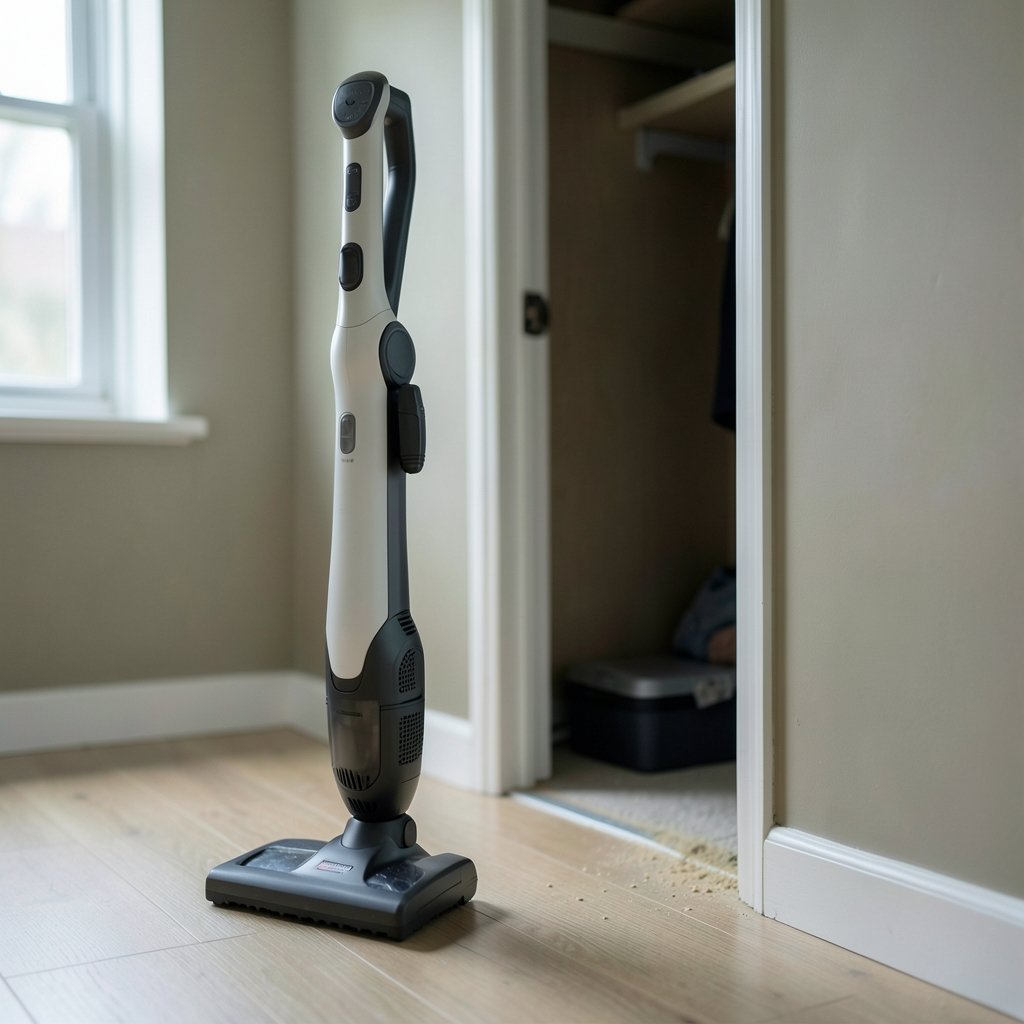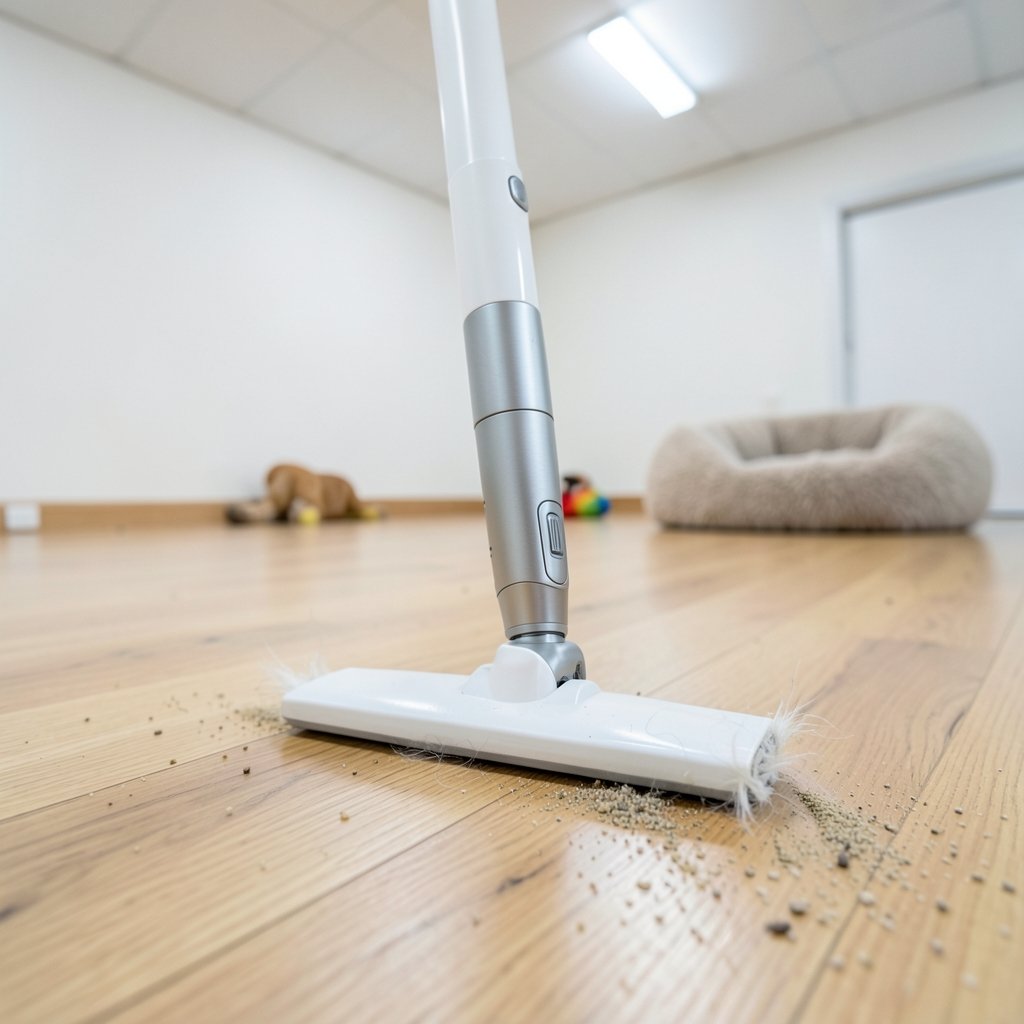
What if the biggest threat to your wood floors isn’t a dropped pot or a muddy paw print, but the invisible grit your shoes drag in every day? Sand is tiny, sharp, and relentless. Dog hair is springy, clingy, and everywhere. Together they form the worst possible combination for hardwood, and that’s exactly why so many people go looking for a vacuum mop that can handle both without wrecking the finish.
The trouble is that “vacuum mop” isn’t a standardized category. Some machines are wet/dry vacuums, some are hard-floor cleaners that scrub and suck in one pass, and some are robot hybrids. Specs vary wildly, and marketing claims like “safe for all hard floors” aren’t regulated. So the smart approach is to understand what sand and dog hair actually do to wood, then pick a machine that matches those realities.
Why Sand and Dog Hair Are a Brutal Combination for Wood
Sand is abrasive grit. When it sits on a wood floor and a vacuum head or mop pad drags across it, it behaves like fine sandpaper. Over months, that dulls the finish in traffic lanes, especially near doors and under chairs. The standard preventive advice from flooring-care guidance is frequent dry removal, meaning vacuuming and dust mopping before grit gets ground in.
Dog hair is a different problem entirely. It’s a fiber, not grit. It wraps around brushrolls, tangles on beater bars, and clogs intake paths. Pet-specific brushroll designs and tangle-free rollers exist for exactly this reason, though those are manufacturer design claims rather than independently tested standards.
Here’s the conflict worth stating plainly: most wood-floor care guidance limits cleaning to a damp mop with a pH-neutral cleaner, and warns against wet mopping. Many wet-mop hybrids market themselves as wood-safe anyway. Those two positions don’t fully agree, and you should treat any product that sprays or washes aggressively as a question mark on sealed hardwood until you’ve tested it in a corner.
The Moisture Rule That Decides Everything
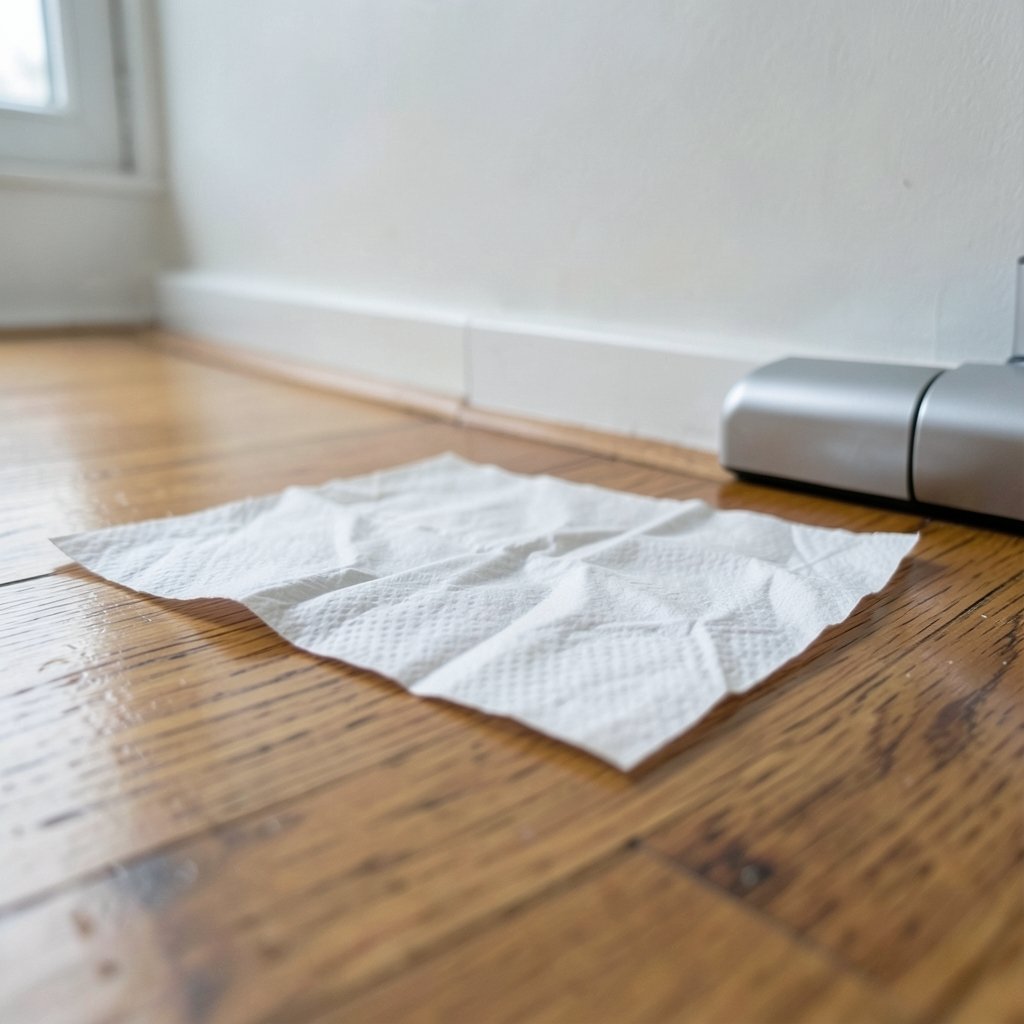
Water exposure is the key risk on wood. Standing water and excess moisture can cause warping and finish damage. That single fact reshapes how you should shop.
A machine that leaves the floor visibly wet is a liability on hardwood. A machine that lays down a fine mist and pulls it back up almost immediately is a different story. The practical test is simple: run it on a small hidden patch, wait a minute, and press a dry paper towel to the floor. If the towel comes up damp, the machine is leaving too much water behind.
This is also why so many experienced wood-floor owners end up preferring a two-step routine: a dry vacuum pass for grit and hair, then a separate damp mop only when needed. If you want to see how that logic plays out across products, this breakdown of the best robot vacuum mop combos that actually clean floors is a useful reality check on which hybrids genuinely pull moisture back up.
What to Look For in a Vacuum Mop for This Job
Rather than chasing a single “best” model, shop against a checklist. The categories below matter more than brand names.
| Feature | Why it matters for sand and dog hair | Watch out for |
|---|---|---|
| Tangle-free brushroll or rubber roller | Dog hair wraps conventional bristle rolls fast | Claims without a removable, cleanable design |
| Sealed system with good filtration | Fine sand and dust otherwise recirculate | “HEPA-like” wording with no efficiency figure |
| Low-moisture dispensing | Wet wood risks warping and finish damage | Spray-heavy modes with no suction recovery |
| Strong edge and corner pickup | Grit collects along baseboards and toe kicks | Bulky heads that can’t reach the wall line |
| Easy debris bin emptying | Sand is heavy and fills bins quickly | Small bins that need emptying mid-room |
| Soft, non-marring wheels and head | Hard plastic can scuff finish over time | Aggressive beater bars on bare wood |
HEPA filtration deserves a note. HEPA is a defined efficiency class, commonly cited as capturing 99.97% of particles at 0.3 micrometers under the U.S. Department of Energy standard. On a wood floor, fine grit and dust are the particles you most want captured rather than blown back into the air. A sealed system with real filtration reduces recirculation, which matters if anyone in the house has allergies.
Runtime and suction also trade off against weight in cordless machines, and there’s no universal benchmark, so manufacturer claims aren’t directly comparable. A lighter machine you’ll actually use twice a week beats a heavy one that stays in the closet.
Dry First, Then Decide About Wet
The single most effective habit on wood floors is separating the two jobs. Sand and dog hair are dry debris. Removing them dry, frequently, is the lowest-risk approach and the one most aligned with wood-care guidance.
A few practical tips that make a real difference:
- Vacuum entry zones daily. Most grit arrives through the front door, so that’s where abrasion starts.
- Use a soft brush or dust mop on dry days between vacuum passes to lift grit before it’s ground in.
- Empty the bin after every session. Sand is dense, and a full bin loses suction fast.
- Cut dog hair off the brushroll weekly rather than waiting for a tangle. It takes two minutes and prevents motor strain.
- Keep mats outside and inside every exterior door. It’s the cheapest grit reduction you’ll ever buy.
If your dog sheds heavily, it’s worth reading up on how different machines handle fur before you commit, since the best vacuums for pet hair tend to share specific design traits: strong seals, tangle-resistant rollers, and bins that don’t choke on fiber. Long human hair creates a similar clogging pattern, and the fixes overlap, as this look at whether a robot vacuum handles long human hair explains.
Where Robot Hybrids Fit, and Where They Don’t
Robot vacuum mops are tempting for daily maintenance. They run while you’re out, lift grit before it’s walked in, and handle surface dog hair well. For a household with a shedding dog and a sandy driveway, a robot running daily can genuinely reduce how often you need to do anything by hand.
But robots have limits on wood. Many use a vibrating or rotating pad with light moisture, which is generally gentler than a spray-and-suck hybrid. Others spray water more freely, and that’s where caution is warranted. Two failure modes come up often in practice.
First, cliff sensors can misread dark flooring and cause the robot to stop, stutter, or refuse to clean a room. If you have dark-stained wood or a black rug border, this guide to robot vacuum cliff sensors failing on black carpet covers the workarounds.
Second, wheels jam on hair, threshold strips, and rug edges. That’s usually a quick fix rather than a dead machine, and this explanation of the robot vacuum wheel stuck error walks through the usual causes.
One more practical point: cleaning solutions matter as much as the machine. Wood-floor guidance favors pH-neutral cleaners, and many manufacturer formulas are more aggressive than that. If you’re mixing your own or switching products, this rundown of robot vacuum cleaning solution alternatives is worth a read before you put anything on sealed hardwood.
Matching the Machine to Your Actual Floor
Not all wood floors behave the same, and the right choice depends on your finish.
Site-finished polyurethane is the most forgiving. It’s a sealed surface that tolerates light damp cleaning well, and a vacuum mop with modest moisture is usually fine.
Oiled or waxed wood absorbs moisture differently and generally needs dry methods plus occasional maintenance oil, not regular wet cleaning. A wet-mop hybrid is a poor match here.
Old, worn, or unsealed wood is the riskiest. Any standing water can wick into seams and cause swelling. Stick to dry vacuuming and a barely damp cloth for spots.
Engineered wood sits somewhere in the middle. It’s more dimensionally stable than solid wood but still vulnerable at seams if water pools.
The takeaway: before buying any hybrid, identify your finish. A machine that’s excellent on polyurethane may be the wrong tool entirely on oiled oak. If you want a broader comparison of hybrid categories before narrowing down, this guide to the best vacuum mop combo covers the trade-offs between wet/dry vacuums and hard-floor cleaners.
Common Mistakes That Cost You a Finish
Most wood-floor damage from cleaning is gradual and avoidable. These are the mistakes that show up again and again.
- Wet mopping “just this once.” Standing water is the main cause of warping and finish clouding. Damp means damp.
- Letting sand sit until the weekend. Grit underfoot is abrasive every time someone walks across it. Frequency beats intensity.
- Ignoring the brushroll. A hair-wrapped roller loses pickup and strains the motor. Weekly cleaning prevents both.
- Using multi-surface cleaners on wood. Many are formulated for tile or laminate and leave residue or dull the finish.
- Skipping the patch test. Every new machine and cleaner deserves a test on a hidden corner first.
- Overfilling the bin. Sand is heavy. A half-full bin cleans better than a packed one.
- Assuming “pet-safe” means “wood-safe.” Those are different claims, and neither is standardized.
How to Test a Vacuum Mop Before You Trust It
A short trial tells you more than any spec sheet. Here’s a sequence that works.
- Vacuum a small area with the dry mode only and check pickup along the baseboard line, where grit hides.
- Sprinkle a pinch of sand on a hidden patch and run the machine over it. Listen for grit grinding against the head.
- Run the wet mode on that same patch, then press a dry paper towel down after 60 seconds. Damp is acceptable; wet is not.
- Inspect the brushroll after one full-room pass. If hair is already wrapped, plan on frequent cleaning or a different roller design.
- Check the floor under bright light from a low angle. Fine scratches and dull patches show up best that way.
- Empty and rinse the bin and filter, then confirm airflow hasn’t dropped.
If a machine fails step three, it’s probably not the right tool for sealed hardwood, no matter how good its suction is.
Conclusion
The best wood floor vacuum mop for sand and dog hair isn’t the one with the biggest numbers on the box. It’s the one that removes abrasive grit dry, captures fine dust instead of blowing it around, and keeps moisture to a damp minimum. Sand rewards frequency. Dog hair rewards a tangle-resistant roller and a bin you’ll actually empty. Wood rewards restraint with water.
Start with your finish, not the product page. Test any machine on a hidden patch. Separate the dry job from the occasional damp one. Do those three things and you’ll spend far less time worrying about scratches and far more time enjoying the floor you paid for.
FAQ
Is it safe to use a wet vacuum mop on hardwood floors?
Generally, no, not in the wet-mop sense. Wood-floor care guidance limits cleaning to a damp mop with a pH-neutral cleaner and warns against wet mopping, because standing water can cause warping and finish damage. A hybrid that lays down a fine mist and immediately recovers it is lower risk than one that leaves visible moisture, but always patch-test first.
How often should I vacuum wood floors with a shedding dog?
Daily in high-traffic areas is ideal, and every other day is a reasonable minimum. Sand is abrasive every time it’s walked on, and dog hair accumulates fast. Frequent light passes remove grit before it’s ground into the finish, which is far more effective than an occasional deep clean.
Will a vacuum mop scratch my wood floor?
The machine itself usually isn’t the culprit. Grit trapped under a vacuum head or mop pad is what scratches. Hard beater bars and stiff bristles on bare wood can also contribute over time. Use soft rollers or brush settings, vacuum frequently so grit doesn’t build up, and avoid dragging a loaded head across dry sand.
What’s better for dog hair, a brushroll or a rubber roller?
Rubber rollers and tangle-free designs generally handle pet hair better because hair doesn’t wrap the way it does around bristles. Bristle brushrolls can still work well, but they need frequent cleaning. There’s no standardized test for “pet-hair proof,” so treat those claims as descriptions rather than guarantees.
Do I need HEPA filtration on a wood floor vacuum?
It helps. HEPA is a defined efficiency class, commonly cited as capturing 99.97% of particles at 0.3 micrometers under the U.S. Department of Energy standard. On wood floors, fine grit and dust are exactly the particles you don’t want recirculating, especially if anyone in the house has allergies. A sealed system with real filtration is worth prioritizing.
Can a robot vacuum mop replace manual cleaning on wood floors?
For daily grit and surface hair, a robot running regularly can meaningfully reduce manual work. It won’t replace periodic edge cleaning, brushroll maintenance, or spot treatment. Robots also hit practical snags on dark flooring and hair-jammed wheels, both of which are usually fixable rather than fatal.